
Business
JUST IN: Fuel price hike: DSS to meet oil marketers


Petroleum marketers have revealed that they will be meeting with the Department of State Services, DSS, on Wednesday, 9 October, 2024 over the price of Premium Motor Spirit (petrol) and its availability.
The President of the Independent Petroleum Marketers Association of Nigeria disclosed this in an interview with newsmen on Monday.
Although he didn’t give details on the reason for the meeting, he however noted that it is about petrol pump price and its availability to oil marketers.
He said: “On Wednesday I have a meeting with the Department of State Services.
“It is about the petrol pump price.
Anywhere IPMAN is involved it is about the issue of petrol and its availability to members,” he said.
Speaking further on the details of the meeting, he said, “Until we go there, I will brief you after the meeting”.
This comes as Nigerians buy fuel between N950 and N1,200 or more across the country.
On Monday, it was reported that the Nigerian National Petroleum Company Limited quit its role as the sole off-taker of Dangote Petrol.
In September, Dangote Refinery began the distribution of petrol, the same day NNPCL increased petrol pump prices.









Business
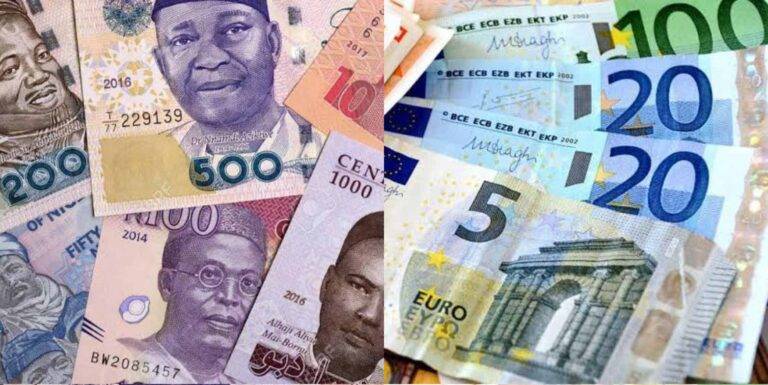
Exchange Rates Today Friday, 12 June
Black Market Rates
US Dollar (USD) ₦1,397
Great British Pound (GBP) ₦1,850

Official CBN Exchange Rates
US Dollar (USD) ₦1,363. 83
Great British Pound (GBP) ₦1,821. 25
EURO (EUR) ₦1,572. 90
SWISS FRANC (CHF) ₦1,706. 49
JAPANESE YEN (JPN) ₦8.50
CHINESE YUAN (CNY) ₦201.20
West African CFA (XOF) ₦2.40
West African Unit Account (WAUA) ₦1,857. 45
SAUDI RIYAL (SAR) ₦363. 29
SOUTH AFRICAN RAND (ZAR) ₦82.61
Black Market Rates
US Dollar (USD) Buy ₦1,397 Sell ₦1,405
Great British Pound (GBP) Buy ₦1,850 Sell: ₦1,870
EURO (EUR) Buy ₦1,587 Sell ₦1, 607
Canadian Dollar (CAD) Buy ₦1,030 Sell ₦1,100
South African Rand (ZAR) Buy ₦75 Sell ₦90
UAE Dirham Buy ₦350 Sell ₦370
Chinese Yuan Buy ₦180 Sell ₦200
Ghana Cedi (GHS) Buy ₦95 Sell ₦110
West African CFA Buy ₦2, 380 Sell ₦2, 460
Central African CFA Buy ₦2, 220 Sell 2,300
Australian Dollar Buy ₦800 Sell ₦900
Business
Airtel launches data calculator to counter depletion complaints
Commenting on the significance of the launch, Dinesh Balsingh, Chief Executive Officer, Airtel Nigeria, said that the company remains focused on building a network and customer experience ecosystem anchored on trust, transparency and continuous improvement.

Airtel Nigeria has launched the Airtel Web Data Calculator, a new digital tool designed to help customers estimate and better understand their internet data consumption based on real-life usage patterns.
Available through Airtel’s website, the calculator enables customers to estimate data usage across common digital activities such as video streaming, social media engagement, voice and video calls, and everyday web browsing.
Speaking on the launch, Oladokun Oye, Customer Experience Director, Airtel Nigeria, said that the initiative reflects Airtel’s commitment to customer empowerment and service transparency.
“As Nigerians become increasingly dependent on digital services for work, education, entertainment and communication, it is important that customers have clear visibility into how their data is consumed.
The Airtel Web Data Calculator was developed to help our customers understand their usage patterns better, make informed choices, and enjoy greater confidence in their digital experience,” he said.
Commenting on the significance of the launch, Dinesh Balsingh, Chief Executive Officer, Airtel Nigeria, said the company remains focused on building a network and customer experience ecosystem anchored on trust, transparency and continuous improvement.
“The future of telecommunications will be defined not only by network investments but also by how effectively operators help customers understand and manage their digital lives. The Airtel Web Data Calculator represents a practical innovation that places more information and control directly in the hands of our customers.” He said.
Business
Kingsley Moghalu chairs Bluecode Africa subsidiary in Nigeria
Moghalu served as Deputy Governor of the Central Bank of Nigeria from 2009 to 2014, heading the Financial System Stability and Operations Directorates at different periods.
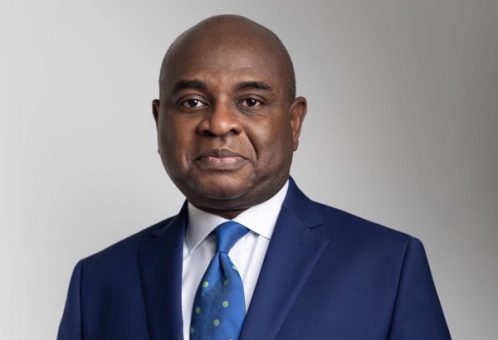
Bluecode Africa, the European payments infrastructure operator backed by leading US and European institutional investors, has named Prof Kingsley Chiedu Moghalu as Chairman of the Advisory Board of its Nigerian subsidiary, Bluecode Payments Nigeria Limited as the company formally enters the Nigerian market.
The appointment was jointly announced by Chris Pirkner, Founder of Bluecode, and Odin Krismayr, Managing Director of Bluecode Africa, who described it as a foundational governance decision for the company’s Nigerian and continental operations.
Moghalu served as Deputy Governor of the Central Bank of Nigeria from 2009 to 2014, heading the Financial System Stability and Operations Directorates at different periods.
He led the team that introduced the unique-identifier Bank Verification Number (BVN), enrolling 50 million banking users, simplifying Know Your Customer (KYC) procedures, and doubled Nigeria’s financial inclusion rate from 33 to 60 per cent.


Edo Queens Win 2025/26 NWFL Title

World Cup: Japan Holds Netherlands To 2-2 Draw

Police begins enforcement on vehicles with covered number plates

Tech Expert, Zuckerberg trains with UFC champions, Adesanya, Alexander

Organ Trafficking: Ekweremadu bags 10 years in UK prison

SAINT OBI: Between his marriage and his death
-

 Opinions3 days ago
Democracy Still Struggling 33 Years After June 12, PDP Laments by Comrade Ini Ememobong
-

 Crime2 days ago
Bandits Kill 19 Farmers, Injure 12 Others in Fresh Attack in Zamfara
-

 Crime2 days ago
BREAKING: Retired General Dies in Kidnappers’ Captivity, Demand Release of Gang Members
-

 Sports5 hours ago
World Cup: Sweden beats Tunisia 5-1
-

 Sports2 days ago
Balogun: This is something I dreamed of for a long time
-

 Sports3 days ago
FIFA World Cup Day 2: Canada holds 1-1 Bosnia-Herzegovina
-

 Sports2 days ago
FIFA World Cup 2026 Day 3: Qatar draws Switzerland 1: 1
-
 News4 hours ago
DHQ vows justice for slain retd Gen Rabe