
News
HOW YOUR PROPERTY PORTFOLIO SHOULD LOOK LIKE IN 2024 BY DENNIS ISONG


Today, we’re delving into the realm of real estate, specifically focusing on how your property portfolio should shape up in 2024.
Whether you’re a seasoned investor with a track record spanning five, ten, or just a couple of years, or if you’ve taken your initial steps into investing this year, this discussion is tailored to guide you through the nuances of crafting a property portfolio that aligns with the opportunities and challenges that the year 2024 holds.
It’s a practical example designed to offer insights regardless of your level of experience in the real estate journey. So, let’s embark on this insightful exploration together.
- CASH FLOW REAL ESTATE
Real estate is like having money-making machines. You buy properties and they make you money regularly. There are three main ways they do this:
• Rental Income:You can own a house or apartment and let someone else live there. They pay you rent every month, and that’s your income.
• Short-Term Rentals:If you own a place in a cool location, you can rent it out for a short period, like a vacation home. People pay good money for short stays.
• Equity-Based Returns: This is like having a share in a property. Even if you don’t own the whole thing, you still get a piece of the profit.
It’s like having different money streams – some from homes, some from businesses, and even some from farms.
If you own a place in a cool location, you can rent it out for a short period, like a vacation home. People pay good money for short stays.
2. LAND BANKING:Imagine buying land like planting seeds for the future. Here’s how:
• High-Yield: Some lands grow in value super fast. You buy low, and before you know it, it’s worth a lot more. Quick and exciting!
• Joint Venture (JV): Team up with others to make something big. You have the land, they have the skills to build. Everyone wins.
• Short-Flip:Buy land, hold it for a bit, and then sell it quickly for a profit. It’s like the fast lane of land investing.
It’s like being a smart farmer – planting seeds in different fields, each with its own strategy.
3.STRATEGIC POSITIONINGThink of real estate like playing a game of chess. You want to position your pieces (properties) in the right places:
• High-End Zone: It’s like the VIP area. People pay big money to live or do business there. Eg Ikoyi
• Student Zones: Where there are students, there’s always a need for housing. Universities and colleges are like gold mines for real estate.
• Business Areas: If there are offices and companies, there’s a need for commercial spaces. Invest where the businesses are.
• Upcoming Regions:Like predicting the next big thing. If you can spot an area on the rise, investing there can bring huge returns eg epe ,ibeju lekki
It’s like placing your chess pieces wisely on the board to win the game.
Let’s talk about addition tips that will help you;
• PORTFOLIO MANAGEMENT:
Managing your real estate portfolio is like taking care of a garden:
• Check Your Plants (Current Investments): See how your properties are doing. Are they growing well or need attention?
• Balance Your Garden (Real Estate Types): Like having a mix of flowers, veggies, and fruits. Balance different types of real estate for the best results.
• Get Professional Gardeners (Portfolio Managers): Sometimes, you need experts to help your garden flourish. Similarly, professionals can manage your portfolio for better outcomes.
It’s like having a beautiful garden that keeps growing and blooming.
• LONG-TERM PLANNING:
Planning your real estate journey is like mapping out a trip:
• Careful Analysis: Study the map and plan your route. Similarly, analyze your options and plan your investments.
• Consider Different Stops (Cash Flow, Land, Positioning): Like planning where to rest and refuel, think about your cash flow, land investments, and where you position your properties.
• Create a Roadmap:Plan for the long term, just like planning a road trip. Know where you want to go and how to get there.
It’s like having a well-thought-out plan, ensuring a smooth and successful journey in real estate.
So, as we wrap up our chat about building your property portfolio for 2024, remember, it’s like creating a map for your real estate journey. Whether you’ve been in the game for a while or you’re just starting out, the key is to mix things up – a bit of renting here, a piece of land there, and maybe even a joint venture.
Don’t forget to position your properties wisely, like chess pieces on a board.
Taking a closer look at your existing investments and balancing them out can lead to a portfolio that’s not just strong but also ready for whatever the real estate world throws your way.
Planning for the long term is like setting out on a road trip with a well-thought-out map – it may take time, but it’s worth it.
So, let’s get out there and turn those property dreams into reality. Unlock the door to your success in real estate – the keys are in your hands.
Happy investing!
Dennis Isong is a TOP REALTOR IN LAGOS.He Helps Nigerians in Diaspora to Own Property In Lagos Nigeria STRESS-FREE. For Questions WhatsApp/Call 2348164741041

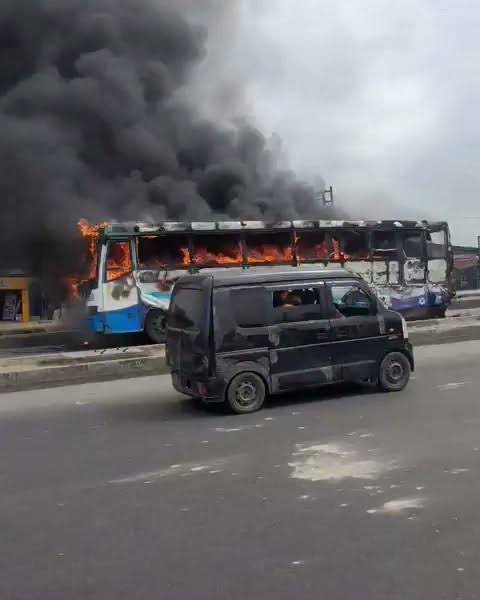
An angry mob has set a Bus Rapid Transit (BRT) bus on fire after it reportedly crushed a commercial motorcyclist to death at Ogolonto Bus Stop along Ikorodu Road in Lagos State.
The incident occurred on Friday, October 16, 2026. Eyewitness accounts and social media reports indicate that the motorcyclist was riding alone along the restricted BRT lane when the collision happened. He died at the scene.
Enraged residents and youths then attacked the bus driver and set the vehicle ablaze. Police officers and officials of the Lagos Neighbourhood Safety Corps (LNSC), who were nearby, intervened promptly and rescued the driver unharmed.
The identity of the deceased motorcyclist and the exact circumstances of the crash had not been officially confirmed at the time of filing this report. It was also unclear whether any arrests had been made in connection with the burning of the bus.
News
ARISE News Wins Seven Honours At Nigerian Broadcasters Merit Awards
The awards recognised the network’s achievements in television journalism and programming, with ARISE News winning the Best TV Channel (Viewer’s Choice) category.
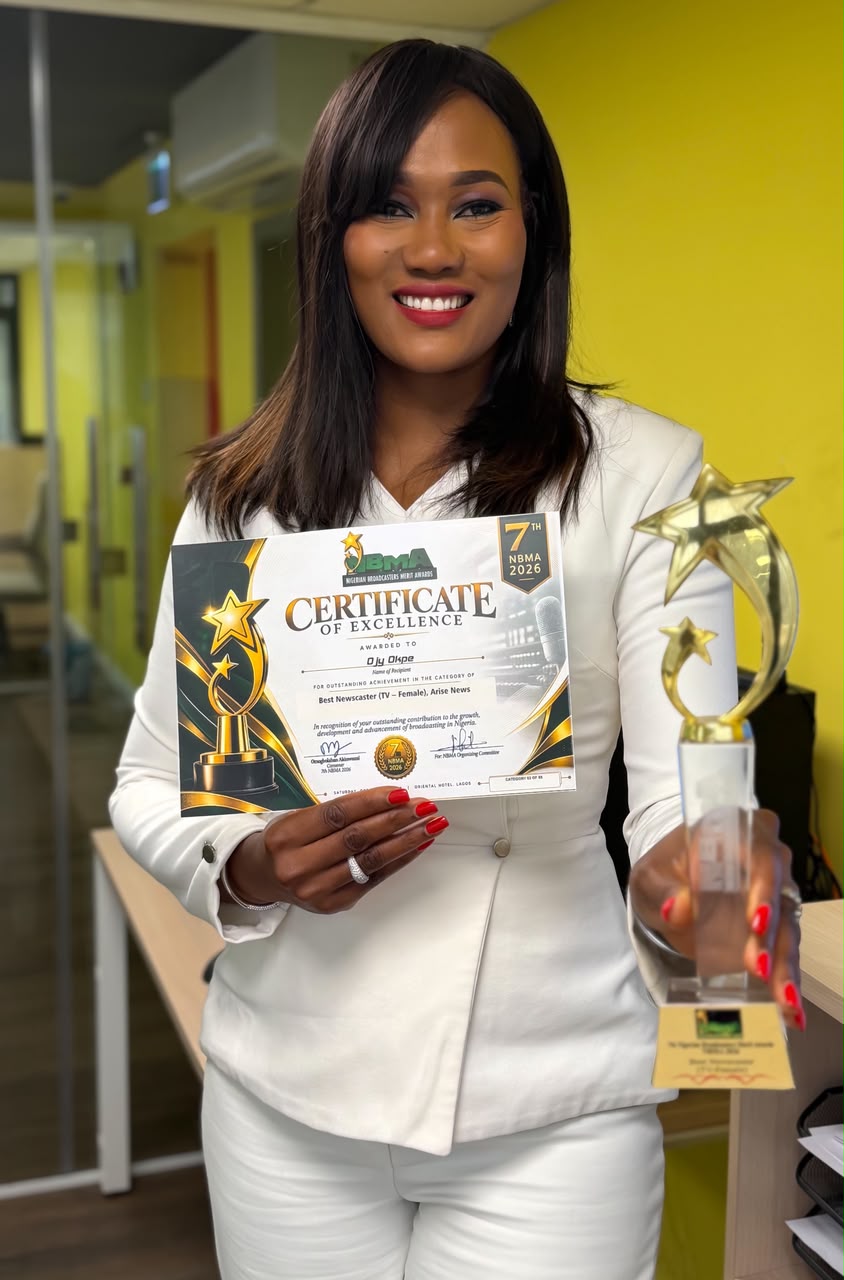
• ARISE News Anchor and host of What’s Trending Ojy Okpe was named Best Newscaster (TV – Female)
ARISE News has emerged as one of the major winners at the just ended Nigerian Broadcasters Merit Awards (NBMA).
ARISE News won seven honours across television broadcasting, news reporting, presentation and production during the ceremony.
The awards recognised the network’s achievements in television journalism and programming, with ARISE News winning the Best TV Channel (Viewer’s Choice) category.
The network’s flagship breakfast programme, The Morning Show, also won the Best TV Talk Show award, further strengthening its recognition in television broadcasting.
ARISE News Anchor and host of What’s Trending Ojy Okpe was named Best Newscaster (TV – Female).
Rufai Oseni was named Nigerian Broadcaster of the Year (Male), while Vimbai Mutinhiri-Ekpeyong received the Nigerian Broadcaster of the Year (Female) award.
The recognition extended to the network’s newsroom, with Ovieteme George winning Best TV News Reporter (Male) for his contributions to television news reporting.
Behind the camera, Sam Adeyemi received the Best Camera Operator/Cinematographer award, recognising his work in television production and visual storytelling.
News
Meta removes 3.7 million accounts in West Africa scam crackdown
The joint operation led to 28 arrests, identified more than 30 suspected scam centres and rescued 117 people allegedly trafficked and forced to work in scam compounds in Ghana.
Meta, the parent company of Facebook and Instagram, has removed more than 3.7 million Facebook and Instagram accounts, pages and groups linked to suspected scam networks operating in West Africa.
The joint operation led to 28 arrests, identified more than 30 suspected scam centres and rescued 117 people allegedly trafficked and forced to work in scam compounds in Ghana.
The company announced the crackdown in a statement on Tuesday, October 13, 2026. It involved 14 technology companies and law enforcement agencies from 10 countries.
The United Kingdom’s National Crime Agency coordinated the operation with the US Department of Justice, the Federal Bureau of Investigation and other agencies. Nigerian authorities were involved.
Other countries included Ghana, Australia, Canada, New Zealand and India.Tech companies that took part included Google, Microsoft, OpenAI, Coinbase, Starlink and Adobe.
Meta said the partnership let participants share intelligence across digital platforms, countries and financial systems to identify criminal networks.


JUST IN: Mob Sets BRT Bus Ablaze After Motorcyclist’s Death in Lagos

BREAKING: DSS Arrests Fugitive Maina Son, Hands Him to EFCC

BREAKING: 5 Arrested Over Imo NYSC Abduction

BREAKING: Lagos Govt Declares Today, Thursday Work-Free to Mark 2026 Ìṣẹ̀ṣe Day

Tech Expert, Zuckerberg trains with UFC champions, Adesanya, Alexander

Organ Trafficking: Ekweremadu bags 10 years in UK prison
-

 Business3 days ago
Naira Exchange Rates Friday, October 16
-
 Crime2 days ago
BREAKING: 5 Arrested Over Imo NYSC Abduction
-

 News3 days ago
Meta removes 3.7 million accounts in West Africa scam crackdown
-
 News3 days ago
ARISE News Wins Seven Honours At Nigerian Broadcasters Merit Awards
-
 Crime2 days ago
BREAKING: DSS Arrests Fugitive Maina Son, Hands Him to EFCC
-
 News2 days ago
JUST IN: Mob Sets BRT Bus Ablaze After Motorcyclist’s Death in Lagos