
International
Hong Kong police can now demand phone passwords under new national security rules
Those who refuse could face up to a year in jail and a fine of up to HK$100,000 ($12,700; £9,600), and individuals who provide “false or misleading information” could face up to three years in jail.


Image credit : Getty images
Hong Kong police can now demand phone or computer passwords from those who are suspected of breaching the wide-ranging National Security Law (NSL).
Those who refuse could face up to a year in jail and a fine of up to HK$100,000 ($12,700; £9,600), and individuals who provide “false or misleading information” could face up to three years in jail.
It comes as part of new amendments to a bylaw under the NSL that the government gazetted on Monday.
The NSL was introduced in Hong Kong in 2020, in wake of massive pro-democracy protests the year before.
Authorities say the laws, which target acts like terrorism and secession, are necessary for stability – but critics say they are tools to quash dissent.
The new amendments also give customs officials the power to seize items that they deem to “have seditious intention”.
Monday’s amendments ensure that “activities endangering national security can be effectively prevented, suppressed and punished, and at the same time the lawful rights and interests of individuals and organisations are adequately protected”, Hong Kong authorities said on Monday.
Changes to the bylaw was announced by the city’s leader, John Lee, bypassing the city’s legislative council
(BBC)









International
Oil jumps 7% to above $100 ahead of US blockade of Strait of Hormuz
U.S. Central Command said U.S. forces would begin implementing the blockade of all maritime traffic entering and exiting Iranian ports at 10 a.m. ET (1400 GMT) on Monday.
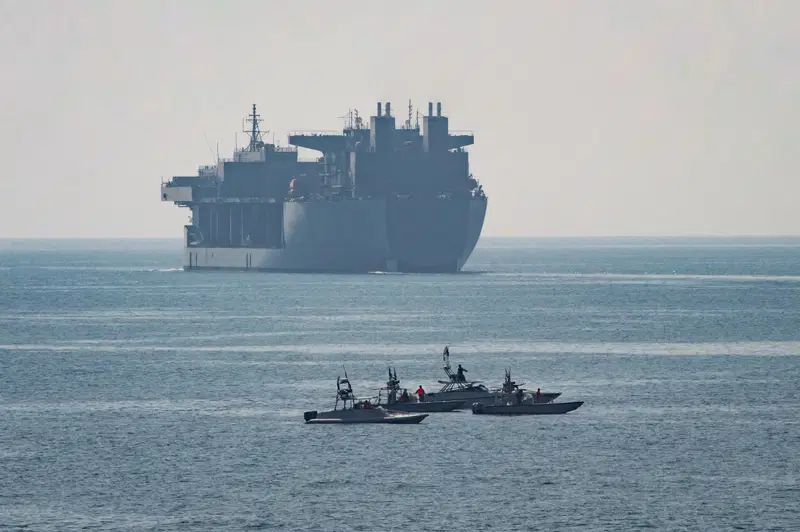
Oil prices jumped above $100 a barrel on Monday as the U.S. Navy prepared to block ships from reaching Iran via the Strait of Hormuz, a move that could restrict Iranian oil exports, after Washington and Tehran failed to reach a deal to end the war.
U.S. Central Command said U.S. forces would begin implementing the blockade of all maritime traffic entering and exiting Iranian ports at 10 a.m. ET (1400 GMT) on Monday.
Reuters reported that Brent crude futures rose $6.71, or 7.05%, to $101.91 a barrel by 0104 GMT after settling 0.75% lower on Friday.
U.S. West Texas Intermediate was at $104.16 a barrel, up $7.59, or 7.86%, following a 1.33% loss in the previous session.
“The market is now largely back to conditions before the ceasefire, except now the U.S. will block the remaining up to 2 million barrels per day Iranian linked flows through the Strait of Hormuz as well,” said Saul Kavonic, head of energy research at MST Marquee.
President Donald Trump said on Sunday the U.S. Navy would start blockading the Strait of Hormuz, raising the stakes after marathon talks with Iran failed to reach a deal to end the war, jeopardising a fragile two-week ceasefire.
International
Iran reopens Strait of Hormuz following two-week cease-fire agreement with Trump
Pakistan, which has mediated between Tehran and Washington, said that an immediate ceasefire between Iran and the US had taken effect.
Iranian Foreign Minister Abbas Araghchi said safe passage through the Strait of Hormuz would be possible for two weeks in coordination with Iran’s armed forces “and with due consideration of technical limitations.”
The development follows a two-week ceasefire announced by U.S. President Donald Trump, the Tasnim news agency, which is close to the Islamic Revolutionary Guard Corps (IRGC), reported early on Wednesday.
Pakistan, which has mediated between Tehran and Washington, said that an immediate ceasefire between Iran and the US had taken effect.
Prime Minister Shehbaz Sharif wrote on X that the Islamic Republic of Iran and the U.S., along with their allies, had agreed to an “immediate ceasefire everywhere,” including in Lebanon.“
Trump had made reopening the waterway a condition for the ceasefire and had threatened to target Iran’s energy sector and infrastructure, including bridges, if Tehran failed to comply, setting a deadline of 0000 GMT.
The Strait of Hormuz, crucial to global oil and gas trade, has been largely closed since the United States and Israel launched large-scale attacks on Iran on Feb. 28.
According to a senior U.S. official, Israel will also adhere to what Trump described as a “double sided CEASEFIRE.”

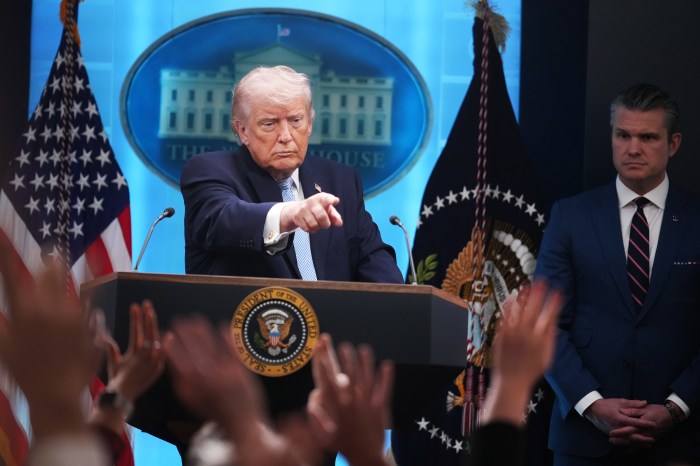
Oil prices climbed sharply while global stocks wavered and mostly declined on Tuesday as President Donald Trump’s looming deadline for Iran to reopen the Strait of Hormuz or face escalated U.S. strikes heightened geopolitical tensions and investor anxiety.
Brent crude futures rose about 1% to trade near $111 per barrel, with U.S. West Texas Intermediate crude also pushing higher amid fears that prolonged disruption to the critical waterway through which a significant portion of global oil supplies passes could worsen energy shortages. Oil has surged more than 50% since the conflict intensified.
Meanwhile, major U.S. stock indexes showed mixed but largely cautious trading, with many shares slipping as investors weighed the risk of further military escalation, including potential strikes on Iranian power plants and infrastructure.
European and Asian markets were similarly tentative, reflecting broader concerns over inflation, energy costs, and economic fallout from the ongoing Middle East conflict.
Trump has set a firm deadline of 8 p.m. ET Tuesday (1 a.m. GMT Wednesday) for Iran to reach a deal and reopen the strait, warning of decisive action if unmet. He has threatened to “decimate” Iranian bridges and power plants, stating the country “could be taken out in one night.
”Iran has rejected recent ceasefire proposals, calling instead for a permanent end to hostilities, while markets remain on edge with no clear resolution in sight.
Analysts warn that sustained high oil prices could fuel global inflation and slow economic growth, though some investors still hope for a last-minute diplomatic breakthrough.
The developments come as the International Energy Agency has described the current oil and gas crisis linked to the Hormuz blockade as potentially more severe than previous major shocks combined.


Oil jumps 7% to above $100 ahead of US blockade of Strait of Hormuz

ADC To Inaugurate Newly Elected States Executives May 12

NAF Jilli Airstrike: Bomb Don’t Know Who’re Terrorists

Tech Expert, Zuckerberg trains with UFC champions, Adesanya, Alexander

Organ Trafficking: Ekweremadu bags 10 years in UK prison

SAINT OBI: Between his marriage and his death
-

 News3 days ago
CBN Debunks Viral Fake News of ₦5,000 Banknote Featuring President Tinubu’s Image
-

 Politics3 days ago
2027: Bode George warns INEC, Judiciary Drifting Nigeria Towards ” One Party Rule”
-
 Business3 days ago
DR Congo Central Bank Announces Ban on Foreign Currency Cash Transactions from 2027
-

 Politics3 days ago
NBA Cautions Lawyers Against Involvement in Political Party Disputes
-

 Business2 days ago
Supreme Court Overturns Appellate’s Ruling on $2bn Debt Recovery Battles Nestoil /Neconde Energy vs FBNQuest Merchant Bank
-
 News1 day ago
FG Unmasks 60 Persons and Corporates Behind Terrorism Financing, Order Banks To Freeze Their Accounts
-
 News2 days ago
Plateau Community Laments ‘ No Security To Repel Attackers’
-

 News2 days ago
Breaking: INEC postpones voter revalidation exercise till after 2027 elections