
Health
Groundbreaking test identifies cancer, a year before tumor formation
This screening method has been shown to detect all types of cancer early, from a simple blood test, even before tumors have formed.


A Mumbai-based biotech firm, Epigeneres, and Singapore-based diagnostic company Tzar Labs have co-developed a new blood test called HrC, which can detect specific markers showing changes in stem cells’ behavior before cancer mutations occur. This new biopsy technique is a major breakthrough in the fight against cancer, as it can identify cancer up to a year before tumors have formed.
The trial of 1,000 patients proved 100% accurate, identifying cancer types and the stage of cancer once it had developed, including in the control group, who were thought to be cancer-free. The blood test is designed to detect specific markers that are precursors to cancer mutations.
Leading universities and hospitals across the UK, including Imperial College, Manchester University, and Cardiff University, are planning to replicate the findings with “proof of concept” trials. St Bartholomew’s Hospital, London, is also set to conduct a larger study.
Dr. Sherif Raouf, a consultant gastrointestinal cancer specialist at St Barts, said: “Picking up cancer at the earliest stage is the holy grail of cancer medicine. To have one blood test to detect the presence of cancer at the earliest stage – or even before it develops – could save many lives. This could be a game-changer.”
According to Ashish Tripathi, CEO of Tzar Labs, this screening method has been shown to detect all types of cancer early, from a simple blood test, even before tumors have formed. It is the first prognostic or predictive test for cancer in the world.




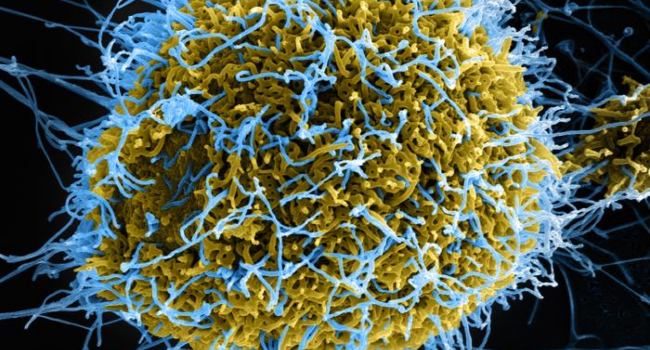
The Federal Government has confirmed Nigeria’s first case of Ebola virus disease in the current regional outbreak, authorities announced Tuesday.
A woman who recently arrived in the country on an international flight from Uganda tested positive after being treated for several days at a private hospital in the Federal Capital Territory (FCT), Abuja. Laboratory confirmation was received on October 20.
The patient is now in isolation and receiving medical care. Health officials have identified 44 close contacts so far and begun contact tracing. These include healthcare workers, other patients, caregivers, and travel contacts.
Coordinating Minister of Health and Social Welfare Prof. Muhammad Ali Pate said the Federal Ministry of Health, the Nigeria Centre for Disease Control and Prevention (NCDC), and FCT health authorities are working together to contain the infection and prevent further spread. Surveillance has been intensified, and the hospital where the patient was treated is receiving support to strengthen infection prevention and control measures.
Pate urged healthcare facilities nationwide to maintain a high index of suspicion, promptly isolate suspected cases, and report them immediately. He also called on the public to cooperate with contact-tracing teams, avoid spreading unverified information, and refrain from stigmatising those who may have been exposed.
Nigeria successfully contained an Ebola outbreak in 2014. Officials say the country has the experience and public health systems needed to respond to this case. The confirmation comes amid a wider regional outbreak linked to cases in the Democratic Republic of the Congo and elsewhere.
Health
Millions of bedbugs crawl out of mattresses and walls in huge outbreak
Bedbugs can enter homes on clothes, luggage, or second hand furniture – and “hide” in mattresses or walls, according to the NHS.


Millions of bedbugs were crawling out of mattresses in what a pest controller said was the worst outbreak he had seen in 38 years.
They were even in the walls and under the wallpaper, with the mattresses and bed frames needing to be incinerated.
Cardiff pest controller Gareth Davies had to wear full protection as his team tackled the problem in the Canton area of the city, using a specialist vacuum cleaner to collect millions of the bugs.
It came after they had tackled a large cockroach outbreak last month in a scene he likened to a horror movie.
“This house was just horrific,” he told BBC Radio Wales Breakfast.
“Hundreds of thousands of them when you lifted the mattresses up.
“They were coming out of the wallpaper, it was horrendous.”
Bedbugs can enter homes on clothes, luggage, or second hand furniture – and “hide” in mattresses or walls, according to the NHS.
Credit: BBC
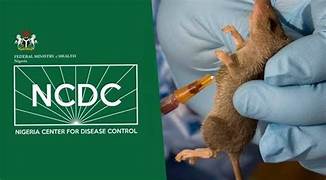
The Nigeria Centre for Disease Control and Prevention (NCDC) has confirmed that Lassa fever has claimed 259 lives and infected 1,086 people across 24 states and 118 local government areas so far in 2026.
In its latest Lassa Fever Situation Report for epidemiological week 36 (August 31 to September 6), the agency said the figures represent a case fatality rate of 23.9 percent — significantly higher than the 18.6 percent recorded during the same period in 2025.
Twelve new confirmed cases were recorded in week 36, a decline from the 18 cases reported the previous week. The fresh infections were detected in Ondo, Edo and Kogi states.
Five states continue to bear the heaviest burden, accounting for 87 percent of all confirmed cases this year: Bauchi, Ondo, Taraba, Benue and Edo. People aged 21 to 30 remain the most affected age group.
The NCDC noted that no new infections among healthcare workers were recorded during the latest reporting week. The agency continues to urge the public to maintain hygiene, avoid contact with rodents and their droppings, and seek early medical care if symptoms appear.


JPMorgan Eyeing Entry Into Nigeria’s Banking Industry

How I steal ATM users’ PINs, defraud them

NCC, CBN To Warn Companies By Flagging Fraudulent Phone Numbers

BREAKING: Lagos Govt Declares Today, Thursday Work-Free to Mark 2026 Ìṣẹ̀ṣe Day

Tech Expert, Zuckerberg trains with UFC champions, Adesanya, Alexander

Organ Trafficking: Ekweremadu bags 10 years in UK prison
-

 News2 days ago
JUST IN: Ex-Delta Gov Uduaghan Dies at 71, Oborevwori Mourns
-

 Sports2 days ago
Mbappé wins Onze d’Or award for 2025/26 season
-

 Business3 hours ago
Naira Exchange Rates Wednesday, October 21, 2026
-

 Sports2 days ago
Ronaldo Gets 30-Day Suspension For Portugal Camp Walkout
-

 Business2 hours ago
Currency Words You Should Know
-
 Business2 hours ago
NCC, CBN To Warn Companies By Flagging Fraudulent Phone Numbers
-
 Health16 hours ago
BREAKING: Nigeria Confirms First Ebola Case
-
 Business1 hour ago
How I steal ATM users’ PINs, defraud them