
International
Fifty People Die In Pakistan Monsoon Floods

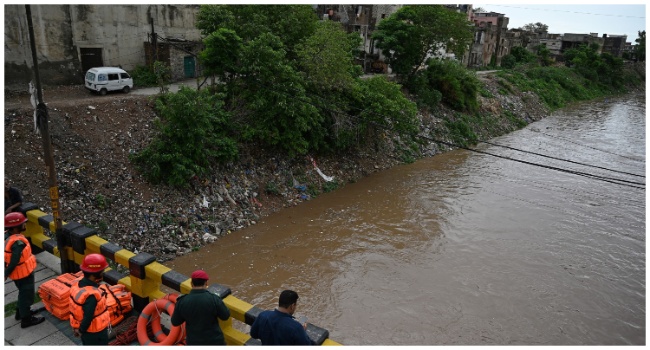
At least 50 people, including eight children, have been killed by floods and landslides triggered by monsoon rains that have lashed Pakistan since last month, officials said Friday.
The summer monsoon brings South Asia 70-80 percent of its annual rainfall between June and September every year.
It is vital for the livelihoods of millions of farmers and food security in a region of around two billion people — but it also brings landslides and floods.
“Fifty deaths have been reported in different rain-related incidents all over Pakistan since the start of the monsoon on June 25,” a national disaster management official told AFP, adding that 87 people were injured during this period.
The majority of the deaths were in eastern Punjab province, and were mainly due to electrocution and building collapses, official data showed.
In northwestern Khyber Pakhtunkhwa province, the bodies of eight children were recovered from a landslide in the Shangla district on Thursday, according to the emergency service Rescue 1122’s spokesman Bilal Ahmed Faizi.
He said rescuers were still searching for other children trapped in the debris.
Officials in Lahore, Pakistan’s second-largest city, said it had received record-breaking rainfall on Wednesday, turning roads into rivers and leaving almost 35 percent without electricity and water this week.
The Meteorological Department has predicted more heavy rainfall nationwide in the days ahead and warned of potential flooding in the catchment areas of Punjab’s major rivers.
The province’s disaster management authority said Friday it is working to relocate people living along the waterways.
Scientists have said climate change is making seasonal rains heavier and more unpredictable.
Last summer, unprecedented monsoon rains put a third of Pakistan under water, damaging two million homes and killing more than 1,700 people.
Storms killed at least 27 people, including eight children, in the country’s northwest early last month.
Pakistan, which has the world’s fifth largest population, is responsible for less than one percent of global greenhouse gas emissions, according to officials.
However, it is one of the most vulnerable nations to the extreme weather caused by global warming.

A commercial flight from Dubai to Tel Aviv was forced to make an emergency landing in Saudi Arabia on Wednesday after a physical fight broke out between its two pilots in the cockpit.
The FlyDubai Boeing 737, carrying about 174–180 passengers, plunged thousands of feet mid-flight and transmitted emergency signals, including one indicating possible unlawful interference. This briefly raised fears of a hijacking and prompted Israel to scramble fighter jets.
According to officials and passenger accounts, the altercation between the pilots turned violent, with reports of a knife being involved and blood seen in the cockpit. Passengers and crew intervened to subdue one of the pilots. The aircraft eventually landed safely in Tabuk, Saudi Arabia. All passengers were reported unharmed, though both pilots sustained injuries and were taken to hospital.
Authorities are investigating the incident.

Africa’s richest man, Aliko Dangote, and Kenyan President William Ruto are currently breaking ground on a landmark $16 billion oil refinery in Lamu, on Kenya’s northern coast.
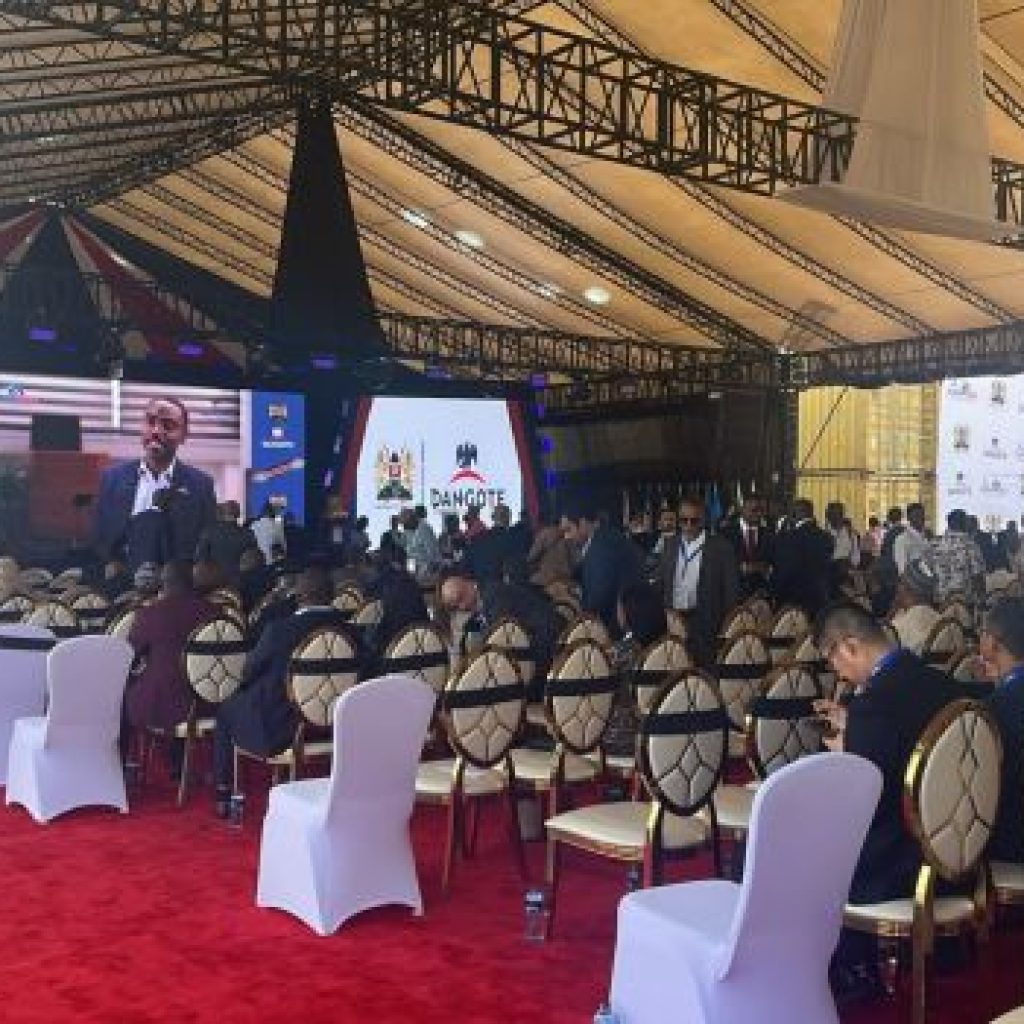
The ceremony, held on Wednesday, September 30, 2026, formally launches construction of the 700,000-barrel-per-day facility, which is set to become the largest refinery in East Africa and the second-largest on the continent after Dangote’s plant in Lekki, Nigeria. The project aims to replicate the success of the Nigerian refinery by processing crude for regional markets, reducing East Africa’s long-standing dependence on imported refined petroleum products, lowering fuel costs, and conserving scarce foreign exchange.
Several African leaders are attending the groundbreaking, including the presidents of Uganda and Ethiopia, along with other regional heads of state and former Nigerian President Olusegun Obasanjo. The event underscores growing continental efforts to process raw materials locally rather than exporting crude and importing finished fuels.
Once completed around 2030, the Lamu refinery is expected to supply Kenya and neighbouring countries such as Uganda, South Sudan, Rwanda, and others. Officials project it will create between 50,000 and 60,000 jobs and stimulate related industries, including petrochemicals and bitumen production. The complex will also feature a 1,000-megawatt power plant, with plans to sell a portion of the electricity to the Kenyan government.
Dangote has offered East African governments a combined 30% equity stake in the project. Financing is structured with roughly 70% debt and 30% equity. The facility is located near Lamu’s deep-water port, chosen for its strategic advantages in handling large-scale industrial operations.

While the project has faced some local land-related protests and a court order maintaining the status quo pending a hearing, the groundbreaking is proceeding as planned. Dangote has dismissed the challenges and reaffirmed that construction will move forward, with the plant targeted for completion in under four years.
The development is being hailed as one of Kenya’s biggest infrastructure investments since independence and a major step toward regional energy security and industrialisation.
International
Death toll in South Africa bar shooting rises to 18, police say
The motive for the attack was not clear but the area is reportedly gripped by rivalry between gangs involved in illicit mining for gold.

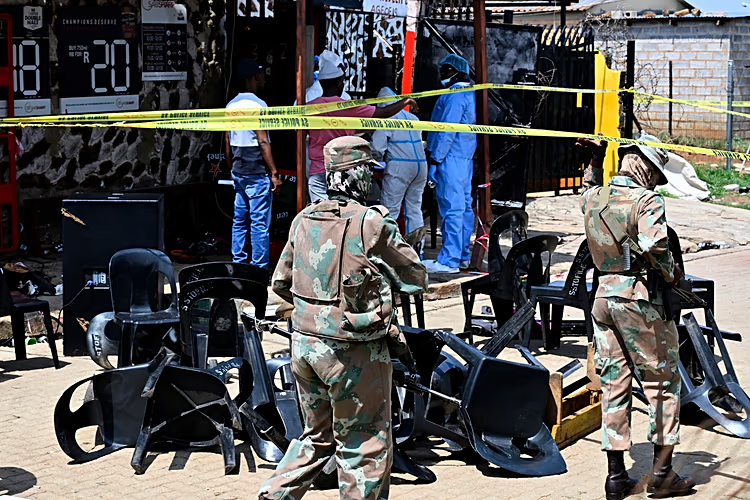
• Forensic officers and the army at the scene of a mass shooting at a bar in Wedela township, 27 September, 2026 AP Photo
The death toll from a mass shooting at a South African tavern has risen to 18 after one person died in hospital, police said on Monday, announcing at least two of the dead were Lesotho nationals.
The shooting west of Johannesburg late on Saturday was part of a bloody weekend in the crime-weary country, with 10 people killed in another mass shooting in Cape Town on Sunday.
Eight gunmen armed with assault rifles stormed the bar in the semi-rural township of Wedela, around 80 kilometres from central Johannesburg, and killed13 men and four women, police said.
“One more victim has died in hospital, bringing the total number of deceased to 18,” they said.
“Only four of the deceased have been identified, two South Africans and two Lesotho nationals.”
The motive for the attack was not clear but the area is reportedly gripped by rivalry between gangs involved in illicit mining for gold.
Thousands of unregistered miners operate in abandoned mining shafts in South Africa, many coming from across southern Africa, including the kingdom of Lesotho which is within South Africa.


Plane Makes Emergency Landing After Pilots Fight in Cockpit

Atiku Demands Release of 5 Arrested Over ‘Tinubu Must Go’ T-Shirts

ON-GOING: Dangote $16 billion refinery groundbreaking holds in Kenya (Images)

Tech Expert, Zuckerberg trains with UFC champions, Adesanya, Alexander

Organ Trafficking: Ekweremadu bags 10 years in UK prison

SAINT OBI: Between his marriage and his death
-

 Business3 days ago
NGX Debuts Invest WhatsApp Channel
-

 Business3 days ago
SEC Highlights Focus of National Capital Market Conference 2026
-

 Sports3 days ago
Flamingos win WAFU B U-17 women’s tournament
-

 Entertainment3 days ago
Madonna and Taylor Swift win big at the MTV VMAs
-

 Business3 days ago
Naira To Dollar, Pound, Euro …Today, September 28
-
 Business3 days ago
Ghana Moves to Cut Domestic Airfares as Ticket Prices Stay High
-

 News3 days ago
Nigeria is 66, Thursday October 1
-
 News2 days ago
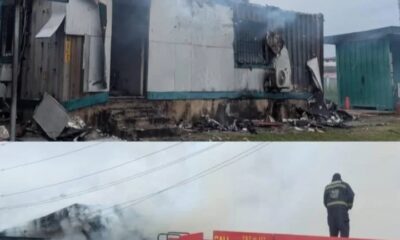
JUST IN: Fire Engulfs Lagos Customs Command Office