
Business
Why Cement Is Expensive in Nigeria – PAMA
Using Dangote Cement as a case study, Ajayi-Kadir disclosed that the company operates in about 11 African countries, with an installed production capacity of 55 million tonnes.


The Pan-African Manufacturers Association (PAMA) has attributed the rising prices of cement in Nigeria to a combination of production, energy, foreign exchange, financing and distribution challenges confronting manufacturers.
As of October 2026, the retail price of a standard 50kg bag of cement in Nigeria generally ranges between ₦11,000 and ₦15,000, depending on the brand, location and volume purchased.
While Dangote Cement sells between ₦12,000 and ₦15,000 per bag, BUA Cement goes for between ₦11,500 and ₦14,500. Lafarge Africa (HBM) sells between ₦10,500 and ₦13,500.
Co-Interim Secretary-General of PAMA, Segun Ajayi-Kadir, explained that cement manufacturers face numerous production and distribution challenges, which contribute significantly to the rising prices of the commodity across the country.
According to him, beyond tariffs, infrastructure deficits, exchange-rate volatility and high interest rates, cement manufacturing is inherently energy-intensive, capital-intensive and relatively expensive to transport.
“Raw materials are often locally available, but energy, maintenance, equipment, logistics and finance can materially affect the economics of production. Scale also matters because fixed costs must be spread across sufficient output,” he said.
Using Dangote Cement as a case study, Ajayi-Kadir disclosed that the company operates in about 11 African countries, with an installed production capacity of 55 million tonnes.
In 2025, the company produced 26.79 million tonnes and sold 27.47 million tonnes of cement and clinker.
Energy Costs Drive Manufacturing Expenses
An examination of the company’s financial statements provides an insight into the cost pressures confronting cement manufacturers.
Dangote Cement’s manufacturing costs stood at ₦1.634 trillion in 2025, with fuel and power accounting for ₦681.9 billion, representing approximately 42 per cent of total manufacturing expenses.
Materials accounted for about 24 per cent, plant maintenance 10 per cent, salaries and related expenses nine per cent, while depreciation and amortisation represented another nine per cent.
Using the 2025 average official exchange rate of approximately ₦1,555 to the dollar, the company’s total manufacturing costs amounted to roughly $1.05 billion, equivalent to about $39 per tonne produced.
Fuel and power alone accounted for approximately $439 million, or $16.4 per tonne.
The figures underscore the significant influence of energy costs on cement production.
For instance, a 20 per cent increase in fuel and power expenses, assuming other variables remain unchanged, would add approximately $88 million to the company’s manufacturing costs, equivalent to an additional $3.3 per tonne.
This would increase manufacturing costs per tonne by approximately eight per cent.
The implication is that addressing energy costs requires more than reducing electricity tariffs. Manufacturers must also explore energy efficiency, alternative fuels, captive power generation, improved production processes and a more diversified energy mix.
Ultimately, reliable and affordable energy remains essential to competitive industrial production.
Foreign Exchange and Local Sourcing
Foreign-exchange exposure is another major consideration.
Dangote Cement operates across several African countries with different currencies, while its consolidated financial statements are reported in naira.
Consequently, imported machinery, spare parts and other production inputs expose the company to exchange-rate fluctuations, which can increase operating costs.
However, the company’s procurement strategy offers an indication of how local sourcing can help reduce such exposure.
In 2024, more than 75 per cent of its procurement expenditure went to local vendors, reflecting efforts to reduce import dependence and foreign-exchange risks.
Nevertheless, local sourcing can only improve manufacturing competitiveness when domestic suppliers are capable of delivering quality materials at competitive prices and in sufficient quantities.
The priority, therefore, should be to develop competitive domestic supplier networks and strengthen local productive capacity rather than merely replacing imports without building the necessary industrial capabilities.
Transportation and Distribution Challenges
Logistics also play a significant role in determining the final price of cement.
Dangote Cement’s 2025 administration and selling expenses increased to ₦943.9 billion, with higher haulage costs identified as a major contributing factor.
Given the weight and bulk of cement, transportation costs are particularly significant. Factory locations, road infrastructure, access to ports, proximity to raw materials and distance to major consumer markets all influence the final delivered price.
The company’s expansion across African markets also illustrates the importance of production location in reducing distribution costs.
Its three-million-tonne-per-annum grinding plant in Côte d’Ivoire, commissioned in 2025, increased its group production capacity to 55 million tonnes.
The facility sold 60,400 tonnes during its initial production ramp-up period.
The investment demonstrates how establishing production facilities closer to regional markets can improve supply efficiency and reduce dependence on transporting products over long distances from a single production base.
The Policy Imperatives
The cost structure of cement manufacturing highlights the need for a more targeted industrial policy response.
Governments should prioritise reliable and affordable industrial energy, efficient road and port infrastructure, predictable foreign-exchange and trade policies, access to long-term industrial financing and the development of competitive domestic suppliers.
Regional economic integration also offers opportunities to improve manufacturing efficiency by enabling companies to access larger markets, increase production volumes and achieve economies of scale.
For Nigeria, the challenge goes beyond making cement available at affordable prices. It involves creating an industrial environment in which manufacturers can produce competitively, expand capacity, invest in technology and deliver products to consumers at reasonable costs.
Rather than relying excessively on incentives, policymakers must address the underlying structural constraints driving production and distribution expenses.
Reducing these costs is essential not only to making cement more affordable but also to supporting construction, infrastructure development, housing delivery and Nigeria’s broader industrialisation agenda.








Business
Kuda to layoff 40% workforce in Nigeria , six other countries
Co-founder and CEO Babs Ogundeyi said the restructuring is needed to improve operational efficiency and position the company for long-term profitability.
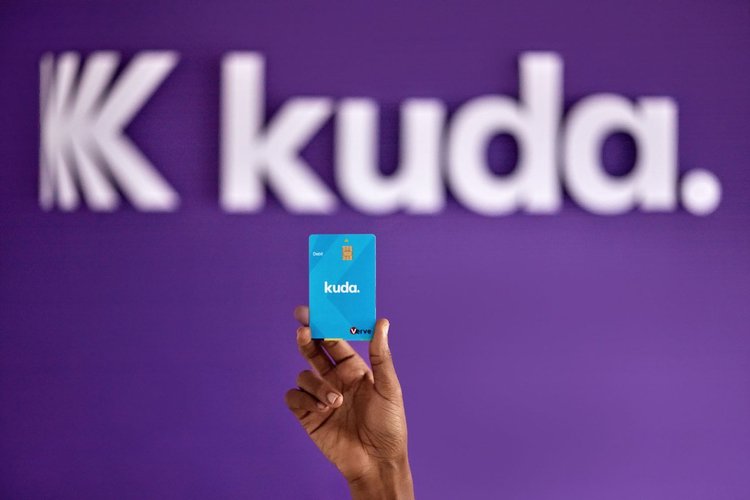
Kuda has announced plans to lay off about 40 employees across seven countries in its second round of job cuts in 2026.
Kuda currently employs about 500 people, with about 40 positions potentially affected. The cuts will affect approximately 7.5% of its workforce.
The countries are Nigeria, the United Kingdom, South Africa, Canada, Tanzania, Uganda and Ghana.
The digital bank is targeting group-wide profitability by 2027 and says customer deposits and services will not be affected.
Co-founder and CEO Babs Ogundeyi said the restructuring is needed to improve operational efficiency and position the company for long-term profitability.
Ogundeyi said investors increasingly expect financial returns rather than continued dependence on external funding.
Kuda’s Nigerian banking operation is already profitable, but the company wants the entire group to be profitable by 2027.
The CEO also linked the decision to higher regulatory capital requirements after the Central Bank of Nigeria approved Kuda’s national microfinance banking licence in January.
The licence requires a minimum paid-up capital of ₦5 billion.
Business
Fidelity Bank Designates Amuchie Next MD/ CEO
Amuchie brings more than 30 years of financial services experience to the role.

Fidelity Bank Plc has confirmed Stanley Chiedoziem Amuchie as its new Managing Director and Chief Executive Officer after the Central Bank of Nigeria approved the appointment.
He will take over on January 1, 2027 from Nneka Onyeali-Ikpe, whose tenure ends on December 31, 2026.
Amuchie currently serves as Executive Director and Chief Operations and Information Officer at the bank.
The handover is set for January 1, 2027.
Board Chairman Amaka Onwughalu said the board was confident in Amuchie’s ability to lead Fidelity Bank.
She pointed to his deep knowledge of the bank’s operations and broader industry experience, adding that his strategic insight would help the lender build on recent achievements and move into its next growth phase.
Onwughalu also paid tribute to outgoing chief executive Onyeali-Ikpe.
She credited her with steering the bank through a period of institutional transformation and improved competitiveness.
The board, she said, would work closely with Amuchie to drive innovation, operational efficiency and long-term sustainable growth.
Amuchie brings more than 30 years of financial services experience to the role.
His expertise covers financial management, treasury operations, capital raising and strategic execution.
He joined Fidelity Bank in January 2022 as Executive Director for Operations and Information Technology.
He contributed to the bank’s digital transformation drive and broader growth strategy.Before joining Fidelity Bank, he built much of his career at Zenith Bank Plc, where he rose to Group Chief Financial Officer.
His notable achievements include supporting Fidelity Bank’s acquisition of Union Bank UK, now rebranded FidBank UK, and playing a central role in the bank’s successful $400 million Eurobond refinancing.
Amuchie holds a First Class degree in Industrial Chemistry and a master’s degree in Corporate Governance.
He is a Fellow of the Institute of Chartered Accountants of Nigeria and an Honorary Senior Member of the Chartered Institute of Bankers of Nigeria.
He is also pursuing a PhD in Management of Technology and Innovation.

Black Market Rates
₦1465DOLLAR (USD)
₦1860POUND (GBP)
₦1550 EURO (EUR)
₦950 CANADIAN DOLLAR (CAD)
₦70 SOUTH AFRICAN RAND (ZAR)
₦350 UAE DIRHAM (AED)
₦190 CHINESE YUAN (CNY)
₦100 GHANAIAN CEDI (GHS)
₦2240 WEST AFRICAN CFA F.(XOF)
₦2180 CENTRAL AFRICAN CFA F.(XAF)
₦820 AUSTRALIAN DOLLAR (AUD)

House For Rent

Armed Men Attack Fmr. Super Eagles Captain, Segun Odegbami in Abeokuta Residence (Images)

Dr. Victor Okhai Named Dean of the Osiri University School of Business

BREAKING: Lagos Govt Declares Today, Thursday Work-Free to Mark 2026 Ìṣẹ̀ṣe Day

Tech Expert, Zuckerberg trains with UFC champions, Adesanya, Alexander

Organ Trafficking: Ekweremadu bags 10 years in UK prison
-

 Crime3 days ago
UPDATE: 17 Kidnap Victims Rescued After Forest Gun Battles in Kogi – Police (Images)
-
 Politics3 days ago
Soludo Bets on Tinubu – Shettima Winning Second Term
-
 Business2 days ago
Kuda to layoff 40% workforce in Nigeria , six other countries
-

 Crime3 days ago
JUST IN: Joint Security Team Rescues 15 Kidnap Victims from Kogi Forest (Images)
-

 News3 days ago
South Africans Begin Another ‘Operations Flush Out Nigerians’ Protest
-
 Sports2 days ago
Armed Men Attack Fmr. Super Eagles Captain, Segun Odegbami in Abeokuta Residence (Images)
-

 Politics3 days ago
JUST IN: Court Affirms Yahaya Bello as APC Kogi Central Candidate
-

 Politics3 days ago
ADC Crisis: INEC Explains Why Atiku’s Name Remains on Website