
Business
Debt: Does Nigeria Lend Money To Other Countries?
Available official records identify several countries from which Nigeria obtains bilateral loans, but that is different from countries to which Nigeria lends money.


Nigeria is primarily a borrower, not a major lender to other countries.
Available official records identify several countries from which Nigeria obtains bilateral loans, but that is different from countries to which Nigeria lends money.
Nigeria provides financial support and participates in regional development initiatives, including through institutions such as the Economic Community of West African States (ECOWAS).
However, financial assistance, contributions to regional institutions and direct government-to-government loans are different categories.
Countries Nigeria borrows from
According to Nigeria’s Debt Management Office (DMO), the country’s principal bilateral creditors include:
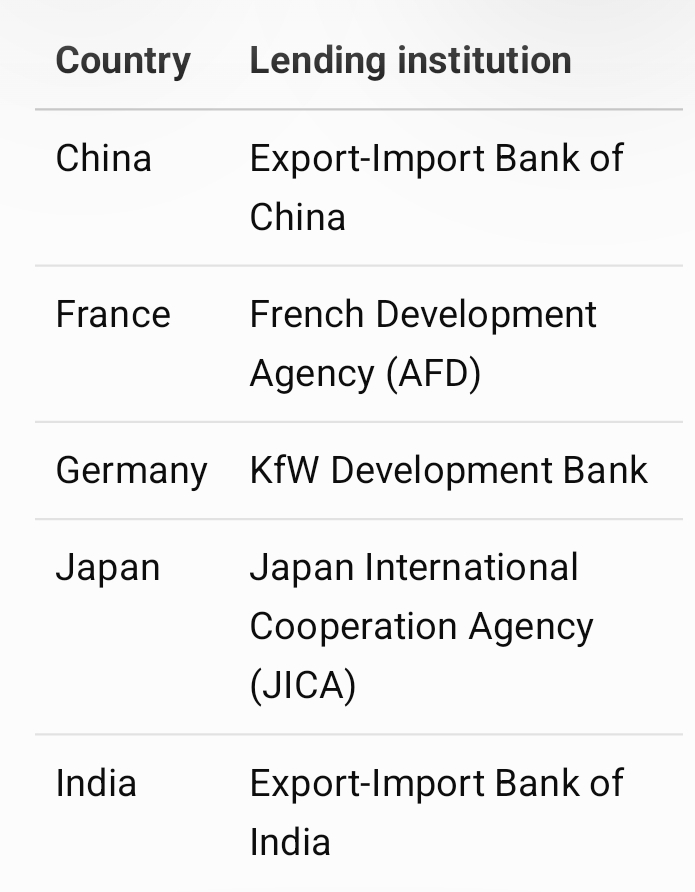
These loans generally finance infrastructure and development projects in Nigeria.





Business
President Tinubu defends $21.7bn fresh loan
In a statement titled “From Reforms to Delivery: Our Infrastructure Investment and Growth Strategy,” Tinubu said the focus should be on the economic value generated by borrowed funds rather than the amount borrowed.
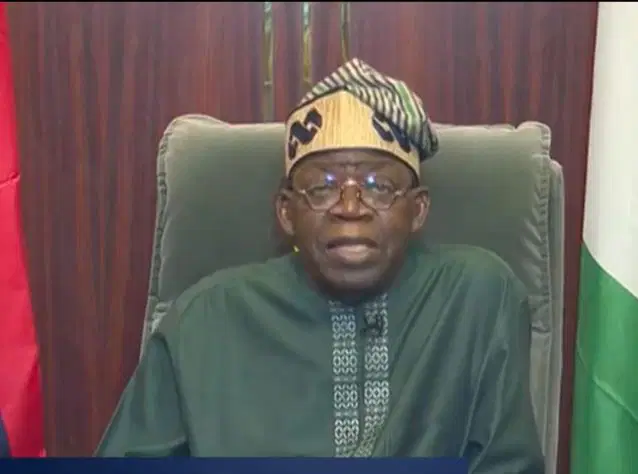
President Bola Tinubu has defended his administration’s external borrowing plans, asserting “The real question is not how much we borrow, but what we build, what value we create and what future we leave behind.”
In a statement titled “From Reforms to Delivery: Our Infrastructure Investment and Growth Strategy,” Tinubu said the focus should be on the economic value generated by borrowed funds rather than the amount borrowed.
According to him, the loans will finance critical infrastructure and investments capable of expanding economic opportunities for future generations.
The infrastructure includes the Lagos-Calabar Coastal Highway, Sokoto-Badagry Superhighway, Trans-Sahara Superhighway, electricity grid upgrades and modernisation of key commercial ports in Lagos among others would strengthen Nigeria’s productive capacity.
Earlier, President Tinubu requested the National Assembly to approve a supplementary external borrowing plan worth $20.52 billion and €1.05 billion, about $21.7 billion in total, for 2026-2027.
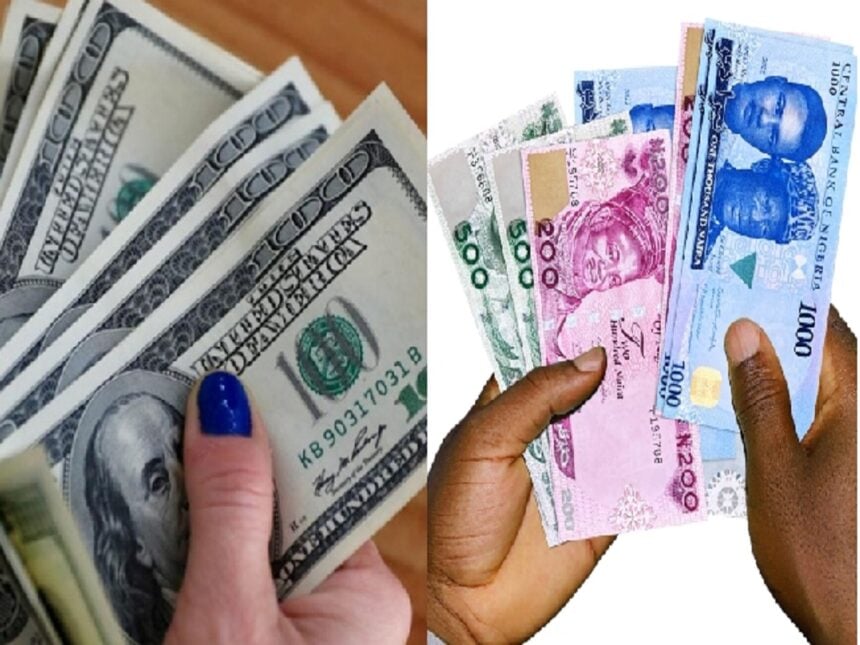
BLACK MARKET EXCHANGE RATES
₦1385DOLLAR (USD)
POUND (GBP) ₦1810
₦1520 EURO (EUR)
₦970 CANADIAN DOLLAR (CAD)
₦65 SOUTH AFRICAN RAND (ZAR)
₦350 UAE DIRHAM (AED)
₦190 CHINESE YUAN (CNY)
₦100 GHANAIAN CEDI (GHS)
₦2300CFA F.(XOF)
₦2200CFA F.(XAF)
₦850 AUSSIE (AUD)
OFFICIAL CBN EXCHANGE RATES
DOLLAR (USD) ₦1346.91
POUND (GBP)₦1794.09
EURO (EUR)₦1498.57
SWISS FRANC (CHF)₦1624.94
JAPANESE YEN (JPN)₦8.52
CFA FRANC (XOF)₦2.29
WEST AFRICAN UNIT OF ACCOUNT (WAUA)₦1820.88
CHINESE YUAN (CNY)₦202.18
SAUDI RIYAL (SAR)₦358.90
SOUTH AFRICAN RAND (ZAR)₦80.87

The Central Bank of Nigeria (CBN) and the National Information Technology Development Agency (NITDA) have intensified efforts to ensure that banks, fintech firms and payment service providers comply with Nigeria’s data localisation directive by January 1, 2027.
The regulators insist that critical payment data must be stored and managed within Nigeria to strengthen digital sovereignty, protect sensitive customer information and improve regulatory oversight of the financial system.
CBN Deputy Governor for Financial System Stability, Lamido Yuguda, stated this at the CBN-NITDA Executive Regulatory Dialogue on the National Sovereign Cloud Initiative and data localisation, held in Lagos on Wednesday.
Yuguda emphasised that institutions must do more than store data locally, stressing the need for robust cybersecurity, business continuity, disaster recovery and risk-management frameworks.
“Local storage alone is not enough; institutions must maintain strong cybersecurity, business continuity, disaster recovery and risk-management frameworks,” he said.
Director of the CBN’s Information Technology Department, Hajiya Rakiya Shuaibu Mohammed, said the apex bank was working closely with industry stakeholders to achieve full compliance before the deadline.
She disclosed that a recent CBN survey showed that more than half of the institutions that responded were already prepared to meet the data localisation requirement.
“Our ultimate expectation is that by January 2027, everyone will be on board to have payment data localised,” Mohammed said.
She explained that the policy would give regulators better visibility into financial transactions and strengthen the stability of the financial system.
Director-General of NITDA, Kashifu Inuwa, said Nigeria’s growing dependence on digital infrastructure had made control over critical technology and data a national priority.
He explained that the National Sovereign Cloud Initiative was designed to build domestic capacity and ensure that essential digital services could continue operating even when external disruptions affect global technology providers.


Rochas Okorocha: 90% Of Nigerian Politicians Would Not Hold Office Under True Democracy

President Tinubu defends $21.7bn fresh loan

Naira Rates To Dollar, Pound , Euro… Friday, October 30

BREAKING: Lagos Govt Declares Today, Thursday Work-Free to Mark 2026 Ìṣẹ̀ṣe Day

Tech Expert, Zuckerberg trains with UFC champions, Adesanya, Alexander

Organ Trafficking: Ekweremadu bags 10 years in UK prison
-
 Business1 day ago
Exchange Rates Thursday October 29 2026
-

 Business2 days ago
Investors from 120 countries participate in Dangote Refinery’s IPO
-

 Entertainment2 days ago
Davido, Kirk Franklin, to hit airwaves with new song ‘Hope In You’
-

 Sports2 days ago
Team Nigeria Braces For Historic Dakar 2026 Youth Olympic Games
-

 Sports2 days ago
Nigeria Thrash New Caledonia 7-0 In FIFA U15 World Cup Festival
-

 Entertainment2 days ago
Sultan of Sokoto to Honour Peter Igho as Kakakin Daular Usmaniyya
-
 Business2 days ago
MTN Pushes Back Fast Data Depletion Complaints To Subscribers
-

 News2 days ago
FG Approves ₦70k Transport Allowance for Civil Servants