
News
FG clears 200,000 passport backlogs, pays ₦28bn debts — Tunji-Ojo

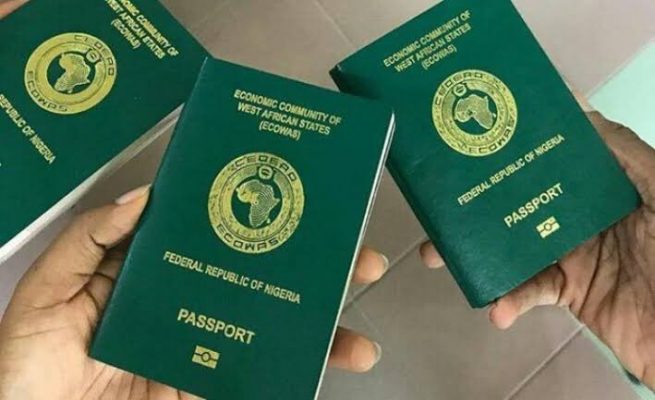
The Minister of Interior, Olubunmi Tunji-Ojo, says the Federal Government has cleared over 200,000 unprocessed passport applications since he assumed office.
Tunji-Ojo also revealed that ₦28 billion in old debts have been paid off, all without extra funding from the government.
He made these announcements during the Access Bank Guest Lecture Series held in Lagos on Monday. He spoke on the topic, “Dare to Dream, Dare to Innovate,” and called for bold leadership, system reform, and the smart use of technology.
“Leadership is not about reacting to problems, it is about foreseeing and solving them before they occur. And for that, you must always ask: What is your purpose? How will you execute it? And when is the right time to act?” he said.
He explained how his ministry used innovation, technology, and planning to clear passport backlogs and debts. New systems like e-visa platforms, contactless passport renewals for Nigerians abroad, and advanced passenger tracking have been launched.
Speaking about Nigeria’s prisons, Tunji-Ojo said the correctional system is in bad shape.
He pointed out that more than 4,000 inmates are behind bars simply because they can’t pay fines as low as ₦50,000.
“This is not a legal crisis, it is a moral one. A society that punishes poverty more harshly than crime has lost its moral compass,” he said.
He added that the ministry is working with private donors to help release many of these non-violent prisoners, noting that it’s also pushing for reforms that focus on rehabilitation, not just punishment.
These include digital case tracking, vocational training in prisons, and partnerships to improve prison conditions.
“A correctional facility must correct, not condemn. Justice without dignity is injustice in disguise,” he said.
Access Holdings Chairman, Aigboje Aig-Imoukhuede, praised Tunji-Ojo’s leadership.
“Innovation is not about big budgets, it is about big thinking,” he said, adding that the Minister’s work shows what real public service should look like.The event brought together business leaders, government officials, and experts from across the country.
It was part of Access Bank’s effort to spark national change through conversations about leadership and service.
In his final words, Tunji-Ojo urged everyone to live with purpose and pursue excellence.
“Let Access Bank not just be a financial institution, let it be a philosophy. Let Nigeria not just be a country of potential, let it be a nation of performance.
It is time to refine our genius, not just export it,” he said.










News
Ahmadu Bello University Hikes Fees Across Programme
The new rates represent a significant increase from the N62,000 to N84,000 range paid during the previous academic session.

• ABU, Zaria
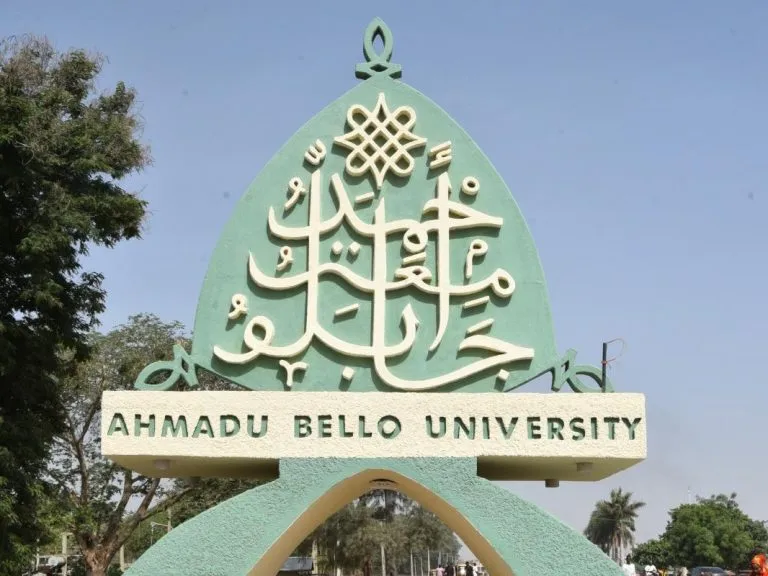
Ahmadu Bello University (ABU), Zaria, has reviewed upward increase in registration charges ahead of the 2026/2027 academic session.
The ABU increase will see students paying between N143,000 and N298,000 depending on their programme and level of study.
The new rates represent a significant increase from the N62,000 to N84,000 range paid during the previous academic session.
The Governing Council approved the revised charges at its 218th Special Meeting on September 29, following a resolution of the university Senate and consultations with stakeholders.
The increase is particularly steep for students in professional, medical and science-based programmes.
For instance, Medicine and Surgery students at 100 level will now pay N242,000, up from N82,000, while Dentistry has risen from N82,625 to N242,000.
Law students will pay N182,000, compared with N82,625 previously, while those studying Civil, Computer, Electrical and Mechanical Engineering will pay N172,000, up from N82,625. Nursing Science has increased from N78,875 to N212,000, while Medical Laboratory Science and Medical Radiography will also attract N212,000 at 100 level.
Veterinary Medicine rose from N82,625 to N232,000, while Computer Science increased from N82,625 to N172,000.
Students in Accounting, Economics and Public Administration will now pay N152,000, compared with N75,125 previously.
Accuses APC of Desperate Cover-Up
The Nigeria Democratic Congress (NDC) has described the Federal Government’s newly announced 30-day petrol discount at NNPC stations as mere tokenism and a deceptive “Greek gift” from an administration that removed fuel subsidy without adequate planning or relief measures for citizens.
Reacting to the announcement by the Minister of Finance and Coordinating Minister of the Economy, Mr. Taiwo Oyedele, the party said the policy does not amount to a return of subsidy but is simply a temporary cost-price sale of petrol at NNPC outlets, with priority for public transporters.
“Nigerians cannot be deceived,” the NDC stated. “This is nothing but tokenism from a government that whimsically removed fuel subsidy without proper consideration, consultation, or cushions for the people.”
The party questioned what concrete relief the measure offers to the millions of Nigerians who lost jobs and businesses following the subsidy removal, or to those who died in under-equipped public hospitals that have become “mortuaries.”
According to the NDC, the move reveals desperation on the part of President Bola Tinubu and the APC. It accused the government of attempting to reintroduce petrol subsidy through the backdoor — a sign, it said, of an administration “in free fall, ready to clutch at anything to survive.”
The party also criticised the practicality of the plan, asking how the limited number of NNPC retail outlets can effectively serve over 200 million Nigerians without creating dangerous stampedes at filling stations.
“The only answer staring Nigerians in the face is that the economy is in a tailspin and at a tipping point,” the statement read. “The APC has shown itself glaringly incapable of rescuing the country from imminent collapse.”
Looking ahead, the NDC expressed confidence that former Anambra State Governor Peter Obi, under its platform, would restore the country to the right path. It called on Nigerians to turn out en masse on 16 January 2027 to vote for Obi and other NDC candidates, describing the current administration as “the most clueless and rudderless government in the history of Nigeria.”
“A New Nigeria is POssible with Obi,” the party declared.
News
FG Plans National Strategic Fuel Reserve As Oil Price Bites
Oyedele also announced a fresh package of other measures to cushion the impact of high fuel prices on Nigerians, including a 30-day margin discount at NNPC stations, a proposed ₦1,350-per-litre ceiling on ex-gantry or landing costs, and increased support for vulnerable households and small businesses..
The Federal Government has announced plans to establish National Strategic Fuel Reserve to strengthen supply security and guard against global disruptions or hoarding.
The Minister of Finance and Coordinating Minister of the Economy, Prof. Taiwo Oyedele, disclosed Thursday during a briefing in Abuja.
Oyedele also announced a fresh package of other measures to cushion the impact of high fuel prices on Nigerians, including a 30-day margin discount at NNPC stations, a proposed ₦1,350-per-litre ceiling on ex-gantry or landing costs, and increased support for vulnerable households and small businesses.
He emphasised that the interventions were designed to provide relief to households and businesses without exposing the wider economy to additional risks.
Oyedele said the government was taking further steps because existing measures had not fully addressed the pressure felt by households following increases in fuel and transportation costs


Ahmadu Bello University Hikes Fees Across Programme

Manufacturers sitting on N40trn untapped opportunities, says report

Naira Exchange Rates Friday, October 9

Tech Expert, Zuckerberg trains with UFC champions, Adesanya, Alexander

Organ Trafficking: Ekweremadu bags 10 years in UK prison

SAINT OBI: Between his marriage and his death
-

 News1 day ago
NAF Helicopter Makes Precautionary Landing In Makurdi
-

 Politics3 days ago
BREAKING: APC Chairmen Accused of Leading Armed Attacks on ADC Members in Igueben
-

 News2 days ago
Military Chiefs Visit Ondo Crash Site As Underwater Search Intensifies
-

 News3 days ago
UPDATE: NAF Release Identities of Ondo Crash Victims
-

 Business1 day ago
Naira Today Exchange Rates, Thursday October 8
-

 Business2 days ago
African Union launch continent’s first credit rating agency
-

 International1 day ago
Belgian Students Protest Over Rising Education Costs
-

 News2 days ago
Breaking: Military rescue 20 corps members, civilian in Imo