
Business
DANGOTE REFINERY COMMISSIONING: LASG Urges Residents to Plan Their Movement Around Lekki-Epe Corridor


Ahead of the proposed commissioning of the Dangote Refinery by President Muhammadu Buhari on Monday, the 22nd of May, 2023, the Lagos State Government has urged residents to plan their movement in and out of the Lekki-Epe corridor between 8.00am and 2.00pm.
A statement by the Lagos State Ministry of Transportation, which was duly signed by the Commissioner, Dr. Frederic Oladeinde noted that it becomes imperative for the State Government to alert the public, particularly regular road users in Lekki-Epe zone, due to high vehicular movement that will be witnessed in the axis as a result of the commissioning.
The Statement further urged residents to plan their journeys around the axis, in order to forestall avoidable delays in travel time.
It added that Lagos State Traffic Management Authority (LASTMA) and other traffic enforcement Personnel have been charged to ensure effective management and control of traffic, urging Motorists to cooperate with them for seamless flow of traffic.









Business
FG Plans to Extend Lagos Rail Line to Murtala Muhammed Airport Terminals
Keyamo noted that Lagos accounts for 67 per mcent of passenger traffic through Nigeria’s airports.


The Minister of Aviation and Aerospace Development, Festus Keyamo, announced at the ongoing Invest in Lagos 3.0 summit, that the federal government has concluded arrangements to extend the existing Lagos rail network to the domestic and international terminals of the Murtala Muhammed Airport (MMA).
The move is aimed at improving connectivity and strengthening Lagos’ position as an aviation hub in Africa.
He said discussions between his ministry and the state government are ongoing.
The extension will link the rail line that currently terminates at Ikeja Bus Stop to the airport.
According to Keyamo, the line will pass through the General Aviation Terminal (GAT), continue to the Murtala Muhammed Airport Terminal Two (MMA2) operated by Bi-Courtney Aviation Services Limited (BASL), and end at the international terminal.
“That rail line is about to start. It is the extension of the rail line. So, Lagos is just ready for the next big step in terms of its aviation activities,” the minister said.
The project is expected to ease access to Nigeria’s busiest airport. It also supports the government’s ambition to position Lagos as a major aviation and logistics hub on the continent.
The proposed link will complement Lagos’ expanding rail network.
Last month, the Lagos State Government said the Blue Line carried about 3.5 million passengers in 2025, with daily ridership rising to 15,000 commuters. Work continues on its extension to Okokomaiko and expansion of services on the Red Line.
Keyamo noted that Lagos accounts for 67 percent of passenger traffic through Nigeria’s airports.
He argued that the state’s location gives it a natural advantage to compete with established aviation hubs.
“Just six hours across the Atlantic, you will get to South America from the Lagos airport. Six hours down, you will get to Southern Africa. Six hours to the Middle East, you will get to Dubai or Qatar. Six hours up, you will get to Europe, either France or London.
That is the equidistant advantage that Lagos provides as a hub for the whole of Africa. We will soon catch up with hubs like Addis Ababa and Lome,” he said.
The minister also highlighted ongoing investments in airport infrastructure under President Bola Tinubu’s administration.
He said about $500 million has been committed to reconstructing and modernising the international terminal at Lagos airport.
The investment will transform the ageing facility into a modern airport capable of handling growing passenger and cargo traffic.
Keyamo added that the federal government has expanded Nigeria’s international airport network. Victor Attah International Airport in Uyo and Maiduguri International Airport have been designated as international airports, bringing the total to seven.
He said the resolution of the long-running dispute between BASL and the federal government shows the administration’s commitment to creating an enabling environment for private sector participation in aviation.
He urged local and foreign investors to explore opportunities in the sector, including the proposed airport project in the Lekki-Epe corridor promoted by the Lagos State Government.If implemented, the airport rail extension will provide direct rail access to the country’s busiest aviation gateway.
It will complement ongoing investments in Lagos’ mass transit system and support broader efforts to improve mobility in Nigeria’s commercial capital.
Business
Exchange Rates Today, Wednesday 10 June, 2026
Black Market Rates
US Dollar (USD) Buy ₦1,390 Sell ₦1,400
Great British Pound (GBP) Buy ₦1,855 Sell: ₦1, 875
EURO (EUR) Buy ₦1,000 Sell ₦1, 100

Official CBN Exchange Rates
US Dollar (USD) ₦1,360.55
Great British Pound (GBP) ₦1,823. 00
EURO (EUR) ₦1,873.61
SWISS FRANC (CHF) ₦1,709. 02
JAPANESE YEN (JPN) ₦8.49
CHINESE YUAN (CNY) ₦200.92
West African CFA (XOF) ₦2.40
West African Unit Account (WAUA) ₦1,856. 66
SAUDI RIYAL (SAR) ₦362. 38
SOUTH AFRICAN RAND (ZAR) ₦82.71
Black Market Rates
US Dollar (USD) Buy ₦1,390 Sell ₦1,400
Great British Pound (GBP) Buy ₦1,855 Sell: ₦1, 875
EURO (EUR) Buy ₦1,000 Sell ₦1, 100
South African Rand (ZAR) Buy ₦75 Sell ₦90
UAE Dirham Buy ₦350 Sell ₦370
Chinese Yuan Buy ₦180 Sell ₦200
Ghana Cedi (GHS) Buy ₦100 Sell ₦115
West African CFA Buy ₦2,450 Sell ₦2,550
Central African CFA Buy ₦2,320 Sell 2400
Australian Dollar Buy ₦800 Sell ₦900
Credit: CBN I Aboki Forex
Business
Invest in Lagos 3.0 Summit Attracts more than 600 delegates
Ohibaba.com reports that the summit, themed “Lagos: The Business Gateway to Africa,” featured presentations from representatives of the Presidency and the governors of Lagos, Imo, Abia, Plateau, Taraba and Nasarawa states.
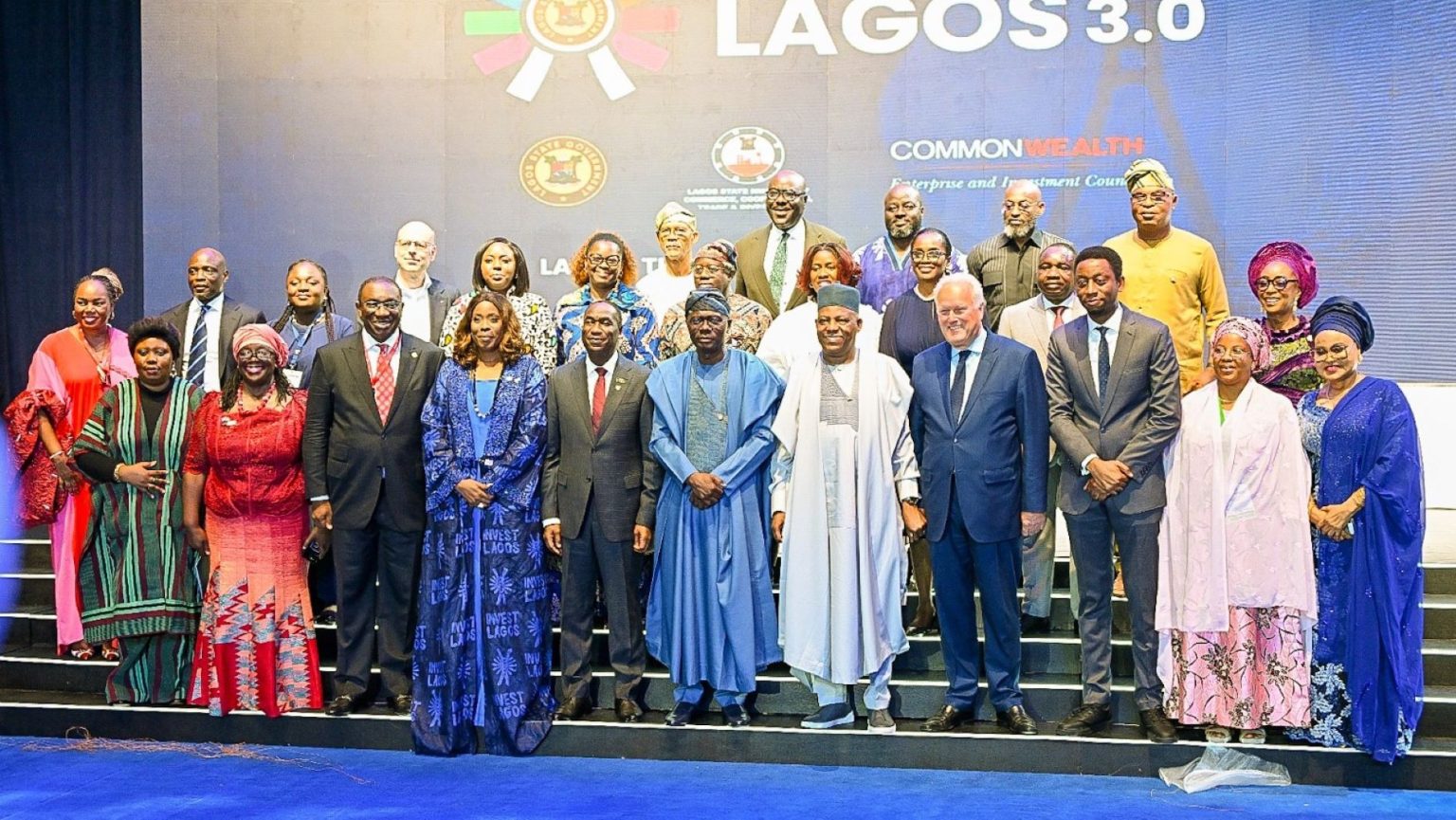
• Representatives of government and private sector delegates at the summit
Invest in Lagos 3.0 Summit attracted more than 600 delegates—including global institutions, sovereign wealth funds, development finance institutions and trade networks.
Ohibaba.com reports that the summit, themed “Lagos: The Business Gateway to Africa,” featured presentations from representatives of the Presidency and the governors of Lagos, Imo, Abia, Plateau, Taraba and Nasarawa states.
The host governor, Babajide Sanwo-Olu, called for increased private sector investment in rail transport, energy, agriculture, agro-processing and water infrastructure.
He said that addressing transportation challenges would unlock Lagos’ economic potential, reduce travel time, boost productivity and improve returns on investment.
Minister of Finance, Dr. Taiwo Oyedele, assured investors of the Federal Government’s commitment to creating a conducive business environment through ongoing fiscal reforms. He said the new tax law has eliminated multiple taxation, improved compliance and provided relief for small and medium enterprises.
Oyedele added that stamp duty collection has been transferred to state governments and commended states that have adopted harmonised tax systems.


Bamidele tasks 11th Senate to consider single term for President, govs

President Tinubu Commissions new EFCC office in Ekiti

Peter Obi demands N5bn from Kenneth Okonkwo over defamation allegations

Tech Expert, Zuckerberg trains with UFC champions, Adesanya, Alexander

Organ Trafficking: Ekweremadu bags 10 years in UK prison

SAINT OBI: Between his marriage and his death
-
 News2 days ago
Court Voids ₦110bn N’Assembly Vehicles, Allowances
-
 Business3 days ago
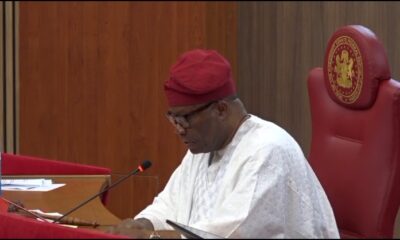
Senate’s approval of Sugar – Sweetened Beverages Tax Bill, Shocking, says CPPE, Lobbying Reps for rejection
-
 News3 days ago
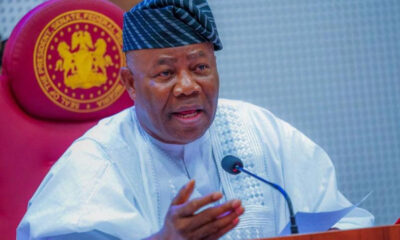
Court Declares National Assembly’s N110bn SUV and Allowance Schemes Unlawful
-
 News2 days ago
FG Clears Five-Month Allowance Arrears for University Lecturers
-

 News2 days ago
Lagos Begins 500-Tree Campaign to Tackle Extreme Heat
-

 Politics2 days ago
NDC Declares Party Supremacy, Approves Code of Conduct Committee
-

 Politics2 days ago
2027: Lagos APC picks Damilola as Hamzat ‘s Deputy Governor
-

 Entertainment2 days ago
Nigerian-British Singer Talay Riley Dies in London Stabbing, Others Mourn