Business
Dangote accuses IOCs of plotting for our Oil Refinery to fail

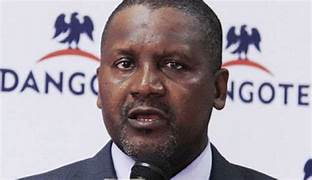
… laments as Regulator (NMDPRA) continues to grant licences to import banned dirty diesel, jet fuel
Vice President, Oil and Gas at Dangote Industries Limited (DIL), Devakumar Edwin, has accused International Oil Companies (IOCs) in Nigeria of doing everything to frustrate the survival of Dangote Oil Refinery and Petrochemicals. Edwin said the IOCs are deliberately and wilfully frustrating the refinery’s efforts to buy local crude by jerking up high premium price above the market price, thereby forcing it to import crude from countries as far as United States, with its attendant high costs.Speaking to a group of Energy Editors at a one-day training programme, organised by the Dangote Group, Edwin also lamented the activity of the Nigerian Midstream and Downstream Petroleum Regulatory Authority (NMDPRA), in granting licences, indiscriminately to marketers to import dirty refined products into the country. He said, “the Federal Government issued 25 licences to build refinery and we are the only one that delivered on promise. In effect, we deserve every support from the Government. It is good to note that from the start of production, more than 3.5 billion litres, which represents 90 per cent of our production, have been exported. We are calling on the Federal Government and regulators to give us the necessary support in order to create jobs and prosperity for the nation.”According to him: “While the Nigerian Upstream Petroleum Regulatory Commission (NUPRC) are trying their best to allocate the crude for us, the IOCs are deliberately and willfully frustrating our efforts to buy the local crude. It would be recalled that the NUPRC, recently met with crude oil producers as well as refineries owners in Nigeria, in a bid to ensure full adherence to Domestic Crude Oil Supply Obligations (DCSO), as enunciated under section 109(2) of the Petroleum Industry Act (PIA). It seems that the IOCs’ objective is to ensure that our Petroleum Refinery fails. It is either they are deliberately asking for ridiculous/humongous premium or, they simply state that crude is not available. At some point, we paid $6 over and above the market price. This has forced us to reduce our output as well as import crude from countries as far as the US, increasing our cost of production…“It appears that the objective of the IOCs is to ensure that Nigeria remains a country which exports Crude Oil and imports refined Petroleum Products. They (IOCs) are keen on exporting the raw materials to their home countries, creating employment and wealth for their countries, adding to their GDP, and dumping the expensive refined products into Nigeria – thus making us to be dependent on imported products. It is the same strategy the multinationals have been adopting in every commodity, making Nigeria and Sub-Saharan Africa to be facing unemployment and poverty, while they create wealth for themselves at our expense. This is exploitation – pure and simple. Unfortunately, the country is also playing into their hands by continuing to issue import licences, at the expense of our economy and at the cost of the health of the Nigerians who are exposed to carcinogenic products.”In spite of the fact that we are producing and bringing out diesel into the market, complying with ECOWAS regulations and standards, licences are being issued, in large quantities, to traders who are buying the extremely high sulphur diesel from Russia and dumping it in the Nigerian Market. Since the US, EU and UK imposed a Price Cap Scheme from 5th February, 2023 on Russian Petroleum Products, a large number of vessels are waiting near Togo with Russian ultra-high sulphur diesel and, they are being purchased and dumped into the Nigerian Market.”In fact, some of the European countries were so alarmed about the carcinogenic effect of the extra high sulphur diesel being dumped into the Nigerian Market that countries like Belgium and the Netherlands imposed a ban on such fuel being exported from its country, into West Africa, recently. It is sad that the country is giving import licences for such dirty diesel to be imported into Nigeria, when we have more than adequate petroleum refining capacity locally…” It would be recalled that in May, Belgium and Netherland adopted new quality standards to halt the export of cheap, low-quality fuels to West Africa, harmonising its standards with those of the European Union. These measures synchronise fuel export standards with the European domestic market, specifically targeting diesel and petrol with high sulphur and chemical content. Historically, these fuels, with sulphur content reaching up to 10,000 ppm, were exported at reduced rates to countries like Nigeria and other West African consumers.Belgium’s Minister of Environment, Zakia Khattabi, announced that his country followed the Netherland, which in April 2023 also prohibited the export of low-quality petrol and diesel to West Africa via the ports of Amsterdam and Rotterdam. Khattabi emphasised that the Netherlands’ decision to restrict dirty fuel exports had redirected the trade to Belgium, now used by oil producers and traders to export gasoline with excessively high levels of benzene and sulphur.“For far too long, toxic fuels have been departing from Belgium to destinations including Africa. They cause extremely poor air quality in countries such as Ghana, Nigeria, and Cameroon and are even carcinogenic,” said Khattabi.In September 2017, an investigation by an international organisation, Public Eye revealed that polluted and toxic fuels were being exported on a large scale from the ports of Rotterdam and Amsterdam for export to African markets. As much as a quarter of the petrol and diesel available in West Africa originates from the ports of Amsterdam, Rotterdam, and Antwerp. These fuels contain sulphur and other pollutants, such as cancer-causing benzene, in quantities up to 400 times the limits permitted in Europe. The Netherlands and Belgium were enjoined to enforce regulations to shield millions of Africans from exposure to toxic fuels.The decision of the Nigerian Midstream and Downstream Petroleum Regulatory Authority (NMDPRA), in granting licenses indiscriminately for the importation of dirty diesel and aviation fuel has made the Dangote refinery to expand into foreign markets. The refinery has recently exported diesel and aviation fuel to Europe and other parts of the world. The same industry players fought us for crashing the price of diesel and aviation fuel, but our aim, as I have said earlier, is to grow our economy.He noted that because the refinery meets the international standard as well as comply with stringent guidelines and regulations to protect the local environment, it has been able to export its products to Europe and other parts of the world.While appealing to the Federal Government and the National Assembly to urgently intervene for speedy implementation of the PIA and to ensure the interest of Nigeria and Nigerians are protected, he said: “Recently, the government of Ghana, through legislation has banned the importation of highly contaminated diesel and PMS into their county. It is regrettable that, in Nigeria, import licences are granted despite knowing that we have the capacity to produce nearly double the amount of products needed in Nigeria and even export the surplus. Since January 2021, ECOWAS regulations have prohibited the import of highly contaminated diesel into the region.”





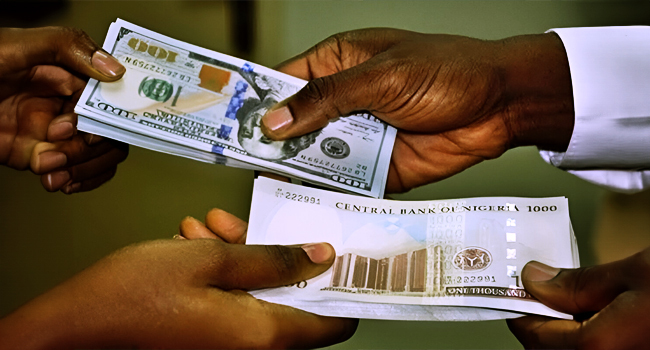
BLACK/ PARALLEL MARKET RATES
₦1370 DOLLAR (USD)
₦1800 POUND (GBP)
₦1510 EURO (EUR)
₦970 CANADIAN DOLLAR (CAD)
₦65 SOUTH AFRICAN RAND (ZAR)
₦350 UAE DIRHAM (AED)
₦190 CHINESE YUAN (CNY)
₦100 GHANAIAN CEDI (GHS)
₦2300 WEST AFRICAN CFA F.(XOF)
₦2200 CENTRAL AFRICAN CFA F.(XAF)
₦850 AUSTRALIAN DOLLAR AUSSIE (AUD)
CBN OFFICIAL RATES
DOLLAR (USD)₦1331.61
POUND (GBP)₦1764.26
EURO (EUR)₦1490.48
SWISS FRANC (CHF)₦1608.23
JAPANESE YEN (JPN)₦8.4
CFA FRANC (XOF)₦2.27
WEST AFRICAN UNIT OF ACCOUNT (WAUA)₦1802.33
CHINESE YUAN (CNY)₦199.01
SAUDI RIYAL (SAR)₦354.83
SOUTH AFRICAN RAND (ZAR)₦80.49
Business
WEF could appoint Lagarde as its next chair, sources say
The WEF’s Board of Trustees, which includes Lagarde herself, was due to meet on November 2 and could elect her as its next chair, said the people close to the organisation, who spoke on condition of anonymity due to the sensitivity of the matter.

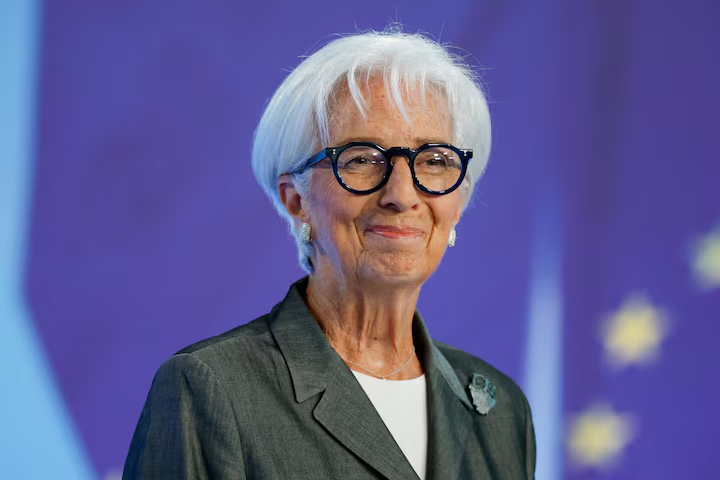
•European Central Bank President Christine Lagarde
The World Economic Forum could appoint Christine Lagarde as its next chair as soon as next month, four people close to the organisation told Reuters, meaning she would step down early as European Central Bank chief and trigger a wider reshuffle at the top of the ECB.Lagarde’s ECB term is scheduled to end in October 2027.
Leaving early would give European Union leaders a chance to pick a new ECB President before France’s spring presidential election, which opinion polls suggest the far-right could win, and could pave the way for a deal involving two other senior ECB roles.
The WEF’s Board of Trustees, which includes Lagarde herself, was due to meet on November 2 and could elect her as its next chair, said the people close to the organisation, who spoke on condition of anonymity due to the sensitivity of the matter.
No final decision has been taken yet, they said.
A spokesperson for the WEF said the forum could not confirm when the next full Board of Trustees meeting would take place, but that the aim was to hold one before the end of the year.
Business
Germany plans tax on sugary drinks
The tax is expected to generate additional revenue for the federal government of €690 million in 2027 and €925 million in 2028.
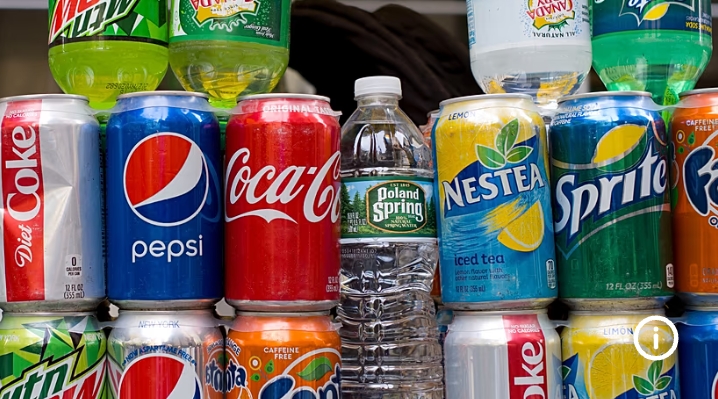
The German cabinet has approved draft legislation to tax sugary drinks in Europe’s biggest economy.
If passed by the German Bundestag, the tax will take effect on 1 July 2027.
The coalition aims to raise revenue for the federal budget while encouraging manufacturers to reduce sugar content and offer healthier products.
The levy is intended to ease pressure on the healthcare system, which faces costs of more than €2 billion every year linked to the high consumption of sugary drinks, which contributes to obesity, diabetes and tooth decay.
According to the federal government, Berlin is using the tax to implement “what associations from the fields of health, science, child protection, and consumer protection have long been demanding.”
The tax is expected to generate additional revenue for the federal government of €690 million in 2027 and €925 million in 2028.


Mbappé wins Onze d’Or award for 2025/26 season

Ronaldo Gets 30-Day Suspension For Portugal Camp Walkout

JUST IN: Ex-Delta Gov Uduaghan Dies at 71, Oborevwori Mourns

BREAKING: Lagos Govt Declares Today, Thursday Work-Free to Mark 2026 Ìṣẹ̀ṣe Day

Tech Expert, Zuckerberg trains with UFC champions, Adesanya, Alexander