
News
Damagum: Continuous postponement of NEC meeting unsettles PDP stakeholders


The leadership crisis in the Peoples Democratic Party (PDP) shows no signs of abating, as efforts to replace Acting National Chairman Umar Damagum remain mired in setbacks, primarily due to repeated postponements of the National Executive Committee (NEC) meetings.
For the umpteenth time, the party deferred its much-anticipated NEC meeting scheduled for Friday. The meeting was meant to address internal disputes and appoint a substantive National Chairman to complete the suspended Iyorchia Ayu’s tenure. This delay has frustrated party members, some of whom accuse the current leadership of intentionally stalling to prolong Damagum’s tenure.
A String of Postponements
At its 98th NEC meeting on April 18, the PDP resolved to address outstanding issues by August 15. However, that deadline was shifted to October 24, then further postponed to November 28. Party officials explained that the most recent delay was to prioritize unity ahead of the Ondo gubernatorial elections, where they hoped to unseat the ruling All Progressives Congress (APC).
The postponements continued, with PDP National Secretary Senator Samuel Anyanwu announcing an indefinite delay on Friday, citing the funeral of Akwa Ibom State’s late First Lady, Pastor Patience Umo Eno, as the reason. However, insiders and stakeholders see this as a deliberate ploy to allow Damagum to remain in office until the party’s next national convention.
Accusations and Divisions
The delay has sparked discontent within the party. Critics, including representatives from the North Central zone, argue that the Damagum-led National Working Committee (NWC) is disregarding the PDP constitution by failing to replace him with someone from their region. Former PDP National Publicity Secretary Kola Ologbondiyan described the situation as a “disrespect for constitutional order” and urged the party to respect regional balance by appointing a North Central member to complete Ayu’s tenure.
Meanwhile, allegations of anti-party activities have further fueled tensions. PDP lawmaker Ikenga Ugochinyere accused Damagum and Anyanwu of secretly meeting with APC officials, claiming their actions signal an effort to collapse the PDP into the ruling party. He called for their immediate removal, warning of “irreparable doom” if the leadership crisis persists.
Governors’ Roles and 2027 Ambitions
The crisis has been exacerbated by conflicting ambitions among PDP governors, with some allegedly prioritizing their aspirations for the 2027 presidential and vice-presidential elections over the party’s immediate stability. A party chieftain, Austin Okai, criticized the governors for failing to act decisively, noting that many are playing “double standards.” He claimed that Damagum and other key NWC members are no longer functioning effectively, further eroding the party’s relevance.
Okai also alleged interference from the APC, accusing some PDP governors of aligning with the ruling party to destabilize opposition parties, including the Labour Party and the New Nigeria Peoples Party (NNPP). He urged the governors to “stop the politics for 2027 and fix the party first.”
Governors’ Forum Steps In
In an attempt to break the deadlock, the PDP Governors’ Forum issued a statement advising the NWC to convene the NEC by February 2025. Bauchi State Governor Bala Mohammed, who chairs the Forum, stressed the need for urgent consultations and a timeline of activities to resolve the leadership crisis and pending litigations.
While the party remains embroiled in internal strife, its ability to position itself as a credible opposition to the APC continues to dwindle, raising questions about its future viability.





News
El-Rufai’ loses mother, Hajiya Umma
She died at a time El-Rufai remains in custody following his arraignment by the Independent Corrupt Practices and Other Related Offences Commission on a 10-count charge bordering on alleged conversion of public property and money laundering.

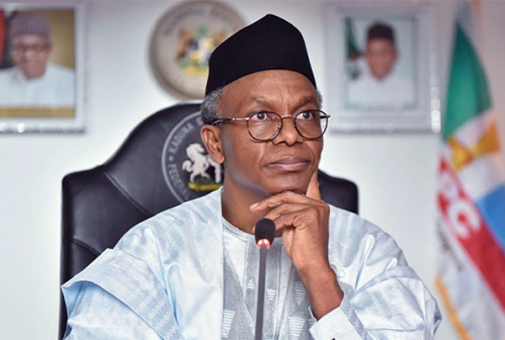
Hajiya Umma El-Rufai, the mother of detained former Kaduna State Governor Malam Nasir El-Rufai, is dead
Her grandson, Hon. Bello El-Rufai, confirmed the development on Friday in a Facebook post:
“Inna lillahi wa inna ilayhi raji’un. I would like to inform the public of the demise of my Grandmother, Hajiya Umma El-Rufai who passed away a few hours ago. She is the biological mother of our father, Mallam Nasir El-Rufai.
We are grateful for the life she lived and may Allah SWT bless her gentle soul. On behalf of our family, we seek your prayers.”
She died at a time El-Rufai remains in custody following his arraignment by the Independent Corrupt Practices and Other Related Offences Commission on a 10-count charge bordering on alleged conversion of public property and money laundering.
News
Kano Deputy Governor Resigns
The decision to step down does not amount to an admission of the allegations leveled against him by the Kano State House of Assembly.
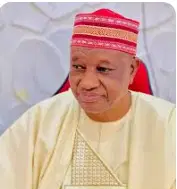
The Deputy Governor of Kano State, Aminu Abdusalam Gwarzo, has resigned from office ahead an ongoing impeachment process by the State House of Assembly.
Spokesperson for Kwankwasiyya Movement , Habibu Mohammed, confirmed the resignation in a statement on Friday, stating that the decision was taken in the overall interest of the people and to ensure stability in the state’s governance.
The Assembly had earlier issued an impeachment notice to the deputy governor over allegations of misappropriation and gave him a two-week ultimatum to respond. The deadline elapsed penultimate Friday,
The statement explained that recent developments had significantly limited the deputy governor’s ability to fully discharge the responsibilities of his office, making it necessary for the position to function without constraints in the public interest.
It, however, clarified that the decision to step down does not amount to an admission of the allegations leveled against him by the Kano State House of Assembly.
The embattled deputy governor who is a strong ally of Rabiu Kwankwaso refused to follow the governor to join the APC.
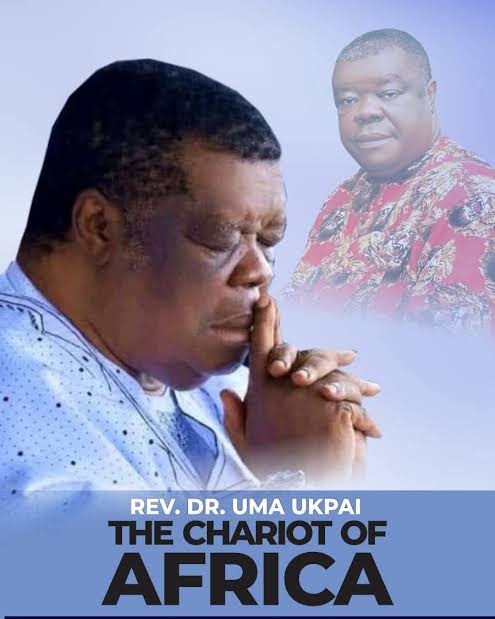
The Abia State Government on Thursday, March 26, 2026, organised a grand state burial service in honour of the late Rev. Dr. Uma Ukpai, one of Nigeria’s most influential Christian evangelists and founder of the Uma Ukpai Evangelistic Association.
The solemn ceremony took place at the International Conference Centre (ICC), Ogurube Layout, Umuahia, beginning at 10:00 a.m. It drew top government officials, religious leaders, and mourners from across Nigeria and beyond to celebrate the life and legacy of the cleric, who died on October 6, 2025, at the age of 80.
The remains of Rev. Dr. Uma Ukpai, a native of Asaga in Ohafia Local Government Area of Abia State, were earlier received with full honours at the Akwa Ibom-Abia state boundary before being conveyed to Umuahia for the state funeral service.
The body had previously lain in state in Uyo, Akwa Ibom State, where he resided for many years.
Governor Alex Otti’s administration described the late evangelist as a “towering figure” whose life of faith, leadership, and humanitarian impact left an indelible mark on Abia State, Nigeria, and the global Christian community.
The state burial was part of a week-long programme of funeral rites that culminated in the final interment on Friday, March 27, 2026, at his hometown of Asaga, Ohafia.
Rev. Dr. Uma Ukpai, born on January 7, 1945, was celebrated as an international preacher who ministered for nearly six decades. He was widely respected for his powerful crusades, teachings on faith and prosperity, and establishment of numerous charitable initiatives, including educational and medical outreach programmes.
Dignitaries in attendance included senior government functionaries, clergy from various denominations, and notable figures who paid glowing tributes to his spiritual legacy and contributions to nation-building through the gospel.
The state burial reflects Abia’s recognition of Rev. Dr. Uma Ukpai’s immense role in promoting moral values and spiritual development. Family members, while expressing gratitude for the honour bestowed on their patriarch, described his passing as a “glorious home-going.
”As the final interment proceeds today in Asaga, Ohafia, many have described the occasion as not just a farewell but a celebration of a life well-lived in service to God and humanity.
The Abia State Government has urged residents and visitors to observe the period with dignity and solemnity.


El-Rufai’ loses mother, Hajiya Umma

Kano Deputy Governor Resigns

Abia State Holds State Burial for Renowned Evangelist Rev. Dr. Uma Ukpai

Tech Expert, Zuckerberg trains with UFC champions, Adesanya, Alexander

Organ Trafficking: Ekweremadu bags 10 years in UK prison

SAINT OBI: Between his marriage and his death
-
 Sports3 days ago
Int’l friendlies: 15 players open Eagles camp in Turkey
-
 Sports3 days ago
Tributes To NRA President Sanni Zubairu
-
 Sports3 days ago
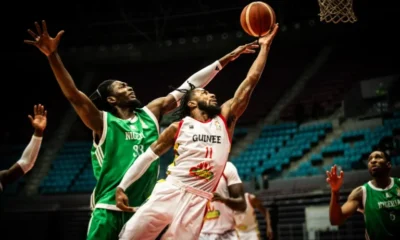
NBF Kida’s board to remain in office until October , says FIBA
-
 Business3 days ago
Dangote: Middle East crisis might take us back to ‘Work from home’ COVID era
-
 Sports3 days ago
Mohamed Salah quitting Liverpool after nine historic years
-
 News3 days ago
Nigeria partner Japan to redevelop Abuja Master Plan
-
 Business3 days ago
Niger Delta Chamber Investment Summit Targets $5bn, 500,000 Jobs
-
 News3 days ago
FG to reopen Enugu–Onitsha expressway March 31