
Health
Lagos Launches Public Health Campaign on Mpox


The Lagos State Government has unveiled a series of comprehensive public health initiatives.
These are in response to the growing global concern over the Mpox virus, particularly the newly identified Clade 1B variant.
During a media briefing held at Protea Hotel, Alausa Ikeja, the State Commissioner for Health, Prof. Akin Abayomi, outlined the state’s multipronged strategy to shield Lagos from this emerging threat.
Prof. Abayomi announced three significant milestones as part of Lagos State’s public health strategy against Mpox.
The first is a robust stakeholder engagement involving experts from various sectors to discuss Mpox and its management, both locally and globally.
Although Lagos has no active cases at present, however, the risk posed by the more aggressive Clade 1B variant remains a significant concern due to Lagos’s extensive travel connections.
The second milestone is the activation of an Emergency Operations Centre (EOC) specifically dedicated to monitoring and addressing the Mpox outbreak, with a particular focus on the Clade 1B variant.
The third milestone is the launch of a statewide public health awareness campaign aimed at educating residents about the risks associated with Mpox and preventive measures they can take.
The Commissioner emphasized the current concern over the Clade 1B variant, which is rapidly spreading across Central Africa, particularly in the Democratic Republic of Congo (DRC), and has now reached neighboring countries like Cameroon, Rwanda, and Burundi.
“This variant is distinct from the indigenous Clade 2 variant, which has been detected sporadically in West Africa. Although Lagos has no active cases at present, however, the risk posed by the more aggressive Clade 1B variant remains a significant concern due to Lagos’s extensive travel connections.
The World Health Organization (WHO) has declared the outbreak in the DRC a Public Health Emergency of International Concern, highlighting the need for a coordinated global response”, he said.
Prof. Abayomi noted that Lagos State is taking proactive steps, drawing on its experience with past health crises like Ebola, COVID-19, cholera, and Lassa fever. According to him, these measures aim to prevent the introduction of the Clade 1B variant into Lagos, which could have severe health and economic implications.
The Commissioner explained that Mpox, like smallpox and cowpox, is a zoonotic disease that initially spreads from animals to humans, particularly through rodents and monkeys.
Human-to-human transmission occurs through close contact, with the Clade 1B variant showing a higher transmission rate, especially through sexual contact.
Prof. Abayomi warned that while there are currently no active Mpox cases in Lagos, the state must remain vigilant against the potential importation of this aggressive variant.
He disclosed that a mini-symposium on Mpox which was held before the media briefing, featured insights from global health experts, including representatives from WHO, UNICEF, the Nigeria Centre for Disease Control (NCDC), Nigeria Institute of Medical Research (NIMR), LUTH and LASUTH. “These experts discussed the risks posed by the Clade 1B variant to Lagos and the steps needed to create a biological shield against the virus.
The collective goal is to ensure that Lagos is fully prepared to manage any potential outbreak and minimize its impact”, Prof. Abayomi said.
While noting that Lagos State’s high population density and extensive travel links make it particularly vulnerable to the rapid spread of contagious diseases, the Commissioner urged the public and healthcare providers to be vigilant and prepared to recognize, diagnose, and manage Mpox cases effectively.
“The activation of the EOC and the launch of the public awareness campaign are critical components of this strategy.
As part of the proactive measures, a comprehensive public health awareness campaign has been rolled out across Lagos. This campaign seeks to inform the public about the symptoms of Mpox, such as fever, joint pain, body aches, and distinctive rashes.
Residents are urged to report any suspicious symptoms to the nearest health facility for prompt evaluation”, he stated.
Prof. Abayomi noted that Lagos State is also exploring vaccine options and has established local research teams to guide government policy on Mpox. These efforts aim to bolster the state’s preparedness for a possible outbreak and ensure a swift and effective response.
The Commissioner noted that despite the absence of active Mpox cases in Lagos, the state government is committed to maintaining a high level of preparedness. Prof. Abayomi expressed gratitude to all partners and collaborators for their continued support in these efforts, stressing the importance of collective action in safeguarding Lagos from the potential dangers of Mpox.
Speaking in the same vein, the Director of Epidemiology, Biosecurity, and Global Health in the Lagos State Ministry of Health, Dr. Ismail Abdus-Salam provided detailed information on the symptoms of the Clade 1B variant.
He highlighted the severity of the rashes caused by this variant, particularly those that appear in the genital area, which are more painful and pronounced than typical Mpox rashes.
Dr. Abdus-Salam emphasized the critical need for early identification and containment of Mpox cases to prevent the spread of the Clade 1B variant within Lagos. “The state’s public health systems are on high alert, ready to act swiftly to protect residents from this virulent strain”, he said.
Lagos State’s comprehensive and proactive approach to public health sets a precedent for other regions to follow.
The state’s ongoing efforts to prevent the importation and spread of Mpox, particularly the Clade 1B variant, demonstrate its commitment to protecting the health and well-being of its residents in the face of emerging global health threats.











Health
Gov Mbah Invest in world-class Enugu International Hospital
The hospital, equipped with state-of-the-art medical equipment and advanced digital and electronic systems, is expected to attract top medical professionals from Nigeria and around the world.

Enugu State Governor, Peter Mbah, says the Enugu International Hospital is designed to provide world-class healthcare services to people across all socioeconomic classes.
The Enugu International Hospital is located at Rangers Avenue, Independence Layout, Enugu.
Mbah stated this during a pre-launch tour of the facility ahead of its official commissioning.
The hospital, equipped with state-of-the-art medical equipment and advanced digital and electronic systems, is expected to attract top medical professionals from Nigeria and around the world.
The governor expressed satisfaction with the quality of the equipment installed at the facility, saying the investment would help position Enugu as a medical tourism hub in Nigeria.
He said the hospital would also help reduce the number of Nigerians travelling abroad for specialist medical treatment while creating an environment that would encourage Enugu-trained medical professionals to return home.
According to Mbah, several Enugu-qualified medical practitioners based abroad have already reached out to express interest in working at the international hospital and contributing to the development of the state’s health sector.
The governor further said the facility would create job opportunities for medical graduates, healthcare professionals and other workers, with the potential to boost economic activity in the state.
During the tour, Mbah inspected several specialist units, including the Precision Oncology and Nuclear Medicine Unit, specialised surgery theatres, intensive care units, advanced diagnostics and imaging, and renal care and dialysis facilities.
He also toured the cancer, heart and vascular, nuclear medicine and molecular imaging, neuroscience, and renal centres.
Accompanied by the Director of the facility, Professor Sam Agwu, and other specialists, the governor received briefings on the various services and specialist care the hospital is expected to provide.
The Enugu International Hospital operates as a comprehensive quaternary care facility with more than 300 beds and was established to provide world-class specialist healthcare.
The facility is expected to strengthen access to advanced medical care, support medical professionals, create employment and contribute to Enugu State’s emergence as a destination for medical tourism.
Health
Bayer to establish reproductive health commodities plant in Nigeria
The plant is expected to manufacture family planning commodities locally, reducing Nigeria’s dependence on imported products, creating jobs and contributing to economic growth.
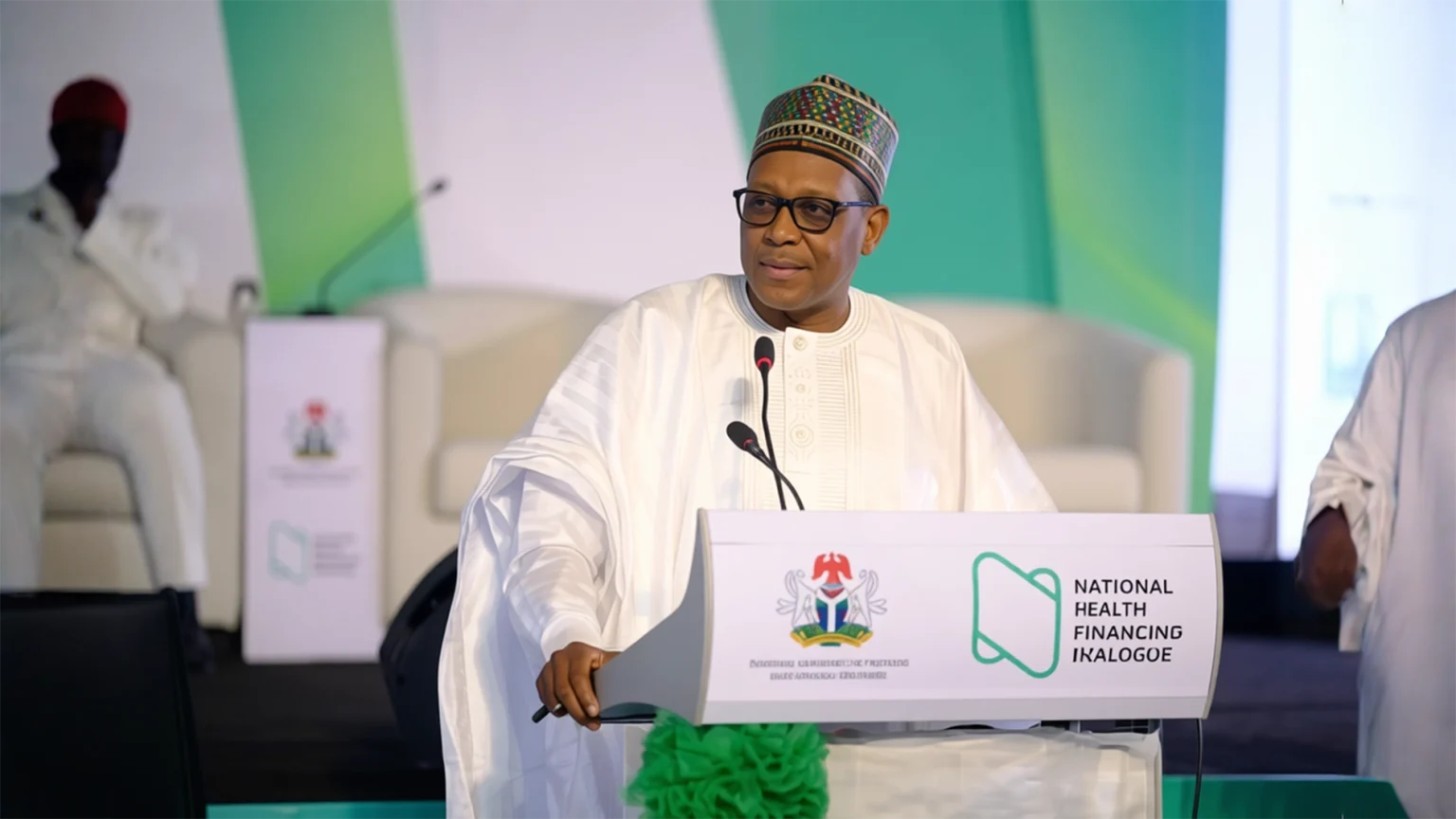
•The Minister of Health and Social Welfare, Prof. Muhammad Pate
Global pharmaceutical company, Bayer, is to establish a reproductive health commodities manufacturing plant in Nigeria, with the facility currently under construction in Anambra State.
The plant is expected to manufacture family planning commodities locally, reducing Nigeria’s dependence on imported products, creating jobs and contributing to economic growth.
The Minister of Health and Social Welfare, Prof. Muhammad Pate, disclosed this in Abuja at the inauguration of the High-Level Inter-Ministerial Platform (IMP) on Family Planning, Health, Human Capital and Sustainable National Development.
Pate described the investment as evidence that President Bola Tinubu’s Executive Order on the pharmaceutical sector was beginning to attract significant investments in local pharmaceutical manufacturing, diagnostics and health technology.
Also speaking, the Managing Director of FP2030 West and Central Africa Office, Dr Alain Damiba, described the initiative as a major step towards strengthening cross-sector collaboration to improve health outcomes and accelerate Nigeria’s socio-economic development.
Damiba commended the Federal Government for adopting a whole-of-government approach, noting that the new platform demonstrated that health and family planning were national development priorities and not issues that should be left to the health sector alone.
“Health, including family planning, is a smart investment in human capital and Nigeria’s future,” Damiba said.
Source: The Guardian Nigeria
Health
Medical Oxygen Killing More Than 600,000 Nigerians Annually
The project started its first phase by carrying out intervention work in three industrial areas of the state: quarry industrial site in Onueke, rice mill in Abakaliki, and timber market

•Professor Jesse Uneke
The Vice Chancellor of David Umahi Federal University of Health Sciences (DUFUS), Ebonyi State, Professor Jesse Uneke, has estimated that more than 600,000 Nigerians died yearly due to issues relating to the administration of medical oxygen.
Uneke, who is the Nigerian and State Lead/Principal Investigator for the EQUI-RESP Africa Research Project, disclosed this in Abakaliki, during the First Stakeholders’ Engagement Event/Co-Creation Workshop on Medical Oxygen Economy organised by the university in conjunction with the University of Edinburgh, UK, supported by the National Institute for Health and Research (NIHR), UK.
He explained that the administration of medical oxygen issues was happening because there was no platform where stakeholders in the medical oxygen space could come together to discuss the research-policy interface and see how to contextualise some of the strategies against the problems for the country.
“That is why, in this phase of this project, we have decided to start with this kind of stakeholders’ engagement. I am excited that we have every key stakeholder in the medical oxygen space represented here,” Uneke said.
He opined that the project started its first phase by carrying out intervention work in three industrial areas of the state: quarry industrial site in Onueke, rice mill in Abakaliki, and timber market.
This project has to do with respiratory health, and the idea is to come up with strategies that will lead to interventions that will improve health outcomes as far as respiratory health is concerned.


Nigerians better off under military than democracy – Duke

Infantino To Seek Re-Election As FIFA President In 2027

Dangote Refinery Signs IPO Document Today

Tech Expert, Zuckerberg trains with UFC champions, Adesanya, Alexander

Organ Trafficking: Ekweremadu bags 10 years in UK prison

SAINT OBI: Between his marriage and his death
-

 News2 days ago
Arise TV Deputy Head of News Ohi Odiai and Wife Celebrate 17th Wedding Anniversary
-

 Politics3 days ago
ADC unveils 28 governorship candidates for 2027 election
-
 Business3 days ago
Dangote Foundation Takes Over Aliko Dangote Skills Acquisition Centre Kano
-
 News3 days ago
UN approves new world map replacing 16th century Mercator map
-

 News3 days ago
BBC Appoints Kakangi Editor Hausa Service
-

 International2 days ago
Trump sends envoys to Russia, Ukraine with new peace plan
-

 News2 days ago
MKO Abiola’s Documentary to hit Cinemas in October
-

 Politics6 hours ago
Obidient Connect Texas Plans Grand Rally for Obi-kwakwanso October 10