
Business
Nigeria’s First Lady empowers 1,000 women petty traders in Kogi

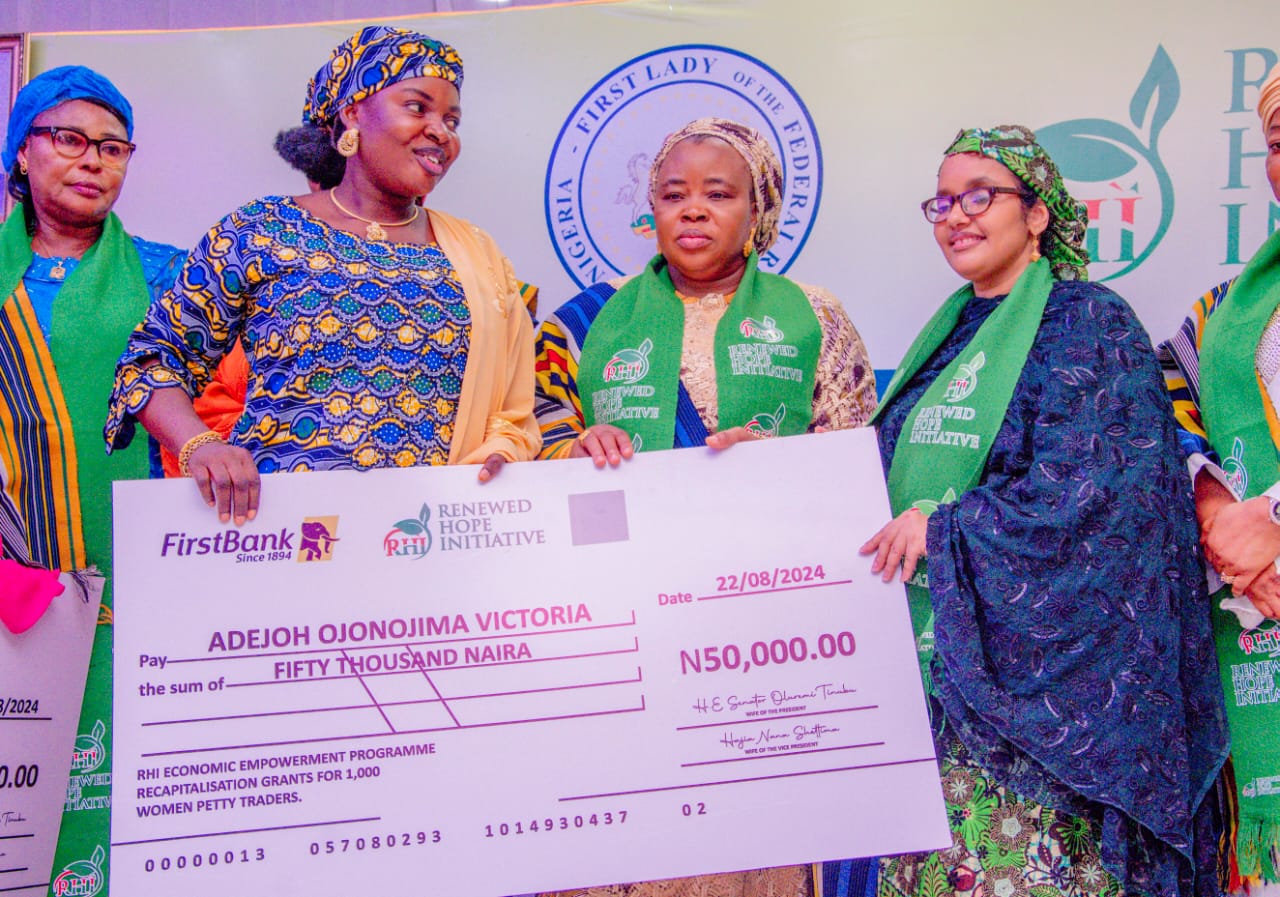
▪︎Mrs. Tinubu, was represented by the wife of the Speaker of the House of Representatives, Hajiya Fatima Tajudeen Abbas.
Nigeria’s First Lady, Mrs. Oluremi Tinubu has flagged-off the Renewed Hope Initiative (RHI) Economic Empowerment programme for 1,000 women petty traders in Kogi State.
The programme is part of the continued commitment of the President’s wife to driving economic growth towards a better life for families, especially women across the country.
During the Flagg-off the disbursement of the grants in Lokoja on Thursday, the First Lady revealed that a total of N1,850,000,000.00 would be disbursed to the selected 1,000 Kogi women and 36,000 other female petty traders in other states and the Federal Capital Territory, Abuja.
Mrs. Tinubu, who was represented by the wife of the Speaker of the House of Representatives, Hajiya Fatima Tajudeen Abbas, noted that RHI was aware of the challenges faced by Small and Medium Enterprises (SMEs), especially the petty traders who form the backbone of the local economies.
She added that the N50,000 business recapitalization grant would go a long way in strengthening the beneficiaries’ businesses for better profits.
She, however, stressed that these challenges had not deterred the strength of the women in their avowed commitment to contribute to the economy at the grassroots.
Mrs. Tinubu said, “Through the Renewed Hope Initiative Economic Empowerment Programme, we are providing 1,000 pre-selected women petty traders per state with a grant of N50,000 each to recapitalize and grow their businesses.
“The grants provided today are to assist our women petty traders in overcoming some of their business challenges, expand their businesses, create more jobs, and contribute more robustly to our economy.”
The First Lady affirmed that economic empowerment remained a core objective of the Renewed Hope Initiative and that the programme had continued to support the economic reforms of the President Bola Tinubu-led administration.
In his remarks, the Governor of Kogi State, Alhaji Ahmed Usman Ododo, said the Renewed Hope Initiative was built on a strong administrative and economic platform “that is sustainable even after eight years”, describing it as a visionary masterplan to address poverty amongst women.
He commended the First Lady of Nigeria for showing that she was capable of matching words with action by providing a strong platform to address poverty amongst women.
She added that the N50,000 business recapitalization grant would go a long way in strengthening the beneficiaries’ businesses for better profits.
Governor Ododo described the event as significant, noting that the rural women who invested their trust in President Bola Ahmed Tinubu by voting for him in the 2023 general election were on ground to reap the benefit of their trust.
He commended the President for honouring his promise to petty traders, and building an enduring microeconomic foundation to address the concerns of the indigents in the society.
The governor who expressed excitement that Sen. Oluremi Tinubu was helping his administration to fulfill his campaign promises to the people of the state, further pledged his administration’s total support for the Renewed Hope Initiative Economic Empowerment Programme.
He assured that the government would continue to partner with the First Lady of Nigeria through her coordinator and First Lady of Kogi State in her determination to empower women.
He said his administration was unbending in its commitment to women empowerment and inclusion, stressing that it had floated many policies with particular interest in women empowerment in agriculture and politics.
Ododo said, “Politically, we have given more women spaces. In the cabinet, the Secretary to the State Government is a woman. The Commissioner for Innovation, Science and Technology is a woman; the Commissioner for Culture and Tourism is a woman. The Commissioner for Humanitarian Affairs and Poverty Alleviation is a woman as well as the Commissioner for Women Affairs.
The Accountant- General of the State is a woman as well as the Special Adviser to the Governor on Drug Abuse as well as the Director- General of the Social Investment Agency and many too numerous to mention, including the first female Director General of the Kogi State Broadcasting Corporation.
“At the grassroots level, we have encouraged our party to produce the first ever female Chairmanship candidate of a ruling party. We have also encouraged our Chairmen to pick females as their Vice Chairmanship candidates, except in one Local Government in order to strike a balance.
Our party has also ensured that 40% of our Councilorship candidates are also women. That means that if all our candidates are able to win in the free and fair election, we will have the first ever elected Local Government Chairman in our dear state as well as 20 Local Government Council Vice Chairmen as women as well as 96 Councilors as women. This is unprecedented in the political history of Nigeria.”
Earlier in her welcome address, the First Lady of Kogi State, Hajiya Sefinat Usman Ododo, described the programme as a significant stride towards empowering women entrepreneurs and enhancing their economic resilience.
She expressed the hope that the grants would undoubtedly provide the much-needed support in helping women petty traders expand their businesses and improve their livelihoods.
Mrs. Ododo said that by investing in women’s growth, the government was creating opportunities for a brighter future, just as she commended the efforts of the First Lady and her dedicated team in making the initiative a reality.
After receiving the grants, the beneficiaries in Kogi State commended the First Lady of Nigeria and President Tinubu’s Administration for the disbursement. ▪︎








Business
NAICOM Hands Over African Alliance Insurance to New Board, Management team
The Commissioner charged the newly constituted Board OF Directors to work collaboratively with shareholders while upholding the highest standards of corporate governance, regulatory compliance, and operational transparency.
The National Insurance Commission (NAICOM), has handed over the operations of African Alliance Insurance plc to a new Board of Directors and a new management team.
The new board is chaired by Rear Admiral Anthony Odogba Isa while the management team is led by Mr. Abayomi Olakunle Ogunkeye as the Managing Director.
The new board was nominated by the company’s shareholders, following the successful conclusion of a regulatory intervention commenced by NAICOM in the company in October 2024.
The handover marks a significant milestone in restoring the company’s financial stability, safeguarding the interests of policyholders and annuitants, and repositioning the organisation for sustainable growth.
NAICOM had in October 2024, intervened in African Alliance Insurance after it faced severe liquidity challenges, a backlog of unsettled claims particularly annuity obligations regulatory breaches, and reputational damage that threatened its continued existence and undermined policyholders confidence.
To address these challenges, NAICOM appointed an Interim Management Board (IMB) and an interim management team, with a clear mandate to stabilise the company, unlock liquidity, settle outstanding liabilities, conduct forensic and actuarial reviews, and restore stakeholder confidence.
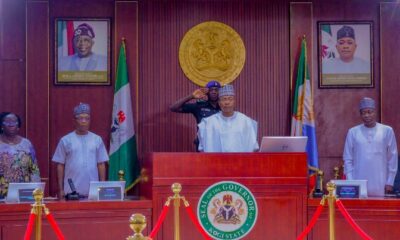
Speaking during the handover ceremony, the Commissioner for Insurance and Chief Executive Officer of NAICOM, Mr. Olusegun Ayo Omosehin, highlighted the transformative impact of the newly enacted Nigerian Insurance Industry Reform Act (NIIRA) 2025.
He noted that the legislation strengthens regulatory oversight, enhances public confidence, and supports deeper insurance penetration in Nigeria.
According to him, a major milestone under the Act is the establishment of the Insurance Policyholders Protection Fund (IPPF) a landmark mechanism designed to provide financial relief to policyholders in the event of insurer distress, insolvency, or liquidation.
The Fund represents a significant advance in consumer protection and aligns Nigeria’s regulatory framework with global best practices.
The Commissioner charged the newly constituted Board OF Directors to work collaboratively with shareholders while upholding the highest standards of corporate governance, regulatory compliance, and operational transparency.
He emphasised the importance of sustaining policyholder confidence through prompt claims settlement, sound solvency management, and prudent business practices.
He further directed the board to strengthen corporate governance structures, restructure portfolios, update and reconcile policyholder records as well as reinforce transparency and accountability.
Source : ThisDay
Business
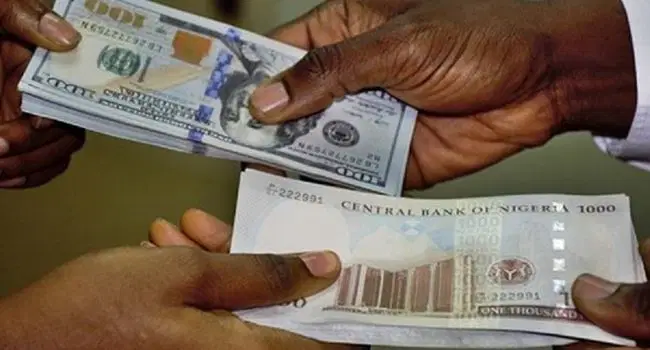
Naira Exchange Rates To Foreign currencies Tuesday June 16
CBN Official Rates
US DOLLAR (USD) ₦1,356.27
GREAT BRITISH POUND (GBP) ₦1,808.86
Official CBN Exchange Rates
US DOLLAR (USD) ₦1,356.27
GREAT BRITISH POUND (GBP) ₦1,808.86
EURO (EUR) ₦1,575. 85
SWISS FRANC (CHF) ₦1,790. 46
JAPANESE YEN (JPN) ₦8.47
CHINESE YUAN (CNY) ₦200.72
WEST AFRICAN CFA (XOF) ₦2.40
WEST AFRICAN UNIT ACCOUNT (WAUA) ₦1,861. 95
SAUDI RIYAL (SAR) ₦361.42
SOUTH AFRICAN RAND (ZAR) ₦83.90
BLACK MARKET RATES
US DOLLAR (USD) Buy ₦1,393 Sell ₦1,400
GREAT BRITISH POUND (GBP) Buy ₦1,845 Sell: ₦1,865
EURO (EUR) Buy ₦1,185 Sell ₦1, 605
CANADIAN DOLLAR (CAD) Buy ₦1,030 Sell ₦1,100
SOUTH AFRICAN RAND (ZAR) Buy ₦75 Sell ₦90
UAE DIRHAM Buy ₦350 Sell ₦370
CHINESE YUAN Buy ₦180 Sell ₦200
GHANA CEDI (GHS) Buy ₦95 Sell ₦110
WEST AFRICAN CFA Buy ₦2, 380 Sell ₦2, 460
CENTRAL AFRICAN CFA Buy ₦2, 220 Sell ₦22,300
AUSTRALIAN DOLLAR Buy ₦800 Sell ₦900
Business
Dangote unveils plans for largest free trade zone in Ondo
On his part, Ondo State Governor, Lucky Aiyedatiwa, views development as a major milestone in Ondo State’s industrialisation agenda.. .
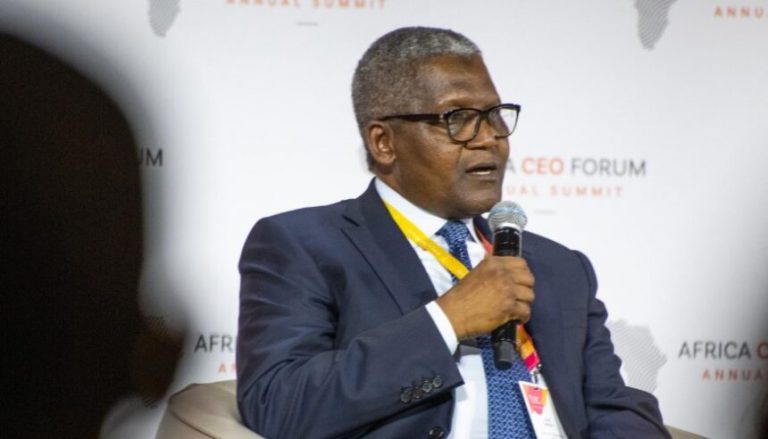
President of Dangote Group, Aliko Dangote, has disclosed plans to develop a large-scale industrial and free trade zone at Olokola in Ondo State.
According to him, the proposed Olokola project would go beyond a conventional free trade zone, emphasising that the move, as a power-driven investment hub, will be designed to attract manufacturers.
Dangote disclosed this during a courtesy visit to Governor Lucky Aiyedatiwa in his office in Akure, yesterday.
Dangote stressed that the free trade zone would be equipped with power, water and logistics infrastructure to enable investors to operate without delays associated with basic utilities.
The initiative, according to Dangote, will address Nigeria’s long-standing power deficit, which he described as the country’s biggest industrial constraint for over 30 years, noting that most manufacturers currently rely on self-generated electricity.
He said that the absence of reliable power had slowed industrial expansion across the country, adding that the new model would integrate a dedicated energy supply into the industrial zone.
Dangote said the group had previously attempted to develop investments in Olokola but was constrained by operational challenges at the time, leading to the concentration of projects in Lagos.
He said the renewed engagement reflects improved conditions and stronger collaboration prospects with the state government.
On his part, Ondo State Governor, Lucky Aiyedatiwa, views development as a major milestone in Ondo State’s industrialisation agenda, stating that the project aligns with his administration’s efforts to position the state as a leading industrial destination in South-West, noting its strategic location along the Lagos-Calabar Coastal Highway corridor.
Aiyedatiwa also highlighted the state’s deep seaport licence, describing it as a key logistics advantage capable of handling large vessels without transshipment.
He disclosed that limestone deposits in the state had been tested and found suitable for industrial use, signalling potential for cement production expansion.
Source: The Guardian


Federal Government Denies Plans to Introduce New Telecoms or Fuel Taxes

Appeal Court Overrides Justice Lifu’s judgment against ADC, 4 others

Police confirms NIPSS Kuru Jos killings

Tech Expert, Zuckerberg trains with UFC champions, Adesanya, Alexander

Organ Trafficking: Ekweremadu bags 10 years in UK prison

SAINT OBI: Between his marriage and his death
-

 Sports2 days ago
World Cup: Sweden beats Tunisia 5-1
-
 International2 days ago
US and Iran to sign historic peace deal June 19 in Switzerland
-

 News2 days ago
Police begins enforcement on vehicles with covered number plates
-
 Sports18 hours ago
Belgium, Egypt draw 1-1 in Group G
-
 Business1 day ago
Manufacturers Association Call for Suspension of NESREA’s Proposed Ban on Single-Use Plastics Below 80 Microns Pending Regulatory Impact Assessment
-

 Business1 day ago
AFC Backs Dangote Fertiliser With $600m Loan for Expansion
-
 Politics1 day ago
FHC Abuja Okays Deregistration of ADC , four other parties • The Judgement Can’t Stand—David Mark
-
 Sports2 days ago
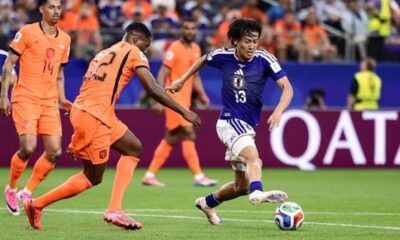
World Cup: Japan Holds Netherlands To 2-2 Draw