
News
Why we insist on state police, by Southern governors

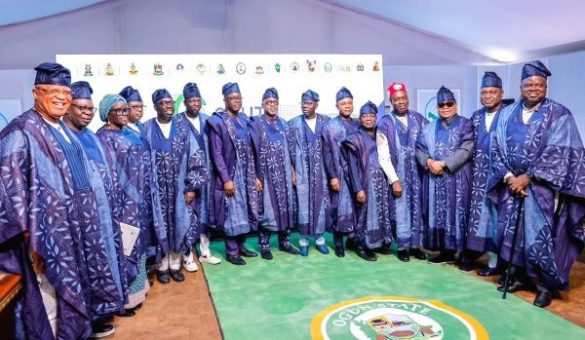
Southern governors yesterday said having state police will give them more control over security decisions in their states.
They believe locals are better placed to fight crime because they understand the terrain and language.
The state helmsmen met under the Southern Governors Forum (SGF) in Abeokuta.
They appointed host Governor Dapo Abiodun as chairman.
Anambra State Governor, Charles Soludo, was named Vice Chairman.
Also in attendance were Babajide Sanwo-Olu (Lagos), Seyi Makinde (Oyo), Biodun Oyebanji (Ekiti), Alex Otti (Abia), Godwin Obaseki (Edo) and Ademola Adeleke (Osun).
Others are Bassey Otu (Cross River), Francis Nwifuru (Ebonyi), Peter Mbah (Enugu), Duoye Diri (Bayelsa) and Umo Eno (Akwa Ibom).
Deputy Governors Chinyere Ekomaru (Imo), Monday Onyeme (Delta) and Olayide Adelami (Ondo) represented Hope Uzodimma, Sheriff Francis Orohwedor Oborevwori and Lucky Aiyedatiwa.
Rivers State Governor, Similayi Fubara, was absent and was not represented.
Abiodun replaced former Ondo governor, the late Rotimi Akeredolu.
The governor, who featured on a national television last night, said the forum deliberated on state police, the political upheaval in Rivers, infrastructure and agriculture, among others.
He said the 17 Southern governors were united in their call for state police.
Abiodun said: “We all spoke with one voice in support of state policing.
“We spoke with one voice in support of regional security outfits which almost all regions have set up.
“The outfits are working hand in glove with the law enforcement agencies and providing them with intelligence and support.
“We all know that we cannot have any meaningful development in the atmosphere of insecurity.
“We all spoke with one voice in support of state policing, and regional security outfits, working hand-in-glove with the security outfits.
“The governors are called state chief security officers. But, we know that the Commissioner of Police is appointed by the Inspector General of Police and is only answerable to the IG.
“And when the governor needs to call the attention of the CP on an urgent task in his state, the governor will have to first clear with the IG.
“What have we discovered? In most cases, a policeman from Borno, Maiduguri, posted to Lagos or Ogun states, for instance.
“Such an officer doesn’t understand the terrain, he doesn’t speak the language and he does not get the level of intelligence he needs.
“By the time he is settling down to understand these factors, he is transferred to another state.
“We’re calling for community police to tame insecurity in the state and the nation.
“Under the state police arrangement, a policeman posted to his ward won’t have problems with language and intelligence.
“In that case, the policeman understands the community and the locals, language, the sentiments and, he knows the criminals within his territory.
“It is also common knowledge that the federal police have a shortage of manpower.
“We, as governors, are not in charge or control of our states as far as security is concerned.
“Yet, we fund the federal police operations, yet we are not getting the best from them. They don’t have enough personnel.
“State policing is not something new.
“We have several types of policing structure in other climes where we took our democracy from.”
Speaking on local government tenure, Abiodun said it was unconstitutional for anybody to extend the tenure of constitutionally elected public servants.
Referring to Rivers political quagmire where the House of Assembly extended the tenure of the local government chairmen, Abiodun said: “On local government administration, it is a constitutional issue that will be put to rest at a point in time.
“When your tenure has expired, it stands to reason that your tenure has expired.
“It is not up to the governor of that state or anybody else to extend the tenure of the local government chairmen.
“The collective position of the governors is that it would be a dangerous precedent and an abuse of the democratic ethos for the tenure of an elected local government chairman to expire and for anyone to imagine that their tenure can be extended by one day.
“I think that puts that matter to rest. If that is not the case, that becomes a precedent, a reference point, and the thing is that somebody will ask for a tenure extension.

News
South African kills Nigerian bar worker
Olaleye was allegedly shot by a South African national following an argument over whether a drinking glass should be taken outside the bar.

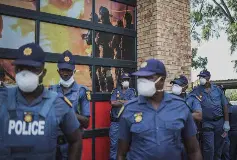
• South African police
The Nigerian Union in South Africa (NUSA) says Olatunde Olaleye, a 40-year-old father of two, has been shot dead in the country.
According to NAN, NUSA said Olaleye, an indigene of Ikere-Ekiti, was killed on September 21 while working at Spanata Bar and Grills in Mamelodi, Pretoria.
Smart Nwobi, NUSA president-general, in a statement on Thursday, said Olaleye was a husband and father of two children, adding that his death has left his family devastated.
He said the union is concerned by reports that Olaleye was allegedly shot by a South African national following an argument over whether a drinking glass should be taken outside the bar.
According to him, there were also reports that the suspect returned to the premises to threaten the bar’s management, with a promise that members of his crew would return.
Nwobi called for a thorough, transparent and impartial investigation into the circumstances surrounding the incident.
“We cannot continue to lose Nigerians under circumstances that leave families devastated and communities traumatised,” he said.
News
Nigerian Editors Brace for Democracy Protection Ahead of 2027 Elections
“As editors, we must remain above board in an increasingly polarised environment. We must not become agents of disorder. Neither should we display contradictory tendencies that cause the citizenry to question our credibility,” Anaba said.
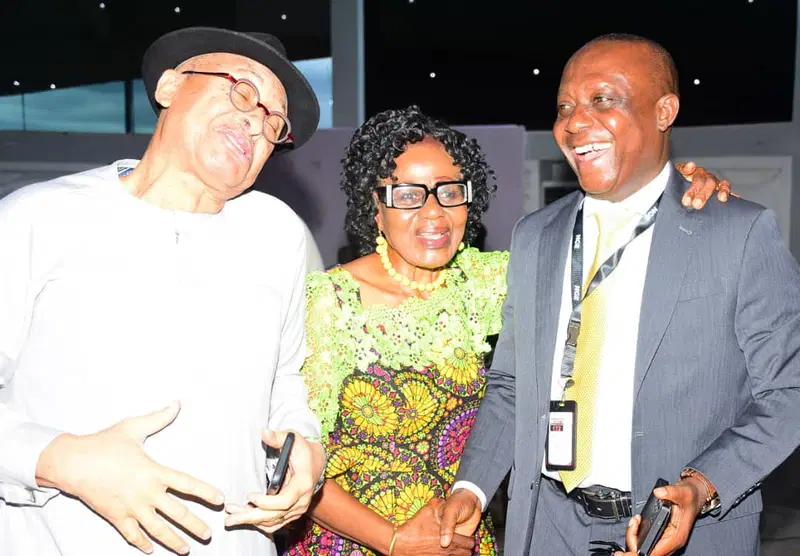
Enugu|•L-R Prof Pat Utomi; Prof Chinyere Okunna and Eze Anaba President Nigerian Guild of Editors at the 22nd All Nigerian Editors Conference in Enugu. Photo. Nwankpa Chijioke
Nigerian editors have been urged to protect the credibility of the ballot and help safeguard democracy as the country prepares for the 2027 general elections.
The call was made by Eze Anaba, President of the Nigerian Guild of Editors (NGE) and Editor of Vanguard Newspaper, in his welcome address at the 22nd Annual All Nigerian Editors Conference, which opened today in Enugu.
The conference is themed, “The Ballot, the Media and the Task of Keeping Democracy Alive.”
Anaba said the media, alongside other critical institutions, had a responsibility to nurture democracy by ensuring that voters were adequately informed and that electoral outcomes reflected the choices of the people.
According to him, the ballot can only fulfil its democratic purpose when voters have access to credible information and are able to make their choices freely, without intimidation or undue influence.
He urged editors and journalists to uphold verification, independence, accuracy, fairness, accountability and courage, particularly in an era of social media, artificial intelligence, deepfakes and the rapid spread of misinformation.
“As editors, we must remain above board in an increasingly polarised environment. We must not become agents of disorder. Neither should we display contradictory tendencies that cause the citizenry to question our credibility,” Anaba said.
He stressed that the media’s overarching responsibility was to serve the public good and help ensure that government derived its legitimacy from the consent of the people.
News
Works Minister Orders Tinubu’s Pictures On First Niger Bridge
“The President has worked so hard and we need to reward his hard work by decorating this bridge with his pictures.”

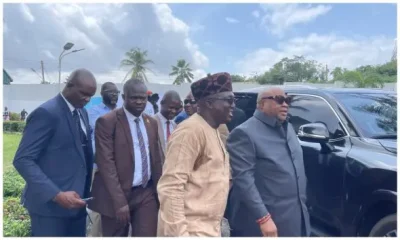
Minister of Works, David Umahi, has ordered the removal of illegal advertisements from the rehabilitated First Niger Bridge and their replacement with pictures of President Bola Tinubu, saying the display would recognise the President’s work on infrastructure.
Umahi gave the directive during an inspection of ongoing rehabilitation works on the bridge linking Anambra and Delta states.
He said the bridge was expected to reopen to motorists next week, subject to the completion of critical structural work.
“Once we are done with work on this bridge, I want all the illegal adverts on this bridge removed. Anyone who wants to advertise should apply to the Ministry of Works. For now, the bridge will be decorated with the pictures of President Tinubu,” Umahi said.
“The President has worked so hard and we need to reward his hard work by decorating this bridge with his pictures.”


Congo military plane crash kills 13, including three officers

Manchester City Faces Expulsion For Breaching 114 EPL Financial Rules

TIME Names Moniepoint CTO Felix Ike Among 50 Global Executives of the Year

Tech Expert, Zuckerberg trains with UFC champions, Adesanya, Alexander

Organ Trafficking: Ekweremadu bags 10 years in UK prison

SAINT OBI: Between his marriage and his death
-
 Business3 days ago
FG Engages Stakeholders On Nigeria’s Rice Value Chain
-

 Business3 days ago
Naira To Dollar, Pound , Euro Rate Wednesday September 23
-
 Business2 days ago
Airtel Money Targets October Listing On London Stock Exchange
-

 Business2 days ago
MAN Urges CBN To Consider CRR Cut Next Phase of Monetary Easing
-
 Crime1 day ago
JUST IN: Zamfara LG Chairman Freed After 61 Days in Captivity
-

 Business3 days ago
Cardoso Says Multiple FX Windows Cost Nigeria 3% of GDP, Higher Than Fuel Subsidy
-

 News2 days ago
VP Shettima, Gov Mbah to address Over 500 editors on 2027 election issues
-
 Sports1 day ago
FIFA names Nigerian referee among 81 officials for U-17 World Cup