
Crime
EFCC bungles arraignment of Yahaya Bello, court picks June 27 as new date


The Economic and Financial Crimes Commission, EFCC, on Thursday abandoned its earlier request for a change in the date for arraignment of former Kogi State Governor, Yahaya Bello, from June 13 to June 27, without informing the defendant’s lawyers.
A new date, June 27, had been reportedly fixed for hearing in the alleged money laundering case instituted by EFCC against Bello, at the instance of the anti-graft agency’s lawyers.
At the resumed hearing on Thursday, counsel to Bello, Adeola Adedipe, SAN, told the court that the EFCC lawyers approached Aliyu AbdulWahab, SAN, who is the counsel for the defendant, that the June 13 date would not be convenient for them to proceed and that Wahab had to agree by way of convenience for another date to be set.
He said he was surprised when he heard that EFCC lawyer, Rotimi Oyedepo was in court.
“They (EFCC) agreed that junior counsel would be sent to court today to formally pick a date. And the registry can confirm this,” Adedipe said.
“Kemi Pinhero, SAN, has been calling us to say today is not convenient,” he added. Kemi Pinhero is the lead counsel.
But for the decision of the EFCC to seek an adjournment to a future date for his arraignment, Bello was said to be ready to appear in court on Thursday.
“Under 266 ACJA there are instances when defendants don’t need to come and this is one of them.
“We came here to pick a date. Of what use will the defendant coming here be? It is the prosecuting counsel that approached us, we did not approach them. We have nothing to hide,” Adedipe noted.
Meanwhile, the court has fixed June 27 as new date for the arraignment.








Crime
‘Stop Giving Testimony In Church, And Why’ – Police IRT Commander
The commander cautioned against assuming that everyone attending church had good intentions, urging worshippers to exercise discretion when sharing sensitive personal information in public gatherings.

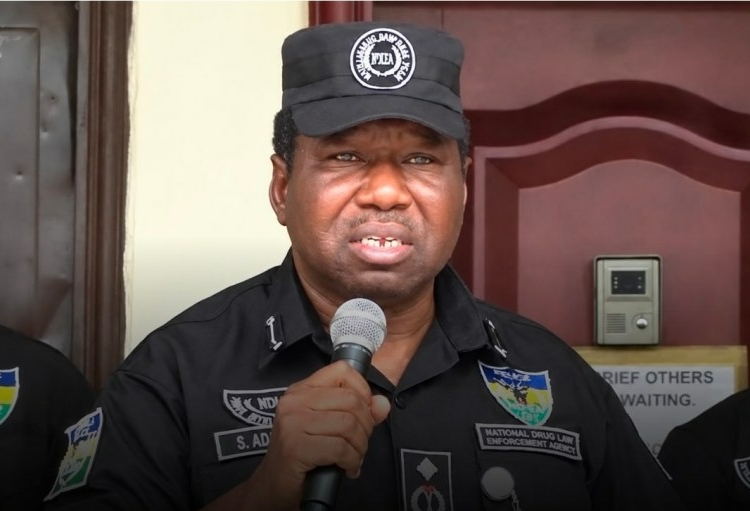
A commander of the Nigeria Police Force Intelligence Response Team (IRT) has cautioned churchgoers against publicly disclosing details of their personal lives and achievements during church services.
The commander gave the warning during an IRT briefing on TV Platinum on Thursday, particularly cautioning worshippers attending evening services at churches on the outskirts of towns.
He said publicly sharing personal achievements before a congregation whose intentions were unknown could make worshippers vulnerable to criminal attacks, particularly when returning home after night services.
“After closing from evening service, such act that they plan will be implemented. You can’t go to a church located on the outskirts, and you go to evening prayer, and close in the evening, coming down to your home, after making testimony of what you have achieved in life,” he said.
The commander cautioned against assuming that everyone attending church had good intentions, urging worshippers to exercise discretion when sharing sensitive personal information in public gatherings.
“It doesn’t conform with common sense and rationality in the midst of gathering of people watching you, thinking that they are all men of God. No. Everybody has his own motive of going to the church,” he said.
The commander further called on churches that hold evening services to strengthen their security arrangements, particularly by monitoring access routes and exits to protect congregants before and after worship.

A commercial tricycle driver has been killed in a fatal one-way crash in the Meiran area of Lagos State.
According to preliminary reports, the incident occurred when a vehicle travelling against the designated flow of traffic on a one-way road collided head-on with the tricycle.
The impact left the tricycle driver with severe injuries, and he was confirmed dead at the scene by emergency responders.
Officials from the Lagos State Traffic Management Authority (LASTMA) and the Nigeria Police Force were quickly mobilised to the location. The crash site was secured, and traffic was temporarily disrupted as recovery operations got underway. The body of the deceased has been evacuated to a nearby mortuary pending formal identification and further investigations.
Authorities say the exact circumstances surrounding the crash, including the identity of the tricycle driver and details of the other vehicle involved, are still being established. Police have launched a probe into the incident, with particular focus on the alleged one-way driving that led to the collision.
Road safety officials have once again cautioned motorists against driving against traffic, describing the practice as a major contributor to fatal accidents on Lagos roads. Further updates are expected as the investigation progresses.
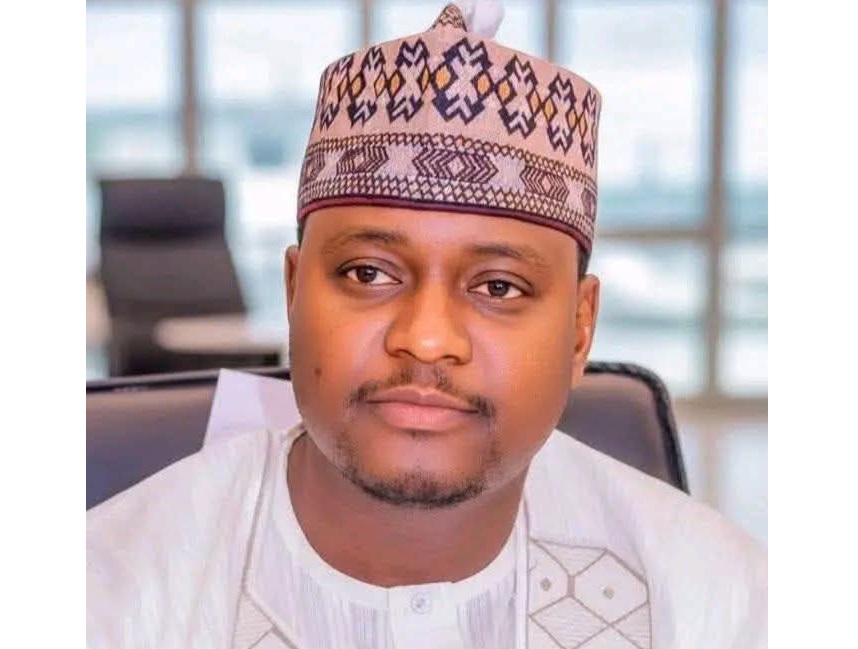
The Zamfara State Police Command has confirmed the release of Nura Abdullahi, Chairman of Bungudu Local Government Area, after spending 61 days in the captivity of kidnappers.
The Command’s Public Relations Officer, DSP Yazid Abubakar, confirmed the development to Arise News in a telephone interview on Thursday. He said the chairman is presently receiving medical attention in Gusau, the Zamfara State capital, following his release.
According to the police, Abdullahi regained his freedom alongside other persons who were abducted with him on the same day and taken to an unknown location. The exact circumstances surrounding the release were not immediately disclosed.
Police authorities have remained silent on whether any ransom was paid to secure the victims’ freedom. However, unconfirmed reports circulating in the state claim that the sum of ₦200 million was earlier paid to the kidnappers. The reports further allege that the abductors refused to free the chairman at the time and continued to hold him, demanding additional payment.
The abduction occurred when heavily armed attackers invaded Abdullahi’s residence in Bungudu town. During the assault, two security agents attached to the local government chairman were killed. His elder brother was also shot and later died in hospital from the injuries sustained.
The release of the Bungudu LG chairman marks the end of a prolonged ordeal that had drawn concern across Zamfara State. Further details on the condition of the other freed victims and any ongoing investigations are still being awaited from the police.


Investors Rush For Airtel Money IPO on LSE

JUST IN: NNPC Clarifies Petrol Discount: Relief Initiative, Not Subsidy Restoration

JUST IN: A’Court Stalls SERAP, Oluwadare Defamation Appeals Over Late Briefs

Tech Expert, Zuckerberg trains with UFC champions, Adesanya, Alexander

Organ Trafficking: Ekweremadu bags 10 years in UK prison

SAINT OBI: Between his marriage and his death
-

 News3 days ago
NAF Helicopter Makes Precautionary Landing In Makurdi
-

 Business3 days ago
Naira Today Exchange Rates, Thursday October 8
-

 News1 day ago
Tears, Embraces as Rescued NYSC Members Reunite with Families in Ibadan
-

 Business3 days ago
Obi advocates policy support for manufacturers
-

 Business2 days ago
Naira Exchange Rates Friday, October 9
-
 News1 day ago
Ahmadu Bello University Hikes Fees Across Programme
-

 International3 days ago
Belgian Students Protest Over Rising Education Costs
-
 International3 days ago
Japan beer giants raided over alleged price-fixing cartel