
Business
JUST IN: CBN Frowns At Exporting Without Documentation, as Proceeds hits $5.6bn


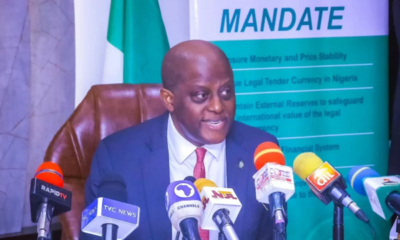
The Governor of the Central Bank of Nigeria (CBN), Godwin Emefiele, has warned exporters and shipping companies to desist from exporting without documentation, saying, “What this does is to reduce the export earning potentials of the country.”
Emefiele made the call today during the Bi-Annual RT200 Non-Oil Export Summit in Abuja.
The CBN boss said: “we keep hearing cases of people trying as much as possible to sidestep the process.
“All I can do now is to appeal to those of us who want to export without documentation to please try as much as possible to desist from this practice.
“We will continue to engage customs, we will continue to engage Nigerian Ports Authority and we will continue to engage the shipping lines and agents to ensure that we nip in the bud the incidences of exporting without documentation.”
Emefiele recalls a meeting of the bank with the shipping lines : “About three years ago when we had a meeting at the CBN in Lagos with the shipping lines, I had said that the CBN will be beaming searchlight on undocumented exports.
“And we had advised the shipping lines at that meeting that we will also be monitoring and if we find that they export without documentation we will fine them by placing their accounts on Post No Debit order.
“We have so far not done anything like that, because we feel that our shipping lines will be responsible to do what is right.
“However, if we do not see the kind of cooperation that we expect, I will have to insist that we do what we need to do.”
He disclosed that the export proceeds repatriation into the country increased by 40 per cent from $3 billion in 2021 to $5.6 billion at the end of 2022.
The CBN Governor added that the momentum for 2023 was equally showing strong numbers and impressive prospects.
“In the first quarter of 2023, a total of US$1.7 billion was repatriated to the economy while about $790 million was sold at the Investors and Exporters window year-to-date.”
Emefiele said the balance of the proceeds remained in the Export Domiciliary Accounts of exporters, noting that proceeds that were not sold at the Investors and Exporters window (I&E) could not and would not be eligible for the rebate.
He urged those holding their export proceeds in their domiciliary accounts to take advantage of the rebate by selling them at the I&E Window.
He expressed the bank’s continued commitment and assurance to strengthening and expanding foreign exchange supply into the market.
Babajide Sanwo-Olu Commends CBN’s RT200 FX programme
Also at the event, Lagos State Governor, Babajide Sanwo-Olu, commended the CBN for its introduction of the programme.
He said that it was a critical step for diversifying the economy.
Sanwo-Olu was represented by the Lagos State Commissioner for Economic Planning and Budget, Samuel Egube.
He stated that it would also increase the capacity of the non-oil sector to generate more foreign exchange earnings, boost economic growth, and stabilise the economy generally.







Business
NPA initiate trucks movement code to ease traffic at Lagos ports
The initiative is designed to ensure that each truck is matched exclusively to its designated empty container, eliminate multiple allocations, improve traffic management and enhance operational efficiency within the port corridor.

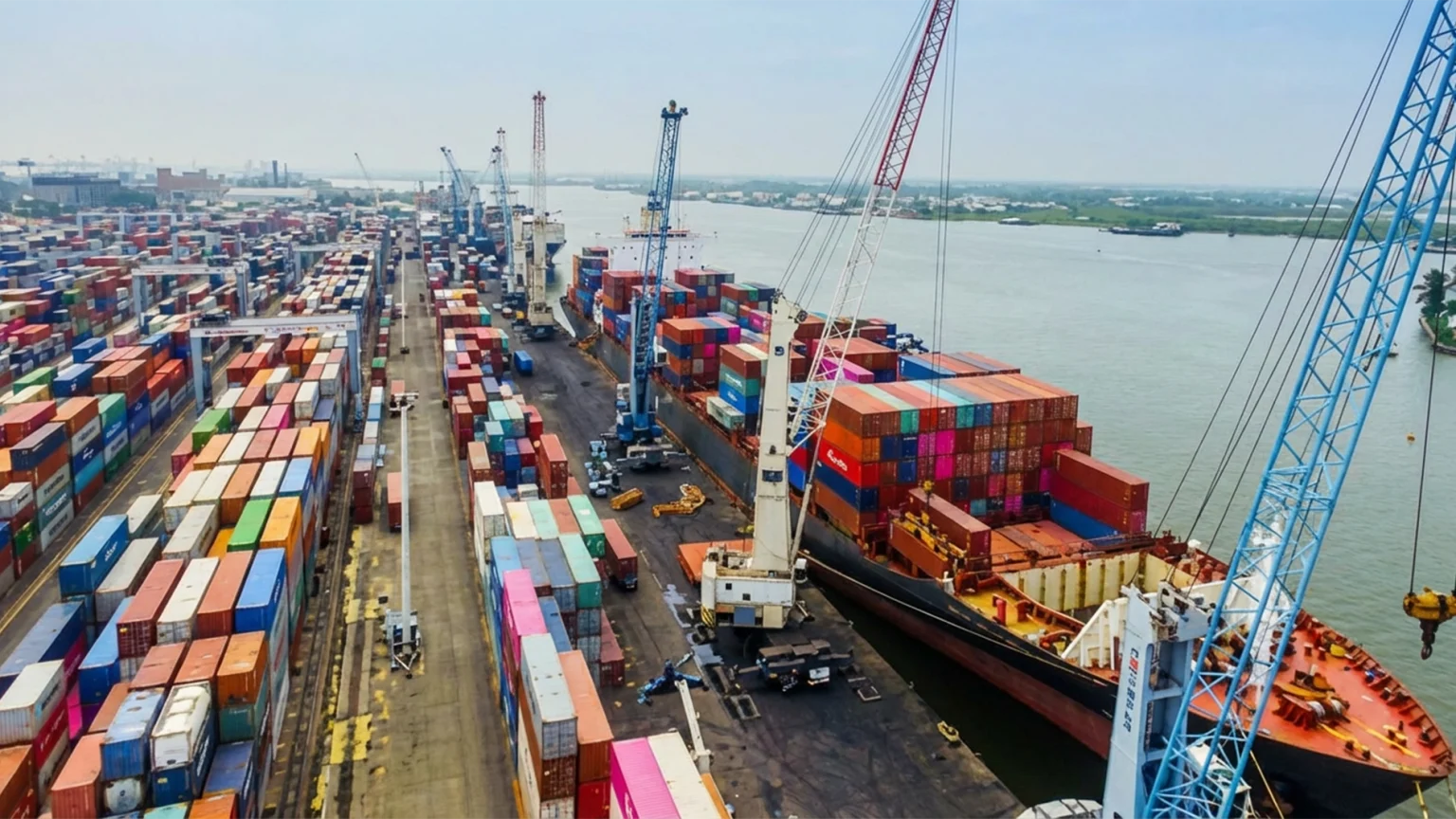
The Nigerian Ports Authority (NPA) has introduced a movement code to streamline the movement of empty containers into seaport terminals and reduce traffic congestion caused by container trucks along the Apapa and Tin Can Island port corridors.
The Guardian reported that under the new policy, the movement code will serve as a unique identifier generated by a holding bay for every empty container uploaded to the Electronic Call-Up (ETO) platform.
The code must correspond with the details captured on the ETO system before trucks are granted access to port terminals.
In a notice issued to stakeholders, the NPA said the movement code has become a mandatory requirement for completing the truck-container matching process.
Truck drivers are required to obtain the code from designated holding bays before proceeding to the ports.
According to the authority, the initiative is designed to ensure that each truck is matched exclusively to its designated empty container, eliminate multiple allocations, improve traffic management and enhance operational efficiency within the port corridor.
Business
Okonjo-Iweala lauds Cardoso for stabilising Nigeria’s monetary environment
Okonjo-Iweala, gave the commendation on Thursday at the 7th Africa Emerging Markets Forum held in Abuja, with the theme: “Building Resilience Amidst Geo-economic Uncertainties.”

The Director-General of the World Trade Organisation (WTO), Dr Ngozi Okonjo-Iweala, has commended the Governor of the Central Bank of Nigeria (CBN), Mr Olayemi Cardoso, for stabilising Nigeria’s monetary environment.
Okonjo-Iweala, gave the commendation on Thursday at the 7th Africa Emerging Markets Forum held in Abuja, with the theme: “Building Resilience Amidst Geo-economic Uncertainties.”
Speaking at the forum, Okonjo-Iweala commended Cardoso on the work that he and his team have done on currency and monetary policy stabilisation.
However, she emphasised that Nigeria must sustain broader macroeconomic reforms.
“Nigerians have to feel the dividends of reform in the real economy,” she added.
The forum brought together policymakers, business leaders and development partners to discuss strategies for strengthening Africa’s resilience amid growing global economic uncertainty.
Business
Naira Exchange Rates Thursday, July 30 : Black Market, CBN, Commercial Bank
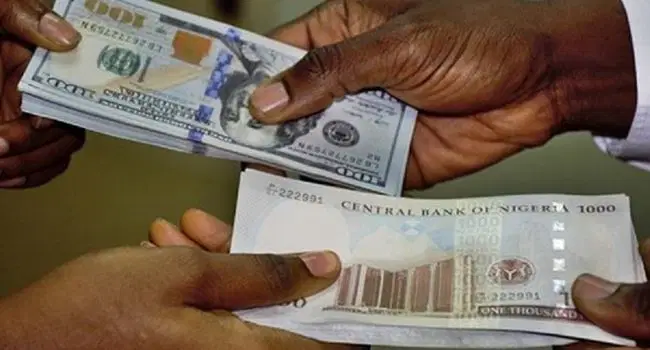
Sterling Bank publishes both a buy rate and a sell rate for USD, GBP, EUR, and ZAR. The buy rate is what Sterling Bank will pay you when you exchange foreign currency for Naira. The sell rate is what you will pay when buying foreign currency from Sterling Bank at its branches.
BLACK MARKET RATES
US DOLLAR (USD) Buy ₦1,407 Sell ₦1,415
GREAT BRITISH POUND (GBP) Buy ₦1,900 Sell: ₦1,925
EURO (EUR) Buy ₦1,590 Sell ₦1,610
CANADIAN DOLLAR (CAD) Buy ₦1,020 Sell ₦1,080
SOUTH AFRICAN RAND (ZAR) Buy ₦75 Sell ₦90
UAE DIRHAM Buy ₦350 Sell ₦370 CHINESE YUAN Buy ₦190 Sell ₦205
GHANA CEDI (GHS) Buy ₦95 Sell ₦110
WEST AFRICAN CFA Buy ₦2, 300 Sell ₦2, 400
CENTRAL AFRICAN CFA Buy ₦2,150 Sell 2,250
AUSTRALIAN DOLLAR Buy ₦800 Sell ₦900
Commercial Bank Exchange Rates
Sterling Bank
Currency Buy Sell
USD / NGN ₦1350.00 ₦1385.00
GBP / NGN ₦1775.23 ₦1862.81
EUR / NGN ₦1518.76 ₦1599.69
ZAR / NGN ₦80.66 ₦85.12
CBN Exchange Rates
US DOLLAR (USD) ₦1,366.71
GREAT BRITISH POUND (GBP) ₦1,815.82
EURO (EUR) ₦1,555.32
SWISS FRANC (CHF) ₦1,666.72
JAPANESE YEN (JPN) ₦8.34
CHINESE YUAN (CNY) ₦201. 99
WEST AFRICAN CFA (XOF) ₦2. 37
WEST AFRICAN UNIT ACCOUNT (WAUA) ₦1,849.04
SAUDI RIYAL (SAR) ₦364.02
SOUTH AFRICAN RAND (ZAR) ₦81.46


SUG Confirms 5 Students Abducted at Gateway ICT Poly

NPA initiate trucks movement code to ease traffic at Lagos ports

Okonjo-Iweala lauds Cardoso for stabilising Nigeria’s monetary environment

Tech Expert, Zuckerberg trains with UFC champions, Adesanya, Alexander

Organ Trafficking: Ekweremadu bags 10 years in UK prison

SAINT OBI: Between his marriage and his death
-

 International2 days ago
Just In: People trapped in Japanese mall hit by earthquake, with others missing after factory chimney collapse
-

 Business2 days ago
FG Availing ₦3.6bn to 200,000 Tailors Nationwide
-

 Entertainment3 days ago
Face of Unijos student, Mbaya, killed over alleged phone theft
-

 Sports2 days ago
Mancini is back as Italy’s national team coach
-
 News2 days ago
LASEMA rescues 12, 3 dead bodies at Ajuwon building collapse
-

 Sports2 days ago
Manchester City renews Gvardiol contract until 2031
-

 News3 days ago
Billionaire Dangote to donate one-third of wealth to philanthropy,says daughter
-
 Politics2 days ago
2027: ADC and Four Other Parties Remain Duly Registered – Appeal Court (Video)