
Business
JUST IN: CBN Frowns At Exporting Without Documentation, as Proceeds hits $5.6bn


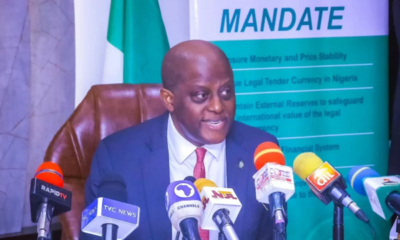
The Governor of the Central Bank of Nigeria (CBN), Godwin Emefiele, has warned exporters and shipping companies to desist from exporting without documentation, saying, “What this does is to reduce the export earning potentials of the country.”
Emefiele made the call today during the Bi-Annual RT200 Non-Oil Export Summit in Abuja.
The CBN boss said: “we keep hearing cases of people trying as much as possible to sidestep the process.
“All I can do now is to appeal to those of us who want to export without documentation to please try as much as possible to desist from this practice.
“We will continue to engage customs, we will continue to engage Nigerian Ports Authority and we will continue to engage the shipping lines and agents to ensure that we nip in the bud the incidences of exporting without documentation.”
Emefiele recalls a meeting of the bank with the shipping lines : “About three years ago when we had a meeting at the CBN in Lagos with the shipping lines, I had said that the CBN will be beaming searchlight on undocumented exports.
“And we had advised the shipping lines at that meeting that we will also be monitoring and if we find that they export without documentation we will fine them by placing their accounts on Post No Debit order.
“We have so far not done anything like that, because we feel that our shipping lines will be responsible to do what is right.
“However, if we do not see the kind of cooperation that we expect, I will have to insist that we do what we need to do.”
He disclosed that the export proceeds repatriation into the country increased by 40 per cent from $3 billion in 2021 to $5.6 billion at the end of 2022.
The CBN Governor added that the momentum for 2023 was equally showing strong numbers and impressive prospects.
“In the first quarter of 2023, a total of US$1.7 billion was repatriated to the economy while about $790 million was sold at the Investors and Exporters window year-to-date.”
Emefiele said the balance of the proceeds remained in the Export Domiciliary Accounts of exporters, noting that proceeds that were not sold at the Investors and Exporters window (I&E) could not and would not be eligible for the rebate.
He urged those holding their export proceeds in their domiciliary accounts to take advantage of the rebate by selling them at the I&E Window.
He expressed the bank’s continued commitment and assurance to strengthening and expanding foreign exchange supply into the market.
Babajide Sanwo-Olu Commends CBN’s RT200 FX programme
Also at the event, Lagos State Governor, Babajide Sanwo-Olu, commended the CBN for its introduction of the programme.
He said that it was a critical step for diversifying the economy.
Sanwo-Olu was represented by the Lagos State Commissioner for Economic Planning and Budget, Samuel Egube.
He stated that it would also increase the capacity of the non-oil sector to generate more foreign exchange earnings, boost economic growth, and stabilise the economy generally.








Business
Obi Sees Something Good in Tinubu’s “Naira Float Policy ‘
The policy was introduced by the Tinubu administration in June 2023 as part of wider foreign exchange reforms.

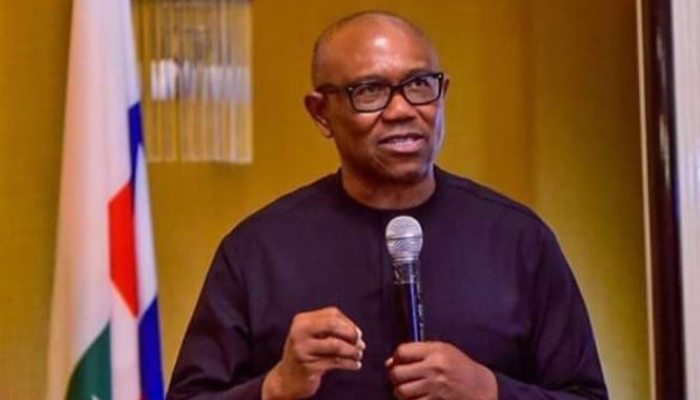
The presidential candidate of the National Democratic Congress (NDC) for the 2027 election, Peter Obi, has said he would retain President Bola Ahmed Tinubu’s naira float policy if elected president.
The policy was introduced by the Tinubu administration in June 2023 as part of wider foreign exchange reforms.
The Central Bank of Nigeria removed restrictions at the Investors and Exporters foreign exchange window, allowing the naira to trade more freely against the dollar and other major currencies
Obi made the disclosure in a public statement on air, emphasising that his administration would seek to strengthen the currency by prioritising productivity and increasing economic output rather than reversing the floating exchange-rate framework.
Asked to identify one policy of the Tinubu administration he would keep if elected, Obi said, “There’s one – the floating of the Naira. I’m not going to defend it. But I’m going to put productivity to make it more valuable to the people.”
His position means he would maintain the floating exchange-rate system while seeking to change the economic conditions that determine the strength and value of the naira.
Business
Dangote Refinery Buys 16m Barrels Of Nigerian Crude For October
The October supply is equivalent to about 520,000 barrels per day, representing most of the refinery’s 700,000 barrels-per-day processing capacity.

Dangote Refinery has bought at least 16 million barrels of Nigerian crude oil for delivery in October.
Reuters reported that the 16 million barrels comprise monthly crude allocations from the Nigerian National Petroleum Company and additional volumes purchased through a tender.
The October supply is equivalent to about 520,000 barrels per day, representing most of the refinery’s 700,000 barrels-per-day processing capacity.
The increased crude purchases highlight the refinery’s rising demand for feedstock as it expands operations and moves closer to operating at a larger share of its installed capacity.
Business
Brent crude slid to around $106 per barrel
Top US officials reportedly warned President Donald Trump that the war could continue through the remainder of his term, which ends in January 2029.

Brent crude slid to around $106 per barrel on Friday in a likely technical correction, but was still set to end the week sharply higher as the escalating conflict between the US and Iran fueled concerns over prolonged disruptions to global energy supplies.
Top US officials reportedly warned President Donald Trump that the war could continue through the remainder of his term, which ends in January 2029.
Meanwhile, Iranian leaders are reportedly determined to continue fighting despite mounting economic costs, viewing the conflict as an existential threat.
They also claim that Tehran has managed to rebuild its missile capabilities and could intensify attacks on US and Gulf assets if Washington escalates its own strikes.
Fighting has intensified over the past two weeks, with the US targeting Iranian oil tankers while Iran launched missiles at US warships and tankers in the Persian Gulf, as well as American assets in neighboring countries.


Bamanga Tukur, former Adamawa gov, ex-PDP Chair dies at 90

Bayelsa deploying 19 doctors, 210 nurses to strengthen primary healthcare centres

Albert Horsfall, Ex-SSS Director-General dies

Tech Expert, Zuckerberg trains with UFC champions, Adesanya, Alexander

Organ Trafficking: Ekweremadu bags 10 years in UK prison

SAINT OBI: Between his marriage and his death
-
 Politics3 days ago
Benue Politician,Terhemba Shija Vows To Bring Back Home Over 900,000 in IDP Camps
-

 News3 days ago
Police arrest 46 for obstruction of Obi’s convoy in Benue
-

 News3 days ago
JUST IN: One Dead, Many Feared Trapped as Two-Storey Building Collapses in Lagos
-

 News3 days ago
Lagos Confirms 6 Diphtheria Cases, Says no Outbreak
-
 Politics3 days ago
Trump promises $5,000 ‘dividend’ to U.S. citizens if Republicans win midterms
-

 Entertainment3 days ago
Rema to release new single ‘Oh No’ Friday
-

 Business3 days ago
Brent Holds Above $101bp
-
 Politics3 days ago
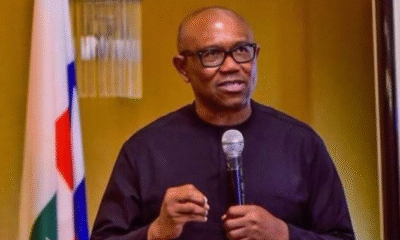
I will concede defeat if 2027 election is credible — Obi