
News
Oyedele’s Presidential Committee on Reforms seeks NEITI Partnership, Collaboration on Accurate Data, Revenue Transparency

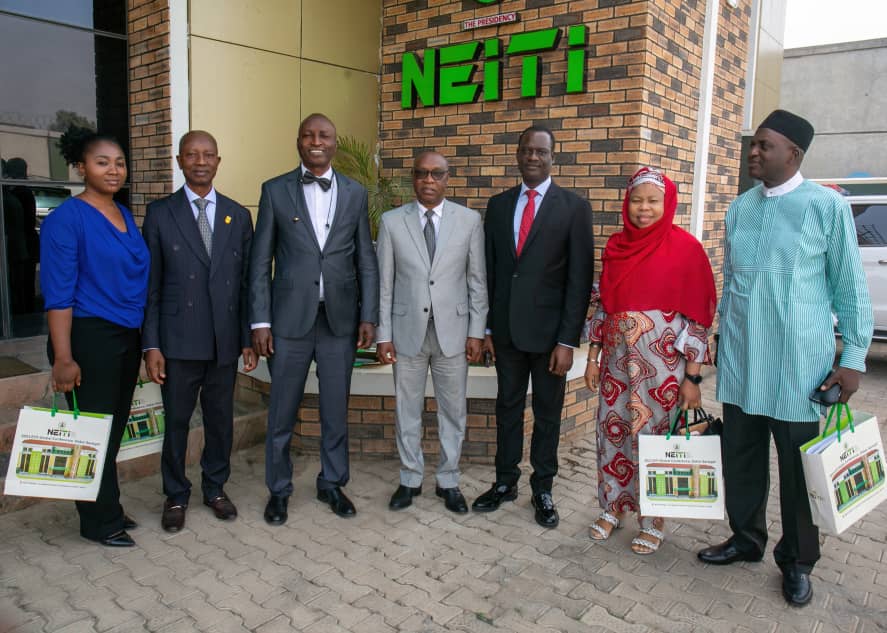
The Nigeria Extractive Industries Transparency Initiative (NEITI) and the Presidential Committee on Fiscal Policy and Tax Reforms (PCFPTR) have agreed to work in partnership and collaborate on deployment of reliable data, public disclosure to support ongoing governance and institutional reforms and public finance management.
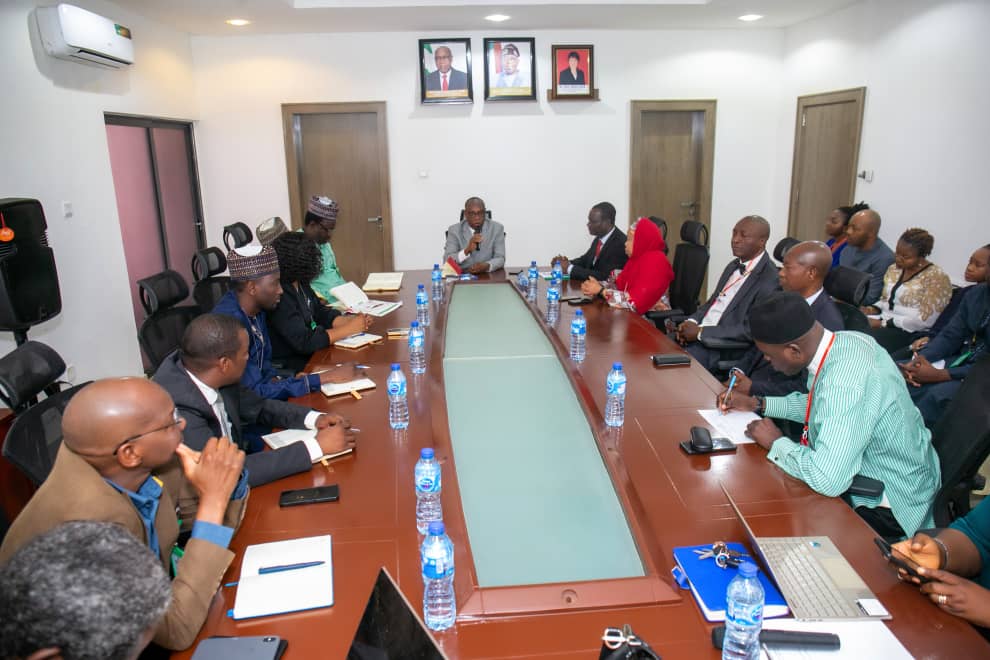
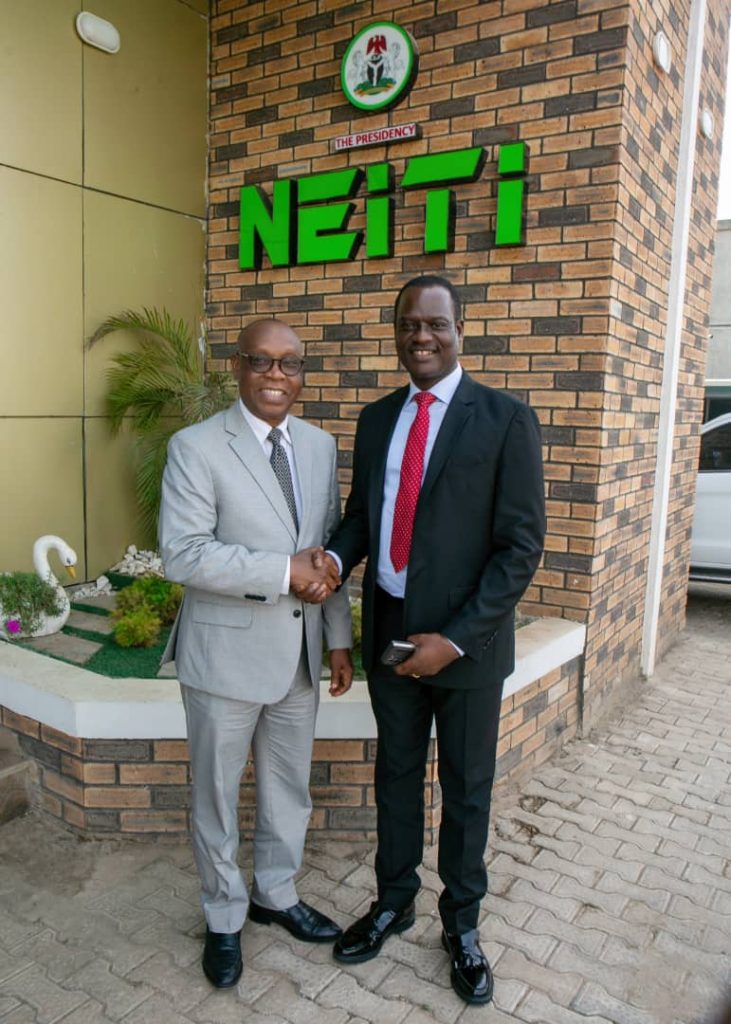
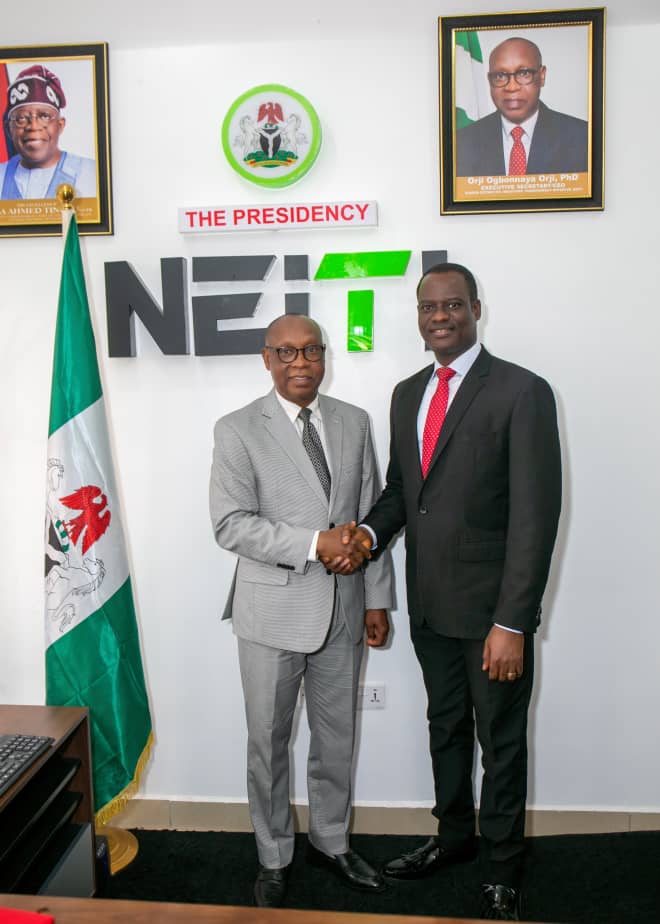
Rising from an elaborate meeting held at the NEITI House Abuja, the Executive Secretary of NEITI, Dr Orji Ogbonnaya Orji and the Chairman of the Presidential Committee on Fiscal Policy and Tax Reforms, Mr. Taiwo Oyedele identified the importance of NEITI’s reports in the oil, gas and mining sectors and the deployment of accurate data as critical success factors in evolving enduring fiscal policies and tax reforms in Nigeria.
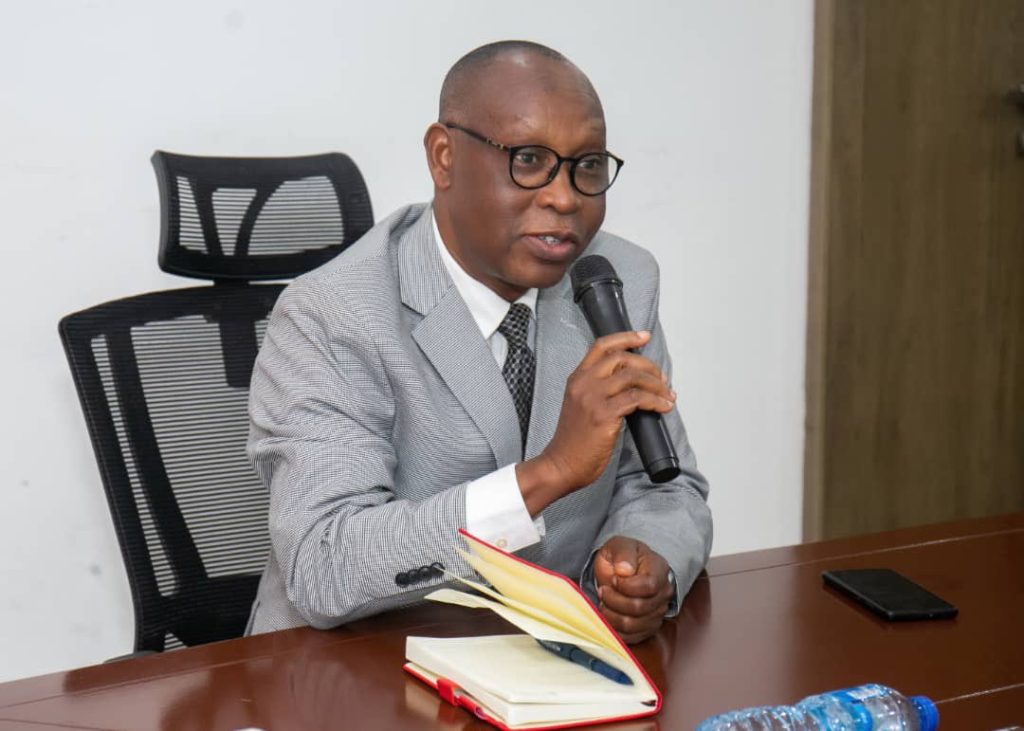
Receiving the delegation, the Executive Secretary of NEITI, Dr Orji Ogbonnaya Orji remarked that NEITI’s key focal areas of improving Nigeria’s macro-economic environment, strengthening public expenditure management, structure, institutional and governance reforms to boost economic growth, create jobs and poverty reduction aligns closely with the mandates of the Presidential Committee.
According to the NEITI Boss: “With the combined forces of the Presidential Committee and NEITI, Nigeria would benefit from shared knowledge, skills, information and data that informs best economic reforms and policy making”.
He noted that NEITI is available to provide information and data as contained in the NEITI oil, gas, solid minerals and the Fiscal Allocation and Statutory Disbursement Reports and advised the Committee on the need to utilize the findings and recommendations contained in the NEITI reports to advance economic policy initiatives for the benefit of the citizens.
Dr. Orji congratulated the Chairman of the Presidential Committee, Mr Taiwo Oyedele on his appointment to undertake such a critical task and pledged the cooperation of NEITI to support and ensure the success of their national assignment.
The Chairman of the Presidential Committee on Fiscal Policy and Tax Reforms (PCFPTR), Mr. Taiwo Oyedele commended NEITI for the work that the agency is doing in the extractive sector and maintained that such efforts are the reason behind NEITI’s selection by the Committee as one of the key Agencies to support the Committee with data and information that will enable it to deliver on its assignment.
He explained that the Committee has classified its work in three distinct categories including fiscal governance with particular attention to financial management, revenue generation, borrowing, spending as well as policy coordination at the national and sub-national levels.
Others were on revenue transformation focusing on improving government revenues through improved mechanisms for taxing oil and gas and non-oil resources to transform the revenue profile of the Country.
The Committee is also looking at oil and gas which is the core area of focus by NEITI as well as non-oil resources like the solid minerals sector which NEITI can support the Committee in the area of information and data.
Mr Oyedele further explained that the third pillar or mandate of the Committee is economic growth facilitation and competitiveness with focus on removal of impediments for businesses to thrive, growth, provide jobs and generate revenues.
Mr. Oyedele announced that under the first phase of the Committee’s work which he classified as the ‘quick wins’, it submitted a report with over 20 recommendations to the President, 3 of which have been fully implemented.
He highlighted that the Committee is in its second phase tagged critical reforms which among other things will require amendment of some existing Laws.
The Committee is already engaging the National Assembly and sub-national government on the issues that concerns them while the third phase will be on implementation and change management.
He hopes that the outcome of the Committee’s work will transform to revenue growth for Nigeria.
The Presidential Committee extended special invitation to NEITI to be its partner and co-opted NEITI into the Committee in recognition of the knowledge, competence and integrity of the agency in helping the Committee to streamline fiscal policies, optimize tax structures, and improve revenue collection mechanisms.
Mr Oyedele remarked “By harnessing data-driven insights and best practices, both entities will strive to create an enabling environment for investment, job creation, and economic growth.
Furthermore, the collaboration will prioritise initiatives aimed at enhancing transparency, accountability, and integrity in the management of Nigeria’s extractive resources through promotion and facilitation of participatory and inclusive dialogue with stakeholders, engagements and information sharing, building trust, promoting responsible resource management and combating illicit financial flows.
In reaffirming their commitment to driving meaningful change, the Presidential Committee and NEITI called on all stakeholders, including government agencies, industry partners, civil society organisations and the general public, to actively support and participate in these collective efforts.


News
UN approves new world map replacing 16th century Mercator map
The outcome is expected to result in an update of classroom curriculums and everyday technology given the wide usage of the Mercator projection in education, technology and governance.


The United Nations has voted to adopt a resolution for the world to formally phase out the traditional Mercator map of the globe in favour of one that more accurately displays Africa’s size.
The Guardian UK, reported that in a session at its headquarters in New York, on Friday, the UN general assembly officially retired the 16th-century Mercator projection in favour of one based on the more accurate 2018 Equal Earth design.
At the session, 164 countries voted in favour of the resolution. Only the US voted no, with its representative saying the resolution was “superfluous”. There were six abstentions.
UN resolutions are non-enforceable, so countries and institutions will not be mandated to use only the new projection or forbidden from using the old one.
However, the outcome is expected to result in an update of classroom curriculums and everyday technology given the wide usage of the Mercator projection in education, technology and governance.
Togo, which spearheaded a campaign for the resolution on behalf of the African Union, said the resolution “recognises and affirms that disproportionate cartographic representations, particularly those resulting from the Mercator projection, have had lasting cognitive, educational, cultural, geopolitical and socioeconomic effects, contributing to a drastic reduction in the perceived size of Africa and other regions of the world in the global collective imagination”.
Speaking before the resolution passed, Robert Dussey, Togo’s foreign affairs minister, said: “This discussion is not a political discussion [but] a scientific discussion, because there is scientific proof so we all have to accept the reality.”
The Mercator layout was introduced by the Flemish cartographer Gerardus Mercator in 1569 to help sailors navigate the seas. Almost five centuries later, it remains the global standard.
Because of its projection style, however, regions near the equator appear significantly smaller than they are, whereas high-latitude areas look much larger. For example, the map shows Africa as being similar in size to Greenland, but the continent is 14 times larger than the Danish territory.
“You could fit the United States, China, India, Japan, Mexico and much of Europe into Africa and still have land to spare,” says a petition on Change.org for the #CorrectTheMap campaign, which has more than 11,000 signatures.
The African Union endorsed the campaign in August 2025 and then asked Togo to spearhead its adoption.
News
BBC Appoints Kakangi Editor Hausa Service
Kakangi is a Senior Digital Journalist with over 10 years of experience producing high-quality content for global platforms.
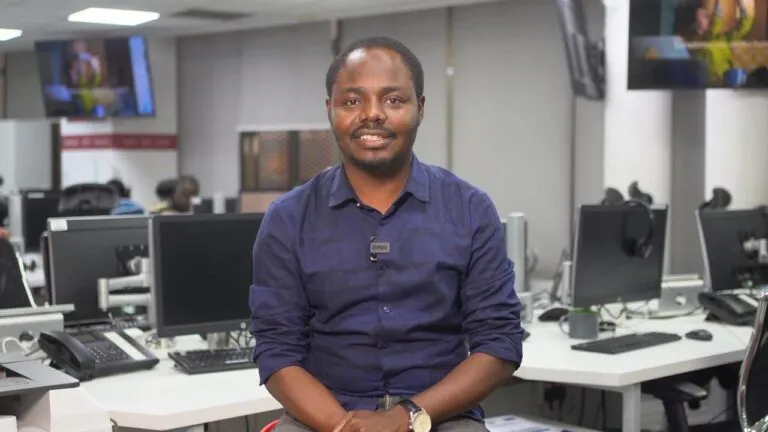
•Haruna Ibrahim Kakangi
The British Broadcasting Corporation (BBC) has appointed Haruna Ibrahim Kakangi as the editor of BBC Hausa Service on a one-year attachment.
Before his appointment, Kakangi was a Senior Digital Journalist at BBC World Service.
He replaces Aliyu Tanko, who resigned from the BBC in August 2025 following allegations of bullying and maltreatment raised by his former colleague, Halima Umar Saleh, and some current staff members.
Kakangi is a Senior Digital Journalist with over 10 years of experience producing high-quality content for global platforms.
He has a track record in producing impactful stories, leading teams and driving audience engagement.
He is also skilled in storytelling, interviewing and broadcasting, with expertise in digital media. Kakangi attended Ahmadu Bello University, Zaria, from 2002 to 2008.
He was also a 2024 U.S. Journalism Fellow at the World Press Institute (WPI).

The Federal Government has moved to harmonize the salaries of its workers in a bid to address long-standing disparities across different grade levels and salary structures in the public service.
This development follows persistent complaints about uneven pay among civil servants on similar grades and the ongoing implementation of consequential adjustments arising from the National Minimum Wage Act, which raised the minimum wage to ₦70,000.
A committee earlier set up by the government had agreed percentage increases under the Consolidated Public Service Salary Structure (CONPSS): higher adjustments for lower grades (up to about 80% for levels 01–06) and more modest ones for senior levels. The National Salaries, Incomes and Wages Commission (NSIWC) was tasked with developing uniform templates for other consolidated salary structures to promote equity.
Officials have repeatedly stressed the need to bridge dichotomies in pay so that no sector is treated as more important than another, while workers’ groups continue to push for fuller implementation of adjustments and further reviews amid rising living costs.
The harmonization is expected to bring greater consistency to federal workers’ take-home pay once the new templates and adjustments are fully rolled out.


UN approves new world map replacing 16th century Mercator map

Dangote Foundation Takes Over Aliko Dangote Skills Acquisition Centre Kano

BBC Appoints Kakangi Editor Hausa Service

Tech Expert, Zuckerberg trains with UFC champions, Adesanya, Alexander

Organ Trafficking: Ekweremadu bags 10 years in UK prison

SAINT OBI: Between his marriage and his death
-
 Business3 days ago
Naira Exchange Rates Wednesday, September 2
-

 Business2 days ago
BREAKING: Uber winds down operations in Nigeria, effective September 2
-

 Business11 hours ago
Okin Biscuits Set For Comeback After 17 Years, Targets Revival Of Jobs, Local Manufacturing
-

 Business3 days ago
Allawee shutting down operations by December 1, warns customers must withdraw by November 30
-

 News3 days ago
Eko Electricity blames Lekki-Ajah power outages on feeders disruption
-
 Business2 days ago
Forest Sector Employs 42m People Globally – FAO
-
 News11 hours ago
BREAKING: FG Harmonizes Workers’ Salaries
-
 International2 days ago
China -Egypt lubricate over 70 years trade, diplomatic relation