
Business
JUST IN: MAN blames business environment as syringe manufacturer exits Nigeria


The Manufacturers Association of Nigeria has blamed the current business environment for the continued exit of multinational companies including the latest departure of Jubilee Syringe Manufacturing.
Jubilee Syringe Manufacturing, once regarded as the largest syringe manufacturing venture in Africa, has officially ceased operations in Awa in the Onna Local Government Area of Akwa Ibom.
Inaugurated in 2017 by former Vice President Yemi Osinbajo, the firm cited “unforeseen circumstances affecting our business operations” as the major reason for its decision to leave Nigeria.
Owned by a Turkish national, Onur Kumral, Jubilee Syringe Manufacturing Limited was one of the several industries attracted to Akwa Ibom State by the Governor Udom Emmanuel administration.
A memo announcing the exit was addressed to workers of the company. The company had ceased production some months ago, but officially announced that its operations came to an end on December 31, 2022.
Titled “Temporary Redundancy – Service Not Needed Till Further Notice,’’ the memo was signed by the company’s Managing Director, Akin Oyediran.
It said it had “to implement temporary measures to ensure the long-term sustainability of the company.”
The memo read in part, “We trust this message finds you in good health. With a heavy heart, we write to you today to communicate a challenging decision that Jubilee Syringe Manufacturing Company Limited has had to make due to unforeseen circumstances affecting our business operations.
“After careful consideration and a thorough evaluation of our current business situation, we regret to inform you that we must implement temporary measures to ensure the long-term sustainability of the company.
“Unfortunately, this includes placing all positions including yours on temporary redundancy effective January 1, 2024. We want to emphasise that this decision is not a reflection of your individual performance or dedication to the company. The challenging business environment we find ourselves in has compelled us to take these difficult steps. Please return all company belongings in your custody. Thank you for your understanding and cooperation during these challenging times.”
The company’s decision to close its factory came over two years after it announced plans were underway to export its products to Germany.
It also came less than a year after the company’s Managing Director, Oyediran said that the company had secured a credit facility of $1m.
The Director-General of the Manufacturers Association of Nigeria, Segun Ajayi-Kadir, said companies exiting Nigeria had been stretched to “breaking point.”
He said, “The reason why companies are closing is evident. It is just a matter of resilience. When it gets to the breaking point, you will have to give up because of the employment environment.”
JSM joins a growing list of international firms to exit Nigeria in recent memory. In December, American manufacturing giant, Procter & Gamble announced that it was leaving Nigeria after decades of manufacturing presence in the country.
The company’s departure was preceded by the exit of the likes of GlaxoSmithKline, Unilever Nigeria (Home and Skin Care Category) and Sanofi-Aventis.


Business
Allawee shutting down operations by December 1, warns customers must withdraw by November 30
Allawee warned that payments sent to its account numbers from December 1, 2026 will fail, while its cards will also stop working, regardless of the expiry dates printed on them.


• Allawee logo
Nigerian card-issuing fintech Allawee is shutting down its business and personal account services from December 1, 2026.
This follows its acquisition by Pay Stack.
Accordingly, customers have been given until November 30 to withdraw their funds and make alternative arrangements.
The company disclosed the decision in emails sent to customers, according to TechCabal, explaining that its technology now operates within Paystack following the latter’s acquisition of Allawee in 2025.
Allawee warned that payments sent to its account numbers from December 1, 2026 will fail, while its cards will also stop working, regardless of the expiry dates printed on them.
Customers have been advised to withdraw their balances before the deadline, provide new bank details to people or businesses that regularly pay them, and replace saved Allawee card information on subscriptions and other recurring payments.Allawee said customers would not lose their money because of the shutdown. “Your money will remain yours,” the company said.
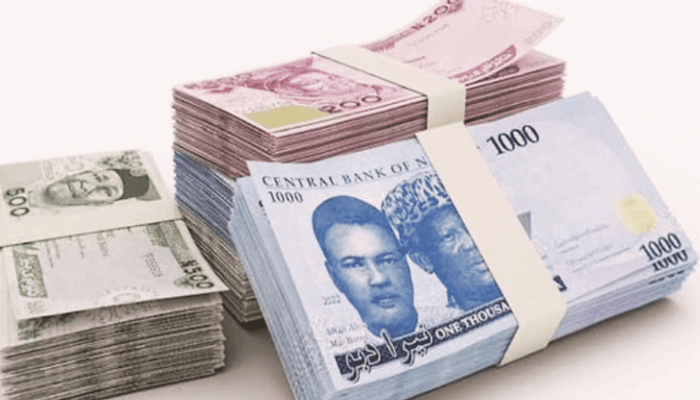
BLACK MARKET RATES
US Dollar (USD) ₦1,400
Great British Pound(GBP) ₦1,890
EURO (EUR) ₦1,580
Canadian Dollar (CAD) ₦1,020
South African Rand (ZAR) ₦75
Ghana CEDI (GHS) ₦95
West African CFA Buy ₦2, 300
CENTRAL AFRICAN CFA Buy ₦2,150
CBN Exchange Rates
US Dollar (USD) ₦1,329.43
Great British Pound (GBP) ₦1,800.18
EURO (EUR) ₦1,542. 01
Swiss Franc (CHF) ₦1,637.63
Chinese Yuan (CNY) ₦197.79
Japanese Yen (Yen) ₦8.31
West African CFA (XOF) ₦2.36
West African Unit Account (WAUA) ₦1,823.95
Saudi Riyal (SAR) ₦354.08 South African Rand (ZAR) ₦82.47
Business
Dangote, NMDPRA Clash Over Refinery’s Free Zone Status
The case has been adjourned until September 9, 2026, when the court is expected to hear the motion on notice.
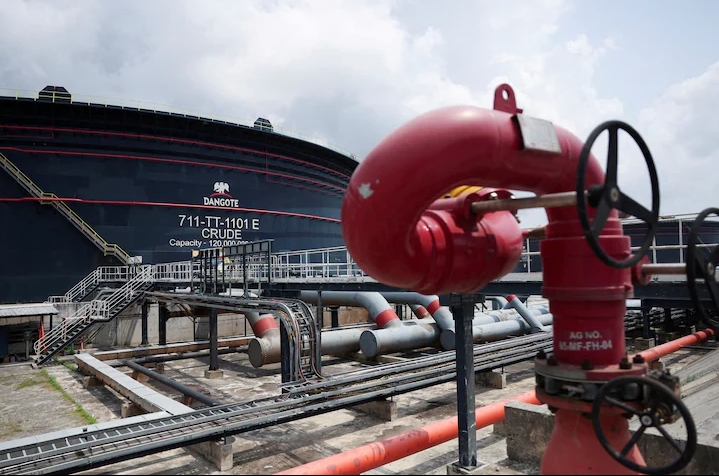
A fresh regulatory battle between Dangote Petroleum Refinery and the Nigerian Midstream and Downstream Petroleum Regulatory Authority (NMDPRA) has erupted into a major legal confrontation over the extent of government’s regulatory powers within Nigeria’s free zones.
A Federal High Court in Lagos yesterday restrained NMDPRA from enforcing its directive suspending the loading and truck-out of petroleum products from the Dangote Refinery, effectively stopping the regulator from taking enforcement action against the facility pending the determination of the substantive application.
Justice Akintayo Aluko, in an interim ruling, also barred NMDPRA, its officers, agents and representatives from entering, sealing, shutting down, restricting access to, obstructing, suspending, disrupting, inspecting, supervising, sanctioning or otherwise interfering with the refinery’s operations at the Lekki Free Zone.
The order followed an ex-parte application filed by Dangote Petroleum Refinery and Petrochemicals FZE in Suit No. FHC/L/CS/1174/2026.
At the heart of the dispute is NMDPRA’s August 24, 2026 directive suspending the loading and truck-out of petroleum products from the refinery.
But the case is rapidly assuming significance beyond the immediate dispute over product evacuation.
It raises a fundamental question about the jurisdiction of Nigeria’s petroleum regulator over businesses operating within designated free zones.
Who Regulates the Refinery?
Dangote is challenging NMDPRA’s action on the ground that the regulator lacks the authority to exercise regulatory or oversight powers over operations within free zones, including the Dangote Industrial Free Zone.
Justice Aluko said the documents placed before the court raised “serious issues” requiring determination, particularly whether NMDPRA possesses the regulatory or oversight powers it sought to exercise over the refinery.
The judge also referred to a March 2, 2026 letter from the Attorney-General of the Federation which, according to the court, “clearly stated” that NMDPRA was not entitled to exercise regulatory powers or oversight functions over operations within free zones.The apparent conflict between that position and NMDPRA’s August 24 directive now forms one of the central issues before the court.
Justice Aluko said the critical question was whether NMDPRA should be allowed to exercise the disputed regulatory authority while the substantive issues remained unresolved.
High Stakes for Downstream Market
The dispute comes at a sensitive time for Nigeria’s downstream petroleum industry, where the Dangote Refinery has become a major source of locally refined petroleum products.
Any regulatory action capable of restricting the refinery’s ability to load and evacuate products has potential implications for petroleum distribution and supply across the country.
For Dangote, the legal battle is also about protecting the operational autonomy and investment framework of a refinery established within a free-zone environment.
For NMDPRA, the issue goes to the core of its mandate as the statutory regulator of Nigeria’s midstream and downstream petroleum sector.
The eventual substantive ruling could therefore have consequences well beyond the two parties.
It could establish a judicial precedent on how far petroleum-sector regulators can go in supervising or enforcing their mandates against businesses operating within free zones.
The case has been adjourned until September 9, 2026, when the court is expected to hear the motion on notice.


Eko Electricity blames Lekki-Ajah power outages on feeders disruption

Allawee shutting down operations by December 1, warns customers must withdraw by November 30

Naira Exchange Rates Wednesday, September 2

Tech Expert, Zuckerberg trains with UFC champions, Adesanya, Alexander

Organ Trafficking: Ekweremadu bags 10 years in UK prison

SAINT OBI: Between his marriage and his death
-

 Business2 days ago
Naira Exchange Rates Today, Monday August 31
-

 Business2 days ago
PZ Cussons Reports N45.2bn PAT, Proposes N2.50 Dividend
-

 News2 days ago
JAMB introducing facial scan to catch UTME impersonators
-

 Business1 day ago
Commercial Banks Borrowing From CBN Drops By 89% in August
-
 Business2 days ago
Emzor Pharma raises N26.7bn bond to boost local drug manufacturing
-

 Entertainment2 days ago
Dolly Parton Buried By Husband’s Grave In Private Cemetry
-

 Business2 days ago
Nigeria’s GDP grew 4.43% in Q2 2026, says NBS
-

 News2 days ago
JUST IN: Duke, Adebayo, Aliyu Arrive Abuja for Opposition Summit