
Business
Breaking: Nigeria wins $11bn P&ID case in UK court


The Federal Government of Nigeria has won the legal case against Process & Industrial Developments (P&ID) Limited in a London court on Monday.
The judgment was delivered after five years of legal frameworks which have finally been to the advantage of Nigeria, as the court quashed the $11 billion arbitration award in favour of P&ID.
In a ruling delivered by e-mail, Robin Knowles, the Justice of the Commercial Courts of England and Wales, upheld Nigeria’s prayer on the ground that the ill-fated gas processing contract was obtained by fraud.
The Business and Property Court in London delivered the judgment in a case between the Federal Government of Nigeria and Process & Industrial Developments (P&ID) Limited.
This ruling came after the Chief Executive Officer of the Nigerian Upstream Petroleum Regulatory Commission (NUPRC), Gbenga Komolafe, urged the bid winners for the Nigerian Gas Flare Commercialisation Programme (NGFCP), to hasten site development.
Meanwhile, the federal government, alongside its partners has begun the deployment of tiny tankers for the transportation of crude oil through the creeks of the Niger Delta, following a protracted inability to fix the often-vandalised pipelines in the region.
P&ID had agreed with Nigeria in 2010 to build a gas processing plant in Calabar, Cross River State, but the company said the contract failed because the Nigerian government did not fulfill its end of the bargain.
Claiming Nigeria breached the terms of the contract, P&ID took a legal recourse and secured an arbitral award against the country.
On January 31, 2017, a tribunal ruled that Nigeria should pay P&ID $6.6 billion as damages, as well as pre-and post-judgment interest at seven per cent.
Following the judgment, Nigeria applied for an extension of time and relief from sanctions.
The application was granted by Ross Cranston, a judge of the Business and Property Courts of England and Wales, in September 2020, thereby returning the case to arbitration.
Nigeria had alleged that the gas deal was a scam conceived to defraud the country.
Lawyers representing the federal government told the court that P&ID officials paid bribes to secure the contract.
But P&ID denied the allegation and accused the Nigerian government of “false allegations and wild conspiracy theories”.
In a March trial at the court, Nigeria alleged that the contract was secured through dishonest means that included bribery and perjury and that the arbitration award, which has now risen to $11 billion because of interests, should be quashed.







Business
Dangote Foundation Takes Over Aliko Dangote Skills Acquisition Centre Kano
Under the agreement, the Foundation will manage the multi-million naira facility for a number of years and operate programmes aimed at equipping young people with technical, digital and industrial skills.

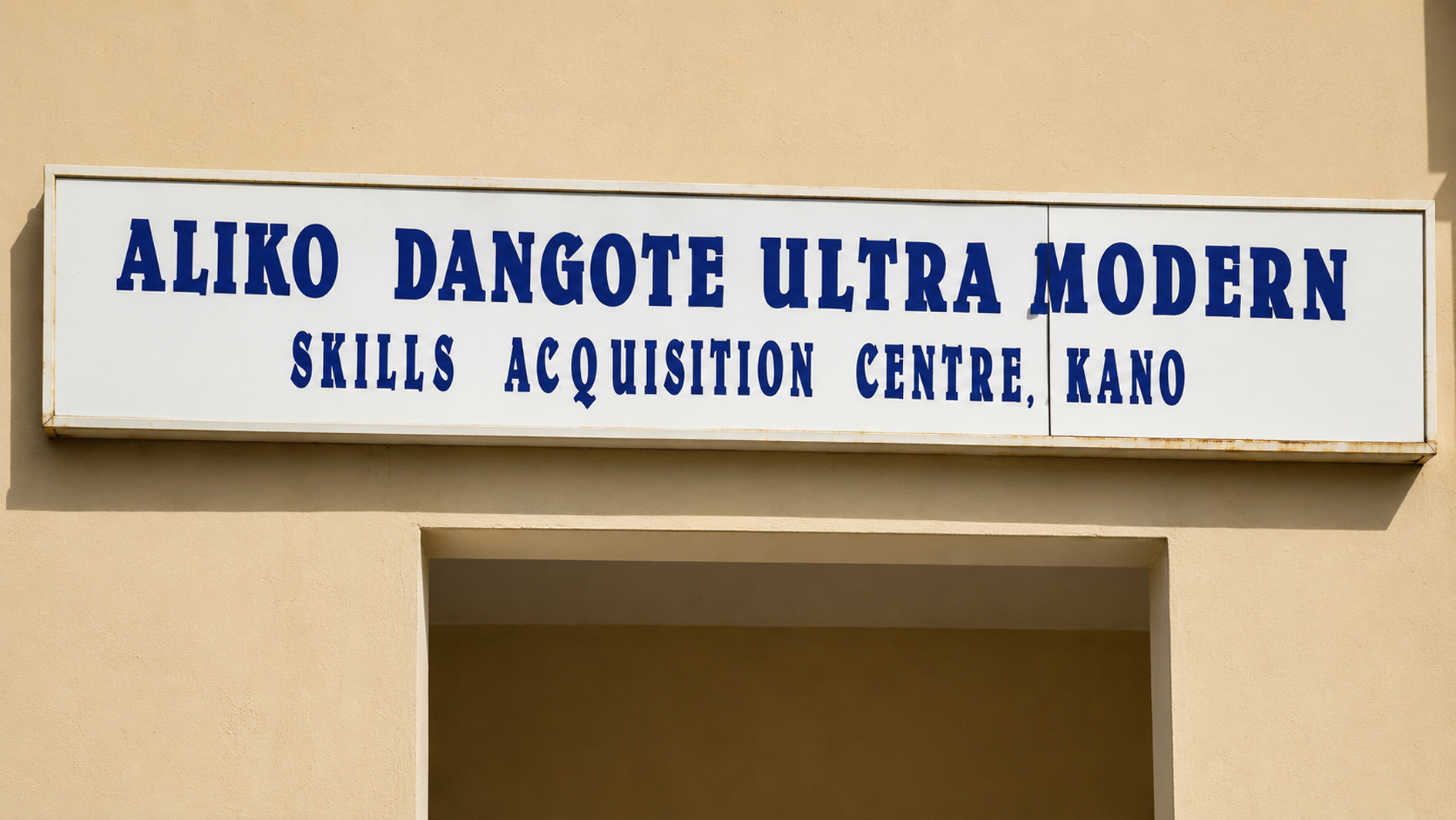
The Aliko Dangote Foundation has taken over the management of the Aliko Dangote Skills Acquisition Centre in Kano state.
The Memorandum of Understanding was signed between the Foundation and the Kano State Government, on Friday.
Under the agreement, the Foundation will manage the multi-million naira facility for a number of years and operate programmes aimed at equipping young people with technical, digital and industrial skills.
Chairman of the Manufacturers Association of Nigeria (MAN), Kano-Jigawa Branch, Muhammad Bello Isyaku Umar, described the intervention as “far-reaching and impactful,” saying skills acquisition remained one of the most effective ways of addressing youth unemployment in Nigeria..
“Programmes such as the Aliko Dangote Skill Acquisition Centre can equip young people with practical skills that enable them to become entrepreneurs, artisans or employees. The emphasis should increasingly be on modern technical, digital and industrial skills,” Umar said.
He described Kano as the economic and commercial hub of northern Nigeria and said the Foundation’s interventions across the region had extended to several sectors.
Business
Okin Biscuits Set For Comeback After 17 Years, Targets Revival Of Jobs, Local Manufacturing
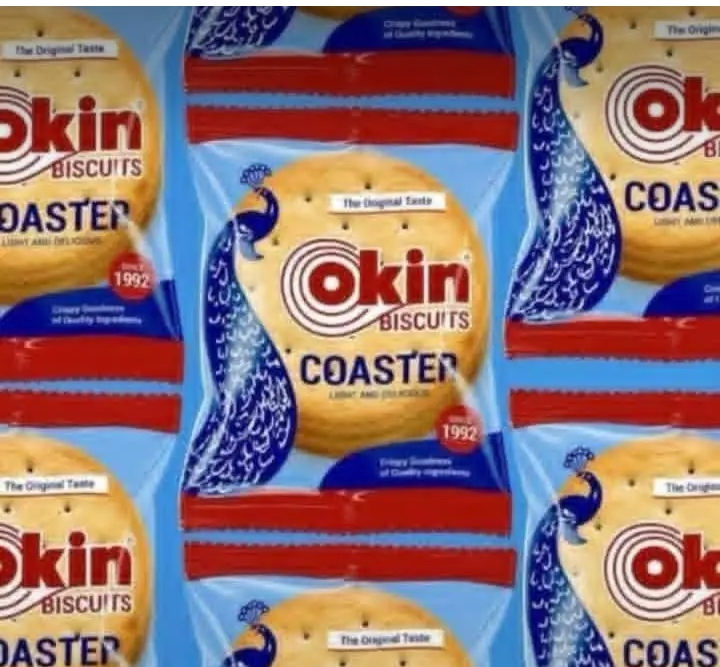
Founded in the 1980s by the late Chief Emmanuel Olatunji Adesoye, an illustrious son of Offa, Okin Biscuits grew into a household name with products including Okin Coasters, Shortcake and Okin Cabin Biscuits.
By Ochefa
After 17 years off the shelves, Okin Biscuits, one of Nigeria’s once-popular indigenous biscuit brands, is set to return to production as efforts intensify to revive the Ijagbo, Kwara State-based factory.
The planned comeback marks a significant attempt to restore one of the country’s old manufacturing brands while potentially reopening a major source of employment and economic activity in the community.
Founded in the 1980s by the late Chief Emmanuel Olatunji Adesoye, an illustrious son of Offa, Okin Biscuits grew into a household name with products including Okin Coasters, Shortcake and Okin Cabin Biscuits.
At its peak, the company provided direct and indirect employment to more than 2,000 people before production was eventually halted in 2009.
The shutdown reflected some of the structural problems that have continued to undermine Nigeria’s manufacturing sector, including harsh operating conditions, intense competition, inadequate infrastructure, vandalism and the theft of critical production equipment.
With the factory no longer producing, its products gradually disappeared from retail outlets and homes in Kwara, Lagos and other parts of the country.
Factory Undergoing Major Rehabilitation
However, the industrial facility is now showing signs of renewed activity.
A visit to the factory in Ijagbo showed that extensive rehabilitation work is underway across the complex.
The main factory building, which houses the production machinery, as well as the administrative block and other facilities, are undergoing comprehensive renovation.
The premises have already assumed a significantly different appearance, suggesting that the revival project has moved beyond plans and into physical reconstruction.
The management recently announced through its official Facebook page that production machinery was being test-run.
It said biscuits rolled off one of the rehabilitated production lines on August 25, 2026, marking the first production from the factory in 17 years.
The development is significant not merely as the return of a nostalgic consumer brand, but as an example of how the rehabilitation of abandoned industrial assets could contribute to renewed domestic production and employment.
For Nigeria, where manufacturers continue to contend with high energy and logistics costs, infrastructure constraints, foreign exchange pressures and strong competition from imported products, the reopening of an existing manufacturing facility could offer a potentially faster route to industrial capacity expansion than building an entirely new factory.
Community Backs Revival
…biscuits rolled off one of the rehabilitated production lines on August 25, 2026, marking the first production from the factory in 17 years.
The planned resuscitation has also attracted strong support from the Offa community.
The Aare Bobaselu of Offa, Chief Abdulatif Adekunle Ajeigbe, described the development as “heartwarming,” linking it to the broader Offa Mega City project championed by the Olora of Offa, Oba Muftau Mohammed Gbadamisi, Esuwoye II.
According to him, members of the community had made several efforts to revive the moribund factory, including exploring the possibility of group financing.
“We did our best to see that the factory came back to life, but it was the children of the late Asiwaju of Offa and the founder of the factory, Chief Emmanuel Olatunji Adesoye, who insisted on carrying on their father’s legacy through the factory,” he said.
Ajeigbe commended the founder’s children for their determination to preserve the family’s industrial legacy and bring the factory back into operation.
More Than A Brand Revival
The return of Okin Biscuits also highlights the wider economic value embedded in Nigeria’s abandoned industrial assets.
The company’s earlier success created employment not only within the factory but across its supply and distribution networks, including raw-material suppliers, transporters, distributors, retailers and other service providers.
A successful reopening could therefore have an economic impact extending beyond the factory gates, particularly if production eventually returns to significant capacity.
The bigger test, however, will be whether the revived company can operate sustainably in an increasingly competitive Nigerian consumer market.
The new investors will have to contend with production costs, energy supply, distribution challenges, consumer purchasing power and competition from both established domestic manufacturers and imported brands.
For Okin, the challenge is therefore not simply to restart the machines, but to build a commercially viable manufacturing operation capable of sustaining production, protecting jobs and reclaiming market share.
If successful, the return of Okin Biscuits could become more than a nostalgic homecoming for Nigerian consumers.
It could provide a practical demonstration that some of the country’s dormant industrial assets can be rehabilitated, modernised and returned to productive use.
After 17 years of silence, the sound of Okin’s production lines running again may therefore signal the beginning of a new chapter for one of Nigeria’s forgotten manufacturing brands.
Business
Dangote to launch Refinery’s IPO September 14 or 16
Dangote disclosed this on Thursday while speaking to investors and analysts in Botswana.
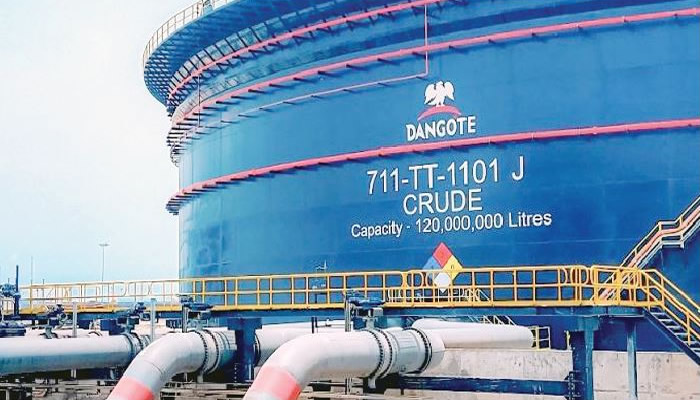
Aliko Dangote, chief executive officer (CEO) of the Dangote Group, says the initial public offering (IPO) of Dangote refinery will open in the next 10 to 12 days.
Dangote disclosed this on Thursday while speaking to investors and analysts in Botswana.
The refinery had announced plans to launch a Pan-African IPO, offering at least 10 percent of its refining business to fund a $40 billion expansion objective.
On August 18, the refinery said it had completed a $1 billion underwriting programme ahead of the planned IPO.
Speaking during his visit to the southern African country, Dangote said his ambition was to double the refinery’s capacity.“So our dream is that we want to make sure we double the capacity of the refinery… which will take us to 1.4 million barrels per day. The IPO will open in the next 10 to 12 days,” he said.


MKO Abiola’s Documentary to hit Cinemas in October

Trump sends envoys to Russia, Ukraine with new peace plan

BREAKING: JAMB releases underage UTME results, clarifies admission conditions

Tech Expert, Zuckerberg trains with UFC champions, Adesanya, Alexander

Organ Trafficking: Ekweremadu bags 10 years in UK prison

SAINT OBI: Between his marriage and his death
-

 Business1 day ago
Okin Biscuits Set For Comeback After 17 Years, Targets Revival Of Jobs, Local Manufacturing
-
 Business2 days ago
Forest Sector Employs 42m People Globally – FAO
-

 News1 day ago
BREAKING: FG Harmonizes Workers’ Salaries
-

 News1 day ago
Toxic fumes kill 37 in Okrika oil tragedy
-

 Politics1 day ago
Nduka Obaigbena Challenges Tinubu, Atiku, Obi on 2027 election campaigns
-
 News1 day ago
FG Announces Two Weeks Closure of First Niger Bridge for Repairs
-

 Sports1 day ago
FIFA Accuses UEFA of ‘Smear Campaign’ Against Infantino
-

 Business1 day ago
Naira Exchange Rates Thursday, September 4