
Business
Nigeria Unveils 20-Year Aviation Master Plan at ICAO Global Symposium In Morocco

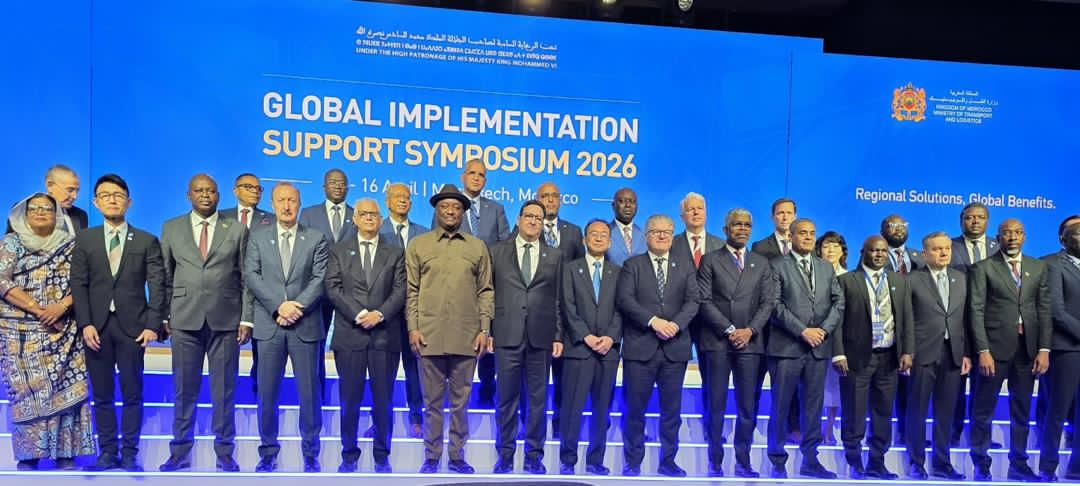
Nigeria has taken a major step toward transforming its aviation industry, as the Minister of Aviation and Aerospace Development, Festus Keyamo, formally received the country’s Civil Aviation Master Plan from the International Civil Aviation Organization during the opening of the ICAO Global Implementation Support Symposium in Marrakech.
The Minister also participated as a special guest at a high-level Ministerial Round Table, where he addressed the “Future of Aviation Workforce in Nigeria,” outlining government efforts to close the skills gap and strengthen human capital development within the aviation sector.
The Civil Aviation Master Plan (CAMP) represents a landmark framework designed to guide the development of Nigeria’s aviation industry over a 20-year period, from 2025 to 2045.
It reflects a structured and forward-looking strategy aligned with the country’s National Development Plan and broader economic priorities.
Developed in collaboration with ICAO’s Capacity Development and Implementation unit, the initiative began in September 2024 with extensive stakeholder engagement and technical training, ensuring a comprehensive and inclusive planning process across the aviation ecosystem.
The Master Plan focuses on critical pillars including infrastructure modernization, adoption of advanced technologies such as unmanned aerial systems, and strict adherence to global safety and security standards to achieve a zero-fatality aviation environment.
It also envisions the transformation of Nigerian airports into aerotropolis hubs to boost economic growth, job creation, and connectivity.
Additionally, the plan emphasizes sustainability, innovation, and private sector participation, particularly in areas such as Maintenance, Repair and Overhaul facilities and cargo development, while aligning Nigeria’s aviation growth with global environmental standards.
The presentation of the CAMP at the ICAO symposium highlights Nigeria’s commitment to international best practices and its rising profile in global aviation development.











BLACK MARKET RATES
US DOLLAR (USD) Buy ₦1,416 Sell ₦1,423
GREAT BRITISH POUND (GBP) Buy ₦1,890 Sell: ₦1,910
EURO (EUR) Buy ₦1,590 Sell ₦1,610
CANADIAN DOLLAR (CAD) Buy ₦1,020 Sell ₦1,080
SOUTH AFRICAN RAND (ZAR) Buy ₦75 Sell ₦90
UAE DIRHAM Buy ₦350 Sell ₦370 CHINESE YUAN Buy ₦190 Sell ₦205
GHANA CEDI (GHS) Buy ₦95 Sell ₦110
WEST AFRICAN CFA Buy ₦2, 300 Sell ₦2, 400
CENTRAL AFRICAN CFA Buy ₦2,150 Sell 2,250
AUSTRALIAN DOLLAR Buy ₦800 Sell ₦900
CBN Exchange Rates
US DOLLAR (USD) ₦1,357. 65
GREAT BRITISH POUND (GBP) ₦1,834.04
EURO (EUR) ₦1,567.00
SWISS FRANC (CHF) ₦1,671. 98
JAPANESE YEN (JPN) ₦8.53
CHINESE YUAN (CNY) ₦201. 34
WEST AFRICAN CFA (XOF) ₦2. 39
WEST AFRICAN UNIT ACCOUNT (WAUA) ₦1,858.02
SAUDI RIYAL (SAR) ₦361.62
SOUTH AFRICAN RAND (ZAR) ₦84.23
Business
Traders shut down Enugu ‘s Obollo-Afor market over N25,000 haulage levy
However, Chairman of ESIRS, Emmanuel Nnamani, in a letter to the traders, said the haulage levy was not paid by traders buying or selling goods in the markets, but was applicable strictly to truck drivers plying interstate routes.


All shops and markets at Obollo-Afor, Udenu Local Government Area of Enugu State were shut yesterday, as traders staged a peaceful protest against alleged selective collection of a N25,000 haulage levy in the market.
The traders, who locked their shops and took to the streets in large numbers, carried placards with various inscriptions, alleging that the Enugu State Internal Revenue Service (ESIRS) had singled out Obollo-Afor Market for the collection of N25,000 haulage fee on every truckload of goods loaded or offloaded in the market.
However, Chairman of ESIRS, Emmanuel Nnamani, in a letter to the traders, said the haulage levy was not paid by traders buying or selling goods in the markets, but was applicable strictly to truck drivers plying interstate routes.
Addressing officials of the Udenu Local Government Council at the council secretariat, where the protesters marched to present their grievances, Chairman, Obollo-Afor Market Traders Association, Charles Eze, lamented that truck operators bringing foodstuffs, building materials, and other commodities to the market had stopped coming because of the levy.
Business
Nigeria’s oil production dropped by 4% in July – NUPRC
“In the month under review, the daily peak production of crude oil and condensate was 1.78mbpd, while the lowest daily production was 1.57mbpd.”

The Nigerian Upstream Regulatory Commission (NUPRC) data has shown Nigeria’s average daily oil production fell by four percent in July, 2026.
According to the NUPRC, Nigeria produced 1.505 million barrels per day (bpd) of crude oil and 0.17 million bpd of condensate, bringing the combined daily production to 1.67 million bpd.
The commission said the country met and exceeded its Organisation of the Petroleum Exporting Countries (OPEC) quota of 1.5 million bpd for the third consecutive month.
“In the month under review, the daily peak production of crude oil and condensate was 1.78mbpd, while the lowest daily production was 1.57mbpd.”


#OsunDecides2026: Accord Party in early lead, APC trails behind

#OsunDecides2026: Adeleke Urges Tinubu to Protect Votes During Collation

(UPDATED) #OsunDecides2026: INEC Uploads 3,119 of 3,763 Polling Unit Results as Collation Continues

Tech Expert, Zuckerberg trains with UFC champions, Adesanya, Alexander

Organ Trafficking: Ekweremadu bags 10 years in UK prison

SAINT OBI: Between his marriage and his death
-

 Business3 days ago
FG approves tax waivers for 4,000 electric vehicles
-

 Business3 days ago
Guaranty Trust Bank doubles naira card international spending limit to $40,000
-

 Business3 days ago
Nigeria’s oil production dropped by 4% in July – NUPRC
-

 Business3 days ago
Naira Exchange Rates Thursday, August 13
-

 Business3 days ago
Azikel Refinery in Bayelsa Set To Add 25,000 bpd To National Capacity
-

 Politics2 days ago
Osun Election: President Tinubu mobilises Voters “Go Out to Vote Candidate of Your Choice on Saturday Without Fear
-

 Sports3 days ago
Katsina United player declared dead found alive in mortuary
-

 Business3 days ago
Traders shut down Enugu ‘s Obollo-Afor market over N25,000 haulage levy