
Business
Nigeria Ranks 14th out of 50 Most Agricultural Land globally
The ranking highlights where the world’s largest agricultural footprints are located, spanning major producers across Asia, Africa, and the Americas.

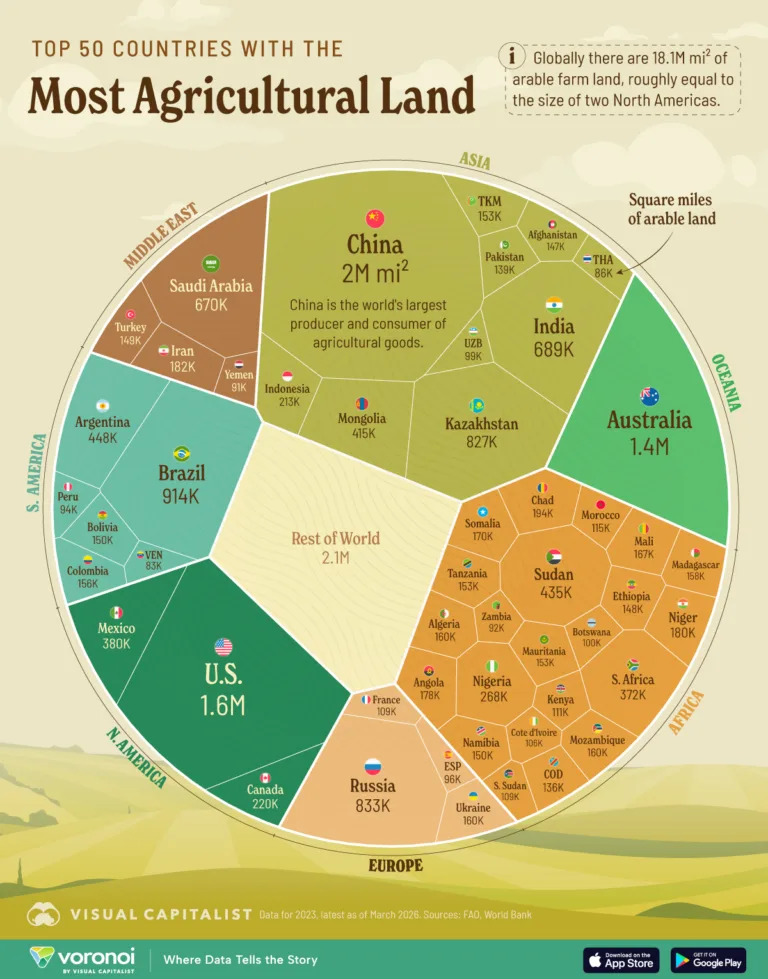
Nigeria has been ranked the fourteenth country among the top 50 Most Agricultural Land in the world.
Agricultural land spans more than 18 million square miles worldwide, forming the foundation of global food production.
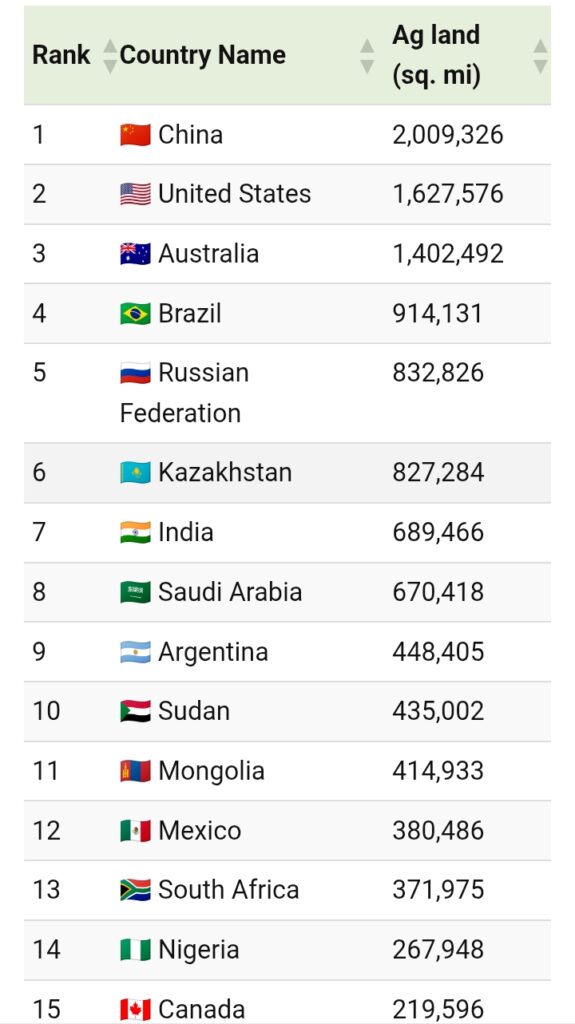
In a data analysed by Visual Capitalist using the most recent FAO data compiled by the World Bank, China has the most agricultural land in the world, with roughly 2.0 million square miles.
The United States (1.6 million), Australia (1.4 million), Brazil (914,000) and Russia (832,826) round out the top five countries worldwide.
Each of these countries specialises in different crops.
For example, the U.S. is the world’s largest producer of corn, while Brazil is the top grower of both soybeans and sugarcane.
Meanwhile, Australia has overcome its mostly arid geography to become a major wheat and cereals grower, rivaling major producers like India (689,000) and Ukraine (160,000).
In the data, Asia and Africa account for a large share of the top 50 countries by agricultural land area.
African countries make up nearly half of the top 50 countries worldwide by square mileage of agricultural land area. They’re led by larger countries like Sudan (435,000), South Africa (372,000), and Nigeria (268,000).
The ranking highlights where the world’s largest agricultural footprints are located, spanning major producers across Asia, Africa, and the Americas.
Each of these countries specializes in different crops.
For example, the U.S. is the world’s largest producer of corn, while Brazil is the top grower of both soybeans and sugarcane.
Meanwhile, Australia has overcome its mostly arid geography to become a major wheat and cereals grower, rivaling major producers like India (689,000) and Ukraine (160,000).
Africa’s Growing Desert ProblemAfrican countries make up nearly half of the top 50 countries worldwide by square mileage of agricultural land area.
They’re led by larger countries like Sudan (435,000), South Africa (372,000), and Nigeria (268,000).
As with peers in Eurasia and the Americas, African agriculture is increasingly facing challenges from climate change.In particular, the growing desertification problem is reducing countries’ agricultural land, especially in the Sahel region, as temperatures rise and soil becomes less fertile for growing crops.
Over-farming and over-grazing are exacerbating regional soil erosion and deepening desertification.

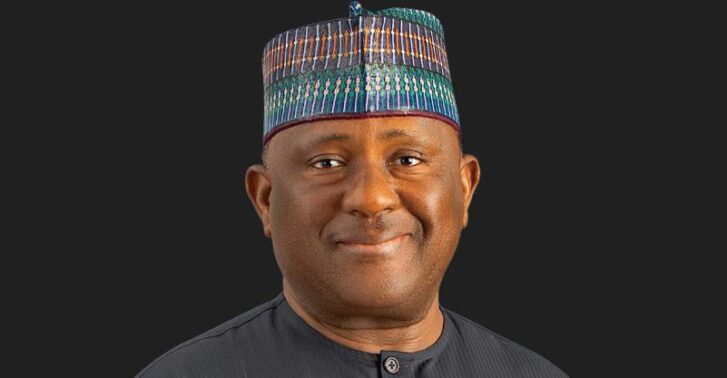
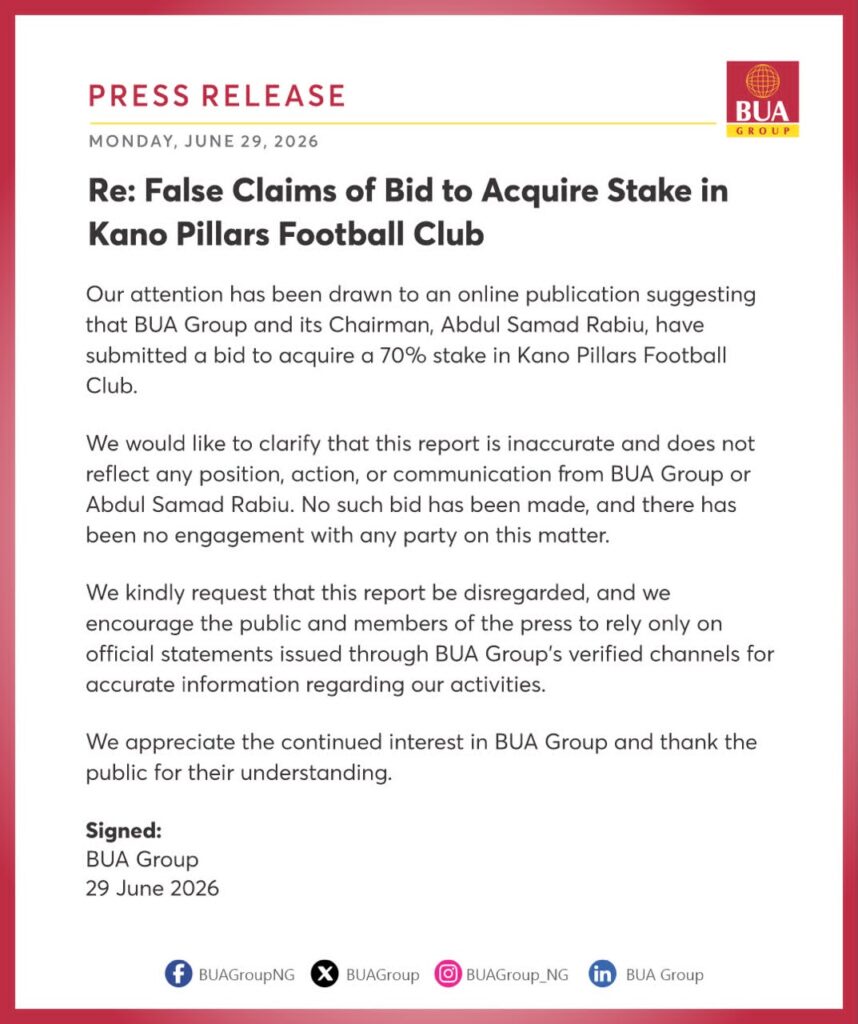
BUA Group has firmly dismissed online reports claiming that the conglomerate and its Chairman, Abdul Samad Rabiu, submitted a bid to acquire a 70% stake in Kano Pillars Football Club.
In a press statement issued on Tuesday, the company described the publication as inaccurate and misleading.
PRESS STATEMENT
Re: False Claims of Bid to Acquire Stake in Kano Pillars Football Club
Our attention has been drawn to an online publication suggesting that BUA Group and its Chairman, Abdul Samad Rabiu, have submitted a bid to acquire a 70% stake in Kano Pillars Football Club.
We would like to clarify that this report is inaccurate and does not reflect any position, action, or communication from BUA Group or Abdul Samad Rabiu. No such bid has been made, and there has been no engagement with any party on this matter.
We kindly request that this report be disregarded, and we encourage the public and members of the press to rely only on official statements issued through BUA Group’s verified channels for accurate information regarding our activities.
We appreciate the continued interest in BUA Group and thank the public for their understanding.
BUA Group reiterated its commitment to transparency and urged stakeholders to verify information through its official communication channels.
Business
Nigeria’s oil minister orders marketers to reduce fuel price
“While we believe that market forces will eventually restore equilibrium, the regulator also has a statutory responsibility to ensure that deregulation does not become an avenue for profiteering. This must be done in line with the extant provisions of the Petroleum Industry Act,”said Lokpobiri.
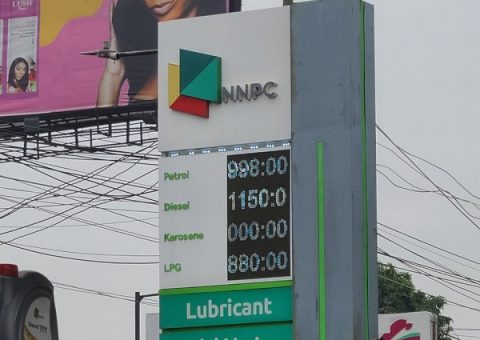
The Minister of State for Petroleum Resources (Oil), Senator Heineken Lokpobiri, at the NMDPRA General Counsel and Legal Advisers Forum, directed petroleum marketers to reduce fuel price .
At the two-day forum themed: “Beyond Compliance: Driving Regulatory Certainty and Investment Confidence in Nigeria’s Petroleum Sector, Lokpobiri noted that refiners and marketers have continued to sell petrol at elevated pump prices despite the significant decline in crude oil prices from a peak of $120 per barrel to about $72 per barrel last week.
He said: “Following de-escalation of tensions between Iran and the United States, we expected to see a commensurate downward adjustment in the prices of PMS and other petroleum products.However, that has not yet happened.”
“While we believe that market forces will eventually restore equilibrium, the regulator also has a statutory responsibility to ensure that deregulation does not become an avenue for profiteering. This must be done in line with the extant provisions of the Petroleum Industry Act,”said Lokpobiri.
Business
Naira Exchange Rates Tuesday, 30 June 2026
BLACK MARKET RATES
US DOLLAR (USD) ₦1, 390
GREAT BRITISH POUND (GBP) ₦1,855
EURO (EUR) ₦1, 585
BLACK MARKET RATES
US DOLLAR (USD) Buy ₦1, 390 Sell ₦1, 395
GREAT BRITISH POUND (GBP) Buy ₦1,855 Sell: ₦1,870
EURO (EUR) Buy ₦1, 585 Sell ₦1,605
CANADIAN DOLLAR (CAD) Buy ₦1,030 Sell ₦1,100
SOUTH AFRICAN RAND (ZAR) Buy ₦75 Sell ₦90
UAE DIRHAM Buy ₦350 Sell ₦370
CHINESE YUAN Buy ₦180 Sell ₦200
GHANA CEDI (GHS) Buy ₦95 Sell ₦110
WEST AFRICAN CFA Buy ₦2, 380 Sell ₦2, 460
CENTRAL AFRICAN CFA Buy ₦2, 220 Sell 2,300
AUSTRALIAN DOLLAR Buy ₦800 Sell ₦900
OFFICIAL CBN EXCHANGE RATES
US DOLLAR (USD) ₦1,383. 63
GREAT BRITISH POUND (GBP) ₦1,831.64
EURO (EUR) ₦1,578. 03
SWISS FRANC (CHF) ₦1,710.71
JAPANESE YEN (JPN) ₦8.55
CHINESE YUAN (CNY) ₦203. 65
WEST AFRICAN CFA (XOF) ₦2.40
WEST AFRICAN UNIT ACCOUNT (WAUA) ₦1,872. 07
SAUDI RIYAL (SAR) ₦368.43
SOUTH AFRICAN RAND (ZAR) ₦84.24


Cut Petrol Prices Now, Trump orders Retailers

2027: Obi asks INEC to publish candidates’ certificates

JUST IN: Third Batch of Evacuated Nigerians from SA Arrives in Lagos Amid Xenophobia Fears

Tech Expert, Zuckerberg trains with UFC champions, Adesanya, Alexander

Organ Trafficking: Ekweremadu bags 10 years in UK prison

SAINT OBI: Between his marriage and his death
-
 Business1 day ago
Naira Exchange Rates Monday, 29 June 2026
-
 News1 day ago
JUST IN: Two Trucks, Car Collide on Lagos Expressway, Several Injured
-

 Health1 day ago
WHO Confirms 1,300 deaths in Europe heatwaves
-
 Politics1 day ago
2027: Atiku Alleged Plot To Keep ADC Off Ballot
-

 News1 day ago
FG bans motorcycles, tricycles on Lagos-Calabar Coastal Highway
-

 Crime2 days ago
Operation Whirl Stroke Troops Foil Terrorist Attack at Tor Donga Yam Market (Images)
-

 News2 days ago
SGF Akume Condemns Killing of MACBAN Chairman in Benue
-
 News1 day ago
JAMB and Rite Foods Initiate Rewarding Top Performing Candidates