
International
How Iran chooses its supreme leader, and who could be next?
Under Iran’s constitution, the supreme leader is appointed by the Assembly of Experts, an 88-member clerical body elected by the public every eight years.

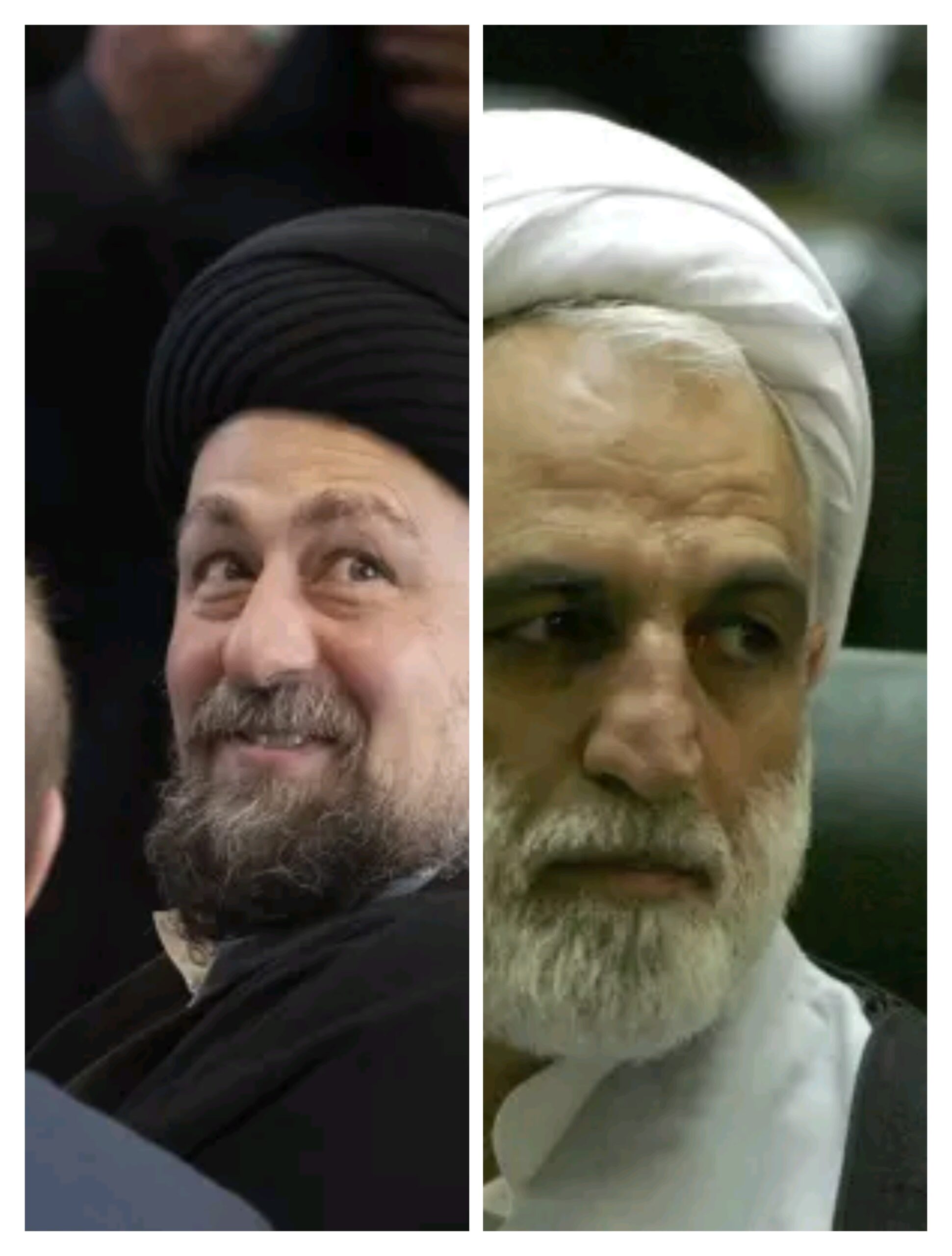
Key Contenders: Hassan Khomeini; Gholam-Hossein Mohseni-Ejei, and Alireza Arafi.Credit: CNBC
Ayatollah Ali Khamenei’s death following joint U.S.-Israeli airstrikes has thrust Iran’s leadership into the urgent process of selecting a new supreme leader.
CNBC reports that under Iran’s constitution, the supreme leader is appointed by the Assembly of Experts, an 88-member clerical body elected by the public every eight years.
Candidates for the Assembly are first vetted by the Guardian Council, tightly controlling who can run.
When the position becomes vacant, the Assembly convenes to deliberate and select a successor.
The decision requires a simple majority vote.In the interim, a provisional three-member leadership council assumes the supreme leader’s duties until a replacement is formally appointed.
In the interim, a provisional three-member leadership council assumes the supreme leader’s duties until a replacement is formally appointed.
On Sunday, local media reported that the temporary council comprises President Masoud Pezeshkian, Judiciary Chief Gholam-Hossein Mohseni-Ejei and Ayatollah Alireza Arafi, who serves as the Guardian Council’s representative.
The council’s authority is strictly transitional, while the Assembly of Experts retains sole constitutional power to choose Iran’s next supreme leader.
On Polymarket, traders are pricing Mohseni-Ejei as the narrow frontrunner at roughly 18%. Other top contenders include Arafi and Iranian cleric Hassan Khomeini.
The “Position abolished” outcome is trading close behind, suggesting that while markets still lean toward an individual successor, there is meaningful speculation around a potential structural change to the office itself.
Here are some key contenders:
- 1. Gholam-Hossein Mohseni-Ejei
- .
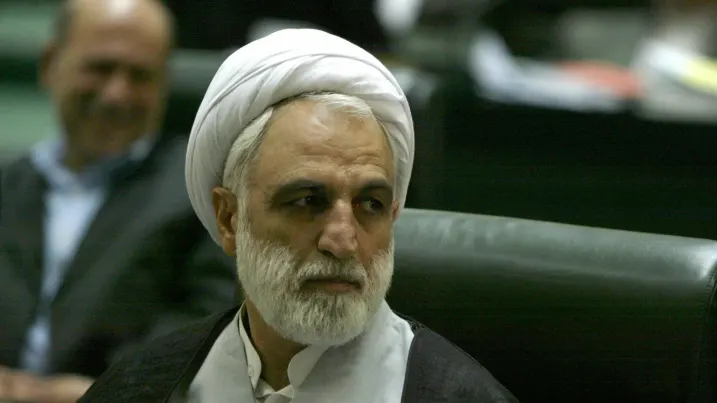
Mohseni-Ejei has been the Chief Justice of Iran since July 2021, overseeing the country’s judiciary and supervising legal policy across the Islamic Republic. Before that, he served as prosecutor-general from 2009 to 2014, was first deputy head and spokesperson of the judiciary from 2014 until 2021, and earlier held national security roles, including minister of intelligence from 2005 until 2009.
He has also been a longtime member of the Expediency Discernment Council, a key advisory body to Iran’s leadership, and his career has spanned senior positions in both the judicial and security apparatus.
2. Hassan Khomeini
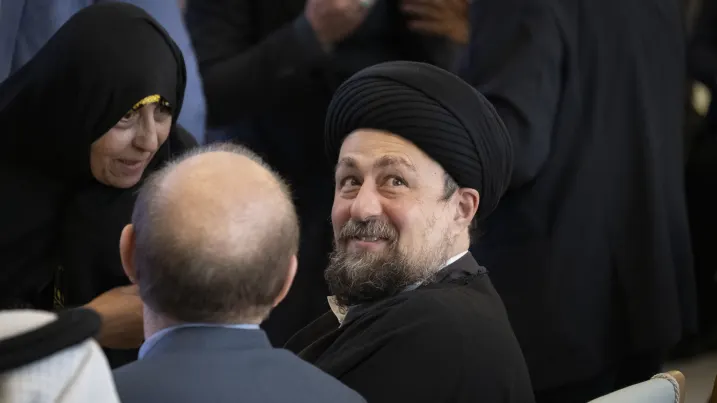
Khomeini is the grandson of Islamic Republic founder Ayatollah Ruhollah Khomeini, could theoretically serve as a bridge between the revolutionary system and reform-minded constituencies, said the Council on Foreign Relations.
CFR suggested that elevating someone like him might help preserve the core structure of the Islamic Republic, ease Iran’s international isolation, and address popular dissatisfaction at home.
3. Alireza Arafi
Arafi is a senior Iranian cleric and influential figure within the Islamic Republic’s religious and political hierarchy.
He has risen through the clerical establishment with a series of key appointments, including director of Iran’s seminaries, Friday Prayer leader in Qom, and member of both the Guardian Council and the Assembly of Experts, the body constitutionally tasked with selecting the supreme leader.
Arafi’s roles in shaping theological education and vetting political candidates have made him a central fixture in Iran’s clerical power structure.
What’s next?
Under Article 111 of Iran’s constitution, the death or incapacity of the supreme leader immediately triggers the formation of a temporary leadership council to exercise his powers until a successor is chosen.The constitution does not set a strict deadline for the Assembly of Experts to appoint a new leader, but it states that the Assembly must act “in the shortest possible time.”


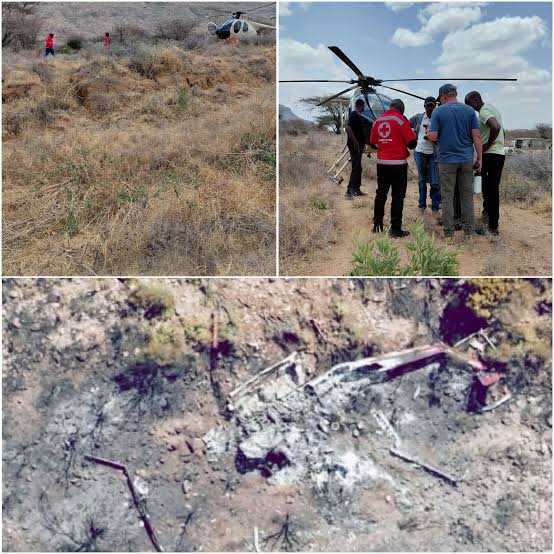
All seven people on board a tourist helicopter were killed when the aircraft crashed in a remote area of northern Kenya on Wednesday morning, authorities confirmed.
The Eurocopter EC130 B4 was flying on a safari route from the Loisaba Conservancy to the Ewaso Nyiro area in Samburu County when it went down at approximately 9:13 a.m. local time near Mount Ololokwe. The Kenya Civil Aviation Authority said the helicopter was carrying six passengers and one pilot. Police later confirmed there were no survivors.
Five of the victims were American citizens, according to the U.S. State Department. Among those killed were José Alberto Suárez, a senior executive with Telemundo (NBCUniversal), and Michele Sensi-Contugi, director of Ecuador’s National Intelligence Center, who was travelling with his wife, Stephany Hollihan. Both she and her husband died in the crash.
The aircraft was operated by Lady Lori Helicopters and was carrying guests of the luxury safari company &Beyond. Rescue teams, including the Kenya Red Cross, faced difficult terrain and a fire at the crash site during recovery operations.
An official investigation into the cause of the accident is underway. The U.S. Embassy in Nairobi said it is providing consular assistance to the families of the American victims.
International
Trump Annex Strait of Hormuz “New US Territory”
The development follows Trump’s recent comments that he would declare the Strait of Hormuz US territory after defeating Iran.
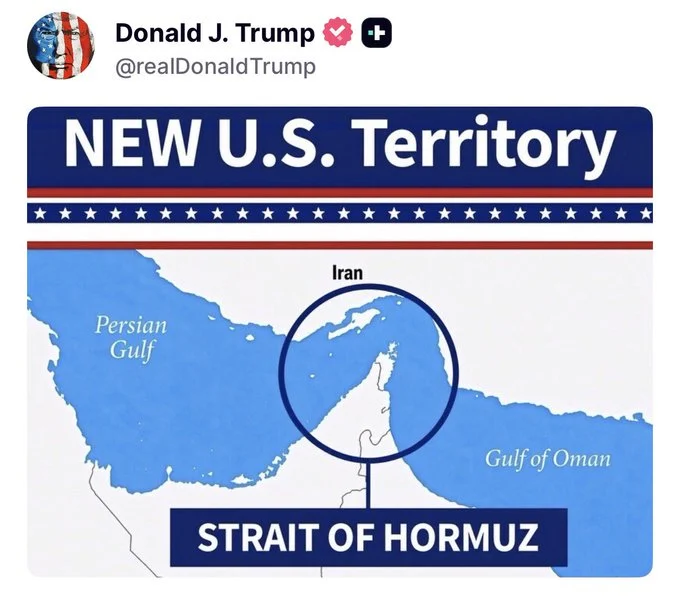
US President Donald Trump has declared the Strait of Hormuz a “new US territory.”
Trump on Tuesday shared a map graphic on Truth Social, a social media platform he owns, labelling the Strait of Hormuz a “NEW U.S. Territory”.
The same graphic was also posted by the official White House account on X.
The image shows a blue-highlighted map of the strait between the Persian Gulf and the Gulf of Oman, with a circle around the narrow passage and the words “NEW U.S. Territory” displayed prominently.
The development follows Trump’s recent comments that he would declare the Strait of Hormuz US territory after defeating Iran.
Speaking at a political rally in New York State on Friday, Trump said,
“After we finish defeating Iran, which is being very badly defeated — pretty soon I’ll be declaring the Hormuz Strait a territory of the United States.”
International
Zambia’s Hichilema leads presidential vote count
Hichilema had 54.82% or 1,056,812 of the declared votes, figures showed, putting him on track for re-election without a second-round runoff if he keeps the overall majority.

Photo: Zambia’s President Hakainde Hichilema greets United Party for National Development (UPND) supporters during their election campaign launch in Lusaka, Zambia, June 28, 2026. Credit : REUTERS
Zambia’s President Hakainde Hichilema was well ahead in counting for national elections on Sunday with nearly half the constituencies declared, the electoral commission said.
Reuters reported that Hichilema had 54.82% or 1,056,812 of the declared votes, figures showed, putting him on track for re-election without a second-round runoff if he keeps the overall majority.
His main challenger, Brian Mundubile, was in second place with 43% or 830,841 of the declared votes, with 105 out of 226 constituencies announced by around 1500 GMT.
The presidential vote — held alongside parliamentary and local elections on Thursday — is seen as a test of whether Hichilema’s economic gains since a pandemic-era debt crisis are enough to win him a second term in Africa’s second-largest copper producer after the Democratic Republic of Congo.
The Electoral Commission of Zambia temporarily halted vote counting on Friday, citing violence against officials and the theft of ballot papers.


BREAKING: Veteran Nollywood Actor Taiwo Hassan ‘Ogogo’ Reportedly Dies at 66

NGE 2026 Conference: Onaiyekan, Mbah, Osigwe, Others to Speak in Enugu

Tinubu Names Yari, DG Presidential Campaign Council

Tech Expert, Zuckerberg trains with UFC champions, Adesanya, Alexander

Organ Trafficking: Ekweremadu bags 10 years in UK prison

SAINT OBI: Between his marriage and his death
-
 Business3 days ago
Cement price hits N16,000 per bag
-
 News3 days ago
FG Declares August 25 Eid ul Mawlid Public Holiday
-

 Business3 days ago
Naira Exchange Rates Friday, August 21
-
 News3 days ago
BREAKING: ICPC Uncovers Another Fake Agency Operating Inside SGF’s Office (Video)
-
 Politics3 days ago
2027: Atiku Promises Nigerian Millions of Subsidy Removal If Voted President
-

 Business3 days ago
Cybercriminals cloning DStv, other brands to steal bank accounts across Africa
-
 News3 days ago
2027 Polls: INEC Fixes November For Nationwide Mock Accreditation Exercise
-

 News3 days ago
Enugu Air: NSIB releases preliminary report