
Crime
Hunting down those who kill people to sell their body parts for ‘magic charms
“I was working with some big, big politicians in Guinea, Senegal and Nigeria. We have our team. Sometimes during election time, at night, this place is full of people.”

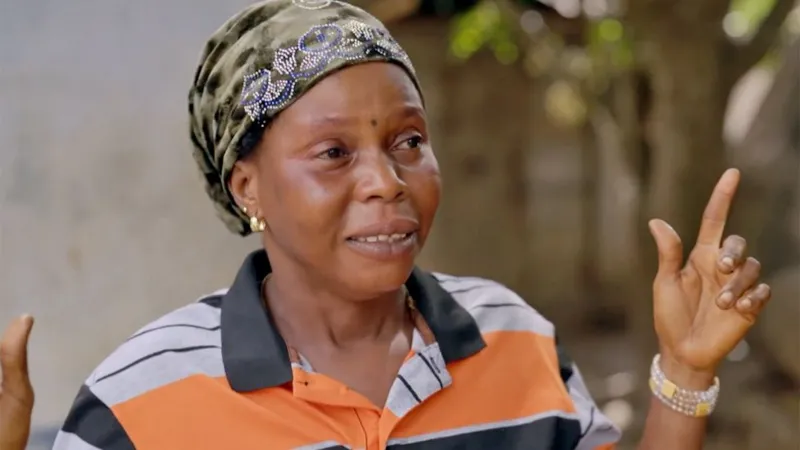
• Picture of Papayo’s mother Sally Kalokoh / BBC.
With many families left traumatised by killings apparently linked to supposed magic rituals in Sierra Leone, BBC Africa Eye looks into those behind the trade in human body parts.
The mother of an 11-year-old boy murdered as part of a suspected black magic killing four years ago is devastated that no-one has yet been brought to justice for his death.
“Today I’m in pain.They killed my child and now there is just silence,” Sallay Kalokoh told BBC Africa Eye, explaining how her son Papayo was found with parts of his body removed, including his vital organs, eyes and one arm.
He had gone out to sell fish at the market and never came back.His family searched for him for two weeks – and finally found his mutilated corpse at the bottom of a well.
“We always tell our children to be careful. If you are selling, don’t go to a corner or take gifts from strangers. It happens frequently in this country,” Ms Kalokoh said.
This murder in my hometown of Makeni, in central Sierra Leone, has haunted me as we often hear of reports of killings linked to black magic, also known as juju, that are never followed up or properly investigated by the authorities.
In Papayo’s case, the police did not even confirm that it was a “ritual killing” – when a person is murdered so that parts of their body can be used in so-called magic rituals by illicit juju practitioners.
They promise things like prosperity and power to clients who pay large sums in the false belief that human body parts can make such charms more potent
.But with the authorities severely under-resourced – there is only one pathologist in a country that has a population of 8.9 million – it is often impossible to gather the evidence needed to track down the culprits.
Belief in witchcraft is also so deeply ingrained in Sierra Leone, even among many police officers, that there is often a fear of pursuing cases further – and most go unsolved.
Our BBC Africa Eye team was able to find two people who claimed they were juju practitioners and offered to obtain body parts for ritual purposes.
Both said they were part of much larger networks – and one boasted that he had powerful clients across West Africa.
The BBC was unable to verify these claims.
One member of our team went undercover, using the name Osman, to pose as a politician who wanted to achieve power through human sacrifice.
We first travelled to a remote area of Kambia district, in the north of the country near the Guinean border, to meet the juju man in his secret shrine – an area in dense bush where he consulted with his clients.
“When Osman specified that he wanted limbs from a woman to be used in a ritual, Kanu got down to business: “The price of a woman is 70m leones [£2,500; $3,000].”
Calling himself Kanu, he wore a ceremonial red mask covering his whole face to conceal his identity and boasted of his political connections.
“I was working with some big, big politicians in Guinea, Senegal and Nigeria. We have our team. Sometimes during election time, at night, this place is full of people,” he claimed.
Election season is regarded by some as a particularly dangerous time when parents have been warned to take special care of their children because of the heightened risk of abductions.
On a second visit, Kanu became more confident and showed Osman what he said was evidence of his trade – a human skull.
“You see this? This belongs to someone. I dried it for them. It is a woman’s skull. I am expecting the person to pick this up today or tomorrow.”
He also pointed to a pit behind his shrine:
“This is where we hang human parts. We slaughter here, and the blood goes down there… Even big chiefs, when they want power, come here. I give them what they want.
“When Osman specified that he wanted limbs from a woman to be used in a ritual, Kanu got down to business: “The price of a woman is 70m leones [£2,500; $3,000].”
Anxious not to put anyone at risk, we did not meet Kanu again. He may have been a scammer, but we handed over our evidence to the local police to investigate further.
Such juju men sometimes refer to themselves as herbalists, the name given to healers who use traditional medicine often made from local plants to treat common illnesses.

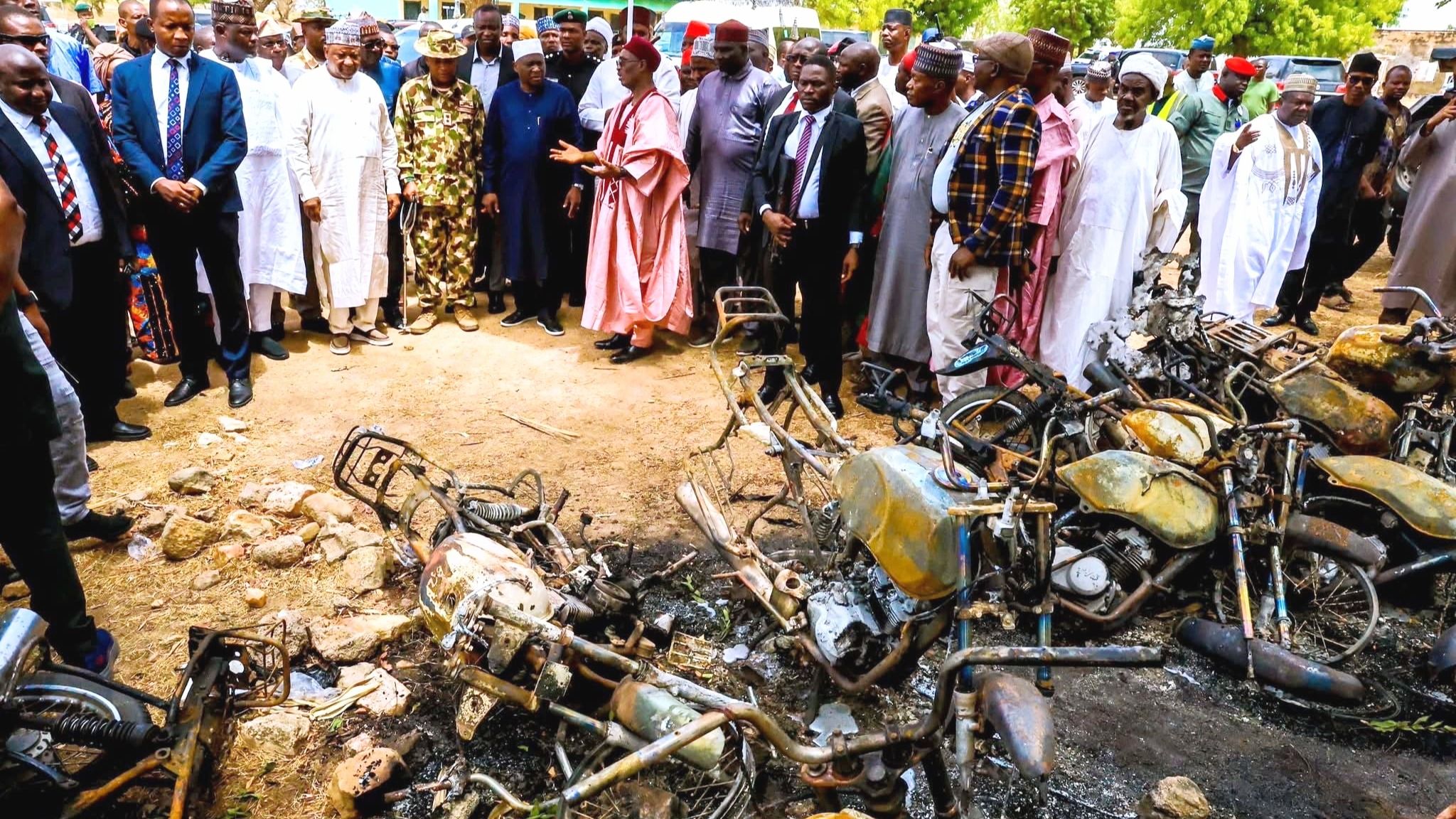
Boko Haram militants have launched a deadly invasion of a community in Adamawa State, killing several residents and setting multiple houses ablaze.
The attack, described by local sources as sudden and coordinated, saw the fighters storm the area, opening fire on civilians and torching homes. Survivors reported scenes of chaos as residents fled in different directions to escape the assault. A number of people were confirmed dead, while others sustained injuries and are receiving treatment.
The burning of houses has left many families displaced, with properties and livelihoods destroyed in the violence. The community remains tense, and residents are calling for increased security presence to prevent further attacks.
Security forces are yet to issue a comprehensive official update on the incident, though reports indicate that troops have been mobilised to the area.
The assault is the latest in a series of raids attributed to the group in the northeast, underscoring the ongoing threat posed by the insurgents in Adamawa and neighbouring states.
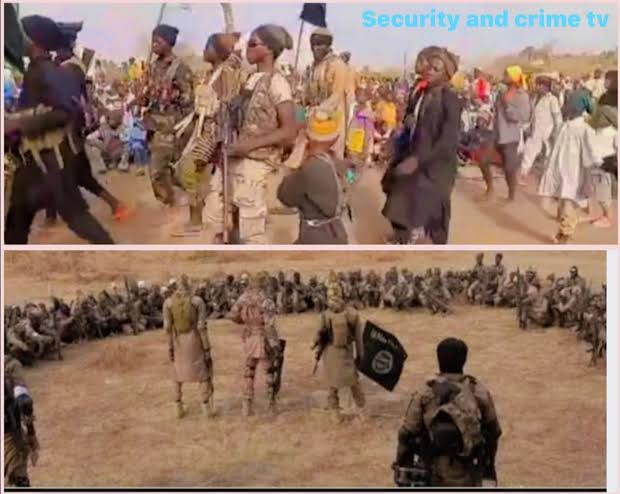
More than 23 terrorists have been killed in renewed fighting between rival Boko Haram and Islamic State West Africa Province (ISWAP) factions in the Sambisa Forest area of Borno State, security sources say.
The latest clashes erupted around the Chingolo axis of Bama Local Government Area after Boko Haram fighters attacked ISWAP members advancing into the area. The fighting forms part of a fresh wave of hostilities that began about two days ago.
A video obtained by Zagazola Makama shows sustained exchanges of fire as both groups tried to consolidate positions and block the other from expanding influence inside the forest.
Preliminary intelligence puts the death toll at more than 23 on both sides since the latest round began, though exact figures for each faction could not be independently verified.
The violence underscores the ongoing rivalry between Boko Haram and ISWAP over territory, access routes, resources and control of fighters in Sambisa Forest and surrounding areas. The confrontation has further weakened both groups and disrupted their activities in a long-standing insurgent stronghold.
Security forces are closely monitoring the situation and exploiting intelligence on the factions’ movements. The military continues to target terrorist concentrations, logistics networks and hideouts across the North-East as part of efforts to degrade the insurgents.
Officials have urged communities near the forest to remain vigilant and report any suspicious movements. The situation remains fluid, with further clashes possible as both sides seek to reposition and reinforce their fighters.
Watch video below:
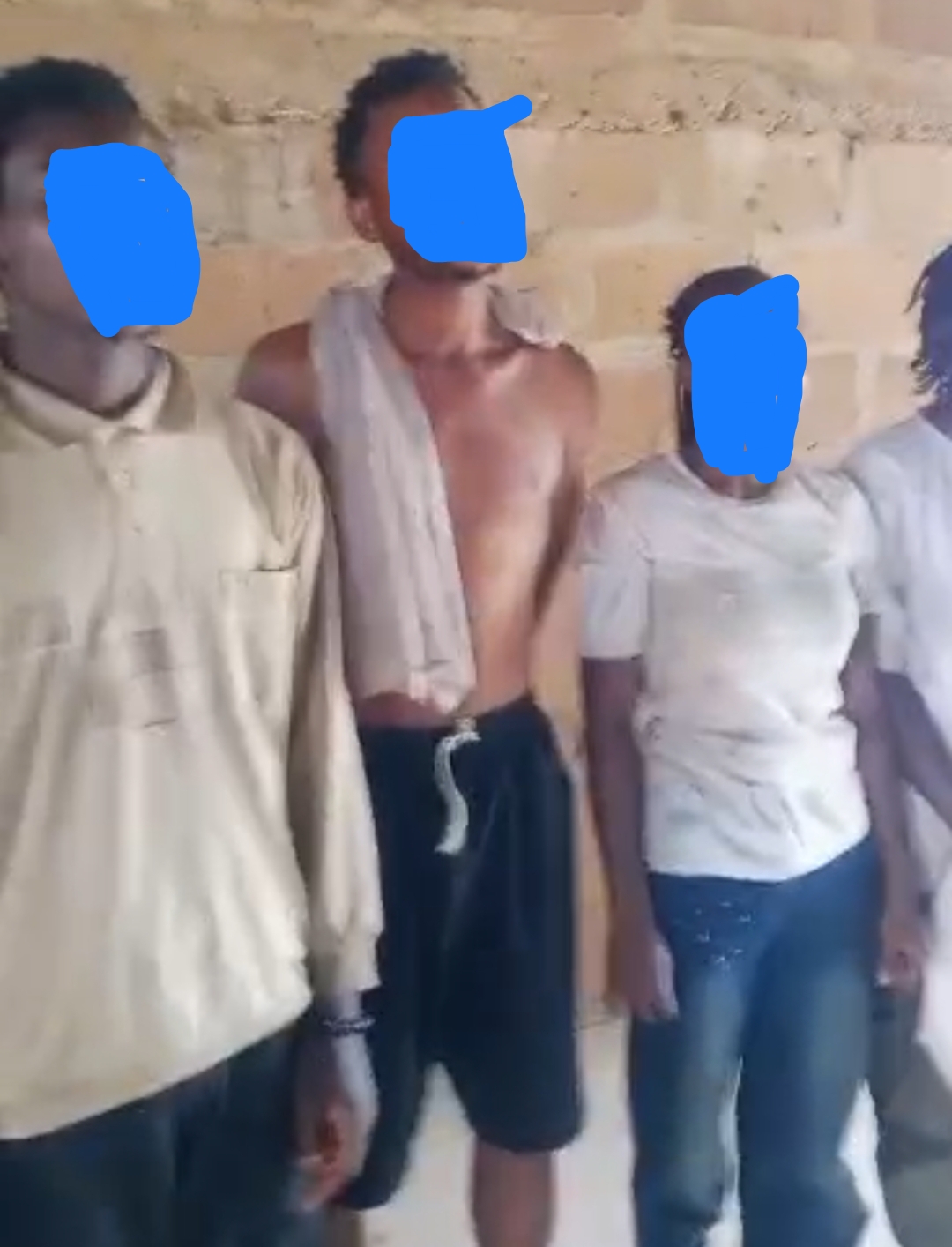
The Kogi State Police Command has confirmed that 10 of the 15 National Youth Service Corps members abducted by suspected bandits along the Aloma–Egane Expressway in Ofu Local Government Area have been rescued.
Commissioner of Police Naziru Bello Kankarofi said security operatives are combing surrounding forests and intensifying efforts to free the remaining victims.

He dismissed reports that the 10 rescued corps members were among the 11 persons freed during a joint security operation last week, clarifying that those earlier rescued were other travellers caught up in the same kidnapping incident.

The commissioner added that several suspects have been arrested in connection with the attack.
Watch the video below:


Madonna Returns To MTV Video Music Awards, After 23 years

Emir Sanusi mobilises Kano People “Buy Dangote Refinery’s Shares Now”

UK court jails Nigerian man for masturbating in front of a woman

Tech Expert, Zuckerberg trains with UFC champions, Adesanya, Alexander

Organ Trafficking: Ekweremadu bags 10 years in UK prison

SAINT OBI: Between his marriage and his death
-
 News3 days ago
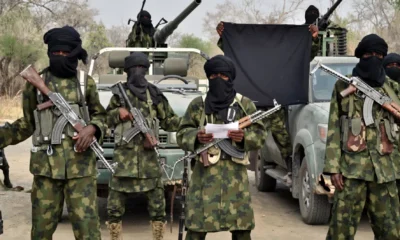
Boko Haram Denies Ceasefire with FG, Vows Continued Attacks
-
 Crime3 days ago
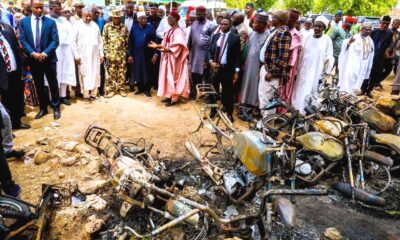
Boko Haram Attacks Adamawa Community, Kills Residents
-
 Business3 days ago
Dangote: Africa Is Like a ‘Scratch Card’ — Opportunities Are Immense
-
 News3 days ago
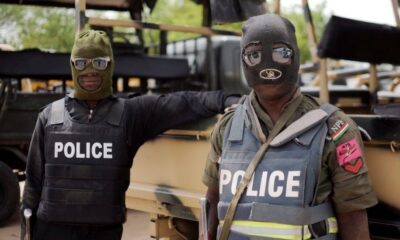
Police Raise Alarm Over Terrorists and Informants Spying on Schools, Other Targets
-

 Business3 days ago
Textiles was my biggest business mistake — Dangote
-
 International3 days ago
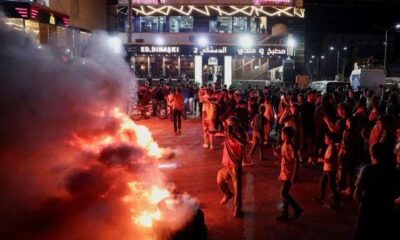
Protests Rock Syria Over Sharp Fuel Price Increase
-

 International3 days ago
JUST IN: All Occupants Survive as Aircraft Crashes, Catches Fire
-

 Business3 days ago
US Bond Selloff Pushes Benchmark Yield Past 5%, Stocks Rattled