
Business
Pump Price Cuts Driven by Pricing, Not Tariff — Dangote


Dangote Petroleum Refinery has dismissed claims that the recent fall in petrol pump prices was triggered by the Federal Government’s suspension of a 15 per cent import tariff, insisting the adjustment was driven solely by its own downward review of Premium Motor Spirit prices.
In a statement on Monday, the company said downstream marketers reacted directly to its revised ex-depot prices, and that the tariff policy did not influence the decision.
“We lowered our PMS gantry price from N877 to N828 per litre, and our coastal price from N854 to N806. The downstream marketers adjusted their prices accordingly. This move was strictly market-driven and not connected to the tariff reversal,” the refinery stated.
Refinery Capacity & Strategic SignificanceSince starting production, Dangote Refinery has significantly reshaped Nigeria’s fuel market. With a nameplate capacity of 650,000 barrels per day (bpd), it has become a major force in reducing Nigeria’s dependence on imported petrol.
The refinery is in the process of upgrading: Dangote recently announced plans to raise capacity from 650,000 bpd to 700,000 bpd, and is also working on a longer‑term expansion to 1.4 million bpd. This expected scale-up would make it one of the largest single-site refineries globally.
Why the Price Cut MattersHistorically, petrol pricing in Nigeria has been highly exposed to global factors, international crude prices, freight costs, foreign-exchange swings, and import duties.
By cutting its own ex-depot price, Dangote is asserting more control over the domestic price structure, reducing volatility tied to imports.
“Dangote’s price cut is a landmark event. For the first time in decades, the pricing power in Nigeria’s fuel market is shifting from international dynamics to local production.
”A refinery executive (who requested not to be named) added that the November 6 adjustment is part of a longer-term plan to stabilise supply and build market trust: “We’re not just lowering prices.
We are building confidence in Nigeria’s refining capacity. Every adjustment is carefully made to balance sustainability for us and affordability for consumers.
”Market Impact: The price review immediately reset the industry pricing floor. Within 24 hours, several major marketers reduced their pump prices, a response that analysts describe as “pure market competition.
”Oil sector analyst Grace Onuoha said:
“Dangote effectively forced a realignment. Marketers naturally had to follow to stay competitive. This isn’t about policy shifts, it’s market dynamics.
”Countering the Tariff NarrativeDangote’s statement is a direct rebuttal to widespread speculation that the 15% import tariff reversal triggered the pump price drop.
The company insists its price cut came first and was the real catalyst. The temporary tariff waiver only applies to imported PMS, while Dangote’s product is refined locally.Boosting Fuel Security.
By leveraging its own refining capacity, Dangote says it is helping to shield Nigeria from global supply disruptions and foreign-exchange risks. The refinery frames its pricing policy as part of a broader strategy toward energy self-sufficiency.
“As more Nigeria households and businesses rely on locally refined fuel, the nation becomes less vulnerable to international shocks,” the company said in its statement.
Energy analyst Dr. Tunde Aluko agrees: “This is what Nigeria has needed for decades, a domestic refinery with real capacity and market influence. Dangote is filling that crucial role.”
What This Means for Consumers
Many industry observers view the November 6 price cut as a turning point.
For the first time, a local refiner, not global import dynamics, is visibly driving fuel prices in Nigeria.
Fuel station owner Uche Eze, who operates in Abuja, said, “This is a positive development. Local refining means more predictable prices, better supply, and a buffer against forex volatility.”






Business
Meta set to charge WhatsApp Business messages from October 1
For example, a Nigerian fintech company sending 500,000 chargeable utility messages could incur about $5,050 in fees from Meta alone, excluding charges that may come from third-party providers or software platforms used to manage the messaging service.

Businesses using Meta’s WhatsApp Business Platform will begin paying for certain messages sent to customers from October 1, 2026, under a new pricing structure announced by the company.
The change applies to organisations that use the WhatsApp Business Platform, formerly known as the WhatsApp Business API, to manage customer communication on a large scale.
Regular WhatsApp users and small businesses using the standard WhatsApp Business app are not the main targets of the new charges.
Under the revised system, the amount businesses pay will depend on the type of message being sent.
Utility messages, including payment alerts, order confirmations and other service-related updates, will cost about $0.0101 per message, while marketing messages will attract a higher fee of approximately $0.062 each.
Although the individual charges appear relatively small, companies that send large volumes of messages could see their communication expenses rise significantly.
For example, a Nigerian fintech company sending 500,000 chargeable utility messages could incur about $5,050 in fees from Meta alone, excluding charges that may come from third-party providers or software platforms used to manage the messaging service.
Business
Dangote Refinery Suspends Petrol Sales To Lagos Depots
Dangote Refinery is prioritising markets where imported products are either unavailable or less dominant, rather than adding more supply to Lagos, which receives substantial volumes of imported petrol.

Dangote Petroleum Refinery has suspended coastal sales of Premium Motor Spirit (PMS) to depot owners and importers in Lagos.
People familiar with the refinery’s operations said that the move is deliberate, aimed at redirecting locally refined petrol to areas where imported supply is scarce.
The suspension is ongoing. A source said: “The suspension of coastal sales to Lagos is still ongoing. It is aimed at redirecting products to locations where imported products are unavailable. Lagos has quite some imported petrol.”
Dangote Refinery is prioritising markets where imported products are either unavailable or less dominant, rather than adding more supply to Lagos, which receives substantial volumes of imported petrol.
The strategy is intended to ensure locally refined petrol reaches areas where it is most needed.
The decision comes amid concerns at the refinery over the volume of imported petrol entering Nigeria.
According to data available to the refinery, imported PMS accounted for about 43 per cent of total petrol supplied into Nigeria in July
Business
Naira Exchange Rates Friday, August 28
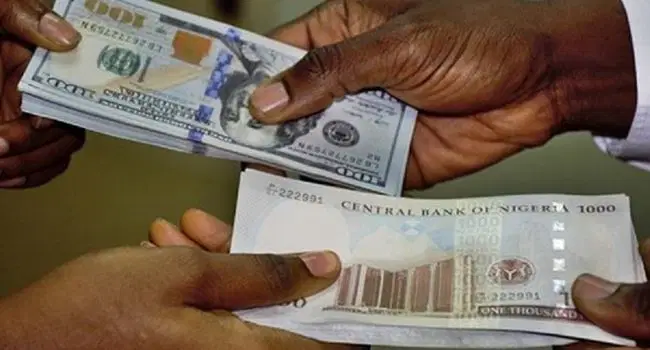
Today, the Naira Black Market exchange rate for 1 Great British Pound (GBP) is 1900 Naira. This means that you can get 1900 Naira for every 1 Pound that you exchange.
How much is 100 pounds in naira today?
At the current black market rate of 1900 per pound, 100 British Pounds = 190,000 Naira.
BLACK MARKET RATES
US Dollar (USD) Buy ₦1,405 Sell ₦1,410
Great British Pound(GBP) Buy ₦1,900 Sell: ₦1,920
EURO (EUR) Buy ₦1,595 Sell ₦1,615
Canadian Dollar (CAD) Buy ₦1,020 Sell ₦1,080
South African Rand (ZAR) Buy ₦75 Sell ₦90
Ghana CEDI (GHS) Buy ₦95 Sell ₦110
West African CFA Buy ₦2, 300 Sell ₦2, 400
CENTRAL AFRICAN CFA Buy ₦2,150 Sell 2,250
CBN Exchange Rates
US Dollar (USD) ₦1,338.59
Great British Pound (GBP) ₦1,820.34
EURO (EUR) ₦1,560.12
Swiss Franc (CHF) ₦1,664 91
Chinese Yuan (CNY) ₦199.19
Japanese Yen (Yen) ₦8.40
West African CFA (XOF) ₦2.39
West African Unit Account (WAUA) ₦1,843.17
Saudi Riyal (SAR) ₦356 51
South African Rand (ZAR) ₦83.72


Police confirm Kogi APC Chairman’s Murder by Bandits

President Tinubu Orders Comprehensive Forensic Audits of MDAs, IPPIS

Wushishi, National Population Commission’s Chairman, Dies

Tech Expert, Zuckerberg trains with UFC champions, Adesanya, Alexander

Organ Trafficking: Ekweremadu bags 10 years in UK prison

SAINT OBI: Between his marriage and his death
-
 Business3 days ago
Meta U.S. agrees to pay $18bn lawsuits over children’s social media addiction
-

 Business3 days ago
Naira Exchange Rates Thursday, August 27
-

 Sports3 days ago
NFF President Gusau, other board members resign Over DSS Probe
-

 News3 days ago
NIGCOMSAT To Procure Two New Communication Satellites
-
 News3 days ago
Gunmen abduct Dangote Cement senior driver in Ogun
-

 News3 days ago
Troops Resist Terrorists At Sokoto Barracks
-
 News3 days ago
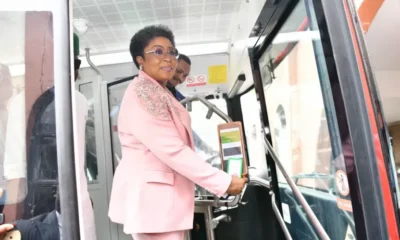
FG commissions 37 electric buses for civil servants
-

 Crime2 days ago
JUST IN: Terrorists kill 4, abduct others in Gorau after boat tragedy