
Health
US Pauses Chikungunya Vaccine Over Severe Side Effects

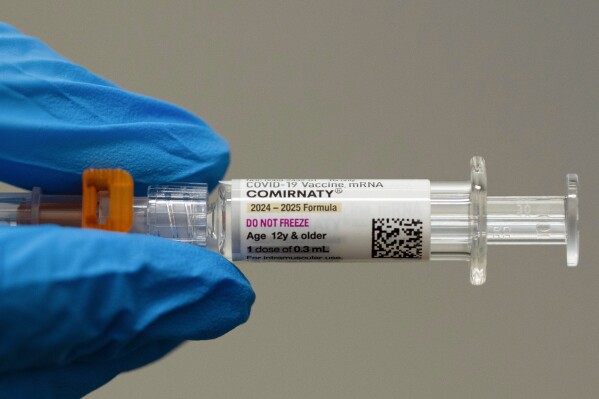
US health authorities have suspended the license for the Ixchiq vaccine against the chikungunya virus following reports of “serious adverse events”, the drug’s French maker said Monday.
Ixchiq is one of just two vaccines approved by the US Food and Drug Administration for the mosquito-spread virus, which mainly occurs in tropical and subtropical regions but has recently been discovered to countries worldwide.
French company Valneva obtained US approval for the vaccine in 2023, but reports of side effects have prompted reviews in particular over its use in older patients, including by the European Medicines Agency this year.
“The suspension of the license is effective immediately,” Valneva said of the FDA order issued Friday, citing four additional cases of serious side effects, three of which involved people aged 70 to 82.
“As we determine potential next steps, and as the clear threat of chikungunya continues to escalate globally, Valneva remains fully committed to maintaining access to our vaccine as a global health tool,” chief executive Thomas Lingelbach said in a statement.
Public health experts say chikungunya could be a potential future pandemic threat as climate change pushes the mosquitoes that spread it into new regions.
The symptoms are similar to those of dengue fever and Zika virus, with high fever and severe joint pain that is often debilitating and varies in duration.
Chikungunya is rarely fatal, though there is an increased risk of death for babies and the elderly.
In July, the World Health Organization warned of the risks of a major chikungunya epidemic, calling for urgent action.
The agency said it was picking up the same early warning signs as in a major outbreak two decades ago, which swept across the Indian Ocean before spreading globally and affecting almost half a million people.
So far this year, Europe has seen 27 chikungunya outbreaks, a new record for the continent, the European Centre for Disease Prevention and Control said this month.
AFP











Health
WHO Confirms 1,300 deaths in Europe heatwaves
At least 191 million people are forecast to endure temperatures of at least 35 °C on Sunday in Europe, with the heat particularly intense in Germany, the Czech Republic, Hungary and Poland, according to AFP estimates.


The World Health Organisation (WHO) confirmed that more than 1,300 people have died in Europe since June 21 in connection with the record-breaking heatwave roasting much of the continent.
WHO chief Tedros Adhanom Ghebreyesus said on X that tens of millions have been braving the extreme temperatures in Europe as a deadly heatwave moves eastwards, with some countries announcing rising death tolls and health services warning of saturation.
On Sunday morning, French health officials said there had been around 1,000 more deaths than expected in that country just since Wednesday.
“Heat stress is often called the ‘silent killer’ – and European homes, workplaces and schools were not built for these temperatures,” he said.At least 191 million people are forecast to endure temperatures of at least 35 °C on Sunday in Europe, with the heat particularly intense in Germany, the Czech Republic, Hungary and Poland, according to AFP estimates.
Health
How 100 hospitals in Romania switched to pen and paper to defeat a national cyber-attack
Cutting off 100 hospitals in Romania from the internet stopped the hackers in their tracks, buying time to work out how bad the attack was.

Photo: Head of Romania’s Cyber-Security Directorate Dan Cimpean (L) was in charge of co-ordinating the crisis response
One after another the calls came in from hospitals; criminals were infecting computer networks in a mass hack that was putting countless lives at risk.
At Bucharest’s national cyber-security centre (DNSC) they watched helplessly as the hackers spread across Romania through a popular piece of medical software.
Cyber-chief Dan Cimpean had a tough decision to make, but it was the only option they had.
The order went out to more than 100 hospitals. Disconnect from the internet, now.
The cyber-attack on Romania’s hospitals in February 2024 is one of the worst to target healthcare systems around the world, but these incidents are becoming increasingly common.
Healthcare is now the most targeted area of critical national infrastructure, the FBI has said recently.
Cutting off 100 hospitals in Romania from the internet stopped the hackers in their tracks, buying time to work out how bad the attack was.
But it meant no connected devices, emails or web browsers.
Medical staff had to switch to pen and paper, improvising workarounds to protect patients while IT teams scrambled and the national cyber response centre tried to find out how the hackers had got in – and how they could stop them.
Their actions over four days from 10 February 2024, and those of the doctors and nurses, have been widely praised.
How they reacted and how they coped has become a test case for disaster planners internationally, as officials look for advice on responding to a mass hospital hack.
(Credit: BBC News)
Health
214 Nigerians die of Lassa fever in 2026
The outbreak has spread across 23 states and 109 Local Government Areas since January 2026.
The Nigeria Centre for Disease Control and Prevention (NCDC) recorded 214 Lassa fever death between January to June this year.
The agency said that the Case Fatality Rate was climbing to 25.0 percent from 18.9 percent during the same period in 2025.
This is contained in the NCDC Lassa Fever Situation Report for Week 23 (June 1 to June 7).
Said the report: “New confirmed cases held steady in week 23, matching the count from week 22.“Infections were reported in Edo, Ondo, Bauchi and Ebonyi. No new healthcare worker infections were reported during the week.
“The outbreak has spread across 23 states and 109 Local Government Areas since January 2026,” it said.


NDC calls for Gbajabiamila sack over fake agency scandal

US ends military operations in Nigeria, withdraws 200 soldiers

Cape Verde faces defending world cup champions , Argentina today

Tech Expert, Zuckerberg trains with UFC champions, Adesanya, Alexander

Organ Trafficking: Ekweremadu bags 10 years in UK prison

SAINT OBI: Between his marriage and his death
-

 Business2 days ago
BOI names Kuramo Capital Fund Manager for $170.6m iDICE
-

 News2 days ago
Nigeria’s data centers worth $2bn
-

 Sports2 days ago
Two Dead In World Cup Celebrations In Mexico City
-

 News2 days ago
Tinubu to Send Off Team Nigeria to 2026 Commonwealth Games Thursday
-

 International3 days ago
HAPPENING NOW: Shops, businesses shut as protesters gather in South Africa over xenophobia
-

 International2 days ago
South Africa Anti-Immigration Peaceful Protests To Continue Weekly Till Demands Are Met
-

 Business2 days ago
DisCos earn N801bn in four months despite persistent blackouts
-

 Business2 days ago
FG Moves to Sheild Pig Industry from Deadly Swine Fever