
News
Benue tackles CJ for relocating LG poll tribunal to Abuja

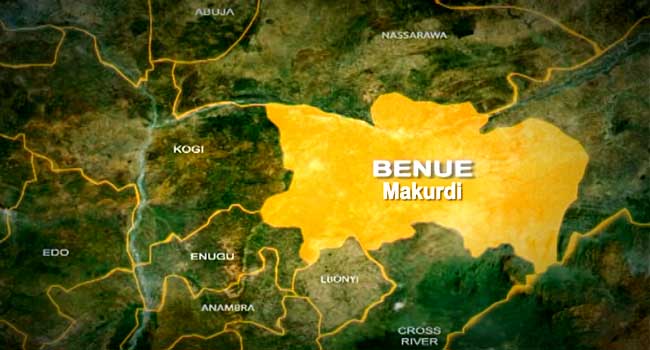
The Benue State Government has raised concerns over the directive issued by the state’s Chief Judge, Justice Maurice Ikpembese, to relocate the Local Government Election Petition Tribunals to Abuja.
The tribunals are currently handling disputes arising from the Benue State Local Government elections conducted on October 5, 2024.
Reports indicate that 93 petitioners, including aggrieved candidates from both the All Progressives Congress and the Peoples Democratic Party, have filed cases at the tribunal since October 17, 2024.
In a statement on Wednesday, Justice Ikpembese cited security concerns as the primary reason for relocating the tribunal proceedings to Abuja, emphasising the need to safeguard the lives of judges amid rising threats of violence.
However, speaking to journalists in Makurdi, the state’s Attorney General and Commissioner for Justice and Public Order, Mr. Fidelis Mnyim, questioned the CJ’s unilateral decision, noting that neither the governor nor his office had been formally notified.
“The state government, which funds the judiciary, was not informed about this decision,” Mnyim said. “We woke up to rumours that the tribunals had been relocated. When we went to the court premises, we found them deserted. As the Attorney General and a respondent in these cases representing the Benue State Independent Electoral Commission, I retain the right to be officially informed of such a critical decision.”
Justice Ikpembese had issued a circular titled ‘Directive for the Immediate Relocation of the Local Government Election Petitions Tribunals to NBA House, Abuja,’ explaining that the move was necessary due to security threats and an ongoing strike by the Benue State Judiciary Staff Union.
“In view of the prevailing security threats and the judiciary workers’ strike, it has become necessary to take urgent measures to ensure the safety of tribunal members, litigants, and counsel while facilitating smooth proceedings within the legally prescribed time frame,” the CJ stated.
Tensions between the Benue State Government and the Chief Judge have been escalating in recent weeks.
The Benue State House of Assembly, acting on a petition from Governor Hyacinth Alia, recently recommended Justice Ikpembese’s removal, a move that was resisted by the National Judicial Council and the Nigerian Bar Association.
Meanwhile, the opposition Peoples Democratic Party in the state has backed the Chief Judge’s decision to relocate the tribunals.
Speaking to newsmen on Wednesday, Benue PDP Publicity Secretary, Tim Nyor, emphasised security concerns.
“This is a matter of safety, and the party supports the relocation order given by the Chief Judge,” Nyor said. “Sponsored hoodlums previously held tribunal judges hostage for five hours and blocked access to the court premises using sandbags.”
Given that election petitions are time-bound, Nyor maintained that relocating to Abuja is the best option to protect the lives of tribunal judges and litigants while ensuring the process continues without interference.











News
Nigerian Law school student dies after falling from hostel rooftop
The deceased was a student of the Nigerian Law School, Enugu campus, who was undergoing externship programme at the Lagos campus.


•Faith Alayande
A Nigerian Law School student identified as Faith Alayande, is dead after she fell from the rooftop at Lagos campus.
In a statement on Monday, Aderonke Osho, secretary to the council and director of administration, said that the deceased was a student of the Nigerian Law School, Enugu campus, who was undergoing externship programme at the Lagos campus.
Osho said preliminary findings revealed that the student died from injuries sustained after falling from the rooftop of the campus hostel around 4am on Friday.
The Nigerian Law School is deeply saddened by this tragic development.
“Management is working closely with the appropriate authorities and the family to establish the circumstances surrounding the incident, ensure that all necessary procedures are duly followed, and provide further information as appropriate.”
News
Ekwulobia Suspends New Yam Festival for Kidnap Billionaire Son
A source from the community said the traditional ruler of Ekwulobia where Ezeokafor hails from, His Royal Majesty, Igwe (Engr) Emmanuel Chukwukadibia Onyeneke, officially suspended the Ekwulobia New Yam Festival, saying there was no need to celebrate while their son remained in captivity.

• Joseph Ezeokafor
Ekwulobia community in Aguata Local Government Area of Anambra State has cancelled its New Yam festival celebration billed for September 4, 2026.
Ohibaba.com learned that this is because of the kidnap of billionaire businessman and owner of Jezco Group of Companies, Chief Joseph Ezeokafor.
Ezeokafor was kidnapped in Awka on Tuesday last week when he stepped out of his house without his security details to attend to his spiritual need, where he goes to offer prays.
Public Relations Officer of Anambra State Police Command, SP Tochukwu Ikenga who confirmed the development said that serious operation is currently ongoing to save the elder statesman.
His kidnap has sent his community into mourning, causing the postponement of the new Yam festival, an annual festival which holds on a static date every year.
A source from the community said the traditional ruler of Ekwulobia where Ezeokafor hails from, His Royal Majesty, Igwe (Engr) Emmanuel Chukwukadibia Onyeneke, officially suspended the Ekwulobia New Yam Festival, saying there was no need to celebrate while their son remained in captivity.
“The Igwe said the community of Ekwulobia cannot celebrate while their son remains in the custody of the kidnappers,” the source said.
News
NLC disrupts Air Peace flight
The affected Air Peace flight, scheduled to depart Lagos at 6:30am, could not take off as passengers waited amid the disruption.

The Nigeria Labour Congress (NLC) on Tuesday disrupted flight operations in Lagos, leaving passengers scheduled to travel on an Air Peace flight stranded at the airport.
Our Reporter learned that the “protest was intended to enforce Air Peace employees right to join the union.”
Zulu terminal gate was under lock and key. The protest started at about 5am.
The affected Air Peace flight, scheduled to depart Lagos at 6:30am, could not take off as passengers waited amid the disruption.


Obasanjo faults court determining election winner , at GJF Democracy Dialogue

Naira Exchange Rates Wednesday, August 12

Nigerian Law school student dies after falling from hostel rooftop

Tech Expert, Zuckerberg trains with UFC champions, Adesanya, Alexander

Organ Trafficking: Ekweremadu bags 10 years in UK prison

SAINT OBI: Between his marriage and his death
-

 News2 days ago
Tinubu Flags Off Eko, Marine Bridge Repairs
-

 Crime24 hours ago
Governor Mbah Commends Security Forces Over Arrest Of Affa Church Kidnappers
-

 News2 days ago
147 Lagos Structures to Face Impact From Coastal Highway
-

 Crime2 days ago
Troops Rescue 33 Hostages in Zamfara (Photos)
-

 International23 hours ago
Trump cancels 175,000 visas for violations of public safety
-

 Crime1 day ago
Police Rescue 16 Kidnapped Victims in Kogi, Neutralise Armed Bandits (Video)
-

 Business24 hours ago
Naira Exchange Rates Tuesday, August 11
-

 Crime22 hours ago
UK court jails Congolese for murder of Nigerian