
Business
Will Trump Renew AGOA in September?
Talking about Nigeria’s participation and utilisation of AGOA preferences since the year 2000, the Nigerian-American Chamber of Commerce said in the past that Nigerian companies had not taken advantage of AGOA.

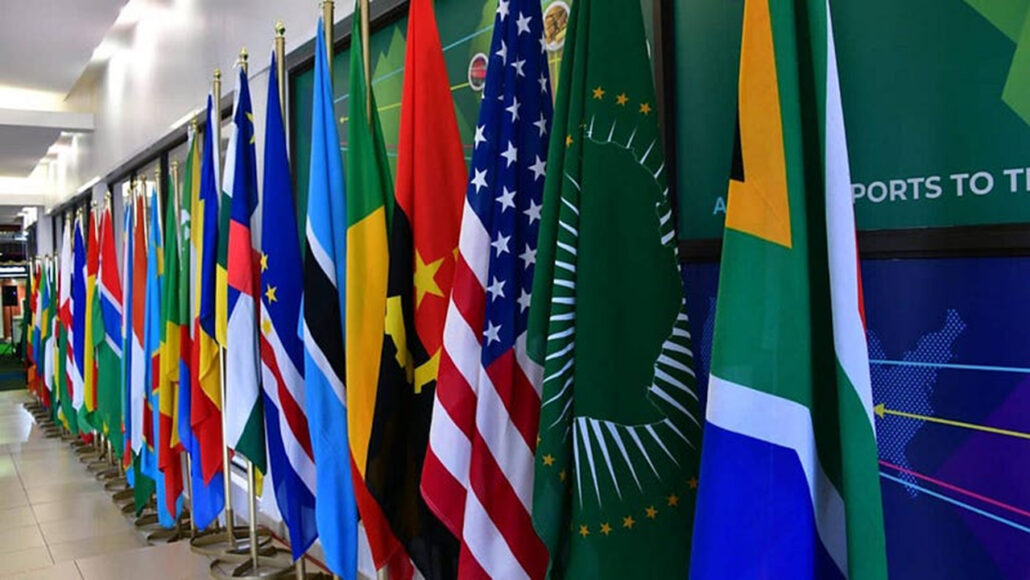
The African Growth and Opportunity Act (AGOA) expires in September 2025, raising questions on the possibility of its renewal.
AGOA is a programme that allows eligible countries in sub-Saharan Africa to export 6,800 different products to the United States without paying tariffs or facing limits on the amount they can export.
It came into existence in the year 2000 when President Bill Clinton’s administration passed some specific trade laws, which included AGOA.
Its purpose is to assist the SSA economy to promote a free market system, stimulate economic growth and integrate into the global economy. AGOA was modernised and extended from 2015 to 2025.
However, a concerted effort was made last December to renew AGOA. American Senator James Ritch introduced a bipartisan Bill that would renew the trade pact for 16 years, extending it to 2041. John James also introduced legislation that would extend AGOA for 12 years.
Apart from differences over the time frames, the two bills were aligned in their support for an enhanced AGOA.
Talking about Nigeria’s participation and utilisation of AGOA preferences since the year 2000, the Nigerian-American Chamber of Commerce said in the past that Nigerian companies had not taken advantage of AGOA.
In 2023, Nigerian-born US Deputy Secretary of the Treasury, Wally Adeyemo, noted that Nigeria has not taken advantage of AGOA and urged entrepreneurs and start-ups to seize opportunity by selling their products and exploring ‘duty-free access’ to the US markets.
Analysts who spoke to The Guardian agreed that Nigeria has not benefited by not taking full advantage of the window.
A capital market analyst, Ola Adeyanju said that despite Nigeria’s strong fundamentals, lack of basic infrastructures has rendered the citizens powerless against exportation.
“Cost of production and lack of basic infrastructures are seriously working against exporters in this country,” he said.
Source: The Guardian
Business
NAFDAC Gives Conditions For Reopening Sealed Factories of Alcoholic Manufacturers
The reopening and continued opening of any facility shall be subject to:Full compliance with the nationwide recall directive. Payment of all applicable investigative charges and regulatory fees…


• NAFDAC DG, Prof Mojisola Christianah Adeyeye
The National Agency for Food and Drug Administration and Control (NAFDAC) on Monday gave the conditions for the reopening of sealed factories of alcoholic beverages manufacturers nationwide.
At a press briefing in Lagos, the agency’s Director – General, Prof Mojisola Christianah Adeyeye, also directed the Distillers and Blenders Association of Nigeria (DIBAN), the Association of Food, Beverage and Tobacco Employers (AFBTE), and their member companies who have not comply with the ban on alcoholic beverages packaged in sachets and PET (plastic) bottles below 200ml to do so.
“Affected manufacturers are required to immediately commence a nationwide recall of all alcoholic drinks packaged in sachets and PET bottles below 200ml from distributors, warehouses, and other points within the supply chain and submit to the agency for destruction,” she said.
Emphasising on reopening sealed factories, she said: ” NAFDAC imposed investigative charges on defaulting companies found to have violated regulatory directives relating to the manufacture and distribution of alcoholic beverages in prohibited package sizes.
The affected companies are required to settle the applicable charges within the stipulated period and comply fully with all regulatory directives issued by the Agency.
The Agency wishes to emphasize that all recalled alcoholic products shall be subjected to inventory verification and destruction under NAFDAC supervision in accordance with the terms of the enforcement undertaking. Manufacturers shall bear the full cost of such destruction exercises.
Furthermore, before any sealed facility involved in the production of alcoholic beverages in sachets or PET bottles below 200ml can be reopened, NAFDAC will require satisfactory evidence that the production lines used for the prohibited package sizes have been dismantled, permanently disabled, or reconfigured to prevent the manufacture and packaging of alcoholic products in sachets and PET bottles below 200ml.
Such dismantling or reconfiguration shall be carried out under the direct supervision and verification of NAFDAC officers.
The reopening and continued opening of any facility shall be subject to:Full compliance with the nationwide recall directive. Payment of all applicable investigative charges and regulatory fees.Successful destruction of recalled products under NAFDAC supervision. Verification of the dismantling, reconfiguration, or decommissioning of equipment used for prohibited package sizes.Satisfactory inspection and certification by NAFDAC that the facility is compliant with all regulatory requirements.”
Business
Cybercriminals cloning DStv, other brands to steal bank accounts across Africa
According to cybersecurity company NordVPN, the campaign distributes Remote Access Trojans (RATs) and banking trojans, forms of malware that can give criminals control over infected devices and access to sensitive information.

Cybercriminals are impersonating popular companies and government agencies across Africa in a campaign designed to take over smartphones and bank accounts.
More than 100 fake websites linked to the malware campaign have been identified since August 2025.
Brands including DStv, Takealot and South African Airways, as well as the South African Revenue Service (SARS), are being used to make fraudulent messages and websites appear legitimate.
According to cybersecurity company NordVPN, the campaign distributes Remote Access Trojans (RATs) and banking trojans, forms of malware that can give criminals control over infected devices and access to sensitive information.
The attacks are particularly concerning in South Africa, where Android dominates the mobile operating system market.
NordVPN said the attacks typically begin with social engineering, where criminals send convincing messages through SMS, WhatsApp or social media.
The messages may contain urgent offers or requests involving job opportunities, tax refunds, identity renewals or pension verification.
Victims are then directed to fake websites designed to closely resemble the official websites of trusted organisations.
The sites encourage users to download an Android application. Once installed, the malicious software can operate quietly in the background, including after the smartphone is restarted.
Business
Cement price hits N16,000 per bag
The current cement prices mark a steep rise from late 2024, when a bag sold for around N7,500.

• Chairman of BUA cement, Abdul Samad Rabiu (ASR)
Cement dealers across Nigeria have announced fresh price increases, with a 50kg bag now selling for as much as N16,000 in some markets, up from N13,000 recorded by buyers just days earlier.
The current cement prices mark a steep rise from late 2024, when a bag sold for around N7,500.
By the third quarter of 2025, that had risen to about N9,000 before reaching the N12,000 to N16,000 range now seen across different locations.
Other building materials have followed a similar upward path. Blocks have climbed from around N600 to N1,100 each.
Sand has gone from N165,000 to N250,000 per 30 tonnes. Granite has risen from N530,000 to N780,000 per 30 tonnes.
Reinforcing steel now costs N1.15 million per tonne, up from N850,000.


NAFDAC Gives Conditions For Reopening Sealed Factories of Alcoholic Manufacturers

BREAKING: Veteran Nollywood Actor Taiwo Hassan ‘Ogogo’ Reportedly Dies at 66

NGE 2026 Conference: Onaiyekan, Mbah, Osigwe, Others to Speak in Enugu

Tech Expert, Zuckerberg trains with UFC champions, Adesanya, Alexander

Organ Trafficking: Ekweremadu bags 10 years in UK prison

SAINT OBI: Between his marriage and his death
-

 Politics2 days ago
Tinubu chairs APC Presidential Campaign Council
-
 News1 day ago
NGE 2026 Conference: Onaiyekan, Mbah, Osigwe, Others to Speak in Enugu
-
 Entertainment1 day ago
BREAKING: Veteran Nollywood Actor Taiwo Hassan ‘Ogogo’ Reportedly Dies at 66
-

 Politics1 day ago
APC Chair Dies After Collapse at Kogi Meeting
-

 News1 day ago
Tinubu Names Yari, DG Presidential Campaign Council
-
 Business2 hours ago
NAFDAC Gives Conditions For Reopening Sealed Factories of Alcoholic Manufacturers