
Business
MAN Opposes Proposed 15% Increase in Port Charges by Nigerian Ports Authority

The Manufacturers Association of Nigeria (MAN) has expressed deep concern over the proposed 15% increase in port-related charges by the Nigerian Ports Authority (NPA).
Amid rising operational costs, high foreign exchange rates, and economic uncertainties, this increase would further burden manufacturers and exacerbate the challenges faced by the real sector.
Port Operations and Their Impact on ManufacturingPorts are vital for international trade and business efficiency.
According to the United Nations Conference on Trade and Development (UNCTAD), 80% of Nigeria’s traded goods are transported by sea, with 70% of imports and exports in West and Central Africa destined for Nigeria.
Increased port charges would significantly raise production costs, inflation, and reduce the competitiveness of locally manufactured goods.
For manufacturers, port-related charges constitute significant indirect costs, as most raw materials and industrial machinery are imported through these ports.
Any increase in charges will have a ripple effect, leading to higher production costs, increased inflationary pressures, and reduced competitiveness of locally manufactured goods.
Many manufacturers who operate as tenants in NPA facilities will also face escalated costs, which could significantly disrupt the slight moderation in the mounting challenges that has bedeviled the manufacturing sector in recent times.
The Economic Realities and Global Competitiveness:
Nigeria’s current economic climate is characterized by rising inflation, foreign exchange challenges, and declining industrial capacity utilization.
Many businesses are experiencing worrying downturn due to unsustainable operating costs.
Increasing port tariffs is therefore ill-timed and could signal a departure from government’s avowed efforts and commitment to the ease of doing business.
It is inevitable that this additional strain on industrial activities will ultimately lead to reduce capacity utilization and possibly job losses.
Furthermore, Nigeria must remain competitive in regional trade.
Neighboring countries with more efficient and cost-effective ports will become far more attractive alternatives, leading to increased cargo diversion.
This will not only reduce revenue for the Nigerian government but will encourage smuggling and other untoward trade practices that weaken our economy.
Alternative Approaches to Revenue Generation:
While we acknowledge the need for revenue generation, increasing port tariffs could be counterproductive in the long run.
The real issues affecting port revenue include:
Port congestion and inefficiency:
Reducing turnaround time for vessels and improving cargo clearing processes can significantly boost revenue.
High demurrage charges: Addressing bureaucratic bottlenecks that delay cargo clearance will ensure faster throughput and more efficient revenue collection.
Infrastructure investment: Improving port infrastructure will enhance operational efficiency and attract more business, leading to natural revenue growth.
Competitive pricing strategies: Instead of raising tariffs, aligning Nigerian port charges with global best practices will encourage more trade volume and increase overall earnings.
Our Appeal to the Nigerian Ports Authority
The Manufacturers Association of Nigeria’s implores the NPA to shelve the proposed 15% tariff increase and instead, collaborate with stakeholders to explore sustainable alternatives for revenue generation.
Increasing tariffs in the current economic climate will have dire consequences, including:
1. Increased cost of production, leading to higher prices of goods and fanning inflation.
2. Reduced competitiveness of Nigerian manufacturers in local and international markets.
3. Increased smuggling due to high costs at Nigerian ports compared to neighboring countries.
4. Decline in government revenue due to lower cargo turn out and manufacturing downturn.
Rather than imposing additional financial burdens on businesses, we propose a stakeholder dialogue to explore strategies for enhancing port efficiency, reducing operational bottlenecks, and creating a more business-friendly environment that will ultimately lead to increased revenue without undermining industrial growth and competitiveness.
We earnestly advocate for caution and deep reflection on the part of the NPA, as a key stakeholder in Nigeria’s economic development.
NPA’s consultation with key economic actors after it has decided on the increase is tantamount to putting the cart before the horse and does not demonstrate goodwill.
We call on NPA to rescind the planned increase in order to avert a monumental downturn in the fortunes of businesses in Nigeria.
The manufacturing sector can ill-afford such an increase at this time; it runs against the present administration’s efforts at making Nigeria a trading hub in the West African sub-region, and would definitely constitute a drag in the efforts of government to stabilize the economy in the year 2025.


Business
Allawee shutting down operations by December 1, warns customers must withdraw by November 30
Allawee warned that payments sent to its account numbers from December 1, 2026 will fail, while its cards will also stop working, regardless of the expiry dates printed on them.


• Allawee logo
Nigerian card-issuing fintech Allawee is shutting down its business and personal account services from December 1, 2026.
This follows its acquisition by Pay Stack.
Accordingly, customers have been given until November 30 to withdraw their funds and make alternative arrangements.
The company disclosed the decision in emails sent to customers, according to TechCabal, explaining that its technology now operates within Paystack following the latter’s acquisition of Allawee in 2025.
Allawee warned that payments sent to its account numbers from December 1, 2026 will fail, while its cards will also stop working, regardless of the expiry dates printed on them.
Customers have been advised to withdraw their balances before the deadline, provide new bank details to people or businesses that regularly pay them, and replace saved Allawee card information on subscriptions and other recurring payments.Allawee said customers would not lose their money because of the shutdown. “Your money will remain yours,” the company said.
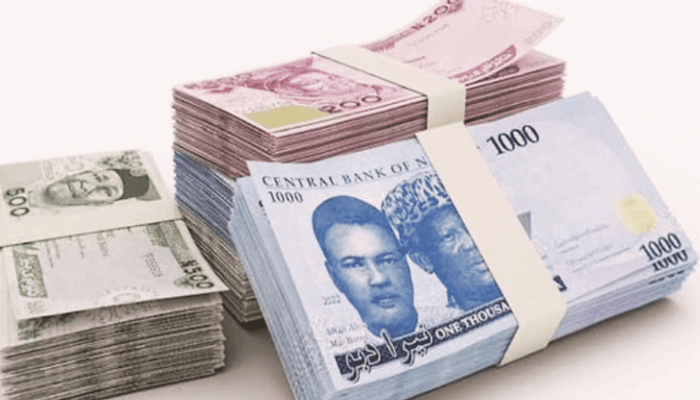
BLACK MARKET RATES
US Dollar (USD) ₦1,400
Great British Pound(GBP) ₦1,890
EURO (EUR) ₦1,580
Canadian Dollar (CAD) ₦1,020
South African Rand (ZAR) ₦75
Ghana CEDI (GHS) ₦95
West African CFA Buy ₦2, 300
CENTRAL AFRICAN CFA Buy ₦2,150
CBN Exchange Rates
US Dollar (USD) ₦1,329.43
Great British Pound (GBP) ₦1,800.18
EURO (EUR) ₦1,542. 01
Swiss Franc (CHF) ₦1,637.63
Chinese Yuan (CNY) ₦197.79
Japanese Yen (Yen) ₦8.31
West African CFA (XOF) ₦2.36
West African Unit Account (WAUA) ₦1,823.95
Saudi Riyal (SAR) ₦354.08 South African Rand (ZAR) ₦82.47
Business
Dangote, NMDPRA Clash Over Refinery’s Free Zone Status
The case has been adjourned until September 9, 2026, when the court is expected to hear the motion on notice.
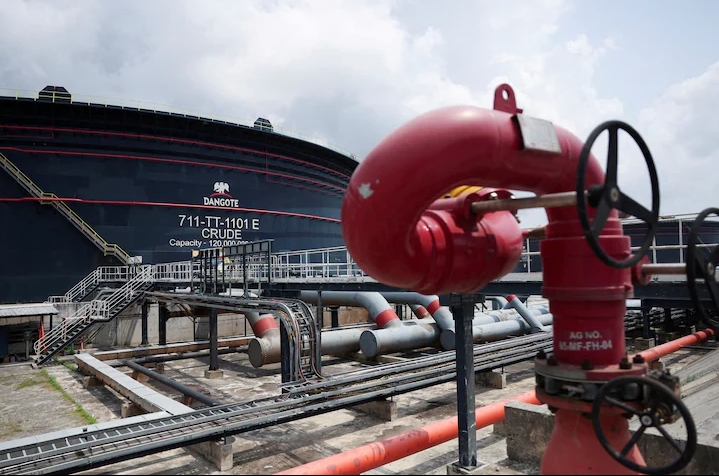
A fresh regulatory battle between Dangote Petroleum Refinery and the Nigerian Midstream and Downstream Petroleum Regulatory Authority (NMDPRA) has erupted into a major legal confrontation over the extent of government’s regulatory powers within Nigeria’s free zones.
A Federal High Court in Lagos yesterday restrained NMDPRA from enforcing its directive suspending the loading and truck-out of petroleum products from the Dangote Refinery, effectively stopping the regulator from taking enforcement action against the facility pending the determination of the substantive application.
Justice Akintayo Aluko, in an interim ruling, also barred NMDPRA, its officers, agents and representatives from entering, sealing, shutting down, restricting access to, obstructing, suspending, disrupting, inspecting, supervising, sanctioning or otherwise interfering with the refinery’s operations at the Lekki Free Zone.
The order followed an ex-parte application filed by Dangote Petroleum Refinery and Petrochemicals FZE in Suit No. FHC/L/CS/1174/2026.
At the heart of the dispute is NMDPRA’s August 24, 2026 directive suspending the loading and truck-out of petroleum products from the refinery.
But the case is rapidly assuming significance beyond the immediate dispute over product evacuation.
It raises a fundamental question about the jurisdiction of Nigeria’s petroleum regulator over businesses operating within designated free zones.
Who Regulates the Refinery?
Dangote is challenging NMDPRA’s action on the ground that the regulator lacks the authority to exercise regulatory or oversight powers over operations within free zones, including the Dangote Industrial Free Zone.
Justice Aluko said the documents placed before the court raised “serious issues” requiring determination, particularly whether NMDPRA possesses the regulatory or oversight powers it sought to exercise over the refinery.
The judge also referred to a March 2, 2026 letter from the Attorney-General of the Federation which, according to the court, “clearly stated” that NMDPRA was not entitled to exercise regulatory powers or oversight functions over operations within free zones.The apparent conflict between that position and NMDPRA’s August 24 directive now forms one of the central issues before the court.
Justice Aluko said the critical question was whether NMDPRA should be allowed to exercise the disputed regulatory authority while the substantive issues remained unresolved.
High Stakes for Downstream Market
The dispute comes at a sensitive time for Nigeria’s downstream petroleum industry, where the Dangote Refinery has become a major source of locally refined petroleum products.
Any regulatory action capable of restricting the refinery’s ability to load and evacuate products has potential implications for petroleum distribution and supply across the country.
For Dangote, the legal battle is also about protecting the operational autonomy and investment framework of a refinery established within a free-zone environment.
For NMDPRA, the issue goes to the core of its mandate as the statutory regulator of Nigeria’s midstream and downstream petroleum sector.
The eventual substantive ruling could therefore have consequences well beyond the two parties.
It could establish a judicial precedent on how far petroleum-sector regulators can go in supervising or enforcing their mandates against businesses operating within free zones.
The case has been adjourned until September 9, 2026, when the court is expected to hear the motion on notice.


Eko Electricity blames Lekki-Ajah power outages on feeders disruption

Allawee shutting down operations by December 1, warns customers must withdraw by November 30

Naira Exchange Rates Wednesday, September 2

Tech Expert, Zuckerberg trains with UFC champions, Adesanya, Alexander

Organ Trafficking: Ekweremadu bags 10 years in UK prison

SAINT OBI: Between his marriage and his death
-

 Business2 days ago
Naira Exchange Rates Today, Monday August 31
-
 Business2 days ago
PZ Cussons Reports N45.2bn PAT, Proposes N2.50 Dividend
-

 News2 days ago
JAMB introducing facial scan to catch UTME impersonators
-

 Business1 day ago
Commercial Banks Borrowing From CBN Drops By 89% in August
-

 Business2 days ago
Emzor Pharma raises N26.7bn bond to boost local drug manufacturing
-

 Entertainment2 days ago
Dolly Parton Buried By Husband’s Grave In Private Cemetry
-

 Business2 days ago
Nigeria’s GDP grew 4.43% in Q2 2026, says NBS
-

 News2 days ago
JUST IN: Duke, Adebayo, Aliyu Arrive Abuja for Opposition Summit