
Business
2024 The Year of Tensed Business Environment
Foreign Direct Investment, the most critical investment that shows long-term investor confidence dropped to $103.82 million in Q3 2024, or 8.29 per cent.”

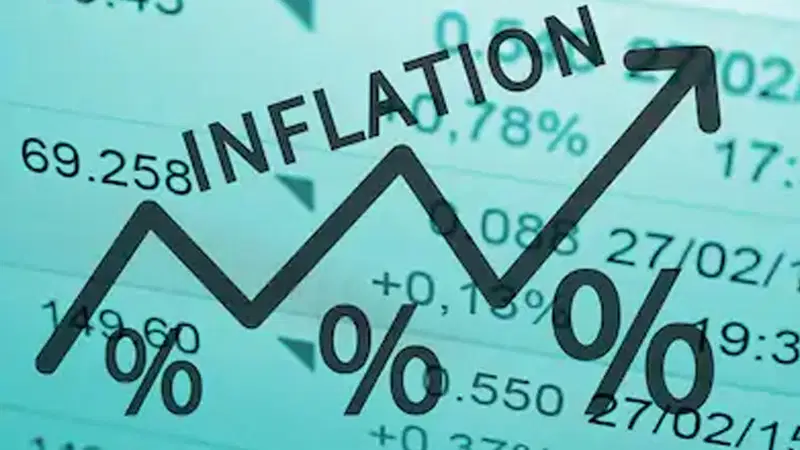
That’s how Chinyere Almona, the Director-General of the Lagos Chamber of Commerce and Industry (LCCI), summed up the outgoing 2024 and urged Nigerian companies to prepare for “more stress in 2025.”
Almona said: ” It was a year of higher inflation, interest rates, and exchange rates, making the country less attractive to investors.
“The persistent rise in the inflation rate, reaching a 28-year record high of 34.60 in November, continues to fuel a tense business environment as elevated prices constrain various business operations,” Almona said.
The LCCI is particularly concerned because, with the persistent and unabated rise in inflation, businesses should prepare for more stress from the burden of higher interest rates as we enter the new year.
“A disappointing negative record of our capital importation at $1.25 billion during the third quarter of 2024 compared with $2.60 billion recorded in the preceding second quarter of the year points to an unattractive environment for investors.
“Foreign Direct Investment, the most critical investment that shows long-term investor confidence dropped to $103.82 million in Q3 2024, or 8.29 per cent.”
The LCCI boss said the rising costs of food, energy, housing, transportation, and services are driving inflation, worsening economic conditions, and reducing both purchasing power and business profitability.
Segun Ajayi-Kadir, the Director-General of the Manufacturers Association of Nigeria (MAN), noted that the government must take decisive action to reverse the trends in 2025.
Ajayi-Kadir said that the harsh himfect of hostile economic policies has largely constrained the country’s goal of rapid industrialisation and has left the economy struggling for survival.
He said that for a positive outlook in the coming year, especially for the manufacturing sector, MAN recommends the following:
1. Create special windows for providing single-digit interest rates to productive sectors and relax stringent conditions for SMEs to access funding
.2. Retain the current excise duty of N10 per litre on non-alcoholic beverages to avoid shutting down the industry.
3. Recapitalize the Bank of Industry (BOI) to meet the growing credit demand of industries.
4. Implement the recommendations of the Presidential Fiscal Policy and Tax Reforms Committee.
5. Review import duty rates for production inputs, particularly those not locally available, and consider pegging the rate at N800.
6. Direct the Central Bank of Nigeria to clear $2.4 billion outstanding dollar obligations on FX forward contracts to support manufacturers.
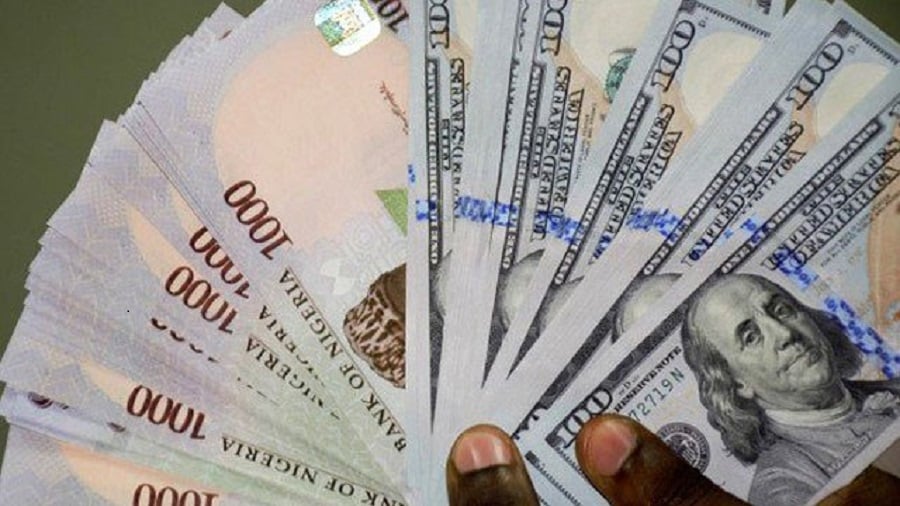
BLACK MARKET RATES
US DOLLAR (USD) Buy ₦1,416 Sell ₦1,423
GREAT BRITISH POUND (GBP) Buy ₦1,890 Sell: ₦1,910
EURO (EUR) Buy ₦1,590 Sell ₦1,610
CANADIAN DOLLAR (CAD) Buy ₦1,020 Sell ₦1,080
SOUTH AFRICAN RAND (ZAR) Buy ₦75 Sell ₦90
UAE DIRHAM Buy ₦350 Sell ₦370 CHINESE YUAN Buy ₦190 Sell ₦205
GHANA CEDI (GHS) Buy ₦95 Sell ₦110
WEST AFRICAN CFA Buy ₦2, 300 Sell ₦2, 400
CENTRAL AFRICAN CFA Buy ₦2,150 Sell 2,250
AUSTRALIAN DOLLAR Buy ₦800 Sell ₦900
CBN Exchange Rates
US DOLLAR (USD) ₦1,357. 65
GREAT BRITISH POUND (GBP) ₦1,834.04
EURO (EUR) ₦1,567.00
SWISS FRANC (CHF) ₦1,671. 98
JAPANESE YEN (JPN) ₦8.53
CHINESE YUAN (CNY) ₦201. 34
WEST AFRICAN CFA (XOF) ₦2. 39
WEST AFRICAN UNIT ACCOUNT (WAUA) ₦1,858.02
SAUDI RIYAL (SAR) ₦361.62
SOUTH AFRICAN RAND (ZAR) ₦84.23
Business
Traders shut down Enugu ‘s Obollo-Afor market over N25,000 haulage levy
However, Chairman of ESIRS, Emmanuel Nnamani, in a letter to the traders, said the haulage levy was not paid by traders buying or selling goods in the markets, but was applicable strictly to truck drivers plying interstate routes.
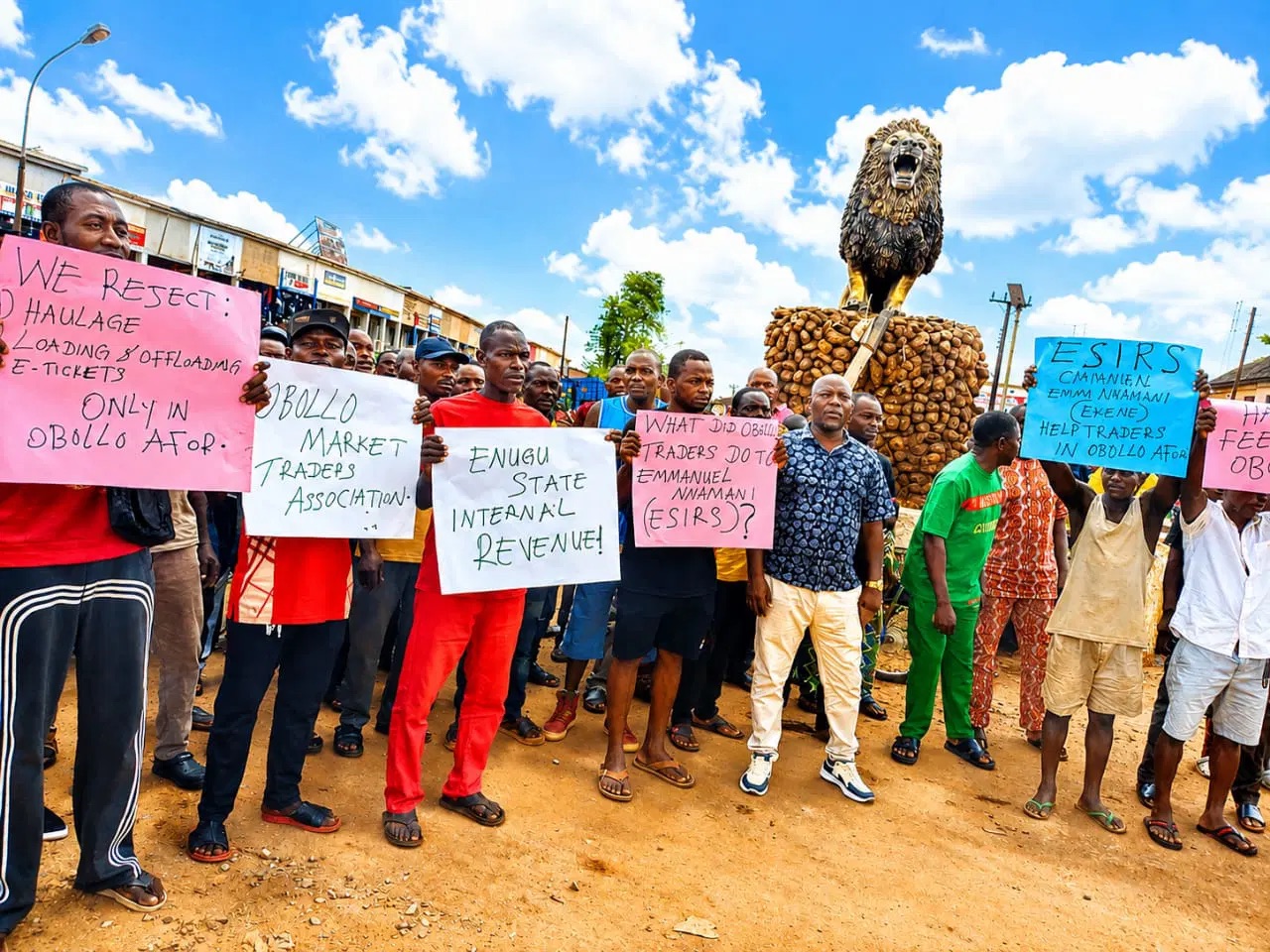
All shops and markets at Obollo-Afor, Udenu Local Government Area of Enugu State were shut yesterday, as traders staged a peaceful protest against alleged selective collection of a N25,000 haulage levy in the market.
The traders, who locked their shops and took to the streets in large numbers, carried placards with various inscriptions, alleging that the Enugu State Internal Revenue Service (ESIRS) had singled out Obollo-Afor Market for the collection of N25,000 haulage fee on every truckload of goods loaded or offloaded in the market.
However, Chairman of ESIRS, Emmanuel Nnamani, in a letter to the traders, said the haulage levy was not paid by traders buying or selling goods in the markets, but was applicable strictly to truck drivers plying interstate routes.
Addressing officials of the Udenu Local Government Council at the council secretariat, where the protesters marched to present their grievances, Chairman, Obollo-Afor Market Traders Association, Charles Eze, lamented that truck operators bringing foodstuffs, building materials, and other commodities to the market had stopped coming because of the levy.
Business
Nigeria’s oil production dropped by 4% in July – NUPRC
“In the month under review, the daily peak production of crude oil and condensate was 1.78mbpd, while the lowest daily production was 1.57mbpd.”

The Nigerian Upstream Regulatory Commission (NUPRC) data has shown Nigeria’s average daily oil production fell by four percent in July, 2026.
According to the NUPRC, Nigeria produced 1.505 million barrels per day (bpd) of crude oil and 0.17 million bpd of condensate, bringing the combined daily production to 1.67 million bpd.
The commission said the country met and exceeded its Organisation of the Petroleum Exporting Countries (OPEC) quota of 1.5 million bpd for the third consecutive month.
“In the month under review, the daily peak production of crude oil and condensate was 1.78mbpd, while the lowest daily production was 1.57mbpd.”


Zambia’s Hichilema leads presidential vote count

Tinubu Hails Adeleke’s Re-Election as Proof Democracy Is Thriving

BREAKING: INEC declares Adeleke winner of Osun gov poll

Tech Expert, Zuckerberg trains with UFC champions, Adesanya, Alexander

Organ Trafficking: Ekweremadu bags 10 years in UK prison

SAINT OBI: Between his marriage and his death
-

 Politics3 days ago
Osun Election: President Tinubu mobilises Voters “Go Out to Vote Candidate of Your Choice on Saturday Without Fear
-
 Politics3 days ago
Accord says Imumolen has no electoral value
-
 Business3 days ago
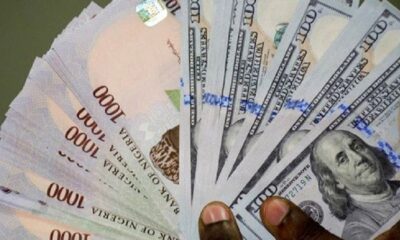
Naira Exchange Rates Friday, August 14
-
 Politics3 days ago
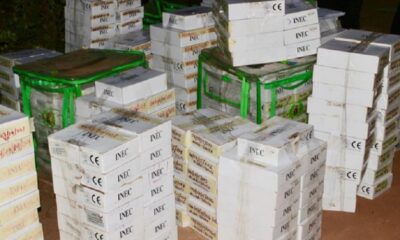
Osun governorship election will be transparent, says INEC
-

 News3 days ago
NMMA shortlist 972 entries for 2026 awards
-

 Sports3 days ago
Committees hit the ground running for 8th Kwara State Sports Festival
-
 Politics1 day ago
(UPDATED) #OsunDecides2026: INEC Uploads 3,119 of 3,763 Polling Unit Results as Collation Continues
-

 Health3 days ago
Gov Mbah Invest in world-class Enugu International Hospital