
Health
US Pauses Chikungunya Vaccine Over Severe Side Effects

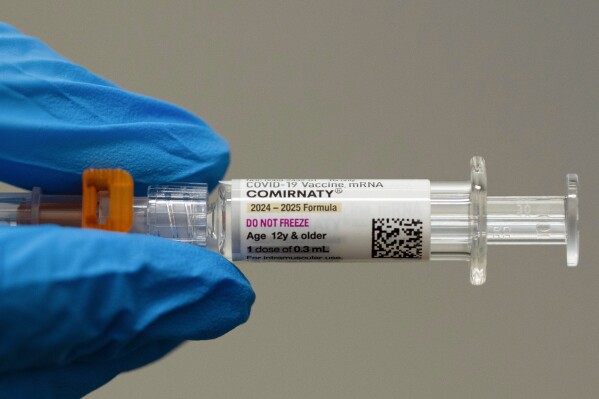
US health authorities have suspended the license for the Ixchiq vaccine against the chikungunya virus following reports of “serious adverse events”, the drug’s French maker said Monday.
Ixchiq is one of just two vaccines approved by the US Food and Drug Administration for the mosquito-spread virus, which mainly occurs in tropical and subtropical regions but has recently been discovered to countries worldwide.
French company Valneva obtained US approval for the vaccine in 2023, but reports of side effects have prompted reviews in particular over its use in older patients, including by the European Medicines Agency this year.
“The suspension of the license is effective immediately,” Valneva said of the FDA order issued Friday, citing four additional cases of serious side effects, three of which involved people aged 70 to 82.
“As we determine potential next steps, and as the clear threat of chikungunya continues to escalate globally, Valneva remains fully committed to maintaining access to our vaccine as a global health tool,” chief executive Thomas Lingelbach said in a statement.
Public health experts say chikungunya could be a potential future pandemic threat as climate change pushes the mosquitoes that spread it into new regions.
The symptoms are similar to those of dengue fever and Zika virus, with high fever and severe joint pain that is often debilitating and varies in duration.
Chikungunya is rarely fatal, though there is an increased risk of death for babies and the elderly.
In July, the World Health Organization warned of the risks of a major chikungunya epidemic, calling for urgent action.
The agency said it was picking up the same early warning signs as in a major outbreak two decades ago, which swept across the Indian Ocean before spreading globally and affecting almost half a million people.
So far this year, Europe has seen 27 chikungunya outbreaks, a new record for the continent, the European Centre for Disease Prevention and Control said this month.
AFP













The Nigerian Association of Resident Doctors (NARD) has suspended its planned indefinite nationwide strike and directed all members to resume duties on Wednesday, April 8, 2026.
The decision was announced on Tuesday following successful last-minute engagements with the Federal Government and other stakeholders over the contentious suspension of the Professional Allowance Table (PAT) and other welfare issues.
NARD had earlier declared a total and comprehensive strike effective from 12:00 a.m. on Tuesday, April 7, protesting the government’s move to halt implementation of the revised allowance structure, unpaid promotion arrears, and other outstanding agreements.
In a statement, the association said the suspension was reached after productive discussions, though it issued a fresh ultimatum, warning of renewed industrial action if demands are not fully met by April 21, 2026.
Patients and healthcare facilities across the country, which had braced for disruption in services, are expected to see normal operations resume from Wednesday morning.
NARD urged its members to return to work promptly while maintaining that the core issues remain unresolved and will be reviewed at the next National Executive Council meeting.
The development brings temporary relief to the public health system amid ongoing concerns over doctor shortages and welfare in Nigerian teaching and specialist hospitals.
Health
Women giving birth on their backs or squatting – Which is Better?
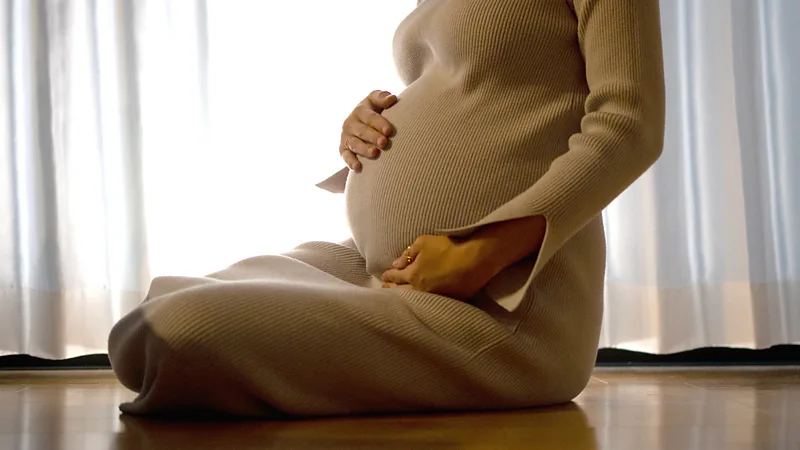
Squatting can enlarge the pelvic diameter by at least 2.5cm (1in), while working with gravity makes it far easier to give birth.So why do so many women today give birth on their backs?

Credit: Getty images
For thousands of years, across the world, women tended to give birth in an upright position – whether kneeling as per Cleopatra, using birthing stools and chairs, or squatting.
In fact, squatting can enlarge the pelvic diameter by at least 2.5cm (1in), while working with gravity makes it far easier to give birth.So why do so many women today give birth on their backs?”
There is a generalised ignorance amongst professions and pregnant women about the physiology of birth,” says Janet Balaskas, founder of the Active Birth Centre in the UK, and author of a number of books detailing how mothers can take control of their birth experience.
In 1982, Balaskas published an “active birth manifesto” that became the central tenet of her organisation.
“Throughout the world, and for thousands of years, women have spontaneously laboured and given birth in some form of upright or crouching positions,” the manifesto reads. “Whatever the race or culture… the same upright positions predominate.”
Most women in post-industrial countries are confined to hospital in recumbent positions, Balaskas says. “This practice is illogical, making birth needlessly complicated and expensive, turning a natural process into a medical event and the labouring woman into a passive patient,” she argues.
“No other species adopts such a disadvantageous position at such a crucial time.”
Other experts agree.
In fact, giving birth lying down is a “relatively modern phenomenon”, Hannah Dahlen, professor of midwifery at Australia’s Western Sydney University, wrote in a 2013 op-ed for The Conversation.
Pregnancy as ‘illness
‘It’s only in the past 300 to 400 years that women have been largely giving birth on their backs. They can thank a French man named François Mauriceau.
He claimed that the reclining position would be both more comfortable for the pregnant woman and more convenient for the male physician attending to her (there was already a movement emerging to dispense of midwives and instead have male surgeons present at births).
Mauriceau viewed pregnancy as an illness.
In his 1668 book The diseases of women with child and in child-bed, Mauriceau advised: “The best and surest is to be delivered in their bed, to shun the inconvenience and trouble of being carried thither afterwards.”
However, some scholars argue that the change in birthing position may actually be due to another Frenchman who lived the same time as Mauriceau – King Louis XIV.
” Since Louis XIV reportedly enjoyed watching women giving birth, he became frustrated by the obscured view of birth when it occurred on a birthing stool, and promoted the new reclining position,” wrote Lauren Dundes, a professor of sociology at McDaniel College in Maryland, US, in her 1987 paper on the evolution of birthing positions.
The influence of the king’s policy is unknown, although the behaviour of royalty must have affected the populace to some degree,” she added. “Louis XIV’s purported demand for change did coincide with the changing of the position and may well have been a contributing influence.”
Regardless of how giving women birth on their backs came about, the trend stuck, much to the detriment of their birthing experience.
“Birth has become institutionalised with options such as home birth – which is more conducive for many women wanting a physiological or ‘natural’ birth – declining,” says Balaskas.
Proven by science
The main reason women have given birth in upright positions for so many thousands of years is simple: gravity. A baby has to travel downwards through the birthing canal, and gravity is beneficial to the process.
It has been shown that left to their own devices, women will instinctively lean forward during labour – not backwards – adopting positions such as squatting, leaning forward on their hands and knees, or leaning against a low piece of furniture.
Credit: BBC

The National Association of Resident Doctors (NARD) has announced plans to commence a total and indefinite nationwide strike starting at midnight on Tuesday, April 7, 2026, citing the Federal Government’s failure to fully implement key agreements.
In a statement following an Extraordinary National Executive Council (e-NEC) meeting, NARD President Dr. Mohammed Suleiman said the strike, tagged: No Implementation, No Going Back,” is aimed at pressing the government to address several outstanding issues.
These include the reinstatement of five dismissed colleagues, payment of promotion and salary arrears across various health institutions, timely release of funds under the 2026 Medical Residency Training Fund (MRTF), and clearance of long-overdue professional allowances.
The association is also protesting the alleged suspension or scrapping of the agreed Professional Allowance Table (PAT), describing the government’s action as unjustifiable and a threat to doctors’ welfare and the stability of the health sector.
Despite the Federal Government’s recent release of ₦21.3 billion (with additional tranches processed) to clear outstanding allowances of which about 60% of affected doctors have reportedly received alerts NARD maintains that critical demands remain unaddressed.
The group insists the strike will proceed unless there is full implementation of the agreements reached in previous negotiations.
“The responsibility to avert this lies with the Federal Government,” sources close to the association emphasised, warning that partial payments and unfulfilled promises have eroded trust.
Healthcare stakeholders have expressed concern over the potential impact of the strike. Resident doctors form a critical backbone of service delivery in teaching hospitals and federal medical centres across the country.
A shutdown is expected to disrupt emergency care, outpatient services, surgeries, and training programmes, putting additional strain on an already overstretched system and leaving many patients vulnerable.
The development comes amid recurring industrial disputes in Nigeria’s health sector, with NARD previously suspending strikes after signing memoranda of understanding with the government, only for fresh disagreements to arise over implementation.
As of now, neither the Federal Ministry of Health nor the Presidency has issued an official response to the latest announcement, though past statements have highlighted efforts to meet multiple demands and urged dialogue to prevent disruption of essential services.
Patients and the public have been advised to seek updates from their local hospitals and explore alternative care options where possible as the April 7 deadline approaches.


Dozens Feared Dead in Nigerian Air Force Airstrike on Jilli Market in Yobe State (Images)

FG Unmasks 60 Persons and Corporates Behind Terrorism Financing, Order Banks To Freeze Their Accounts

Police reopens, handover PDP Hqtrs to Wike backed Faction

Tech Expert, Zuckerberg trains with UFC champions, Adesanya, Alexander

Organ Trafficking: Ekweremadu bags 10 years in UK prison

SAINT OBI: Between his marriage and his death
-

 News2 days ago
CBN Debunks Viral Fake News of ₦5,000 Banknote Featuring President Tinubu’s Image
-

 Politics2 days ago
2027: Bode George warns INEC, Judiciary Drifting Nigeria Towards ” One Party Rule”
-

 Business2 days ago
DR Congo Central Bank Announces Ban on Foreign Currency Cash Transactions from 2027
-

 Crime3 days ago
Tinubu Mourns Soldiers Killed in Benisheikh Terror Attack
-

 Politics2 days ago
NBA Cautions Lawyers Against Involvement in Political Party Disputes
-

 Business2 days ago
Supreme Court Overturns Appellate’s Ruling on $2bn Debt Recovery Battles Nestoil /Neconde Energy vs FBNQuest Merchant Bank
-

 News3 days ago
Police Debunk Viral “Terror Attack” Video in Abuja, Launch Investigation
-

 News2 days ago
Plateau Community Laments ‘ No Security To Repel Attackers’