
Business
UBA To Rollout Banking Products For Ex-staff


” As a bank that is interested in the welfare of both staff and ex-staff, we are going to roll out products that are specifically tailored to suit the needs of all our alumni.”
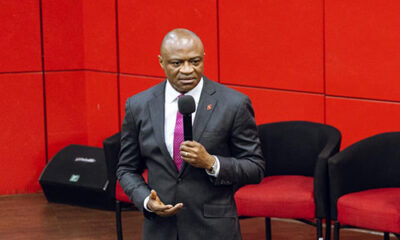
Oliver Alawuba, UBA’s Group Managing Director, disclosed this, during the relauch of the UBA Alumni Network Programme, in Lagos.
He said that some of the new offerings and benefits to be enjoyed by the members of the UBA alumni include debt restructuring and a moratorium for staff who left while still servicing loans, top-up loans, CoT concessions, access to senior citizens loans, and fast-tracking of banking services, among others.
He expressed the bank’s commitment to reposition the alumni to do more to ensure that ex-staff remain comfortable ambassadors of the brand.
“I understand that this very key network was launched in 2021, and we have come here today to assure all the members of our alumni that UBA, which is over 75 years old, will continue to play the role of becoming a beacon of hope to our Ex-staff,” he said .
Muyiwa Akinyemi, the UBA’s Deputy Managing Director, also noted that the bank is where it is today because of the sacrifices made by its ex-staff several years ago, adding that this is the driving force behind the bank’s desire to support them.
“Today, we are here, but tomorrow, we might be somewhere else, and it is, therefore, essential for us to bond with our former employees who we recognise as ambassadors that have contributed to the bank’s legacy in various sectors over the years,” Akinyemi stated.
He explained that with 35 million customers and over 25,000 staff, the bank remains committed to fostering a vibrant alumni community.
,
“We will continue to rely on this all important network to help us to know how to serve you better, in the four continents and 24 countries that UBA currently operates in,” he said
The Chairperson of the UBA Alumni Network, Mosunmola Yusuf, who was a former staff with the Employee Experience unit, explained that the bank aims to harness the wealth of knowledge and experience of its former employees, creating a powerful network that extends far beyond the continent.




Business
AfCFTA : Nigerian Goods In High Demand In Africa, says Minister
On a trade mission to Botswana with about 11 Nigerian businesses, one of them immediately got an order of 6,000 T-shirts to be supplied there.

The Minister of Trade, Industry and Investment, Dr Jumoke Oduwole, has said that Nigerian goods continue to remain competitive and, in particular, high demand on the continent.
The minister disclosed this yesterday in Abuja at the 2026 Third Quarter meeting of the African Continental Free Trade Area (AfCFTA) Central Coordination Committee (CCC).
She said, ” I think that a lot of Nigerians have the perception that Nigerian goods are not competitive on this continent. Nigerian entrepreneurs have shown that they can compete anywhere in the world, and are doing particularly well in the rest of Africa, and this is demonstrated by our non-oil exports, which have gone up exponentially, and it’s due to the exports of Nigerian goods across the African continent
She said on a trade mission to Botswana with about 11 Nigerian businesses, one of them immediately got an order of 6,000 T-shirts to be supplied there.
Business
After South Africa, Kenya Cracks Down on Foreign Traders, Retailers
Ruto directed authorities to begin shutting down small businesses operated by foreign nationals from September 7, saying hawking and small-scale retail should be reserved for Kenyans.
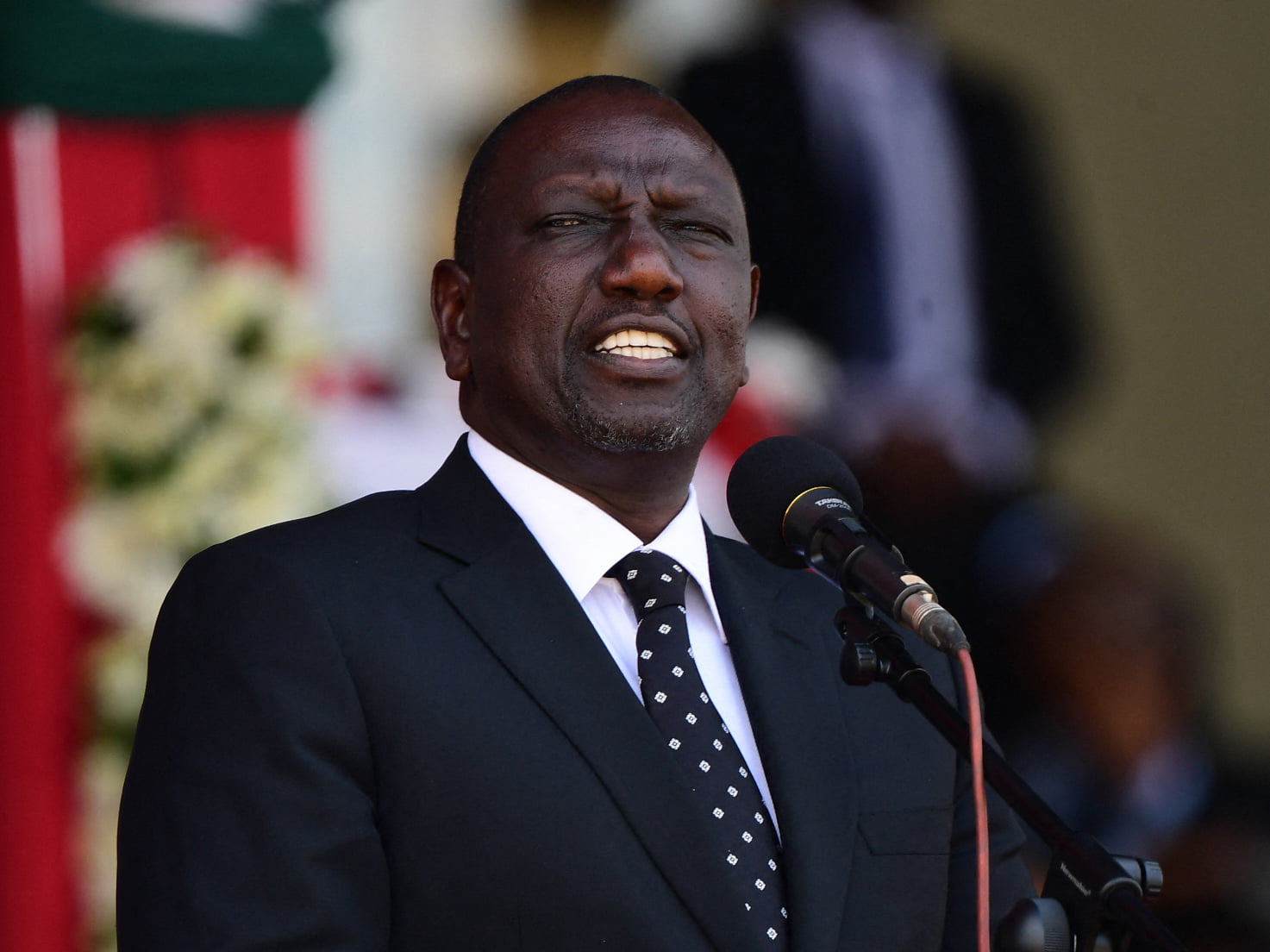
Kenya is beginning a crackdown on foreign nationals operating small retail shops and engaging in hawking, after President William Ruto directed authorities to shut down such businesses from September 7.
Ruto announced this on September 2 while addressing micro, small and medium-sized enterprises, MSME. traders at State House in Nairobi.
He said foreigners should not compete with Kenyans in businesses such as hawking and small retail, while foreign investment was welcome in activities requiring greater capital.
Ruto directed authorities to begin shutting down small businesses operated by foreign nationals from September 7, saying hawking and small-scale retail should be reserved for Kenyans.
He said the government would take administrative action while the Parliament of Kenya considers the proposed Local Content Bill, 2025.
He also directed National Assembly Majority Leader Kimani Ichung’wah and Trade Cabinet Secretary Lee Kinyanjui to accelerate the bill’s passage through Parliament.
Business
NAFDAC Goes After Chinese Logistics Firms Over Products Counterfeiting
Chinese people (counterfeiters) own the logistics companies which they used to bring these (fake goods) things.” NAFDAC said it has been shutting down the logistics companies.

The National Agency for Food and Drug Administration and Control (NAFDAC) has revealed that Chinese counterfeiters now living in Nigeria are behind the proliferation of fake goods in Nigeria.
NAFDAC’s Director of Investigation and Enforcement, Martins Iluyomade disclosed that recent investigations found Chinese counterfeiters, previously operating externally, have set up plants and logistics channels inside the country.
How They Operate
He said, “Before, to fake a product, you needed to go to China to bring it. Now, you don’t need to go. They are here (in Nigeria) with us. They are the ones who will identify the product that will be moving, send it to their country (China), and then come here and distribute it to our people (Nigerians) without having to travel, thereby worsening the production, distribution and sale of adulterated, harmful and unwholesome products.
Iluyomade, describing it as a “new trend making it (fake goods situation) look this serious,” noted that NAFDAC discovered the “Chinese people (counterfeiters) own the logistics companies which they used to bring these (fake goods) things.” NAFDAC said it has been shutting down the logistics companies.


AfCFTA : Nigerian Goods In High Demand In Africa, says Minister

Abia ranks top in BudgIT 2026 report

FG inaugurates Committee for nationwide activation of Nigeria’s unified 112 emergency number

Tech Expert, Zuckerberg trains with UFC champions, Adesanya, Alexander

Organ Trafficking: Ekweremadu bags 10 years in UK prison

SAINT OBI: Between his marriage and his death
-

 Business1 day ago
NAFDAC Goes After Chinese Logistics Firms Over Products Counterfeiting
-

 Business2 days ago
Dangote Refinery Signs IPO Document Today
-
 Politics2 days ago
Obidient Connect Texas Plans Grand Rally for Obi-kwakwanso October 10
-
 Politics2 days ago
Nigerians better off under military than democracy – Duke
-
 News1 day ago
JUST IN: Traffic Chaos Expected on Lagos-Ibadan Expressway From Tuesday
-

 News2 days ago
FG announces two-week traffic delays on Kara–Berger Bridge for repairs
-

 Sports2 days ago
Infantino To Seek Re-Election As FIFA President In 2027
-

 Entertainment1 day ago
Ikenga becomes highest-grossing Igbo film of all time