
News
Top 10 Reasons to Invest in Nigerian Urban Properties

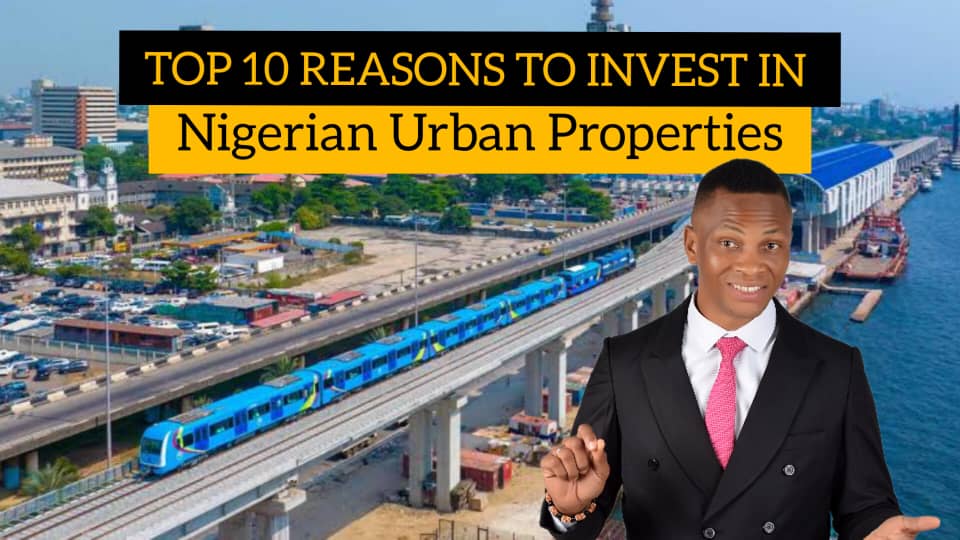
By Dennis Isong
A number of reasons have contributed to a significant increase in urban property investment in Nigeria in recent years.
Urban property investing is a desirable potential for both local and foreign investors due to a mix of a rapidly growing population, continual economic developments, and altering demographics.
This article delves into ten persuasive justifications that highlight the possible wisdom of deciding to invest in Nigerian urban real estate.
Several important variables are responsible for Nigeria’s increased interest in urban real estate. First off, there is a growing demand for residential and commercial space due to the country’s rapidly increasing population, especially in urban regions.
Infrastructure improvements, more job possibilities, and a growing middle class are just a few of the current economic factors that are fueling this demand. Furthermore, changing demographics play a pivotal role.
As more young professionals and families seek modern and convenient living spaces, the demand for well-located urban properties continues to rise. The shift towards urbanization is reshaping lifestyles and preferences, making investments in well-designed and strategically located properties a lucrative option.
Nigeria’s favorable investment climate, which includes various incentives and reforms aimed at attracting foreign investors, has also contributed to the increasing interest in urban property ventures.
The government’s efforts to improve the ease of doing business and provide legal protections for investors enhance the overall appeal of investing in urban properties.
A major attraction is also the potential for capital growth and rental revenue.
Due to the great demand for urban properties, they frequently produce consistent rental returns, making them a dependable source of passive income.
Additionally, property values are projected to increase over time as metropolitan areas continue to expand and gentrify, providing investors with the possibility of long-term financial advantages.
Exploring the prospect of property investments within these flourishing locales not only promises the allure of substantial rental returns but also opens the door to significant appreciation in capital value over time.
1) Rapid Urbanization:
Nigeria is currently undergoing a pronounced phase of urbanization, marked by a significant surge in population migration towards urban centers.
This transformative trend is instigating a noteworthy surge in the need for urban real estate, encompassing a diverse array of properties ranging from residential apartments to dynamic commercial spaces, as well as innovative mixed-use developments that cater to the multifaceted demands of modern urban living.
2) Growing Middle Class:
The growing middle class is driving a higher need for contemporary and convenient living spaces, leading to a notable uptick in the urban real estate market for properties.
This trend is being fueled by the desire for improved lifestyles and urbanization, as more individuals seek modern housing options in bustling city environments.
As a result, the demand for well-designed, accessible, and technologically advanced urban properties is on the rise, propelling the real estate market to new heights.
3) Economic Growth:
Nigeria’s bustling urban centers serve as vibrant epicenters of economic vitality, drawing in a myriad of enterprises, innovative entrepreneurs, and ambitious job seekers.
Exploring the prospect of property investments within these flourishing locales not only promises the allure of substantial rental returns but also opens the door to significant appreciation in capital value over time.
4) Infrastructure Development:
Both government initiatives and private sector investments in infrastructure are playing a pivotal role in enhancing the connectivity and accessibility of urban areas. Improved transportation links in these regions often lead to a surge in property demand and an increase in property value.
The collaboration between government efforts and private sector investments has become instrumental in shaping the connectivity and accessibility of urban landscapes.
These initiatives encompass a wide range of infrastructure developments, including the expansion of road networks, the establishment of efficient public transportation systems, and the integration of advanced technologies that facilitate smoother mobility within cities.
As a direct consequence of these advancements, areas that benefit from enhanced transportation links tend to witness a substantial transformation in their property dynamics.
The demand for properties in these well-connected neighborhoods experiences a noticeable upswing, driven by the convenience and ease of movement that improved infrastructure offers to residents.
Moreover, the value of properties in such areas also sees a significant appreciation, as the enhanced accessibility and connectivity contribute to the overall desirability of the location.
This phenomenon can be attributed to several factors.
First, the accessibility provided by well-connected transportation systems attracts both individuals and businesses looking for convenient commuting options.
As a result, the demand for properties in these regions increases, exerting upward pressure on property prices.
Second, improved urban connectivity often leads to an influx of economic activities, which can stimulate local economies and create a virtuous cycle of growth.
This economic vibrancy further enhances the appeal of the area, translating into heightened property values.
5) Diversification:
Real estate investment provides diversification in an investment portfolio. Urban properties offer an alternative asset class that can act as a hedge against inflation and market volatility.
6) Foreign Direct Investment (FDI):
Nigeria’s urban property market is attracting foreign investors looking to capitalize on the country’s emerging opportunities. FDI inflows can contribute to overall market growth.
7) Tourism and Hospitality Boom:
Nigeria’s growing tourism and hospitality sector is driving demand for short-term rental properties, particularly in popular urban destinations. Investors can benefit from consistent rental income.
8) Government Incentives:
Government policies aimed at promoting real estate investment, such as tax incentives and ease of doing business reforms, are creating a favorable environment for urban property investors.
9) Cultural and Commercial Centers:
Lagos, Abuja, and Port Harcourt stand as vibrant cultural and economic epicenters, drawing in inhabitants, enterprises, and visitors.
Placing investments in real estate within these thriving urban cores can lead to significant financial gains due to their dynamic nature and constant appeal to a wide range of stakeholders.
(10) Long-Term Appreciation:
Over time, real estate has demonstrated its ability to appreciate significantly.
As urban centers grow and flourish, there is a strong likelihood that property values will continue to increase due to ongoing development and prosperity. This potential for long-term appreciation makes real estate an attractive investment option.
▪︎Dennis Isong is a TOP REALTOR IN LAGOS.He Helps Nigerians in Diaspora to Own Property In Lagos Nigeria STRESS-FREE. For Questions WhatsApp/Call 2348164741041
News
South African kills Nigerian bar worker
Olaleye was allegedly shot by a South African national following an argument over whether a drinking glass should be taken outside the bar.
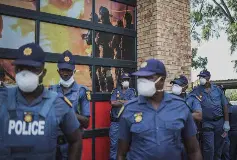
• South African police
The Nigerian Union in South Africa (NUSA) says Olatunde Olaleye, a 40-year-old father of two, has been shot dead in the country.
According to NAN, NUSA said Olaleye, an indigene of Ikere-Ekiti, was killed on September 21 while working at Spanata Bar and Grills in Mamelodi, Pretoria.
Smart Nwobi, NUSA president-general, in a statement on Thursday, said Olaleye was a husband and father of two children, adding that his death has left his family devastated.
He said the union is concerned by reports that Olaleye was allegedly shot by a South African national following an argument over whether a drinking glass should be taken outside the bar.
According to him, there were also reports that the suspect returned to the premises to threaten the bar’s management, with a promise that members of his crew would return.
Nwobi called for a thorough, transparent and impartial investigation into the circumstances surrounding the incident.
“We cannot continue to lose Nigerians under circumstances that leave families devastated and communities traumatised,” he said.
News
Nigerian Editors Brace for Democracy Protection Ahead of 2027 Elections
“As editors, we must remain above board in an increasingly polarised environment. We must not become agents of disorder. Neither should we display contradictory tendencies that cause the citizenry to question our credibility,” Anaba said.
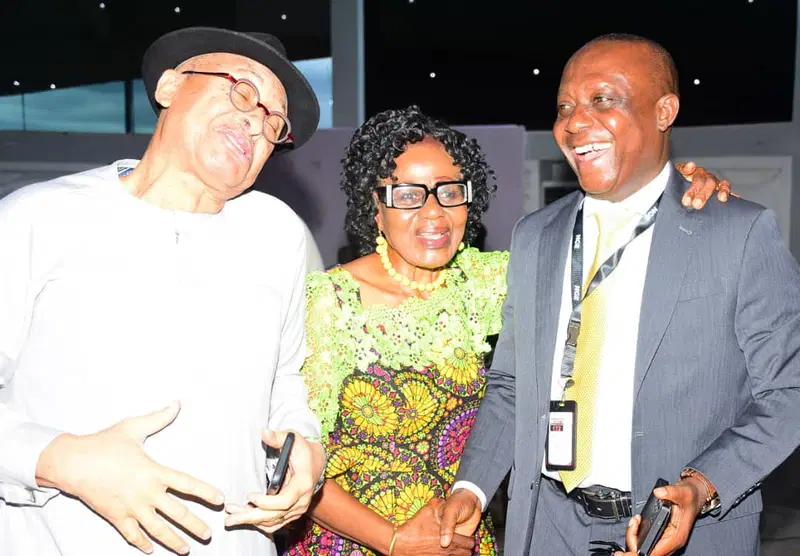
Enugu|•L-R Prof Pat Utomi; Prof Chinyere Okunna and Eze Anaba President Nigerian Guild of Editors at the 22nd All Nigerian Editors Conference in Enugu. Photo. Nwankpa Chijioke
Nigerian editors have been urged to protect the credibility of the ballot and help safeguard democracy as the country prepares for the 2027 general elections.
The call was made by Eze Anaba, President of the Nigerian Guild of Editors (NGE) and Editor of Vanguard Newspaper, in his welcome address at the 22nd Annual All Nigerian Editors Conference, which opened today in Enugu.
The conference is themed, “The Ballot, the Media and the Task of Keeping Democracy Alive.”
Anaba said the media, alongside other critical institutions, had a responsibility to nurture democracy by ensuring that voters were adequately informed and that electoral outcomes reflected the choices of the people.
According to him, the ballot can only fulfil its democratic purpose when voters have access to credible information and are able to make their choices freely, without intimidation or undue influence.
He urged editors and journalists to uphold verification, independence, accuracy, fairness, accountability and courage, particularly in an era of social media, artificial intelligence, deepfakes and the rapid spread of misinformation.
“As editors, we must remain above board in an increasingly polarised environment. We must not become agents of disorder. Neither should we display contradictory tendencies that cause the citizenry to question our credibility,” Anaba said.
He stressed that the media’s overarching responsibility was to serve the public good and help ensure that government derived its legitimacy from the consent of the people.
News
Works Minister Orders Tinubu’s Pictures On First Niger Bridge
“The President has worked so hard and we need to reward his hard work by decorating this bridge with his pictures.”

Minister of Works, David Umahi, has ordered the removal of illegal advertisements from the rehabilitated First Niger Bridge and their replacement with pictures of President Bola Tinubu, saying the display would recognise the President’s work on infrastructure.
Umahi gave the directive during an inspection of ongoing rehabilitation works on the bridge linking Anambra and Delta states.
He said the bridge was expected to reopen to motorists next week, subject to the completion of critical structural work.
“Once we are done with work on this bridge, I want all the illegal adverts on this bridge removed. Anyone who wants to advertise should apply to the Ministry of Works. For now, the bridge will be decorated with the pictures of President Tinubu,” Umahi said.
“The President has worked so hard and we need to reward his hard work by decorating this bridge with his pictures.”


Congo military plane crash kills 13, including three officers

Manchester City Faces Expulsion For Breaching 114 EPL Financial Rules

TIME Names Moniepoint CTO Felix Ike Among 50 Global Executives of the Year

Tech Expert, Zuckerberg trains with UFC champions, Adesanya, Alexander

Organ Trafficking: Ekweremadu bags 10 years in UK prison

SAINT OBI: Between his marriage and his death
-

 Business3 days ago
MAN Urges CBN To Consider CRR Cut Next Phase of Monetary Easing
-

 Crime2 days ago
JUST IN: Zamfara LG Chairman Freed After 61 Days in Captivity
-

 News2 days ago
VP Shettima, Gov Mbah to address Over 500 editors on 2027 election issues
-

 Sports2 days ago
FIFA names Nigerian referee among 81 officials for U-17 World Cup
-

 Entertainment2 days ago
MultiChoice launches Wethu+ as DStv overhauls packages
-
 Business2 days ago
Naira To Dollar , Pound, Euro Rate, Thursday September 24
-
 Business2 days ago
Otedola bypasses seven African billionaires as fortune hits $2 billion
-
 News2 days ago
South African kills Nigerian bar worker