
News
Tinubu’s 2026 Budget: Discipline as Doctrine, Bold Security Stance, Defense as Top Priority


By SUNDAY DARE
In a landmark address to a joint session of the National Assembly on December 19, President Bola Ahmed Tinubu presented the 2026 Appropriation Bill, titled the “Budget of Consolidation, Renewed Resilience and Shared Prosperity.”
The ₦58.18 trillion proposal marks a pivotal shift in Nigeria’s fiscal strategy, emphasizing strict fiscal discipline, decisive action against insecurity, and a clear prioritization of national defense amid ongoing economic reforms.
Analysts describe the speech as a doctrinal reset for governance, where discipline emerges as the core doctrine, boldness serves as a political and policy signal, and security stands as the unchallenged foundation of the administration’s agenda.
Discipline As Doctrine: A Commitment to Fiscal RigorPresident Tinubu underscored that “the greatest budget is not the one we announce—it is the one we deliver.”
He pledged 2026 as a year of “stronger discipline in budget execution,” directing ministries, departments, and agencies (MDAs) to eliminate leakages through full digitization of revenue processes and strict adherence to timelines.
This doctrine extends to Government-Owned Enterprises (GOEs), with warnings against underperformance and inefficiencies. Revenue mobilization will prioritize transparency and compliance, particularly in the oil and gas sector.
The budget’s realistic parameters—crude oil benchmark at $64.85 per barrel, production at 1.84 million barrels per day, and exchange rate at ₦1,400 to the dollar—reflect prudence amid global uncertainties.
With a projected deficit of ₦23.85 trillion (4.28% of GDP), recurrent non-debt expenditure at ₦15.25 trillion, and capital expenditure at ₦26.08 trillion, the administration signals an end to wasteful spending.
As Tinubu stated, “We will spend with purpose, manage debt with discipline.”
Boldness As Signal: Tough Stance on Security and AccountabilityThe speech’s boldest element was a new security doctrine: any armed group operating outside state authority—bandits, kidnappers, militias, or violent cults—will be designated as terrorists, along with their sponsors, including politicians, traditional rulers, or community leaders who facilitate violence.
This declaration removes ambiguity and ethnic cover from non-state actors, signaling zero tolerance for insecurity that has hampered investment and agriculture. It sends a clear message of accountability, narrowing discretion for security forces while widening consequences for enablers.
Boldness also shines in fiscal demands on GOEs and MDAs, with threats of consequences for revenue shortfalls.
Tinubu’s assurance that reforms are yielding results—GDP growth at 3.98% in Q3 2025, inflation down to 14.45% in November, and external reserves at a 7-year high of $47 billion—bolsters confidence in these tough measures.
Security As Core: Highest Allocation Reflects PrioritySecurity received the largest sectoral allocation at ₦5.41 trillion, underscoring its role as the bedrock of development. Tinubu described it as “the foundation of development,” linking it to infrastructure (₦3.56 trillion), education (₦3.52 trillion), and health (₦2.48 trillion).
The budget strengthens military and paramilitary capabilities, peacebuilding, and a “holistic reset” of the security architecture. Without security, the President argued, investment, productivity, and human capital development cannot thrive.Other priorities include human capital (expanding student loans and healthcare access) and agriculture (mechanization, irrigation, and value chains to reduce post-harvest losses).
As the National Assembly begins scrutiny of the bill, President Tinubu’s speech positions the 2026 budget not merely as a fiscal document, but as a governance blueprint for a more accountable, secure, and prosperous Nigeria.
The emphasis on delivery over announcement sets a high bar for implementation in the year ahead.
News
Police must pay transport fares, says AIG
” No police officer has the right to enter your vehicle without paying. We should assist one another willingly, not by force,” he said.

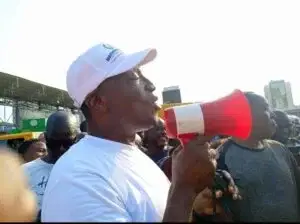
• The Assistant Inspector-General of Police(AIG) in charge of Zone 2 Command, Mr Olohundare Jimoh, speaking with transporters at Obalende garage, Lagos State, on Wednesday.
The Assistant Inspector-General of Police, Zone 2 Command, Mr Olohundare Jimoh, has declared that officers must pay fares before boarding commercial vehicles, warning against abuse of authority.
Jimoh spoke on Wednesday at Obalende garage during a sensitisation meeting with drivers and transport workers marking National Police Day 2026.
He stressed that relations between police and the public must be based on partnership, not coercion, urging both sides to support each other voluntarily.
“No police officer has the right to enter your vehicle without paying. We should assist one another willingly, not by force,” he said.
Jimoh called for stronger cooperation to maintain safety and order on roads, insisting there was no conflict between officers and transport unions.
“I don’t collect money from officers. We don’t arrest people arbitrarily. If you have issues with any officer, report directly to me,” he said.
(Vanguard)
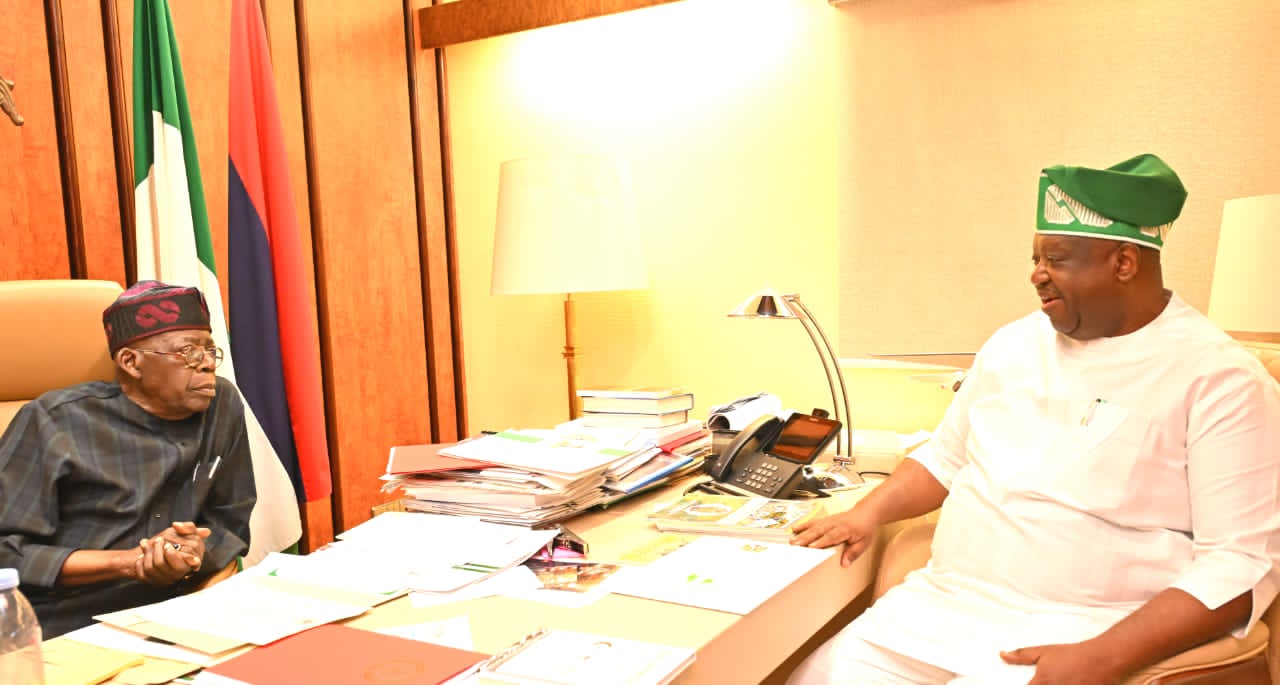
President Bola Ahmed Tinubu will leave for Jos tomorrow to commiserate with the state government and residents over recent deadly gun attacks that lefts dozens dead.
This was following Governor Caleb Mutfwang’s security briefing to the President on the recent violent attack in Angwan Rukuba, Plateau State.
During the meeting on Wednesday at the presidential villa in Abuja, Governor Caleb Mutfwang told Mr President that although security forces have restored calm after fresh disturbances involving looters on Wednesday morning, following the deadly Palm Sunday attack that left more than a dozen dead and many others injured.
He said that investigations are continuing to determine the identities or motives of the attackers who are yet to be apprehended .
Presidency source said that President Tinubu was initially scheduled for a planned trip to Ogun State to flag off operations at the Gateway International Cargo Airport on Thursday.
From Jos, the President will travel to Lagos to observe Good Friday.
On Saturday, April 4, he will visit Ogun State to commission projects including the cargo airport.
He will then return to Lagos during the Easter holiday to commission several state infrastructure projects, including the Ojota/Opebi Link Bridge.
Before heading back to Abuja, the president will visit Bayelsa State on April 10 to commission projects completed under Governor Duoye Diri.
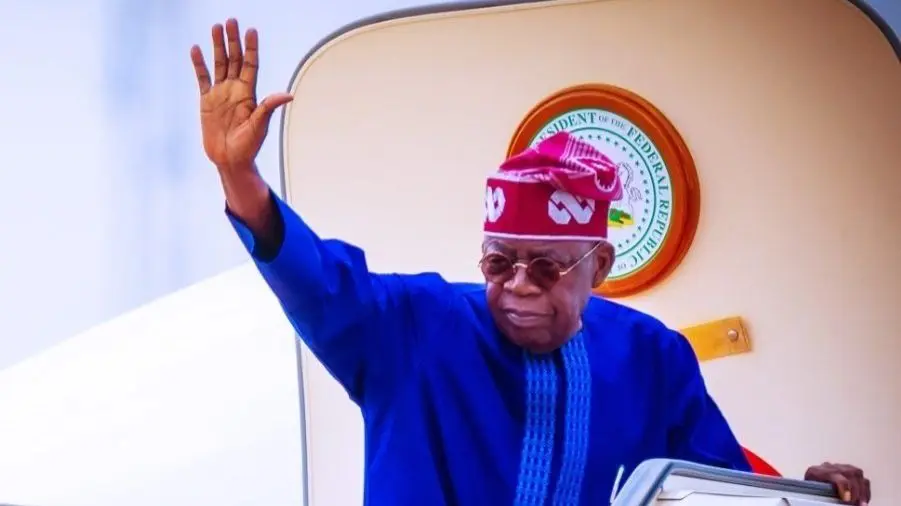
President Bola Ahmed Tinubu will tomorrow embark on a visit to Jos, Plateau State, as the first leg of a five-state tour across the country.
The Presidency announced that the President has postponed his scheduled trip to Ogun State to enable him to commence the series of official visits.
Details of the remaining four states in the tour are expected to be released by the Presidency in due course.
The development comes as President Tinubu continues nationwide engagements aimed at assessing development projects, interacting with stakeholders, and addressing key national issues in the respective states.
Further updates on the itinerary will be communicated as the visits progress.


Ebonyi: Gunmen Assasinate Another Traditional Ruler

From South Africa to US, ‘Cicada’ COVID-19 variant spreading

FIFA ranks Super Eagles third in Africa, 26th globally

Tech Expert, Zuckerberg trains with UFC champions, Adesanya, Alexander

Organ Trafficking: Ekweremadu bags 10 years in UK prison

SAINT OBI: Between his marriage and his death
-

 Business3 days ago
BUA Foods Plc Reports Strong 2025 Performance with ₦1.77 Trillion Revenue, Proposes Record ₦28 Dividend per Share
-

 News3 days ago
NELFUND Debunks Claims of ₦25,000 Student Upkeep Allowance
-
 Business1 day ago
33 Nigerian Banks Beat CBN’s Recapialisation with ₦4.65trn Combined Capital Base
-
 Sports3 days ago
Sportsville Awards: Olopade Leads NSC Delegation to Honour Dikko with Transformative Impact Award
-
 News3 days ago
Tinubu Appoints CAC, NPC, Officials, Names Adviser on Political Economy
-
 News3 days ago
Nigeria Welcomes African Games Bid Evaluation Committee
-
 Politics1 day ago
BREAKING: INEC Withdraws Recognition of David Mark’s ADC
-
 News3 days ago
El-Rufai Appear in State High Court, after Mother’s death, as Trial Continues