
News
TIME Honors Lagos Governor Sanwo-Olu with Africa Special Award – Spotlight on Innovation and Leadership


agos has long been one of Africa’s most complex and ambitious urban experiments — a megacity whose growth, pressures, and potential reflect the broader story of a rapidly urbanizing continent.
Today, more than 24 million people call Lagos home, making it not only Nigeria’s economic heartland but one of the most influential urban centres anywhere in the Global South.
Managing such a city requires more than routine governance; it demands vision, long-term planning, and a willingness to confront structural challenges head-on.
It is against this backdrop that TIME Africa presents the 2025 Special Recognition Award to His Excellency Babajide Olusola Sanwo-Olu, Governor of Lagos State.
The award honours his administration’s sustained contributions to infrastructure modernisation, urban renewal, and the ongoing transformation of Lagos into a globally competitive, 21st-century megacity.
Sanwo-Olu’s leadership has been guided by a wide-ranging development blueprint — the T.H.E.M.E.S.+ Agenda — which stands for Traffic Management & Transportation; Health & Environment; Education & Technology; Making Lagos a 21st Century Economy; Entertainment, Tourism & Culture; Security & Governance.
Together, these pillars have represented a holistic approach to modernising a city whose pace of growth could otherwise overwhelm its potential.
What Lagos has achieved in the past six years is not simply incremental improvement; it is structural and generational. And, increasingly, it offers a continent-wide roadmap for how African megacities can transition from overburdened to future-ready.
Re-Engineering Mobility: The Blueprint for a Modern African Transit System
Nowhere is Lagos’ transformation more visible than in its transportation sector — historically one of the city’s greatest pressure points.
The Lagos Rail Mass Transit: A Landmark for West Africa
The launch of the Lagos Rail Mass Transit (LRMT), beginning with the Blue Line, marks one of the most significant achievements in Nigerian infrastructure in decades. The rail system has already moved millions of passengers, reducing reliance on road traffic and offering an affordable, efficient alternative to the informal transport networks that have dominated Lagos for generations.
The Blue Line — fully powered by an independent electricity system — has become a proof of concept that large-scale rail is viable in West Africa. As new phases advance, the LRMT is expected to evolve into a multi-line network that will reshape commuting patterns for decades to come.
Road Expansion and Modernisation at Unprecedented ScaleSince 2019, the Sanwo-Olu administration has delivered hundreds of kilometres of new and rehabilitated roads, bridges, and linkways. These include:
172 completed roads across Lagos by mid-2024, 61 additional roads and five bridges were commissioned in 2025
Major interventions such as the Abiola-Onijemo Link Bridge, access roads in Lekki, upgrades in Ikorodu, Alimosho, Surulere, and Epe.
The ongoing transformation of the Lagos–Badagry Expressway, a strategic corridor connecting Nigeria to the wider West African region
Crucially, these projects were not centralised in wealthy districts. Local councils and historically underserved areas have received road renewals, showing a commitment to equitable infrastructure distribution.
A Model for Other African CitiesAcross Africa, cities are struggling with congestion, exponential population growth, and inadequate transport systems. Lagos demonstrates that:
Rail cannot be optional — megacities need multimodal transit.
Road investments must be strategic – linking economic nodes and residential clusters.Inclusive transport planning – reduces social disparities and widens economic access. Lagos is proving that transport reform is not only possible but essential for sustainable urban futures.
Health, Education & Social Infrastructure: Building a City for PeopleThe T.H.E.M.E.S.+ agenda extends beyond construction into the social fabric of Lagos, where population density places enormous pressure on public systems.Strengthening Public Health Capacity.
The administration has overseen significant expansions in healthcare access, including: Upgraded maternal and child-care facilities.
New emergency and trauma centresGreater investment in medical equipment, specialist training, and diagnostic capacity.
Environmental sanitation reforms and climate resilience programmes.
For a city that faces both communicable and non-communicable disease burdens, these reforms are foundational to long-term resilience.
Education & Digital Future-Readiness
Lagos has also prioritised education and digital advancement. Key achievements include:
Classroom construction and rehabilitation across multiple districtsIntroduction of new technology learning toolsInvestments in teacher training.
The expansion of tech hubs and digital infrastructureNotably, the state has attracted over US$1.2 billion in digital infrastructure investment, including data centres and broadband expansion — positioning Lagos as a future African tech capital.
Economic Transformation: Steering Lagos Toward a 21st Century Economy
Lagos accounts for a significant share of Nigeria’s GDP, yet the city continues to pursue deeper diversification and global competitiveness.
Industrial Expansion & Job Creation Under Sanwo-Olu’s leadership:
New industrial facilities and logistics hubs have been launched across Ikorodu, Badagry, Lekki and Epe. Creative industries — from film to tourism — have been supported through targeted investment and infrastructure.
Government reforms aim to improve ease of doing business and reduce bureaucratic bottlenecks.
These initiatives align with Lagos’ ambition not only to expand its economy, but to shift into higher-value sectors that can withstand global shocks.
A Governance Model Focused on Inclusion
The state’s budgeting approach — with recent proposals labelled the Budget of Shared Prosperity — highlights a deliberate move toward balancing growth with human development. The focus is on:
Infrastructure consolidation, Youth Empowerment, Community revitalisation, Public safety, Digital transformation, Governance reforms have modernised public service delivery and strengthened transparency, aiming to rebuild confidence in state institutions.
Lessons for the Continent: Lagos as a Playbook for African Megacities Urbanisation in Africa is accelerating faster than anywhere else on Earth. By 2050, African cities will house more than one billion people.
The challenges facing Lagos today are the challenges others will face tomorrow.
Sanwo-Olu’s Lagos offers several transferable lessons:
1. Integrated Urban Mobility Is Non-NegotiableCities like Nairobi, Kinshasa, Dar es Salaam, Cairo, Addis Ababa and Johannesburg can draw from Lagos’ multimodal strategy. A combination of rail, modernised roads, BRT, ferry services and last-mile connectivity is key to reducing congestion and improving productivity.
2. Urban Renewal Must Be HolisticTransport alone cannot stabilise a megacity.Lagos shows that health, education, environmental policy, flood control, and economic development must advance together.
3. Public–Private Partnerships Are CatalystsLagos’ ability to attract global digital infrastructure investment demonstrates how public policy can unlock private sector capacity.
4. Infrastructure Must Reach the UnderservedUrban inequality is one of Africa’s biggest challenges. By distributing road upgrades, bridges, and public services across multiple districts, Lagos illustrates the importance of equitable development.
5. Long-Term Vision MattersThe T.H.E.M.E.S.+ agenda provides a structured, multi-year roadmap — a model many African cities lack.Continuity of policy is essential for large-scale infrastructure success.
A City Still in Motion
While Lagos has made significant strides, its transformation is still unfolding. Challenges remain — from population pressure to maintenance demands, environmental risks, and the complexity of sustaining megacity-scale infrastructure. But the foundations being laid today will determine the city’s trajectory for decades.
Sanwo-Olu’s administration has positioned Lagos as a laboratory of African urban possibility: a place where large-scale public projects are delivered, where ambition is matched by execution, and where the future of African megacities is being imagined in real time.
Conclusion: Why TIME Africa Honours Governor Babajide Sanwo-Olu
The TIME Africa Special Recognition Award is presented to Governor Babajide Olusola Sanwo-Olu for: aaHis leadership in delivering large-scale, high-impact infrastructureHis commitment to a more inclusive, modern Lagos.
His role in steering one of the world’s most dynamic megacities toward global competitiveness.
His administration’s multidimensional approach to urban governance, mobility, health, technology, and economic growthIn elevating Lagos, Sanwo-Olu is contributing to a broader continental narrative: Africa’s cities are not waiting to be defined by the world — they are defining themselves.
Lagos’ transformation is far from complete, but its trajectory is unmistakable. As African nations look ahead to an era of unprecedented urbanisation, Lagos stands as both a model and an inspiration — a city proving that with vision, strategy, and sustained investment, the future can be reshaped for millions.
News
BudgIT appoints Nigeria Country Director
He brought with him a track record in governance, research, and institutional leadership.

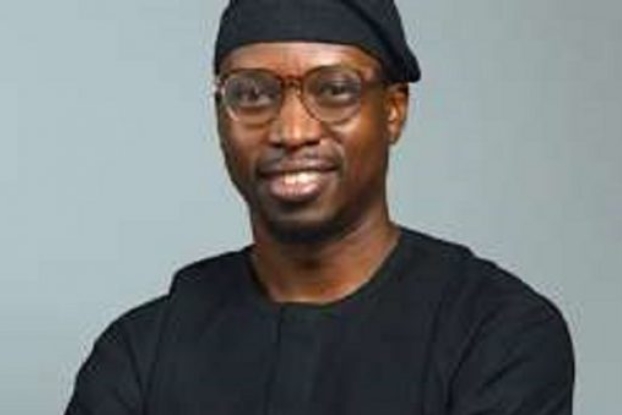
BudgIT has appointed Mr. Vahyala Kwaga as Country Director for Nigeria.
The appointment took effect on April 1, 2026.Kwaga was appointed following a leadership transition within the civic-tech organisation.
He brought with him a track record in governance, research, and institutional leadership.
Since joining BudgIT in 2021, Kwaga has held several leadership roles, including Senior Researcher, Head of the Open Government and Institutional Partnerships (OGIP) Unit, Group Head of Research and OGIP, and Deputy Country Director.
In these positions, he contributed to strengthening BudgIT’s research output, deepening its policy engagement, and improving coordination across programmes.
News
Kebbi Assembly Speaker Muhammad Usman Zuru dies in Egypt
The deceased Speaker, who represented Zuru Constituency, was widely regarded as a seasoned lawmaker and a key figure in the state’s legislative arm.
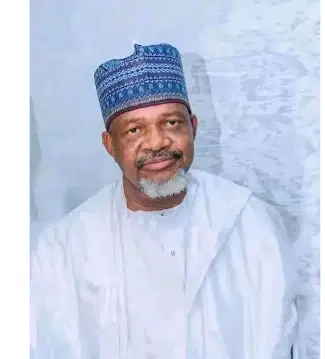
The Speaker of the Kebbi State House of Assembly, Muhammad Usman Zuru, has died in an Egyptian hospital, where he had been receiving treatment for an undisclosed illness.
Zuru died on Monday night after a period of ill health. Sources close to the Kebbi State Government confirmed his death, though details about the nature of his illness remain limited.
The deceased Speaker, who represented Zuru Constituency, was widely regarded as a seasoned lawmaker and a key figure in the state’s legislative arm.
An aide to the Governor on Communication and Strategy, Idris Zuru, described the news as shocking.
“The death of the Speaker, Rt. Hon. Muhammad Usman Zuru, came to us as a rude shock. It is a painful loss not only to Kebbi State but to the entire nation,” he said.
“We are still gathering full information surrounding his passing. The government will make an official statement and announce burial arrangements in consultation with the family,” Idris Zuru stated.
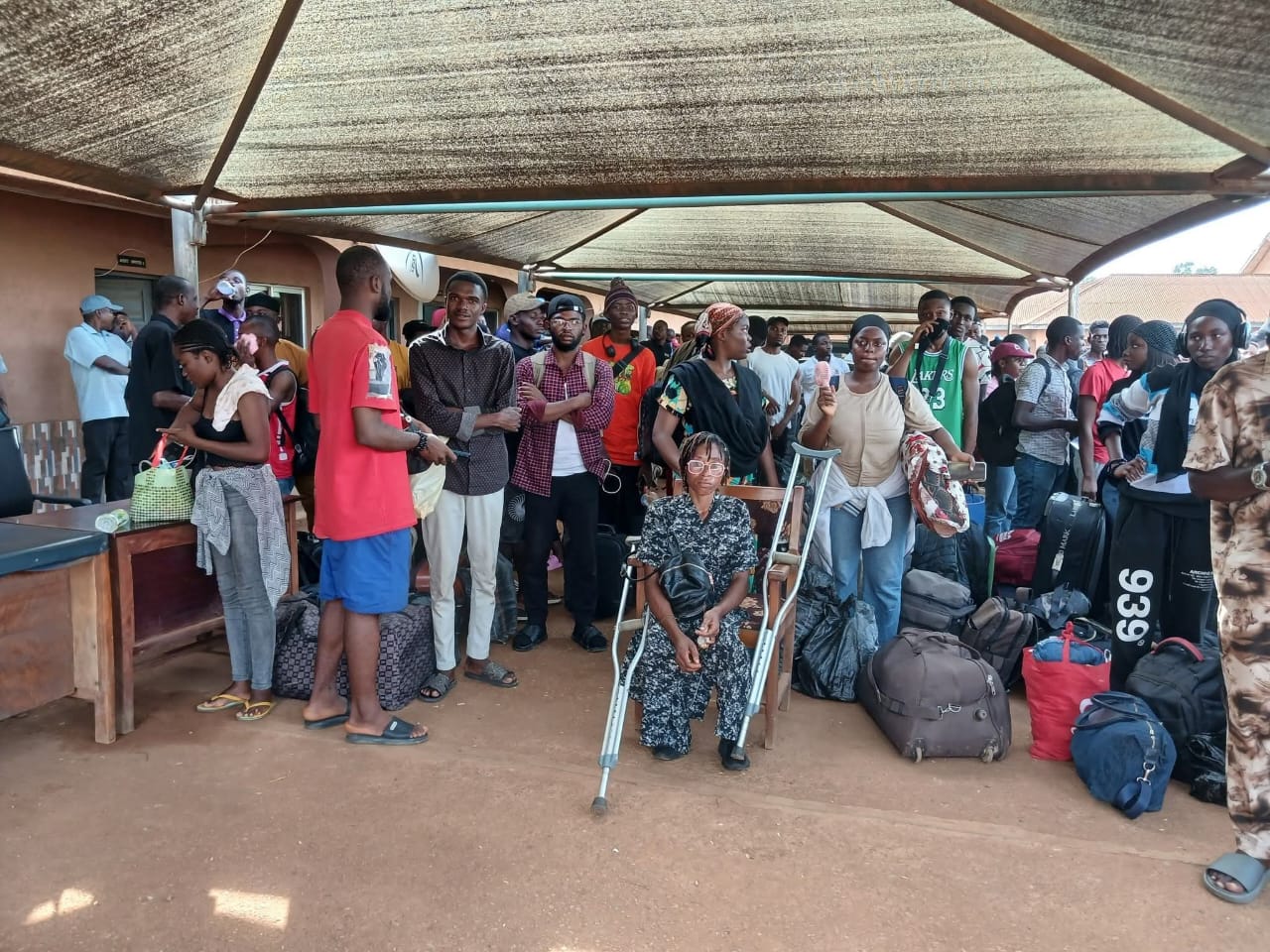
The Benue State Government has confirmed the successful evacuation of all students of Benue State origin studying at the University of Jos following the crisis currently affecting the area.
The evacuation was carried out in line with the directive of the Executive Governor of Benue State, His Excellency, Reverend Father Hyacinth Iormem Alia.
The General Manager of Benue Links Nigeria Limited, Comrade Alexander Aondohemba Fanafa said the third and final batch of student evacuees arrived at the company’s headquarters and bus terminal in Makurdi, Benue State on Saturday the 4th of April.Comrade Fanafa explained that a total of seventy-seven (77) vehicles were deployed in three batches to convey the students safely from Jos, the Plateau State capital.
He attributed the success of the operation to the proactive leadership of Governor Hyacinth Alia and the effective collaboration among government agencies, including the Ministry of Education and Knowledge Management and the Bureau of Homeland Security.
The General Manager also expressed appreciation to the security operatives who escorted the students from Jos, commending their professionalism in ensuring the safety of the students throughout the journey.
He reaffirmed the company’s commitment to implementing all transport policies of the Governor Alia administration.Commissioner for Education and Knowledge Management, Doctor. Margaret Adamu, described the exercise as a clear demonstration of the Governor’s commitment to the safety and welfare of Benue indigenes.
She noted that the evacuation directive was issued immediately upon receiving reports of the crisis, emphasizing that the administration places a high premium on education and the well-being of students.
Earlier, the Director General of the Bureau of Homeland Security, Air Commodore Jacob Gbamwuan (rtd.), stated that the success of the operation was made possible through swift coordination between security agencies and the State owned transport company, enabling the rapid deployment of buses and security escorts.
He reassured citizens that the administration remains vigilant and committed to protecting the lives and interests of Benue people both within and outside the state.
In their separate appreciation messages, the President of the University of Jos Chapter of the National Union of Benue State Students (NUBESS), Mchivga Iornder, and the National President of the Benue State Medical and Dental Students Association, Williams Kachira, commended Governor Alia for the prompt intervention and confirmed that all Benue students at the University of Jos have been successfully evacuated.
A statement its Information Officer Johnson Ehi Daniel revealed that Benue Links Nigeria Limited also provided additional vehicles to convey some of the students from Makurdi to their respective Local Government Areas across the state.


BudgIT appoints Nigeria Country Director

Kebbi Assembly Speaker Muhammad Usman Zuru dies in Egypt

Benue Govt Confirms Total Evacuation of Benue Students From University of Jos

Tech Expert, Zuckerberg trains with UFC champions, Adesanya, Alexander

Organ Trafficking: Ekweremadu bags 10 years in UK prison

SAINT OBI: Between his marriage and his death
-
 Crime3 days ago
Three Killed, One Injured in Fresh Jos Attack (Video)
-
 News3 days ago
Nigerian Army Debunks Claims of Attack on Bishop Matthew Kukah’s Residence and Sokoto Catholic Cathedral
-
 News2 days ago
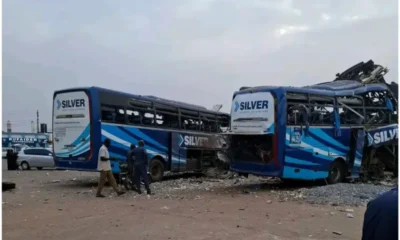
Kaduna Mando Garage Explosion Not Bomb- Police
-

 News3 days ago
JUST IN: Lagos Fire Service Successfully Contains Two Overnight Fire Incidents iin Lagos
-

 News2 days ago
Atiku hires US lobbying firm for $1.2m to boost image – Report
-
 Politics1 day ago
Obidients mobilise for #OccupyINEC protest
-
 Business1 day ago
President Tinubu Approves N3.3Trn Payments Plan To Restore Reliable Electricity
-
 Politics1 day ago
INEC suspends voter revalidation amid rising concerns by Opposition parties