
International
South Korean President Under Travel Bans

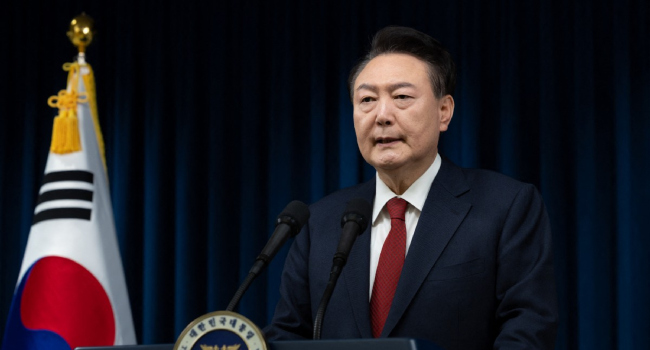
▪︎This handout photo taken and released on December 7, 2024 by the South Korean Presidential Office shows South Korea’s President Yoon Suk Yeol delivering an address at the Presidential Office in Seoul. (Photo by Handout / South Korean Presidential Office / AFP).
South Korea’s President Yoon Suk Yeol has been banned from leaving the country.
The Justice Ministry on Monday, enforced the travel restrictions, less than a week after President Yoon plunged the country into chaos by briefly imposing martial law.
Also under travel bans for their roles in last week’s events are former defence minister Kim Yong-hyun — currently in detention — and ex-interior minister Lee Sang-min.
Yoon sent special forces and helicopters to parliament on the night of December 3 before lawmakers forced him to rescind the order by rejecting his decree.
The hugely unpopular leader narrowly survived an impeachment motion in parliament on Saturday even as huge crowds braved freezing temperatures to call for his ouster.
However, despite remaining in office, a clutch of investigations has been closing in on Yoon and his close allies, including a probe for alleged insurrection.
The Ministry of Justice confirmed on Monday that Yoon had become the first sitting South Korean president to be banned from leaving the country.
A lawmaker was asked at a parliamentary hearing on Monday whether Yoon had been banned from leaving the country. “Yes, that’s right,” Bae Sang-up, an immigration services commissioner at the ministry, replied.
International
US and Iran to sign historic peace deal June 19 in Switzerland
He commended both Washington and Tehran for choosing diplomacy over continued conflict and acknowledged the roles played by Qatar, Saudi Arabia, and Türkiye in facilitating the talks.
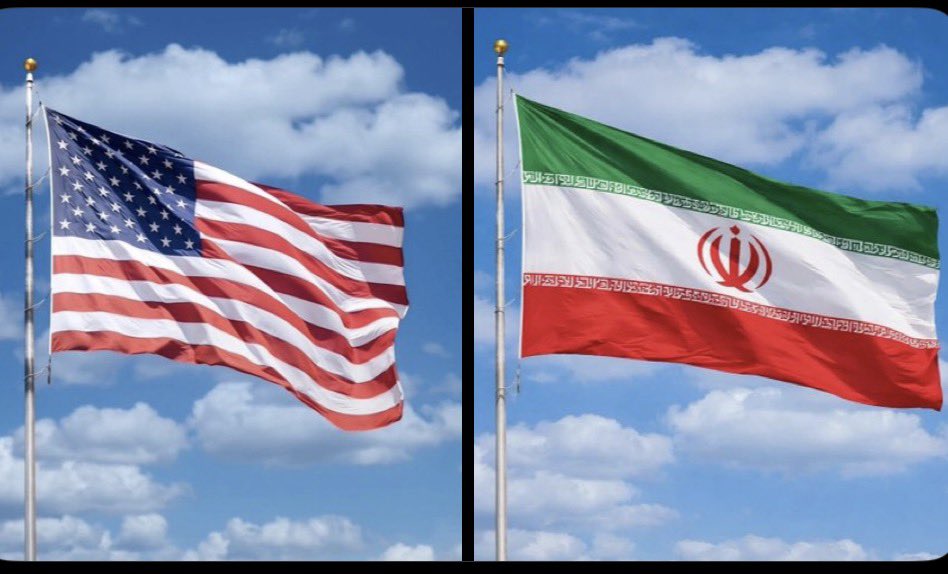
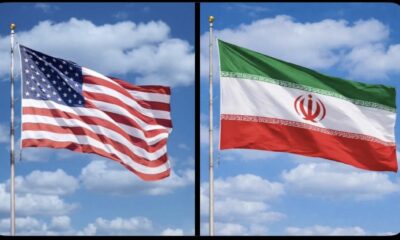
•US/IRAN flags
Pakistan’s Prime Minister, Shehbaz Sharif, revealed that both the United States and Iran have reached a landmark peace agreement to the immediate and permanent cessation of military operations on all fronts, including in Lebanon.
The formal signing ceremony is scheduled to take place on June 19 in Switzerland.
According to Sharif, the agreement is the result of extensive mediation efforts involving several regional and international stakeholders.
He commended both Washington and Tehran for choosing diplomacy over continued conflict and acknowledged the roles played by Qatar, Saudi Arabia, and Türkiye in facilitating the talks.
International
Zimbabwe Wins UN Security Council Seat for 2027-2028
The five countries were elected by the 193-member General Assembly to serve as non-permanent members of the Security Council for two-year terms beginning on January 1, 2027.
Zimbabwe has been elected to a non-permanent, two-year term on the United Nations Security Council, the third time the country will be represented on the body mandated to maintain international peace and security.
Voice of Nigeria reports that the other countries that secured seats around the iconic horseshoe table are Austria, Portugal, Trinidad and Tobago, and Kyrgyzstan.
The five countries were elected by the 193-member General Assembly to serve as non-permanent members of the Security Council for two-year terms beginning on January 1, 2027.
Austria and Portugal won the two seats allocated to the Western European and other States (WEOG) Group, while Trinidad and Tobago and Zimbabwe were elected from the Latin American and Caribbean Group and the African Group, respectively.
Kyrgyzstan secured the Asia-Pacific seat after defeating the Philippines in four rounds of voting.
International
Finland’s president says EU should expand to 40 states — including Canada
His comments come as the Trump administration’s actions, alongside Russia’s war with Ukraine, prompt some countries to reconsider the benefits of EU membership.
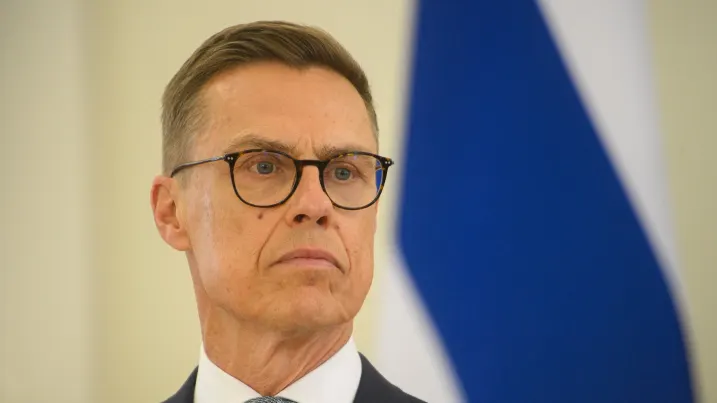
• Finland’s president Alexander Stubb
Finnish President Alexander Stubb has stressed the need for a much larger European Union, saying the 27-nation bloc should increase its membership to 40 states and named the U.K., Canada, Turkey, Norway and Iceland as potential candidates to join.
Stubb made the call at an energy conference in the Finnish capital on Wednesday.
His comments come as the Trump administration’s actions, alongside Russia’s war with Ukraine, prompt some countries to reconsider the benefits of EU membership.
Stubb told the Eurelectric Power Summit that “the window of opportunity” for EU enlargement “is quite short because when the war in Ukraine ends and perhaps when the U.S. administration changes, I don’t know, then people are going to take their foot off the gas pedal and start heckling about unnecessary stuff again.”
Stubb added that “European strategic autonomy or European geopolitical power” is “often based on size and scale and I think the best European policy ever has been European enlargement.”
“In this moment, we need to think big and geographically, we need to enlarge or at least create memberships which are flexible enough to bring in a sum total of 40 European states — or even non-European,” Stubb said.
Finland’s president said the EU should look to its western flank and bring the U.K., which left the bloc in 2020, back into the fold, or at least “as close as possible
.”Canada should be considered as another option, Stubb said. “Wouldn’t it be lovely if Canada was the 28th state of the European Union rather than the 51st state of the United States?”


Edo Queens Win 2025/26 NWFL Title

World Cup: Japan Holds Netherlands To 2-2 Draw

Police begins enforcement on vehicles with covered number plates

Tech Expert, Zuckerberg trains with UFC champions, Adesanya, Alexander

Organ Trafficking: Ekweremadu bags 10 years in UK prison

SAINT OBI: Between his marriage and his death
-
 Opinions3 days ago
Democracy Still Struggling 33 Years After June 12, PDP Laments by Comrade Ini Ememobong
-

 Crime2 days ago
Bandits Kill 19 Farmers, Injure 12 Others in Fresh Attack in Zamfara
-

 Crime2 days ago
BREAKING: Retired General Dies in Kidnappers’ Captivity, Demand Release of Gang Members
-

 Sports2 days ago
Balogun: This is something I dreamed of for a long time
-

 Sports4 hours ago
World Cup: Sweden beats Tunisia 5-1
-

 Sports2 days ago
FIFA World Cup Day 2: Canada holds 1-1 Bosnia-Herzegovina
-

 Sports1 day ago
FIFA World Cup 2026 Day 3: Qatar draws Switzerland 1: 1
-
 International4 hours ago
US and Iran to sign historic peace deal June 19 in Switzerland