
News
Something has to be done, Our electricity bills now more than house rent – Band A customers cry out

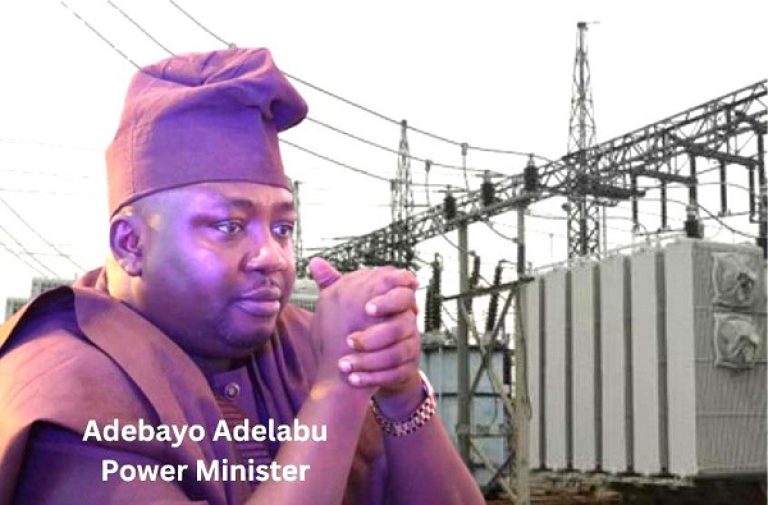
Minister of Power Adebayo Adelabu proudly highlighted the accomplishments of his ministry during his tenure.
Adelabu celebrated the ministry’s successes since taking charge a few years ago.
Minister Adelabu announced that the ministry achieved an additional N200 billion in revenue in 2024, as reported by Saturday Tribune.
But many Lagos residents, especially consumers in the power sector, do not share in the minister’s excitement.
Of late, it has been a litany of woes from the consumers, who insist that the reforms introduced by the minister since assuming office have left them worse off.
They can no longer use their freezers, pressing irons and other energy-sapping appliances.
Unfortunately, they believe the minister has abandoned them to the whims and caprices of the distribution companies (DisCos) in the state.
The DisCos, they claim, have continued to rip them off under the noses of the minister and other relevant regulatory authorities in the sector.
Some of them argue that despite being placed on Band A, they have been contending with epileptic power supply in their localities.
Recently, residents of Aguda and Ayetoro CDA in Surulere expressed their displeasure over exorbitant electricity bills despite poor power supply to the supposedly Band A consumers.
They allege that they receive less than 10 hours of electricity daily, instead of the over 20 hours meant for Band A consumers. Besides, they claim that N10,000 worth of electricity units last less than two hours.
They are therefore calling on the Eko Electricity Distribution Company (EKEDC) to return them to Band C, where they believe they truly belong based on the hours of electricity their community receives.
“What they are giving us is even more than our house rent. If you load N10,000 now, it won’t last two hours. Despite the high tariff, we are not getting electricity adequately,” Mr. Jimoh Ajala, the Aguda CDA leader, lamented in a video.
Ajala said, “I am here because of EKEDC. This is a residential area, not commercial. Like yesterday, they took the light four times for four hours each. We are requesting that the DisCo should return us to Band B or C. The tariff is for commercial users and we are not; we are residential.”
Another resident, Adeyanju from Ayetoro CDA, corroborated Ajala’s claims, saying that what they pay for electricity is more than their house rent.
“We are paying more than our house rent for light. This is killing us. They should return us to Band D,” he said.
Jimoh Ajala and other Aguda CDA residents in Surulere protested at the Ikoyi Federal High Court, demanding government action against their exorbitant electricity bills.Interestingly, they are not alone.
Many Lagos residents are finding it increasingly difficult to pay their electricity bills due to several factors, including the harsh economy, rising inflation, high transportation costs and rent, among others.
Source: Saturday Tribune
News
US Declares 23 Nigerian States High-Risk for Citizens
Southern and Southeastern states were not spared. The Department urged caution in Abia, Anambra, Bayelsa, Delta, Enugu, Imo, and Rivers (excluding Port Harcourt), citing crime, kidnapping, and violent protests.

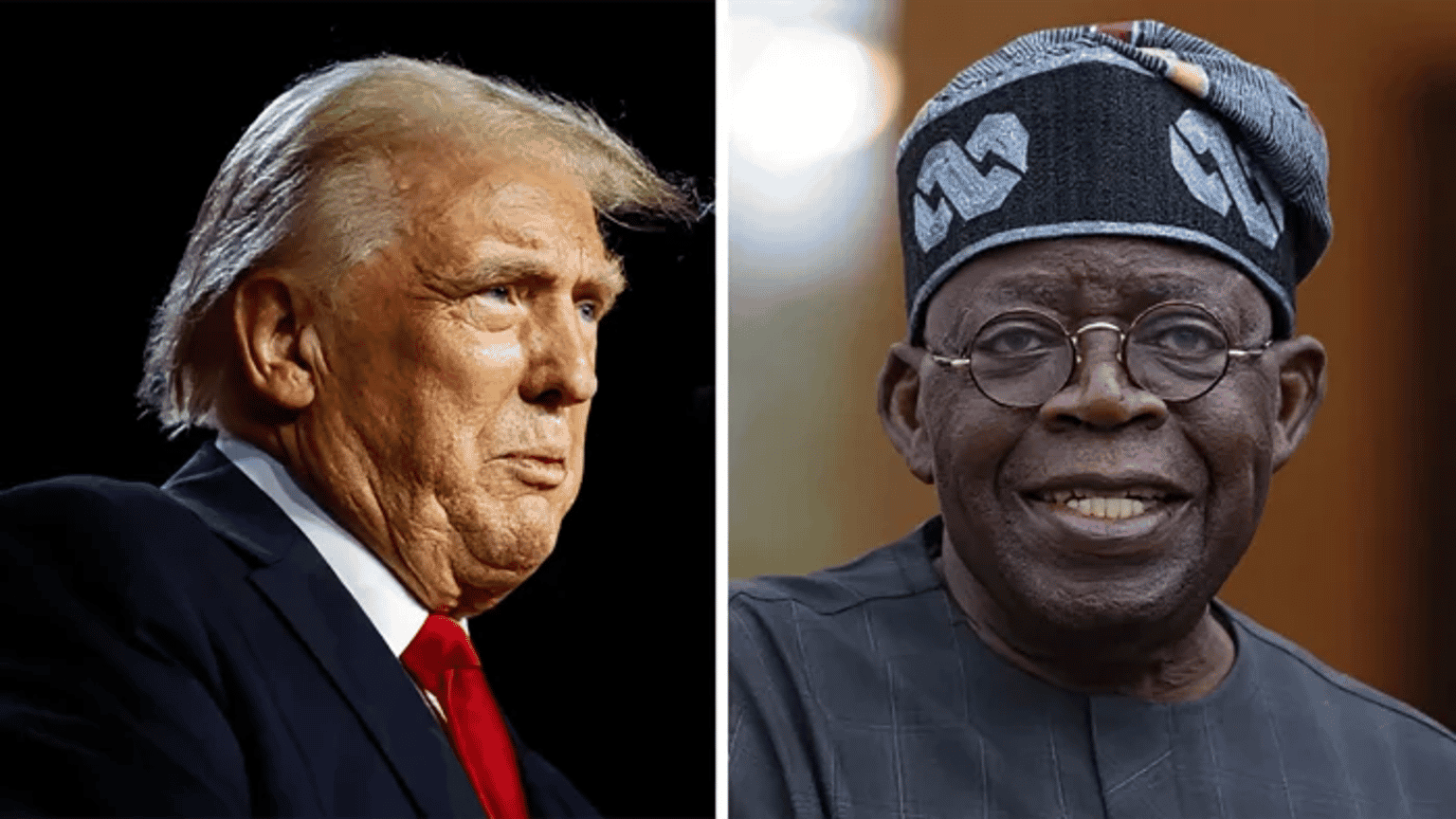
Photo: President Donald Trump; President Bola Tinubu
The United States Department of State has classified 23 Nigerian states “High Insecurity Risks” for its citizens to go , work and live.
In an updated travel advisory issued on Wednesday, the Embassy in Nigeria urged Americans to reconsider travel to Nigeria, with certain states classified under “Level 4: Do Not Travel” due to heightened security risks.
Plateau, Jigawa, Kwara, Niger, and Taraba were added to the list, bringing the total to 23 states where travel is strongly discouraged.
In Northern Nigeria, the advisory highlighted Borno, Jigawa, Kogi, Kwara, Niger, Plateau, Taraba, Yobe, and northern Adamawa as particularly high-risk, citing terrorism, kidnapping, and violent crime.Bauchi, Gombe, Kaduna, Kano, Katsina, Sokoto, and Zamfara were also flagged due to civil unrest, widespread crime, and kidnappings.
“The security situation in these states is unstable and uncertain due to civil unrest. Widespread violence between communities and armed crime, including kidnapping and roadside banditry.
“Security operations to counter these threats may occur without warning,” the advisory warned.
Southern and Southeastern states were not spared. The Department urged caution in Abia, Anambra, Bayelsa, Delta, Enugu, Imo, and Rivers (excluding Port Harcourt), citing crime, kidnapping, and violent protests.
“Crime is widespread in Southern Nigeria. There is a high risk of kidnapping, violent protests, and armed gangs,” the advisory stated.
News
INEC releases updated voters registration figure nationwide
Youth participation remained dominant, with citizens aged between 18 and 34 accounting for 2,354,768 registrants, representing 68.43 per cent of the total figure.
The Independent National Electoral Commission has recorded over 3.4 million new voters in the ongoing second phase of the Continuous Voter Registration exercise nationwide.
The figure is disclosed by the Commission in its week 13 update released on Wednesday in Abuja.
” A total of 3,441,121 registrations have been completed as of April 3, covering both online pre-registrations and physical walk-ins,” said INEC .
Given the breakdown, INEC explained that 2,068,384 citizens completed their registration online, while 1,372,737 others registered physically at designated centres across the country.
State-by-state data showed that Jigawa recorded the highest number of registrants with 201,047, representing 5.84 percent of the total.
Lagos followed with 181,095, while Kano ranked third with 177,681 registrations.Youth participation remained dominant, with citizens aged between 18 and 34 accounting for 2,354,768 registrants, representing 68.43 per cent of the total figure.
Gender distribution indicated a higher turnout among women, with females accounting for 1,922,143 registrations (55.86 percent), compared to 1,518,978 males (44.14 percent).
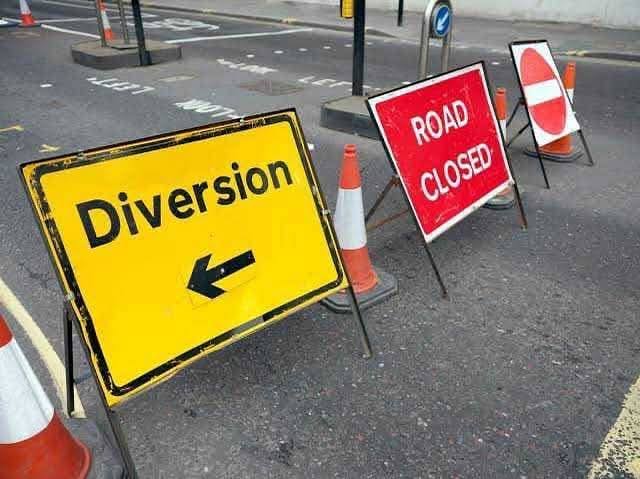
The Lagos State Government has unveiled a comprehensive traffic diversion plan for Wednesday, April 8, and Thursday, April 9, 2026, in preparation for the commissioning of several key infrastructure projects by President Bola Tinubu.
According to the state Ministry of Transportation, partial road closures and diversions will be implemented in affected areas to ensure smooth movement during the events, which include the inauguration of the Ojota-Opebi Link Bridge and other major projects such as the Lagos State Geographic Information Service building in Alausa and the Tolu Schools Complex.
On Wednesday, April 8, diversions will be enforced around venues for the commissioning ceremonies, while on Thursday, April 9, restrictions will apply between 9:00 a.m. and 1:00 p.m. during the Tolu Schools Complex event and additional project unveilings.
Motorists have been advised to use alternative routes and plan their journeys accordingly to avoid delays. The government urged residents and commuters to cooperate with traffic management officials and security personnel deployed to the areas.
The projects form part of ongoing efforts to improve infrastructure and education facilities across the state. Further details on specific diversion routes are expected to be released by the Ministry of Transportation in the coming hours.
Commuters are encouraged to monitor official announcements via Lagos State traffic radio and social media handles for real-time updates.


US Declares 23 Nigerian States High-Risk for Citizens

INEC releases updated voters registration figure nationwide

Rep Dasuki Joins ADC, says INEC Chair Becoming Threat to Nigeria’s Multi-party Democracy

Tech Expert, Zuckerberg trains with UFC champions, Adesanya, Alexander

Organ Trafficking: Ekweremadu bags 10 years in UK prison

SAINT OBI: Between his marriage and his death
-

 Sports3 days ago
CAF confirms 16 teams for U-17 AFCON 2026
-

 Sports3 days ago
Seven Eritrean players fail to return home after AFCON qualifier
-
 Politics3 days ago
FG earmarks N135bn for 2027 post election disputes
-
 News2 days ago
Abiodun Presents Ceremonial Sword to Tinubu, Urges Sustained War on Crime
-

 Politics3 days ago
ADC youths give INEC 72-hour ultimatum to restore David Mark -led leadership
-

 International2 days ago
Oil Prices Rise, Stocks Fall as Trump’s Iran Deadline Looms
-
 News3 days ago
Sanwo-Olu prepares the way for Tinubu’s official visit to Lagos state
-

 International3 days ago
Trump warns Entire Iran could be ‘taken out’ Tuesday night