
Business
Obi Sees Something Good in Tinubu’s “Naira Float Policy ‘
The policy was introduced by the Tinubu administration in June 2023 as part of wider foreign exchange reforms.

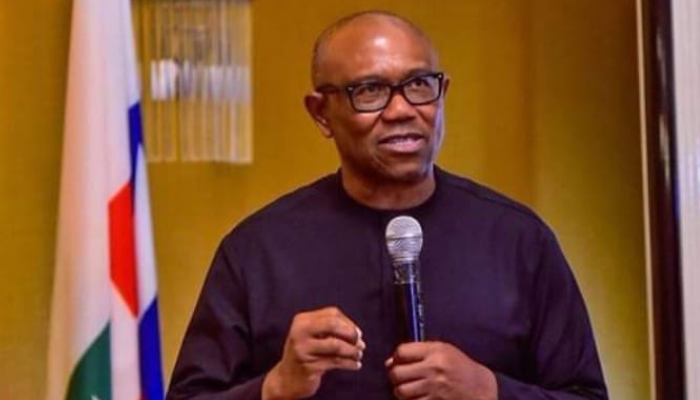
The presidential candidate of the National Democratic Congress (NDC) for the 2027 election, Peter Obi, has said he would retain President Bola Ahmed Tinubu’s naira float policy if elected president.
The policy was introduced by the Tinubu administration in June 2023 as part of wider foreign exchange reforms.
The Central Bank of Nigeria removed restrictions at the Investors and Exporters foreign exchange window, allowing the naira to trade more freely against the dollar and other major currencies
Obi made the disclosure in a public statement on air, emphasising that his administration would seek to strengthen the currency by prioritising productivity and increasing economic output rather than reversing the floating exchange-rate framework.
Asked to identify one policy of the Tinubu administration he would keep if elected, Obi said, “There’s one – the floating of the Naira. I’m not going to defend it. But I’m going to put productivity to make it more valuable to the people.”
His position means he would maintain the floating exchange-rate system while seeking to change the economic conditions that determine the strength and value of the naira.
Business
Investors Rush For Airtel Money IPO on LSE
Airtel Money is proving popular among retail investors ahead of full admission next week.

Airtel Money began conditional trading on the London Stock Exchange this morning in a £5.3 billion market debut, dubbed Africa’s Revolut.
Shares, which were open only to investors allocated stock in the offer, were trading flat at around 194p.
But armchair investors are rushing to sign up to the City’s largest IPO in five years ahead of full admission on October 14.
It is the ninth most popular initial public offering on AJ Bell’s investment platform based on the number of customers applying to take part in the offer, it said.
Airtel Money is proving popular among retail investors ahead of full admission next week
Airtel Money, a subsidiary of Airtel Africa, which offers mobile payment services in 13 countries across Africa, is a subsidiary of FTSE 100 telecoms group Airtel Africa, whose shares have trebled in less than two years.

The Nigerian National Petroleum Company Limited (NNPC Ltd) has clarified that its ongoing petrol discount is a temporary customer relief measure and does not amount to a restoration of the petroleum subsidy abolished in 2023.
In a statement issued on Friday by Chief Corporate Communications Officer Andy Odeh, the company said the N66-per-litre sales discount, first introduced on 1 October 2026 to mark Nigeria’s 66th Independence Anniversary, will continue until 31 October 2026 at NNPC Retail stations nationwide.
NNPC stressed that the initiative is designed to ease the burden of rising fuel prices linked to elevated global crude oil costs and the Middle East conflict. It applies only to NNPC Retail outlets and does not set a uniform national pump price or change the market-based pricing framework for petroleum products.
“This discount is a customer relief initiative and does not represent the reintroduction of petroleum subsidy,” the statement said. The company urged the public to disregard any interpretation of the measure as a return to the subsidy regime.
The clarification followed comments by Finance Minister and Coordinating Minister of the Economy Taiwo Oyedele, who explained that the discount is funded solely from NNPC Retail’s own profit margin and involves no public funds from the federal budget or Federation Account.
Business
Manufacturers sitting on N40trn untapped opportunities, says report
The Nigerian Manufacturing Opportunity Report 2026 provides decision-makers with the insights on opportunities that are most immediate, where Nigeria is already making progress and what needs to be done better to unlock greater value.
SEID, a marketing communications and market intelligence firm in Lagos, has estimated that the Manufacturing industries in Nigeria is sitting on more than N40 trillion in untapped manufacturing opportunities.
The Managing Partner at SEID, Tubosun Akeju, disclosed this in a report -The Nigerian Manufacturing Opportunity Report 2026 launched by the during the 54th Annual General Meeting of the Manufacturers Association of Nigeria, held at the Oriental Hotel.
Akeju emphasised that the report provides decision-makers with the insights on opportunities that are most immediate, where Nigeria is already making progress and what needs to be done better to unlock greater value.
“The opportunity is to understand where those strengths exist, deepen them, and build the competitiveness required to capture more value locally and compete beyond our borders,” he said .
The report examines manufacturing opportunities across Nigeria’s subsectors, states, value chains and industrial clusters, while identifying areas where existing strengths can be deepened and competitiveness improved.
It said that Nigeria’s manufacturing landscape was shaped by distinct areas of industrial strength, with different states, regions and value chains demonstrating varying levels of scale, specialisation and competitiveness.
The report noted that this created an opportunity to build on existing capabilities rather than adopt a one-size-fits-all approach to industrial development.
Manufacturing activity is spread across states with different levels of scale, specialisation and growth.
The South-West remains the country’s largest manufacturing zone, while other regions are developing strengths in areas ranging from food and agro-processing to textiles, chemicals, pharmaceuticals, cement, steel and light manufacturing.
The report maps these differences to show where investment and industrial development can build on existing capabilities.


Investors Rush For Airtel Money IPO on LSE

JUST IN: NNPC Clarifies Petrol Discount: Relief Initiative, Not Subsidy Restoration

JUST IN: A’Court Stalls SERAP, Oluwadare Defamation Appeals Over Late Briefs

Tech Expert, Zuckerberg trains with UFC champions, Adesanya, Alexander

Organ Trafficking: Ekweremadu bags 10 years in UK prison

SAINT OBI: Between his marriage and his death
-

 News3 days ago
NAF Helicopter Makes Precautionary Landing In Makurdi
-
 Business3 days ago
Naira Today Exchange Rates, Thursday October 8
-
 News2 days ago
Tears, Embraces as Rescued NYSC Members Reunite with Families in Ibadan
-

 Business3 days ago
Obi advocates policy support for manufacturers
-
 Business2 days ago
Naira Exchange Rates Friday, October 9
-

 International3 days ago
Belgian Students Protest Over Rising Education Costs
-
 International3 days ago
Japan beer giants raided over alleged price-fixing cartel
-
 News2 days ago
VON now broadcast in nine languages — DG