
News
Sanwo-Olu Introduces Law to Regulate Electricity Production and distribution in Lagos


Lagos State Governor, Babajide Sanwo-Olu, on Tuesday signed the Lagos State Electricity Bill 2024 into law. The law is aimed at teansforming electricity production and distribution in Lagos State, especially the Independent Power Plants (IPP).
The event held at Lagos House, Alausa, Ikeja, was attended by key officials including Deputy Governor Dr. Femi Hamzat, Chairman of the Lagos State House Committee on Energy and Mineral Resources Sabur Oluwa, Attorney General and Commissioner for Justice Pedro Lawal, Commissioner for Energy and Mineral Resources Biodun Ogunleye, and Commissioner for Information and Strategy Gbenga Omotoso.
Sanwo-Olu, said that the Lagos State Electricity Law 2024 aims to: Establish a technically sound, financially viable, and well-regulated Lagos Electricity Market.
Ensure access to affordable, reliable, and sustainable electricity for all residents. Promote diverse energy sources, including renewable energy, and encourage energy efficiency.
Foster investment, competition, and innovation in the electricity sector. Extend electricity access to underserved areas to support sustainabledevelopment.
Commissioner for Energy and Mineral Resources Biodun Ogunleye announced that the law’s implementation will begin within six months, pending final approval from the Federal Government .
The law creates several regulatory bodies to manage the electricity market: Lagos State Electricity Regulatory Commission (LASERC): Ensures compliance and oversees licensing. Lagos Independent System Operator (ISO): Responsible for maintaining system reliability and operational efficiency.
Lagos State Electrification Agency: Tasked with expanding electricity access to underserved communities.
Electrification Funds: Allocated for financing electrification projects and sustainable energy solutions in underserved areas.
Community Trust Fund: Requires power generating companies to allocate a percentage of their previous year’s operating expenditure to host community development.
Power Enforcement Unit: Charged with addressing electricity theft and infrastructure damage.
The Lagos State Electricity Law 2024 represents Governor Sanwo-Olu’s commitment to resolving long standing energy challenges, laying the foundation for economic growth, industrial development, improved quality of life, and environmental sustainability.
News
Minister of Power Apologise To Nigerians Over Blackouts
“I can tell you, with the committee that we have set up, and commitments from gas suppliers, and the timeline for repair of the gas pipelines, two weeks from now, we should start seeing improvements in supply. Two weeks,” Adelabu said.
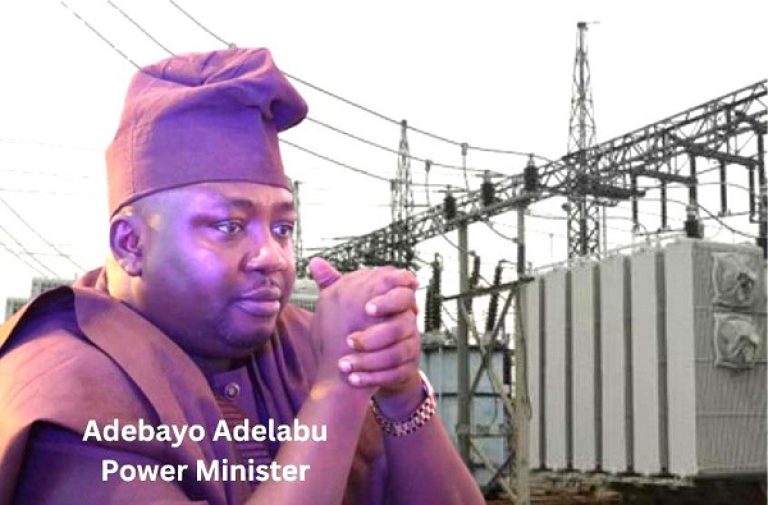
The Minister of Power, Adebayo Adelabu, has apologised to Nigerians over the prolonged and severe electricity outages recorded in recent weeks across the country.
He acknowledged the strain the outages have caused on households and businesses in key sectors of the economy.
“I want to apologise to Nigerians, officially now, coming from me as the Minister of Power, for this temporary issue that is leading to hardship being experienced, especially during this dry season, where there is so much heat everywhere,” Adelabu said at a press briefing in Abuja on Tuesday
He admitted that the ongoing blackouts has worsened living conditions, particularly during the intense dry-season heat.
“Businesses are being affected, schools have been affected, and industries have been affected. It is not our wish to find ourselves in this situation, but it is due to some factors that are actually beyond our control, ”said Adelabu.
Despite the disruptions, Adelabu assured citizens that the situation would soon improve, offering a clear timeline for restoration of better power supply.
“I can tell you, with the committee that we have set up, and commitments from gas suppliers, and the timeline for repair of the gas pipelines, two weeks from now, we should start seeing improvements in supply. Two weeks,” Adelabu said.
News
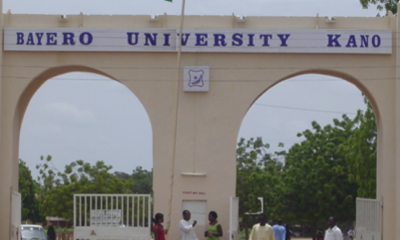
BUK expels 171 students for admission frauds
The affected students cut across different departments and levels, describing the action as part of efforts to sanitise its academic records
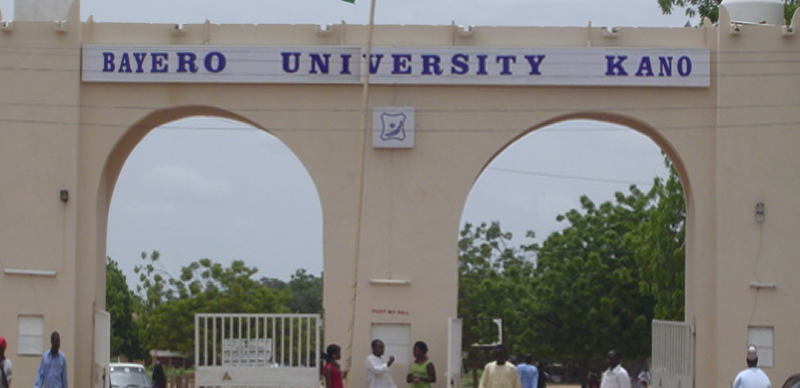
The Senate of Bayero University Kano has approved the expulsion of 171 students over falsification of admission entry qualifications.
In a statement published in the university’s weekly bulletin on Friday, said that the decision was taken during the Senate’s 433rd meeting held on March 4, 2026.
It said that following an investigation by the Senate’s Committee on Entry Qualification Irregularities, the affected students were found to have presented falsified credentials during their admission processes.
The university noted that the offence constitutes a violation of Section 20.7, Category A (vii) of its General Examinations and Academic Regulations, which prescribes expulsion for such misconduct.
It added that the affected students cut across different departments and levels, describing the action as part of efforts to sanitise its academic records.
News
Tinubu renews determination to conquer insecurity nationwide
Tinubu revealed that security cooperation formed a major part of his recent engagements abroad, particularly during his visit to the United Kingdom, adding that his government was prepared to leverage Nigeria’s goodwill and existing credit lines to acquire the needed support.
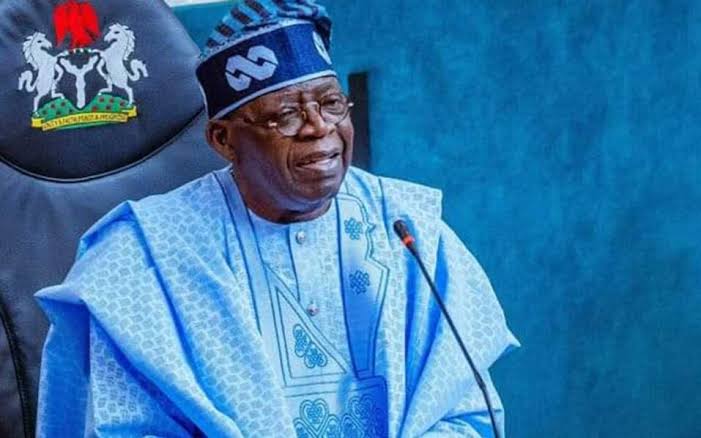
President Bola Ahmed Tinubu said on Sunday that his administration is intensifying diplomatic engagements with world leaders to secure critical equipment and training support for Nigeria’s security and intelligence agencies as part of a renewed push to end insecurity across the country.
He disclosed this while receiving state governors who paid him a courtesy visit his Ikoyi residence in Lagos, where he observed the Eid-el-Fitr holidays after returning from his two-day state visit to the United Kingdom.
President Tinubu said that the discussions with international partners, including recent talks with French President Emmanuel Macron, were already yielding prospects for collaboration in strengthening Nigeria’s security architecture.
Tinubu revealed that security cooperation formed a major part of his recent engagements abroad, particularly during his visit to the United Kingdom, adding that his government was prepared to leverage Nigeria’s goodwill and existing credit lines to acquire the needed support.
“One of the major discussions in the UK is equipment and support. I can report to you that yesterday again, I had a lengthy discussion with Emmanuel Macron on their collaboration with us for equipment and support,” the President said.
He added that efforts were ongoing to reach out to other countries willing to assist Nigeria in combating insecurity through provision of modern tools and capacity building for security personnel.
“If we have to spend our goodwill and line of credit, we have those who are willing to support us with equipment and training,” Tinubu stated.
Describing insecurity as a direct threat to national development, the President stressed that tackling the menace remained a top priority for his administration, calling for collective action by all levels of government.
“Insecurity is an enemy of development, progress and prosperity. The next phase of our struggle is staring us in the face, and it is the challenge of insecurity in this country,” he said.


Minister of Power Apologise To Nigerians Over Blackouts

JUST IN: Federal High Court Adjourns Nasir El-Rufai’s Bail Application to March 31

Two Pilots Killed, Dozens Injured After Air Canada Jet Collides with Fire Truck

Tech Expert, Zuckerberg trains with UFC champions, Adesanya, Alexander

Organ Trafficking: Ekweremadu bags 10 years in UK prison

SAINT OBI: Between his marriage and his death
-

 Sports2 days ago
FIFA orders representation of female coaches across all women’s tournaments
-
 Sports2 days ago
Odegbami: Why CAF should return AFCON 2025 trophy back to Senegal
-
 News2 days ago
BUK expels 171 students for admission frauds
-

 News2 days ago
Why I returned to school – Emir Sanusi
-
 Entertainment2 days ago
Papa Ajasco rebrands as Bondu Alaska
-
 Entertainment2 days ago
AGN President Jetting to London for UK–Nigeria Creative Roundtable and Awards
-
 Business2 days ago
Moniepoint buys Orda to capture Africa’s $50bn restaurant economy
-
 Politics2 days ago
Peter Obi: I can govern from Kaduna if elected