
News
SA to the President on Energy, Olu Verheijen urges investors to seize new opportunities in Nigeria’s energy sector

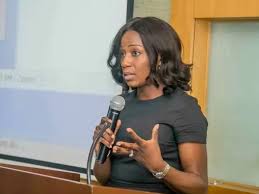
…Says IOCs invested $82 billion in deepwater outside Nigeria since 2013
The Special Adviser to the President on Energy, Olu Verheijen has urged investors to seize new opportunities in Nigeria’s energy sector, highlighting untapped potential and recent reforms to attract capital.
Speaking to a diverse audience, at the ongoing African Energy Week in Cape Town, South Africa, she underscored the untapped potential within the industry and discussed the recent reforms implemented by the President Bola Tinubu administration to attract investment.
Verheijen noted that the country has historically underperformed in oil and gas production despite Nigeria’s wealth in the oil and gas industry.
She referenced how countries like Brazil that has only 30% of Nigeria’s oil reserves has outperformed by producing 131% more than current production of Nigeria.
“Despite our abundant endowments, we have underperformed against our potential. For example, Brazil holds only 30% of Nigeria’s oil reserves but produces 131% more.
This is largely due to under-investment,” she said. She said that since 2016, Nigeria has attracted only 4% of African oil and gas investments, while investment has surged in other, less resource-rich nations.
“Since 2016, Nigeria has managed to attract only 4 percent of total investments in oil and gas, while less resourced countries in Africa have enjoyed a bigger share.
When we analyzed investment data, we also found that, between 2013, when Nigeria’s last deepwater project reached FID, and now, IOCs operating in Nigeria have committed more than $82 billion in deepwater investments in other countries that they have deemed to be more attractive destinations for their capital.”
Recognizing this trend, the presidential aide highlighted many efforts by President Tinubu’s administration to enact reforms aimed at reshaping Nigeria’s investment landscape.
Among these initiatives, she said the government has introduced fiscal incentives targeting deep offshore and non-associated gas projects, marking the first time Nigeria has outlined a fiscal framework specifically for deepwater gas.
In efforts to enhance the upstream Oil and Gas sector, she said her office has collaborated closely with the office of the National Security Adviser to create and distribute focused Security Directives, leveraging insights garnered from on-ground operators.
Additionally, Verheijen revealed steps to streamline approval processes by clearly defining the regulatory scopes involved.
This initiative, she said, aims to significantly reduce the extended project timelines that have historically plagued the industry, as well as the high-cost premiums associated with operating in Nigeria.
She added, “Our target is to shorten the contracting timelines from an extensive 38 months to just 135 days, while also working to eliminate the 40% cost premium that currently exists within the Nigerian petroleum industry.
The presidential aide also revealed efforts by the current President Tinubu administration to further open up the oil and gas sector for bigger investments with a set of clear fiscal incentives for Non-Associated Gas and Deep offshore Oil & Gas exploration and production.
“This is the first time that Nigeria is outlining a fiscal framework for Deepwater gas since exploration in the basin commenced in 1991,” She said.
According to her, amongst other initiatives, there has been a focus on midstream and downstream investments in Compressed Natural Gas, (CNG), liquefied petroleum gas, and electric vehicles as part of the Presidential Gas for Growth Initiative.
She added that the administration has also worked to streamline regulatory processes, shorten project timelines, and reduce the high-cost premium of operating in Nigeria.
“We have also introduced fiscal incentives to catalyze investments in the midstream and downstream sectors, including, Compressed Natural Gas (CNG), Liquefied Petroleum Gas (LPG), and Mini Liquefied Natural Gas (LNG).
“These align with the broader Presidential Gas for Growth Initiative, which seeks to enable the displacement of PMS and Diesel in three key sectors: heavy transport, decentralised power generation and cooking.
These incentives are also stimulating demand for Electric Vehicles. “Our goal is to eliminate the 40% cost premium within the Nigerian petroleum industry and cut down contracting timelines from 38 months to 135 days,” Verheijen stated.
She said the government has unlocked over $1 billion across the energy value chain, with two more major investment projects expected by mid-2025.
“We are also facilitating the transfer of onshore and shallow water assets to local companies with the capacity to grow production, while supporting the transition of International Oil Companies, with resilient capital, into deep offshore and integrated gas.
We have unlocked over $1 billion in investments across the value chain and by the middle of 2025 we expect to see FID on two more projects, including a multibillion-dollar deepwater exploration project, which will be the first of its kind in Nigeria in over a decade – one of many to come.
Verheijen also addressed efforts by the Tinubu administration to revamp the nation’s power sector, with plans to provide more reliable electricity access for the 86 million Nigerians currently underserved.
She said the scheme aims to improve revenue assurance and collection. Other key measures include tackling legacy debt, deploying seven million smart meters to reduce losses, and expanding off-grid solutions for remote communities.
By 2027, Nigeria aims to ensure 20 hours of electricity daily for consumers in urban areas and industrial hubs.
Highlighting recent macroeconomic reforms such as petrol subsidy removal and foreign exchange liberalization, Verheijen expressed confidence that Nigeria is set for unprecedented growth.
“Under President Tinubu’s leadership, Nigeria is championing reforms to unlock its vast economic potential and create jobs,” she concluded, inviting foreign partners to participate in Nigeria’s next chapter of growth.
Abiodun OladunjoyeDirector of Information State House, AbujaNovember 7, 2024

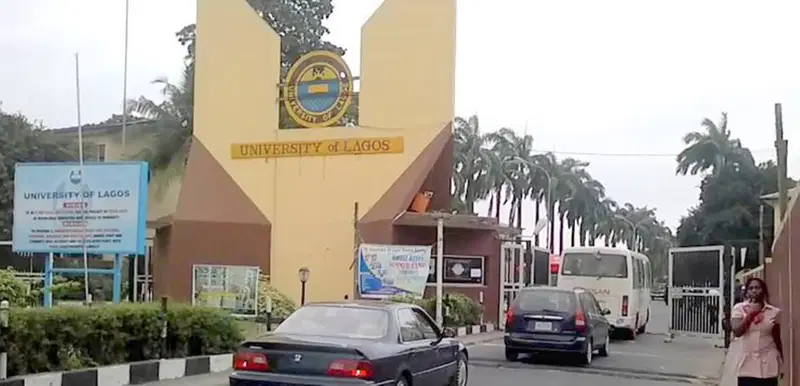
Teachers at the International School, University of Lagos (ISL), on Wednesday commenced a work-to-rule action over unpaid salary arrears, their removal from the university’s payroll, and delays in implementing a National Industrial Court judgment.
The staff are demanding the payment of outstanding Consolidated Tertiary Institutions Teaching Allowance (CONTTA) arrears, as well as arrears from the 25 per cent and 35 per cent salary adjustments approved in 2024. They also want full restoration to the university’s payroll.
Comrade Razak Yusuf, Chairman of the Senior Staff Association of Nigerian Universities (SSANU), University of Lagos branch, said the industrial action followed prolonged delays in resolving the teachers’ employment status and financial entitlements.
The teachers had approached the National Industrial Court of Nigeria, which ruled in their favour on May 11, 2026. Despite the judgment, they claim the university has yet to fully restore their names to the payroll or settle outstanding benefits.
Protesters carried placards with messages such as “Equal Work, Equal Rights,” “ISL tutors deserve their due,” and “Other UNILAG staff paid, ISL tutors still owed.” The action disrupted teaching and a scheduled mid-term examination at the school.
The teachers called on the university management to restore the affected staff to the payroll, settle all outstanding financial obligations, and provide a clear payment plan with timelines.
They rejected suggestions that any interim arrangement under the university’s Council protocol amounted to goodwill, insisting they were only seeking recognition of their employment rights.
The development continues a pattern of industrial disputes at the University of Lagos over salary and allowance issues.
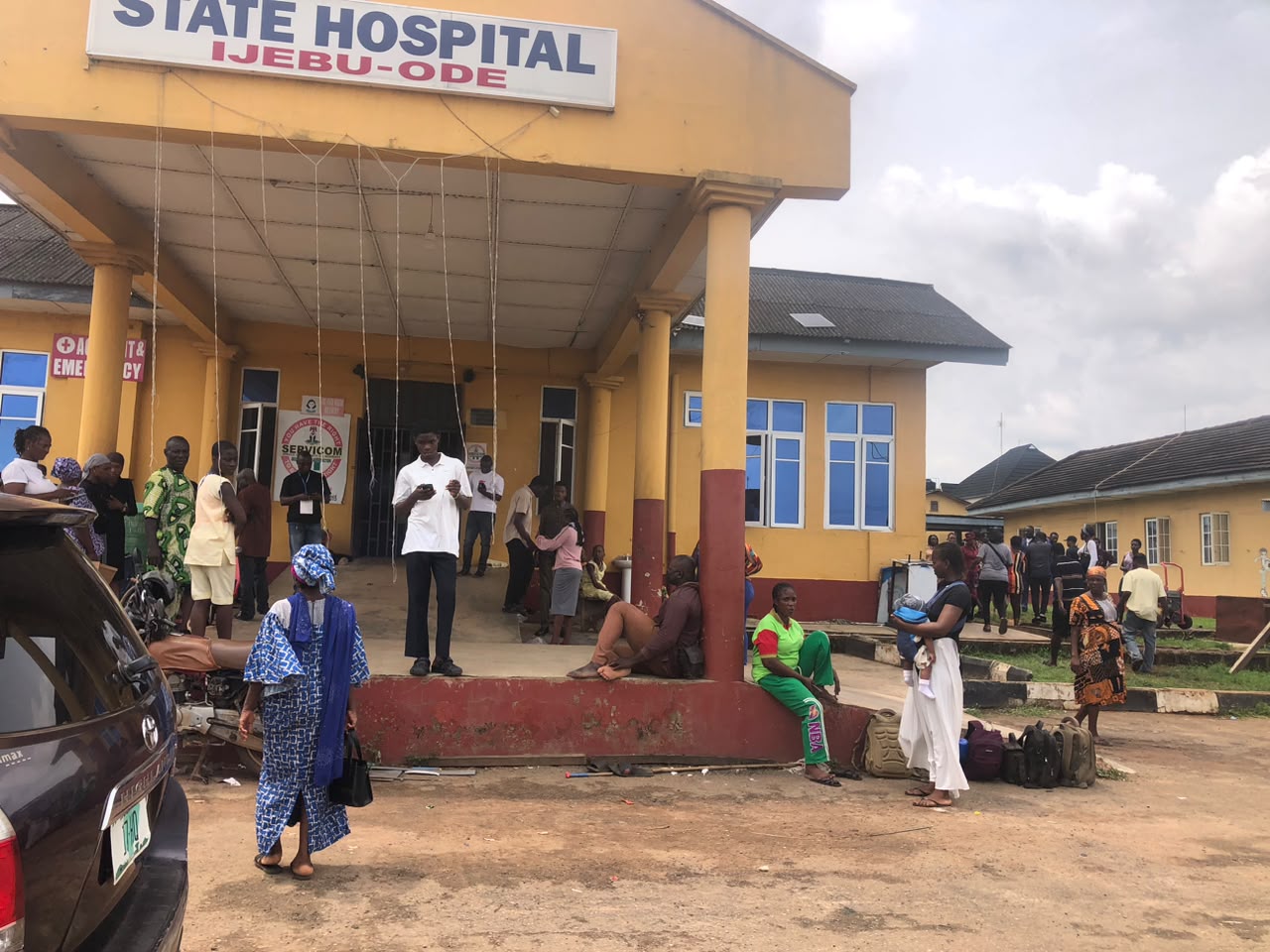
Hundreds of students were hospitalised on Wednesday morning after fresh gaseous emissions hit parts of Ogun State, including Ijebu-Ode, Ijebu-Igbo and Ago-Iwoye.
The incident affected pupils at Anglican Girls Grammar School, Obalende, Ijebu-Ode, and Ijebu-Igbo Girls Grammar School. Several schools in Ago-Iwoye suspended academic activities and sent students home as a precaution.
Kehinde Bello, General Manager of the Ogun State Environmental Protection Agency (OGEPA), visited the affected areas and linked the emissions to underground gas previously recorded in Ijebu-Ode since April 2026. He said the situation was under control and attributed the releases to natural geological and tectonic fault lines, ruling out sabotage or a gas pipeline leak.
Bello assured residents that the state government was working on a lasting solution. He advised anyone exposed to the odour to cover their noses and mouths with wet handkerchiefs.
The recurring emissions have renewed concerns about the safety of students and residents in the affected communities.

Former Delta State Governor Dr. Emmanuel Eweta Uduaghan is dead. He passed away on the morning of Monday, October 19, 2026, at the age of 71, after a period of illness.
A family statement announced his death, describing it as a devastating loss. Uduaghan, a medical doctor, served as Delta State Commissioner for Health (1999–2003) and Secretary to the State Government (2003–2007) before becoming governor from 2007 to 2015. He was known for contributions to infrastructure and human capital development in the state.
Delta State Governor Sheriff Oborevwori has expressed deep sadness over the passing. In a condolence message, he described Uduaghan as a detribalised leader whose service left a lasting mark on Delta State.
Oborevwori extended heartfelt condolences to Uduaghan’s wife, Roli, his children, the Uduaghan family, the Itsekiri nation, and the people of Delta State, praying for the peaceful repose of his soul.


UPDATE: Identity of Woman Who Flew into Nigeria with Ebola Virus Revealed

UNILAG School Teachers Begin Work-to-Rule Over Unpaid Arrears

Dollar to Naira Exchange Rate – Thursday, October 22, 2026

BREAKING: Lagos Govt Declares Today, Thursday Work-Free to Mark 2026 Ìṣẹ̀ṣe Day

Tech Expert, Zuckerberg trains with UFC champions, Adesanya, Alexander

Organ Trafficking: Ekweremadu bags 10 years in UK prison
-

 Sports3 days ago
Mbappé wins Onze d’Or award for 2025/26 season
-
 Business2 days ago
Naira Exchange Rates Wednesday, October 21, 2026
-
 Business1 day ago
Currency Words You Should Know
-

 Business1 day ago
NCC, CBN To Warn Companies By Flagging Fraudulent Phone Numbers
-

 Sports3 days ago
Ronaldo Gets 30-Day Suspension For Portugal Camp Walkout
-
 Business1 day ago
JPMorgan Eyeing Entry Into Nigeria’s Banking Industry
-

 Business1 day ago
RMRDC Taking 2027 Africa Raw Materials Summit To Kenya
-
 Health2 days ago
BREAKING: Nigeria Confirms First Ebola Case