
Business
Over 200 Chambers of Commerce Lamenting Taxation, Inflation hampering Businesses


Over 200 chambers of commerce worldwide says insecurity, taxation, inflation holding down businesses from performing optimally.
The International Chamber of Commerce (ICC) reveals this in its World Chambers Federation (WCF) 2024 Global Economic Survey, released on 17 October.
In the report, respondents from 96 countries spanning five continents, believe that the global trade environment has hampered business operations.
The respondents say the main constraints for businesses are:
• shortage of labour or skilled labour,• inflation,
• geopolitical tensions,
• taxation, and
• financial problems.
Specifically, the report says inflation and limited access to finance still weigh heavily on businesses Over 80% of respondents expect inflation to rise, affecting operating costs, wages, supply chains and competitiveness, with concerns especially pronounced in North America and Sub-Saharan Africa.
Commenting at the launch of the survey results in Istanbul, ICC Secretary General John W.H Denton AO said:
“As the voice of the real economy worldwide, ICC has leveraged its unique institutional reach to provide a comprehensive global picture of the realities of doing business in today’s increasingly complex environment. We hope this real-time data will help shape the strategic response of governments to the key challenges faced by MSMEs.”
Global business environment
Rising prices and labour costs were cited as a significant challenge in the majority of countries surveyed, with more than 80% of respondents expressing concern that cost pressures will persist into 2025 — casting doubt on recent claims from prominent economists that inflation is “no longer a thing”.
Inflation has translated into significantly higher staffing costs for businesses in some 44 countries— a trend exacerbated in several regions by skills shortages in the local workforce, most notably North America and Europe.
The economic environment and tight financial conditions have hindered access to finance where findings show that high interest rates are limiting access to credit particularly in Sub-Saharan Africa (80%), Latin America and the Caribbean (63%) and South Asia (60%),”said the report.





BLACK/ PARALLEL MARKET RATES
₦1370 DOLLAR (USD)
₦1800 POUND (GBP)
₦1510 EURO (EUR)
₦970 CANADIAN DOLLAR (CAD)
₦65 SOUTH AFRICAN RAND (ZAR)
₦350 UAE DIRHAM (AED)
₦190 CHINESE YUAN (CNY)
₦100 GHANAIAN CEDI (GHS)
₦2300 WEST AFRICAN CFA F.(XOF)
₦2200 CENTRAL AFRICAN CFA F.(XAF)
₦850 AUSTRALIAN DOLLAR AUSSIE (AUD)
CBN OFFICIAL RATES
DOLLAR (USD)₦1331.61
POUND (GBP)₦1764.26
EURO (EUR)₦1490.48
SWISS FRANC (CHF)₦1608.23
JAPANESE YEN (JPN)₦8.4
CFA FRANC (XOF)₦2.27
WEST AFRICAN UNIT OF ACCOUNT (WAUA)₦1802.33
CHINESE YUAN (CNY)₦199.01
SAUDI RIYAL (SAR)₦354.83
SOUTH AFRICAN RAND (ZAR)₦80.49
Business
WEF could appoint Lagarde as its next chair, sources say
The WEF’s Board of Trustees, which includes Lagarde herself, was due to meet on November 2 and could elect her as its next chair, said the people close to the organisation, who spoke on condition of anonymity due to the sensitivity of the matter.

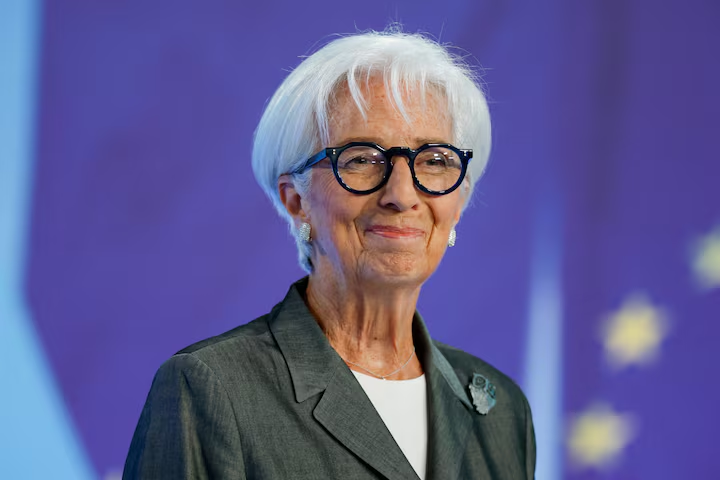
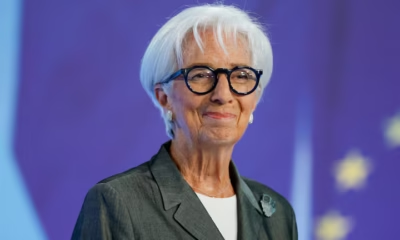
•European Central Bank President Christine Lagarde
The World Economic Forum could appoint Christine Lagarde as its next chair as soon as next month, four people close to the organisation told Reuters, meaning she would step down early as European Central Bank chief and trigger a wider reshuffle at the top of the ECB.Lagarde’s ECB term is scheduled to end in October 2027.
Leaving early would give European Union leaders a chance to pick a new ECB President before France’s spring presidential election, which opinion polls suggest the far-right could win, and could pave the way for a deal involving two other senior ECB roles.
The WEF’s Board of Trustees, which includes Lagarde herself, was due to meet on November 2 and could elect her as its next chair, said the people close to the organisation, who spoke on condition of anonymity due to the sensitivity of the matter.
No final decision has been taken yet, they said.
A spokesperson for the WEF said the forum could not confirm when the next full Board of Trustees meeting would take place, but that the aim was to hold one before the end of the year.
Business
Germany plans tax on sugary drinks
The tax is expected to generate additional revenue for the federal government of €690 million in 2027 and €925 million in 2028.
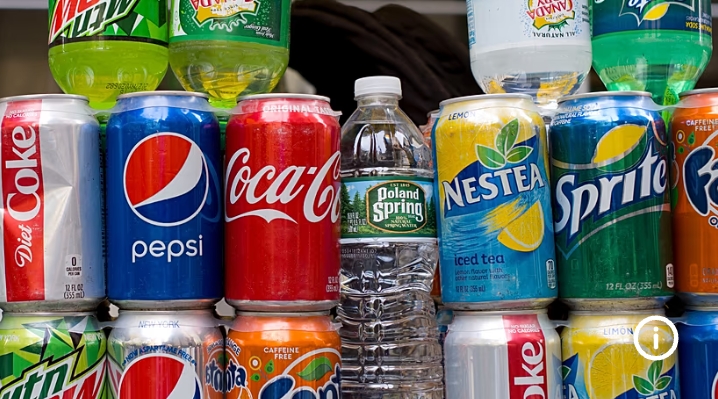
The German cabinet has approved draft legislation to tax sugary drinks in Europe’s biggest economy.
If passed by the German Bundestag, the tax will take effect on 1 July 2027.
The coalition aims to raise revenue for the federal budget while encouraging manufacturers to reduce sugar content and offer healthier products.
The levy is intended to ease pressure on the healthcare system, which faces costs of more than €2 billion every year linked to the high consumption of sugary drinks, which contributes to obesity, diabetes and tooth decay.
According to the federal government, Berlin is using the tax to implement “what associations from the fields of health, science, child protection, and consumer protection have long been demanding.”
The tax is expected to generate additional revenue for the federal government of €690 million in 2027 and €925 million in 2028.


JUST IN: Mob Sets BRT Bus Ablaze After Motorcyclist’s Death in Lagos

BREAKING: DSS Arrests Fugitive Maina Son, Hands Him to EFCC

BREAKING: 5 Arrested Over Imo NYSC Abduction

BREAKING: Lagos Govt Declares Today, Thursday Work-Free to Mark 2026 Ìṣẹ̀ṣe Day

Tech Expert, Zuckerberg trains with UFC champions, Adesanya, Alexander

Organ Trafficking: Ekweremadu bags 10 years in UK prison
-
 Business2 days ago
Naira Exchange Rates For Thursday, October 15
-
 Sports2 days ago
CAF Increases Annual Funding for Member Federations to $700,000
-

 News2 days ago
ASCON To Be Rebranded “National School Of Government”
-
 Business2 days ago
Germany plans tax on sugary drinks
-

 News3 days ago
Sanwo-Olu Appoints Olatunbosun Ogunbanwo, 5 Others as Perm Secs
-
 Business2 days ago
WEF could appoint Lagarde as its next chair, sources say
-
 International2 days ago
“Mother of all bombs,” Trump Plans To Hit Iran
-
 Business1 day ago
Naira Exchange Rates Friday, October 16