
Business
ON-GOING: Dangote $16 billion refinery groundbreaking holds in Kenya (Images)


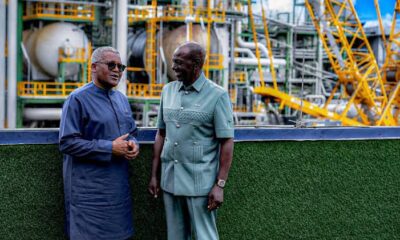
Africa’s richest man, Aliko Dangote, and Kenyan President William Ruto are currently breaking ground on a landmark $16 billion oil refinery in Lamu, on Kenya’s northern coast.

The ceremony, held on Wednesday, September 30, 2026, formally launches construction of the 700,000-barrel-per-day facility, which is set to become the largest refinery in East Africa and the second-largest on the continent after Dangote’s plant in Lekki, Nigeria. The project aims to replicate the success of the Nigerian refinery by processing crude for regional markets, reducing East Africa’s long-standing dependence on imported refined petroleum products, lowering fuel costs, and conserving scarce foreign exchange.
Several African leaders are attending the groundbreaking, including the presidents of Uganda and Ethiopia, along with other regional heads of state and former Nigerian President Olusegun Obasanjo. The event underscores growing continental efforts to process raw materials locally rather than exporting crude and importing finished fuels.
Once completed around 2030, the Lamu refinery is expected to supply Kenya and neighbouring countries such as Uganda, South Sudan, Rwanda, and others. Officials project it will create between 50,000 and 60,000 jobs and stimulate related industries, including petrochemicals and bitumen production. The complex will also feature a 1,000-megawatt power plant, with plans to sell a portion of the electricity to the Kenyan government.
Dangote has offered East African governments a combined 30% equity stake in the project. Financing is structured with roughly 70% debt and 30% equity. The facility is located near Lamu’s deep-water port, chosen for its strategic advantages in handling large-scale industrial operations.

While the project has faced some local land-related protests and a court order maintaining the status quo pending a hearing, the groundbreaking is proceeding as planned. Dangote has dismissed the challenges and reaffirmed that construction will move forward, with the plant targeted for completion in under four years.
The development is being hailed as one of Kenya’s biggest infrastructure investments since independence and a major step toward regional energy security and industrialisation.







Business
How I steal ATM users’ PINs, defraud them
“I do go to the ATM machine to lie in wait for gullible customers who believe whatever I may tell them, and people that seek for help too,” he said.

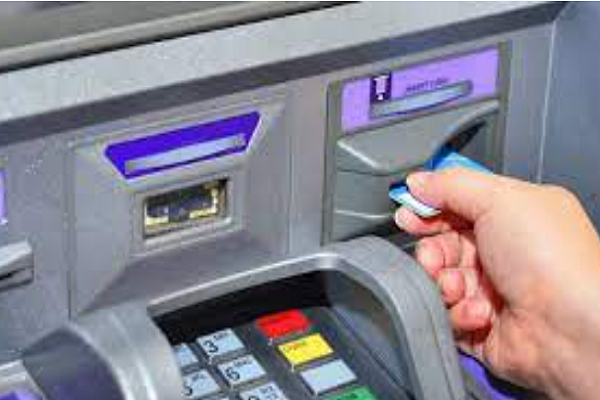
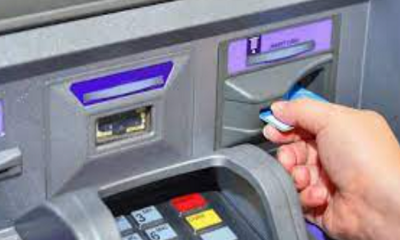
A fraudster has confessed to the police how he stole bank customers’ PINs by pretending to help them operate automated teller machines
The suspect, whose identity was not disclosed in a statement by the Cross River State Police Command, said that he targeted customers who needed assistance at ATM points, withheld their cards and observed them entering their PINs before leaving the premises.
The Cross River State Police Command’s Public Relations Officer, ASP Sunday Eitokpah, disclosed this in a video uploaded to the command’s Facebook page on Tuesday.
Eitokpah said the suspect was arrested on October 6, 2026, over alleged fraud involving unsuspecting ATM users.
Explaining the alleged method, the suspect said he approached customers who appeared to need help and exploited their willingness to trust him.
“I do go to the ATM machine to lie in wait for gullible customers who believe whatever I may tell them, and people that seek for help too,” he said.
He added, “So, if you call for help or assistance from me, what I do is I put the ATM on the cardless transaction mode and withhold your card. You’ll be thinking your card is inside, but your card is not inside.”
According to the suspect, he watched as customers selected the transactions they wanted to carry out and entered their PINs.
He said, “And you’ll choose a transaction which you want to perform. It’s either withdrawal or transfer or inquiry. By the time you click on any of them, ask you to put your password, to put your password, and confirm your password, I will leave the premises.”
Eitokpah said the suspect allegedly memorised customers’ PINs as they entered them, then left the ATM point with the information needed to carry out fraudulent transactions elsewhere.
The customers would subsequently discover that their cards were missing and their accounts had been debited.
Business
NCC, CBN To Warn Companies By Flagging Fraudulent Phone Numbers
“A phone number has also become part of our digital identity, used to access financial services, manage pensions and shop online,” Maida said.

The Nigerian Communications Commission is working with the Central Bank of Nigeria (CBN) to identify recycled phone numbers and numbers flagged for fraudulent activities.
The NCC Executive Vice Chairman, Dr Aminu Maida, disclosed this on Tuesday in Lagos at the commission’s 95th Telecom Consumer Parliament.
Maida said that the proposed verifications under its Telecommunications Identity Risk Management System (TIRMS) would help organisations to identify fraudulent linked phone numbers and reduce the risk of unauthorised access to customers’ accounts and services.
He said phone numbers have become central to how people access digital services.
“A phone number has also become part of our digital identity, used to access financial services, manage pensions and shop online,” Maida said.
Business
Currency Words You Should Know
Appreciation is an increase in a currency’s value under a market-driven exchange-rate system.
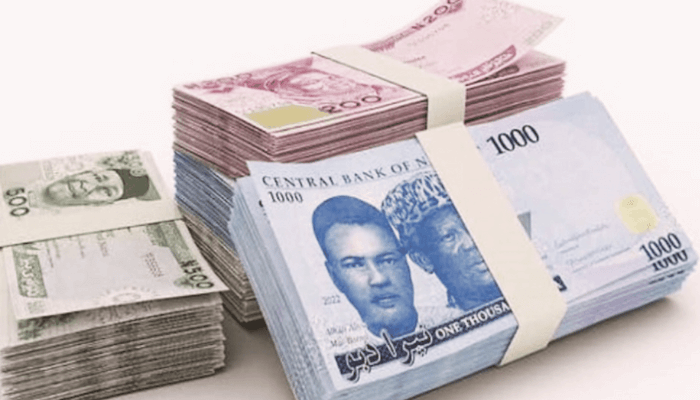
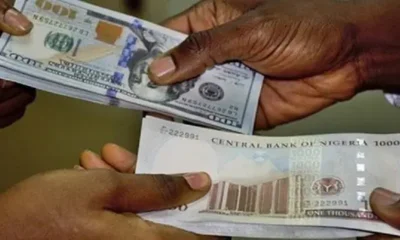
As of October 21, 2026, the Naira is exchanging at the parallel makert at 1370 USD, 1800 British Pound, while the EURO is1500.
Here’s are some words commonly used in currency movement in the foreign exchange market:
Devaluation occurs when authorities deliberately reduce a currency’s official value under a fixed or managed exchange-rate system.
Revaluation occurs when authorities deliberately increase a currency’s official value under such a system.
Depreciation is a decline in a currency’s value under a market-driven exchange-rate system.
Appreciation is an increase in a currency’s value under a market-driven exchange-rate system.
For example, if the exchange rate moves from ₦1,500 per dollar to ₦1,200 per dollar, the naira has appreciated against the dollar because fewer naira are needed to purchase one dollar. If the rate moves from ₦1,200 to ₦1,500 per dollar, the naira has depreciated.


How I steal ATM users’ PINs, defraud them

NCC, CBN To Warn Companies By Flagging Fraudulent Phone Numbers

Currency Words You Should Know

BREAKING: Lagos Govt Declares Today, Thursday Work-Free to Mark 2026 Ìṣẹ̀ṣe Day

Tech Expert, Zuckerberg trains with UFC champions, Adesanya, Alexander

Organ Trafficking: Ekweremadu bags 10 years in UK prison
-

 News2 days ago
JUST IN: Ex-Delta Gov Uduaghan Dies at 71, Oborevwori Mourns
-

 Sports2 days ago
Ronaldo Gets 30-Day Suspension For Portugal Camp Walkout
-

 Sports2 days ago
Mbappé wins Onze d’Or award for 2025/26 season
-
 Business1 hour ago
Currency Words You Should Know
-
 Business2 hours ago
Naira Exchange Rates Wednesday, October 21, 2026
-

 Health15 hours ago
BREAKING: Nigeria Confirms First Ebola Case
-
 Business40 minutes ago
NCC, CBN To Warn Companies By Flagging Fraudulent Phone Numbers
-
 Business3 minutes ago
How I steal ATM users’ PINs, defraud them