
Business
Okonjo-Iweala Challenges Delta State To Become Nigeria’s Fourth Industrial Hubs
Consider Delta’s natural, infrastructural, and human endowments. We’ve heard about them. Abundant natural gas, a coastline with seaports at Warri, Sapele, Burutu, and Asaba.

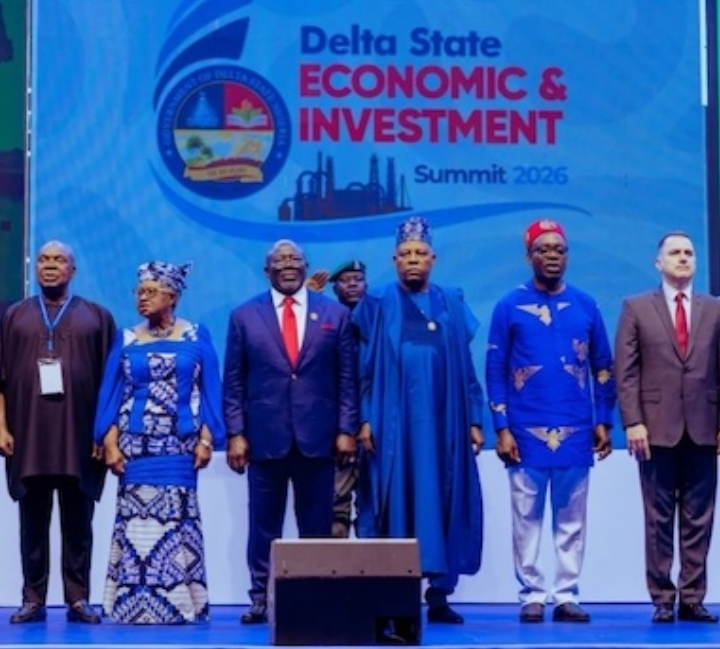
Dr Ngozi Okonjo-Iweala, the Director -General of the World Trade Organisation (WTO) has positioned Delta State, as Nigeria’s next great industrial hub after Lagos, Kano and Port Harcourt.
Okonjo-Iweala expressed the conviction in a keynote address, she delivered during the state’s on-going economic and investment summit in Asaba.
Speaking at the summit, Okonjo-Iweala emphasised that Delta State had the potential to become Nigeria’s next great industrial hub, standing alongside Lagos, Kano, and Port Harcourt, as an engine of the national economy.
Okonjo-Iweala said: “This would be good for Nigeria as a whole. It would help decongest some of our economic hubs like Lagos and Kano that are becoming overcrowded. Lagos alone accounts for about a quarter of Nigeria’s GDP and half of its non-oil GDP.“
Consider Delta’s natural, infrastructural, and human endowments. We’ve heard about them. Abundant natural gas, a coastline with seaports at Warri, Sapele, Burutu, and Asaba.
The Itape-Ajaokuta-Wari rail line. The fertile land of Delta State, solid minerals, 49 tertiary institutions producing young people who want opportunities in the state where they grew up.
”Okonjo-Iweala said, “On the financial front, the state also has some fiscal space. Budget 2025 State of States report ranked Delta 6th of 35 states in overall fiscal performance and 2nd in debt sustainability. I was very happy about that. And when I heard one of the speakers say, you’re not going to borrow, I was smiling. Keep the fiscal prudence because without it, you’re not going to be able to build the Delta State we want.
“If you have to deploy resources, you have to deploy them in a manner that makes the state productive, not wasteful.
The 2025 proposed budget of N1.66 trillion prioritises increased capital expenditure as part of the efforts to move Delta onto a higher growth path.
A stable macro-economic environment at the federal level, exchange rate management, bringing down inflationary pressures, would improve state’s prospects for success.”








BLACK MARKET RATES
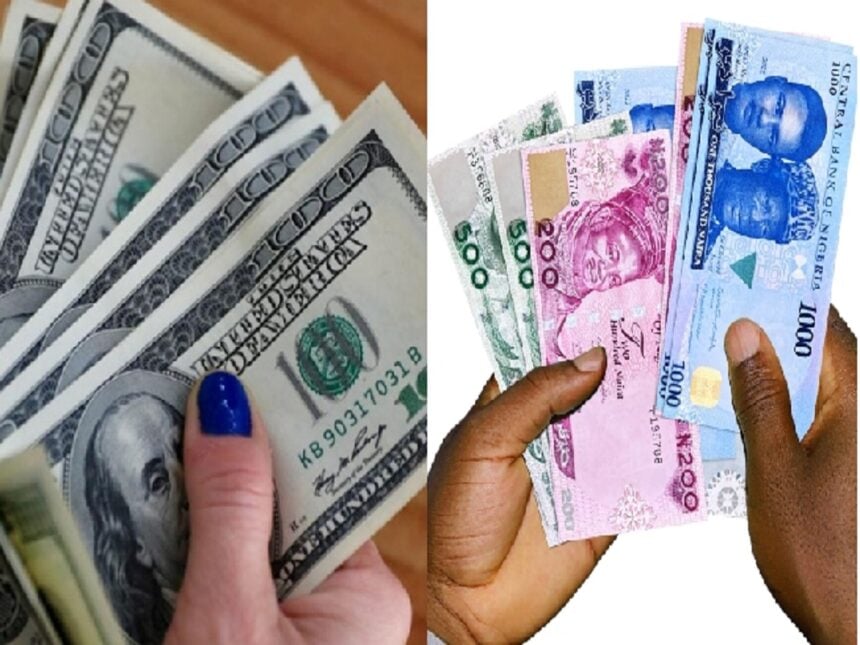
US Dollar (USD) Buy ₦1,400 Sell ₦1,405
Great British Pound(GBP) Buy ₦1,900 Sell: ₦1,920
EURO (EUR) Buy ₦1,590 Sell ₦1,610
Canadian Dollar (CAD) Buy ₦1,020 Sell ₦1,080
South African Rand (ZAR) Buy ₦75 Sell ₦90
Ghana CEDI (GHS) Buy ₦95 Sell ₦110
West African CFA Buy ₦2, 300 Sell ₦2, 400
CENTRAL AFRICAN CFA Buy ₦2,150 Sell 2,250
CBN Exchange Rates
US Dollar (USD) ₦1,346.98
Great British Pound (GBP) ₦1,837 54
EURO (EUR) ₦1,571.52
Swiss Franc (CHF) ₦1,678.89
Chinese Yuan (CNY) ₦200.37
Japanese Yen (Yen) ₦8.46
West African CFA (XOF) ₦2. 40
West African Unit Account (WAUA) ₦1,849. 43
Saudi Riyal (SAR) ₦358.73
South African Rand (ZAR) ₦84.11
Business
NAFDAC Gives Conditions For Reopening Sealed Factories of Alcoholic Manufacturers
The reopening and continued opening of any facility shall be subject to:Full compliance with the nationwide recall directive. Payment of all applicable investigative charges and regulatory fees…
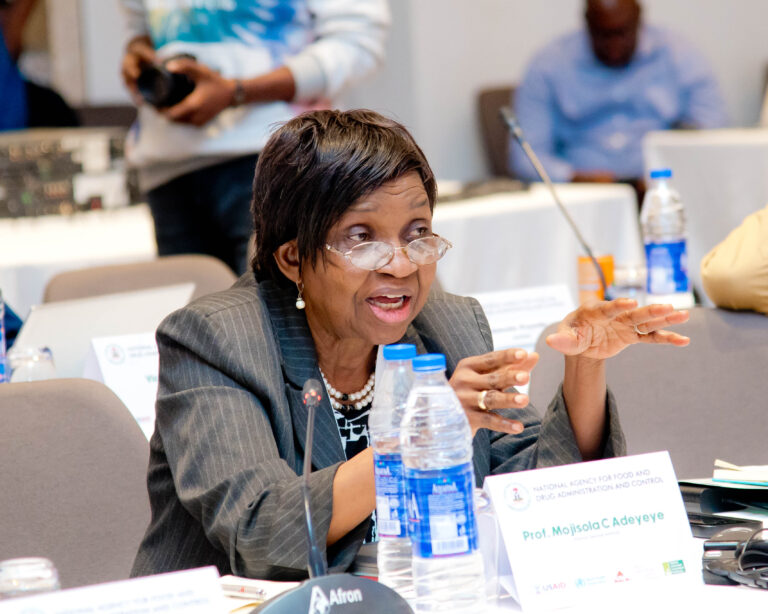
• NAFDAC DG, Prof Mojisola Christianah Adeyeye
The National Agency for Food and Drug Administration and Control (NAFDAC) on Monday gave the conditions for the reopening of sealed factories of alcoholic beverages manufacturers nationwide.
At a press briefing in Lagos, the agency’s Director – General, Prof Mojisola Christianah Adeyeye, also directed the Distillers and Blenders Association of Nigeria (DIBAN), the Association of Food, Beverage and Tobacco Employers (AFBTE), and their member companies who have not comply with the ban on alcoholic beverages packaged in sachets and PET (plastic) bottles below 200ml to do so.
“Affected manufacturers are required to immediately commence a nationwide recall of all alcoholic drinks packaged in sachets and PET bottles below 200ml from distributors, warehouses, and other points within the supply chain and submit to the agency for destruction,” she said.
Emphasising on reopening sealed factories, she said: ” NAFDAC imposed investigative charges on defaulting companies found to have violated regulatory directives relating to the manufacture and distribution of alcoholic beverages in prohibited package sizes.
The affected companies are required to settle the applicable charges within the stipulated period and comply fully with all regulatory directives issued by the Agency.
The Agency wishes to emphasize that all recalled alcoholic products shall be subjected to inventory verification and destruction under NAFDAC supervision in accordance with the terms of the enforcement undertaking. Manufacturers shall bear the full cost of such destruction exercises.
Furthermore, before any sealed facility involved in the production of alcoholic beverages in sachets or PET bottles below 200ml can be reopened, NAFDAC will require satisfactory evidence that the production lines used for the prohibited package sizes have been dismantled, permanently disabled, or reconfigured to prevent the manufacture and packaging of alcoholic products in sachets and PET bottles below 200ml.
Such dismantling or reconfiguration shall be carried out under the direct supervision and verification of NAFDAC officers.
The reopening and continued opening of any facility shall be subject to:Full compliance with the nationwide recall directive. Payment of all applicable investigative charges and regulatory fees.Successful destruction of recalled products under NAFDAC supervision. Verification of the dismantling, reconfiguration, or decommissioning of equipment used for prohibited package sizes.Satisfactory inspection and certification by NAFDAC that the facility is compliant with all regulatory requirements.”
Business
Cybercriminals cloning DStv, other brands to steal bank accounts across Africa
According to cybersecurity company NordVPN, the campaign distributes Remote Access Trojans (RATs) and banking trojans, forms of malware that can give criminals control over infected devices and access to sensitive information.

Cybercriminals are impersonating popular companies and government agencies across Africa in a campaign designed to take over smartphones and bank accounts.
More than 100 fake websites linked to the malware campaign have been identified since August 2025.
Brands including DStv, Takealot and South African Airways, as well as the South African Revenue Service (SARS), are being used to make fraudulent messages and websites appear legitimate.
According to cybersecurity company NordVPN, the campaign distributes Remote Access Trojans (RATs) and banking trojans, forms of malware that can give criminals control over infected devices and access to sensitive information.
The attacks are particularly concerning in South Africa, where Android dominates the mobile operating system market.
NordVPN said the attacks typically begin with social engineering, where criminals send convincing messages through SMS, WhatsApp or social media.
The messages may contain urgent offers or requests involving job opportunities, tax refunds, identity renewals or pension verification.
Victims are then directed to fake websites designed to closely resemble the official websites of trusted organisations.
The sites encourage users to download an Android application. Once installed, the malicious software can operate quietly in the background, including after the smartphone is restarted.


Naira Exchange Rates Tuesday, August 25

NAFDAC Gives Conditions For Reopening Sealed Factories of Alcoholic Manufacturers

BREAKING: Veteran Nollywood Actor Taiwo Hassan ‘Ogogo’ Reportedly Dies at 66

Tech Expert, Zuckerberg trains with UFC champions, Adesanya, Alexander

Organ Trafficking: Ekweremadu bags 10 years in UK prison

SAINT OBI: Between his marriage and his death
-

 Politics3 days ago
Tinubu chairs APC Presidential Campaign Council
-

 Politics2 days ago
APC Chair Dies After Collapse at Kogi Meeting
-

 News2 days ago
Tinubu Names Yari, DG Presidential Campaign Council
-

 News2 days ago
NGE 2026 Conference: Onaiyekan, Mbah, Osigwe, Others to Speak in Enugu
-
 Entertainment2 days ago
BREAKING: Veteran Nollywood Actor Taiwo Hassan ‘Ogogo’ Reportedly Dies at 66
-
 Business13 hours ago
NAFDAC Gives Conditions For Reopening Sealed Factories of Alcoholic Manufacturers
-
 Business4 minutes ago
Naira Exchange Rates Tuesday, August 25