
Health
NCDC Confirms Spread of Lassa Fever As Death Toll Reaches 98
NCDC said five states account for 91 percent of confirmed cases: Ondo, Bauchi, Edo, Taraba, and Ebonyi states. Also, ten local government areas make up 68 percent of confirmed cases: Owo, Akure South, Etsako West, Kirfi, Akoko South-West, Bali, Esan North-East, Bauchi, Toro, and Jalingo.

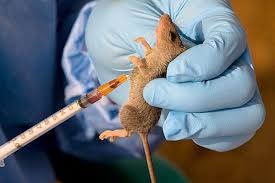
The Nigeria Centre for Disease Control and Prevention has confirmed the spread of Lassa fever across the country, and death of a 31-year-old physician who died of the disease after he had returned from the United Kingdom.
The NCDC, in a statement said that the Ondo State Ministry of Health confirmed that a 31-year-old physician, was managed at a private health facility in Ondo State after returning from the UK but died after.
The agency reports that the number of Lassa fever cases has risen to 535 out of 2,728 suspected cases, with 98 deaths recorded across 14 states in Nigeria as of March 2, 2025.
NCDC said five states account for 91 percent of confirmed cases: Ondo, Bauchi, Edo, Taraba, and Ebonyi states. Also, ten local government areas make up 68 percent of confirmed cases: Owo, Akure South, Etsako West, Kirfi, Akoko South-West, Bali, Esan North-East, Bauchi, Toro, and Jalingo.
To strengthen both national and international coordination efforts, NCDC says that all necessary in-country structures had been mobilised to ensure proper monitoring of contacts.
NCDC states that Lassa fever cases occur year-round, with peak transmission periods typically from October to May.





Health
Medical Academy Warms Nigerians New COVID-19 Variant Spreading
The variant was first detected in Ontario, Canada, on May 2, 2026, and has since been reported in the United States, Canada, Spain, France, the Netherlands, Israel, Singapore, Brazil, Argentina, Australia and New Zealand.

A new COVID-19 variant called PJ.2.1 is spreading across several countries, according to the Academy of Medical Sciences of Nigeria, urging
In a public health advisory, the Academy said the World Health Organisation (WHO) had classified PJ.2.1 as a “Variant Under Monitoring”, although its current assessment indicates a low additional global public health risk.
According to the advisory signed by the Chairman of the Academy’s Rapid Response Committee, Prof. Boaz Adegboro, and Academy President, Prof. Joseph Ahaneku, the variant was first detected in Ontario, Canada, on May 2, 2026, and has since been reported in the United States, Canada, Spain, France, the Netherlands, Israel, Singapore, Brazil, Argentina, Australia and New Zealand.
The WHO had counted sequences from 18 countries as of November 8, 2026.
The body, however, cautioned that available evidence remains limited, making continued surveillance necessary to establish the variant’s behaviour and potential impact.It said preliminary studies suggest that PJ.2.1 may spread more efficiently than some other circulating Omicron sub-lineages, but there is currently no evidence that it causes more severe illness.

The Nigeria Centre for Disease Control and Prevention (NCDC) has cautioned that the country remains not Ebola-free, even though no new cases have been recorded since an imported infection was confirmed last month.
NCDC Director-General Dr Jide Idris issued the update on Tuesday, stressing the need for continued nationwide vigilance while Nigeria awaits clearance from the World Health Organization (WHO). He noted that 28 of the 62 contacts linked to the index case—a traveller from Uganda who tested positive for Bundibugyo virus disease on October 20—were still under monitoring as of November 9. The other 34 had completed their individual 21-day follow-up periods.
“Because they have left the quarantine does not mean we are Ebola-free. We can only be declared Ebola-free after another 21 days again. And it is not by ourselves to declare ourselves Ebola-free. WHO must be involved,” Idris said. He added that the absence of new cases does not end the response, as each contact’s monitoring period runs separately based on their last possible exposure.
The agency is maintaining contact tracing, laboratory testing, investigation of alerts, infection prevention measures, and surveillance at airports and land borders in collaboration with the Federal Ministry of Health and Social Welfare, the Federal Capital Territory Administration, state authorities, and partners. Alerts from states including Adamawa, Rivers, and Borno have so far tested negative.
Idris clarified that identification as a contact does not mean a person has the virus; monitoring allows early detection of symptoms and a rapid public health response. He urged healthcare workers to stay alert, take travel and exposure histories, follow infection control protocols, and report suspected cases promptly.
Nigeria currently has no confirmed active cases following the medical evacuation of the index patient (and her husband) to Switzerland. Under WHO protocols, a country is typically declared free of Ebola only after 42 days without new confirmed or probable cases.
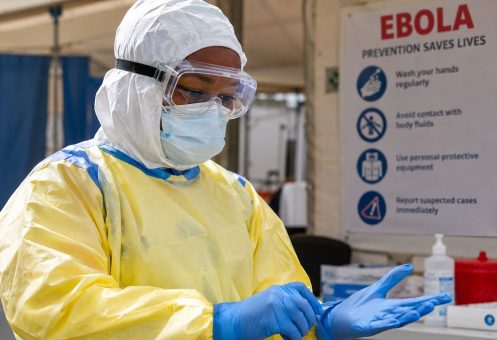
The Nigeria Centre for Disease Control and Prevention (NCDC) has reported two new suspected cases of Ebola virus disease in the country’s North-East region.
In an update released on Saturday, October 31, 2026, the agency said the two individuals have been isolated. Contact identification and listing are ongoing, and laboratory testing is underway to confirm or rule out the infection.
“Being classified as suspected cases does not mean they are confirmed Ebola cases; confirmation is subject to laboratory results,” the NCDC stated. The agency advised the public to maintain good hand hygiene, practise enhanced sanitation, and follow guidance from public health authorities. Further updates will be provided as verified information becomes available.
The development comes after Nigeria confirmed its first Ebola case in more than a decade on October 20. That case involved a 42-year-old woman who had travelled from Uganda to Abuja and tested positive for the Bundibugyo strain of the virus. She was later medically evacuated to Switzerland along with her husband.
Health authorities continue to monitor contacts linked to the earlier confirmed case while strengthening surveillance nationwide.


El-Rufai makes u-turn on wiretapping

Katsina Suspends Emir of Daura Over Sexual Allegations By Polish Tourist

Mother, daughter crushed to death by truck in Abuja

BREAKING: Lagos Govt Declares Today, Thursday Work-Free to Mark 2026 Ìṣẹ̀ṣe Day

Tech Expert, Zuckerberg trains with UFC champions, Adesanya, Alexander

Why we Increase the 2025 Budget by ₦700bn – Bichi
-

 News3 days ago
Emir, 92, Under Probe For Alleged Palace Romance
-

 News3 days ago
Tinubu Tasks APC on Winning Lagos in 2027 general elections
-

 Business3 days ago
Naira Exchange Rates, Monday 23 Nov 2026
-

 Sports3 days ago
Zenith Bank/Delta Principals’ Cup kicks off November 26
-
 News2 days ago
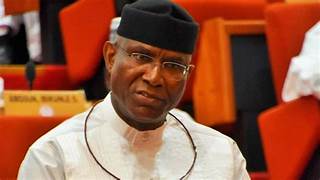
Omo-Agege survives assassination attempts at campaign rally in Delta, four dead
-

 Politics3 days ago
Atiku: I’m in 2027 presidential race to win
-

 Health2 days ago
Medical Academy Warms Nigerians New COVID-19 Variant Spreading
-

 Sports2 days ago
Nigeria Lacks Infrastructure To Host FIFA World Cup – Infantino