
International
NATO begins unprecedented air drill in ‘show of strength’


NATO will begin the largest air force deployment exercise in Europe in the alliance’s history on Monday in a display of unity toward partners and potential threats such as Russia.
The German-led “Air Defender 23” will run until June 23 and include some 250 military aircraft from 25 NATO and partner countries including Japan and Sweden, which is bidding to join the alliance.
Up to 10,000 people will participate in the drills intended to boost interoperability and preparedness to protect against drones and cruise missiles in the case of an attack on cities, airports or sea ports within NATO territory.
Presenting the plans last week, Lieutenant General Ingo Gerhartz of the German Luftwaffe said “Air Defender” was conceived in 2018 in part as a response to the Russian annexation of Crimea from Ukraine four years before, though he said it was “not targeted at anyone”.
He said that while NATO would defend “every centimetre” of its territory, the exercise would not “send any flights, for example, in the direction of Kaliningrad,” the Russian enclave bordering alliance member states Poland and Lithuania.
“We are a defensive alliance and that is how this exercise is planned,” he said.
US Ambassador to Germany Amy Gutmann said the drill would show “beyond a shadow of a doubt the agility and the swiftness of our allied force” and was intended to send a message to countries including Russia.
“I would be pretty surprised if any world leader was not taking note of what this shows in terms of the spirit of this alliance, which means the strength of this alliance, and that includes Mr Putin,” she told reporters, referring to the Russian president.
“By synchronising together, we multiply our force.”
Russia’s war on Ukraine has galvanised the Western military alliance set up almost 75 years ago to face off against the Soviet Union.
Finland and Sweden, which long kept an official veneer of neutrality to avoid conflict with Moscow, both sought membership in NATO after Russia’s February 2022 invasion.
Under NATO’s Article Five, an attack on one member is considered an attack on all.
– ‘Great power competition’ –
The exercise will include operational and tactical-level training, primarily in Germany, but also in the Czech Republic, Estonia and Latvia. German Chancellor Olaf Scholz will visit pilots based at the Schleswig-Jagel airfield in northern Germany on Friday.
General Michael Loh, director of the US Air National Guard, said NATO’s duties were at an “inflection point”.
“A great deal has changed on the strategic landscape throughout the world, especially here in Europe,” he said.
The exercise will focus on “supplementing the permanent United States presence in Europe” as well as providing training “on a larger scale than what was usually accomplished on the continent”, Loh added.
He said many of the alliance pilots would be working together for the first time.
“It’s about fostering the old relationships that we have but also building new ones with this younger generation of airmen,” he said.
“And so this is about now establishing what it means to go against a great power in a great power competition.”
Gutmann said that while there were no plans to make “Air Defender” a recurring exercise, she added: “We have no desire for this to be the last.”
Asked about potential disruption to civilian air transport during the exercise, Gerhartz said the planners would do “everything in our power” to limit flight delays or cancellations.
German authorities had warned that flight schedules could be impacted by the drills.


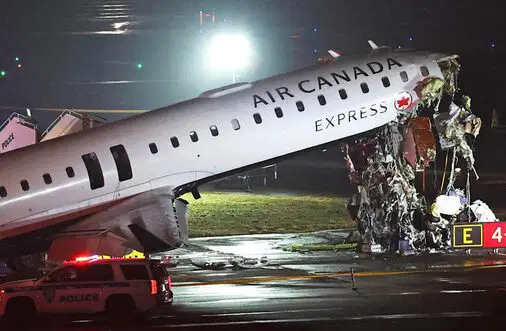
Two pilots were killed and at least 41 people were hospitalized after an Air Canada regional jet struck a Port Authority fire truck on a runway at LaGuardia Airport late Sunday night, officials said.
The incident occurred around 11:40 p.m. on March 22, 2026, when Air Canada Flight 8646 — operated by Jazz Aviation as an Air Canada Express service — was landing after departing from Montreal.
The Bombardier CRJ-900 aircraft, carrying 72 passengers and four crew members, collided with the airport’s Aircraft Rescue and Firefighting vehicle, which was crossing the runway in response to a separate incident.
Both the captain, identified as 30-year-old Antoine Forest, and the first officer, Mackenzie Gunther, died in the crash. The impact heavily damaged the cockpit area of the jet.
At least 41 passengers and crew were transported to area hospitals with injuries ranging from minor to serious, while additional people were treated at the scene. Two Port Authority workers in the fire truck were also reported injured.
Passengers described the collision as sudden and violent, with some crediting the pilots’ actions for helping mitigate a worse outcome.
CCTV and other video footage captured the moments leading up to and during the collision, showing the aircraft striking the emergency vehicle. Air traffic control audio reportedly included urgent calls of “Stop, truck 1. Stop” just before impact.
LaGuardia Airport was temporarily closed following the crash, causing widespread flight delays and cancellations across the New York area. It reopened on Monday at reduced capacity as investigators continued their work on the scene.
The U.S. National Transportation Safety Board (NTSB), along with Canadian aviation authorities and the Port Authority of New York and New Jersey, have launched a full investigation into the runway incursion and collision.
Preliminary reports suggest the fire truck had been cleared to cross the active runway.
Air Canada expressed condolences to the families of the deceased pilots and said it is cooperating fully with investigators.
“Our thoughts are with everyone affected by this tragic event,” the airline stated. This marks a rare fatal ground collision at a major U.S. airport in recent years, raising fresh questions about runway safety protocols and vehicle movements during active landings.
International
Middle East War: IEA recommends options to ease oil price pressures on consumers, Motorists
Work from home where possible. Displaces oil use from commuting, particularly where jobs are suitable for remote work.

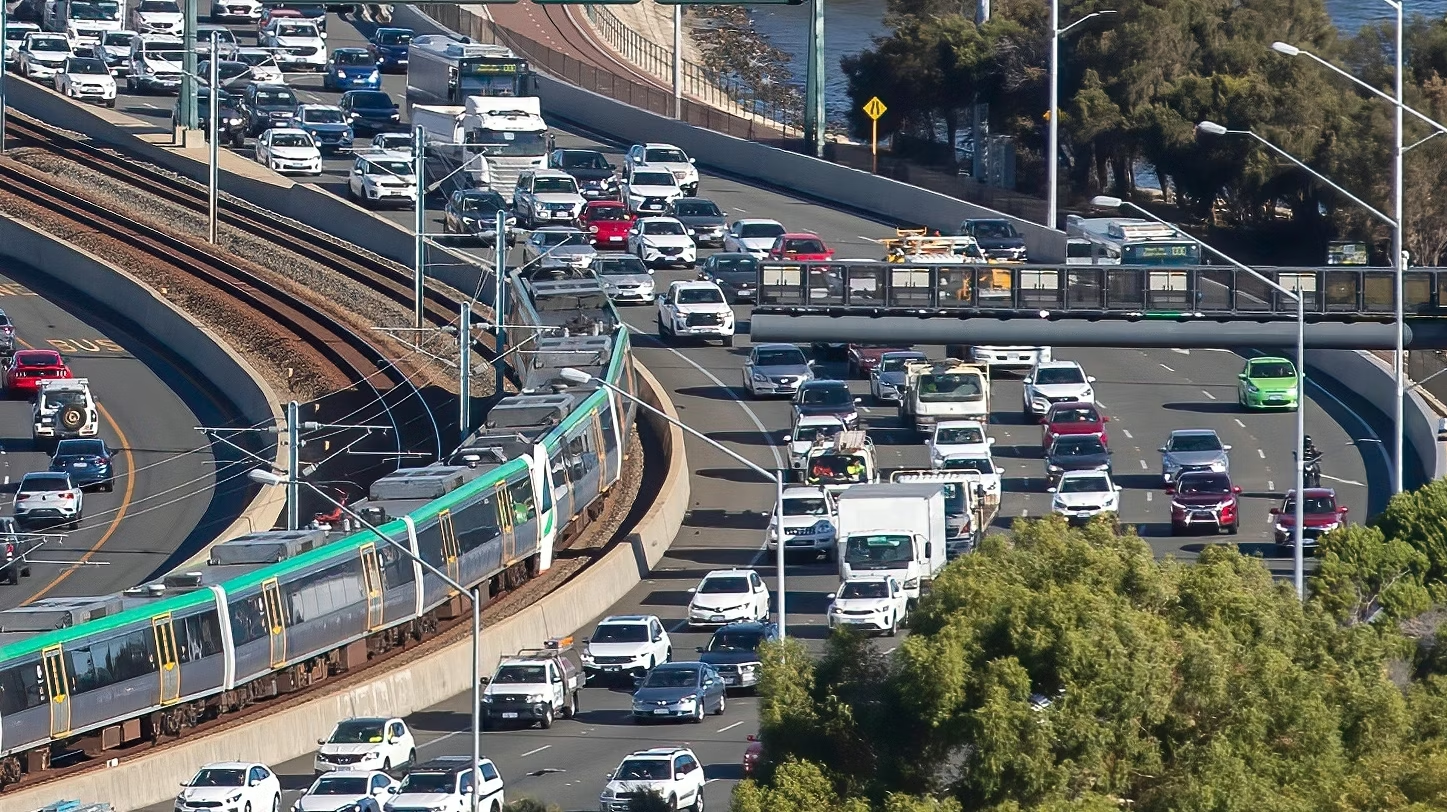
Image credit : Shutterstock
Immediate actions to reduce demand:
1. Work from home where possible. Displaces oil use from commuting, particularly where jobs are suitable for remote work.
2. Reduce highway speed limits by at least 10 km/h. Lower speeds reduce fuel use for passenger cars, vans and trucks.
3. Encourage public transport. A shift from private cars to buses and trains can quickly reduce oil demand.
4. Alternate private car access to roads in large cities on different days.
Number-plate rotation schemes can reduce congestion and fuel-intensive driving.
5. Increase car sharing and adopt efficient driving practices. Higher car occupancy and eco-driving can lower fuel consumption quickly.
6. Efficient driving for road commercial vehicles and delivery of goods
Better driving practices, vehicle maintenance and load optimisation can cut diesel use.
7. Divert LPG use from transport
Shifting bi-fuel and converted vehicles from LPG to gasoline can preserve LPG for cooking and other essential needs.
8. Avoid air travel where alternative options exist
Reducing business flights can quickly ease pressure on jet fuel markets.
9. Where possible, switch to other modern cooking solutions
Encouraging electric cooking and other modern options can reduce reliance on LPG.
10. Leverage flexibility with petrochemical feedstocks and implement short-term efficiency and maintenance measures
Industry can help free up LPG for essential uses while reducing oil consumption through quick operational improvements
International
Hong Kong police can now demand phone passwords under new national security rules
Those who refuse could face up to a year in jail and a fine of up to HK$100,000 ($12,700; £9,600), and individuals who provide “false or misleading information” could face up to three years in jail.

Image credit : Getty images
Hong Kong police can now demand phone or computer passwords from those who are suspected of breaching the wide-ranging National Security Law (NSL).
Those who refuse could face up to a year in jail and a fine of up to HK$100,000 ($12,700; £9,600), and individuals who provide “false or misleading information” could face up to three years in jail.
It comes as part of new amendments to a bylaw under the NSL that the government gazetted on Monday.
The NSL was introduced in Hong Kong in 2020, in wake of massive pro-democracy protests the year before.
Authorities say the laws, which target acts like terrorism and secession, are necessary for stability – but critics say they are tools to quash dissent.
The new amendments also give customs officials the power to seize items that they deem to “have seditious intention”.
Monday’s amendments ensure that “activities endangering national security can be effectively prevented, suppressed and punished, and at the same time the lawful rights and interests of individuals and organisations are adequately protected”, Hong Kong authorities said on Monday.
Changes to the bylaw was announced by the city’s leader, John Lee, bypassing the city’s legislative council
(BBC)


APC Holds National Convention on Saturday

What Ex-INEC Commissioner Igini says about 2026 Electoral Act

UK revises visa fees upward from April

Tech Expert, Zuckerberg trains with UFC champions, Adesanya, Alexander

Organ Trafficking: Ekweremadu bags 10 years in UK prison

SAINT OBI: Between his marriage and his death
-

 Sports2 days ago
Int’l friendlies: 15 players open Eagles camp in Turkey
-

 Sports2 days ago
Tributes To NRA President Sanni Zubairu
-

 Sports2 days ago
NBF Kida’s board to remain in office until October , says FIBA
-
 Business2 days ago
Dangote: Middle East crisis might take us back to ‘Work from home’ COVID era
-

 Crime3 days ago
Bill Cosby Ordered to Pay $19.25 Million After Jury Finds Him Liable for 1972 Sexual Assault
-
 International3 days ago
Two Pilots Killed, Dozens Injured After Air Canada Jet Collides with Fire Truck
-

 News2 days ago
Nigeria partner Japan to redevelop Abuja Master Plan
-

 Business2 days ago
Niger Delta Chamber Investment Summit Targets $5bn, 500,000 Jobs