
News
Military Vows To Deal With Looters, Appeals To Protesters To Avoid Mayhem

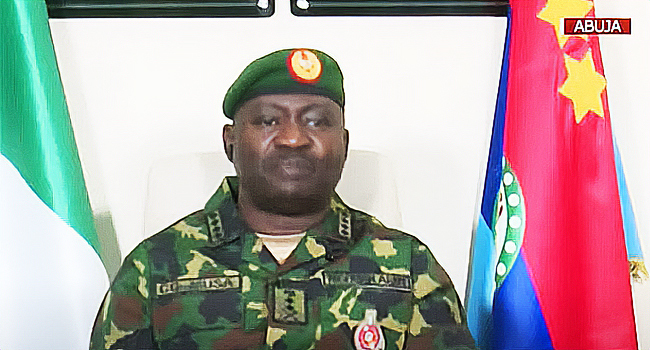
The military on Friday warned looters taking advantage of the #EndBadGovernance nationwide protests to desist from the destruction of lives and properties.
At a press conference in the nation’s capital Abuja on the second day of the rallies against economic hardship and high cost of living, the Chief of Defence Staff (CDS), General Christopher Musa, said the extent of destruction experienced on the first day of the demonstrations was “crazy”.
He said the Armed Forces will take action and won’t allow the looting and destruction to fester.
The defence chief said the Bola Tinubu administration has been in power for one year and the government has been doing its best to boost economic activities.
General Musa said the economic crisis and high cost of living in Nigeria is a global phenomenon. He urged Nigerians to give the government time to address the challenges.
He said, “So, we want to call on all Nigerians to understand the government. If you have grievances, which I know people have, a lot of challenges here and there, and it is not only in Nigeria alone; everywhere in the world is facing one economic or security crisis or the other. And so, it is important to understand that we are not alone.
“But what we can do is not allow criminals and individuals that have lost out to take advantage of this to destroy our country. We should realise that these destructions, monies have to be used to replace them so that we can move forward.”
Youths Protest High Living CostTension was palpable in parts of Nigeria on Thursday as the much-touted #EndBadGovernance protests finally kicked off in almost all the 36 states of the Federation and the Federal Capital Territory (FCT), Abuja.
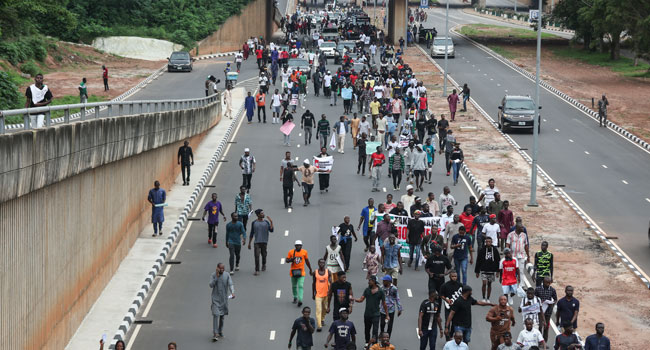
On the first and second day of the protests, policemen were seen dispersing the demonstrators, mostly youths, using tear gas, even as civil society organisations (CSOs) condemned the action of the police.
The protests turned awry when some hoodlums took advantage of the demonstrations and looted public and private assets.
In a bid to curb the looting, violence and other after-effects of the protests, the Kano, Borno, Yobe, Katsina, Nasarawa, Jigawa and other state governments imposed curfews in volatile local government areas (LGAs) in their states.
Some deaths have also been recorded, as claimed by Amnesty International. The Inspector General of Police Kayode Egbetokun said a policeman was murdered, some cops injured, and police stations burnt.
Propagated on social media, the nationwide protests against economic hardship started on Thursday, August 1, 2024, and have been scheduled to stretch till August 10 across all states of the Federation as well as the nation’s capital Abuja.
Prices of food and basic commodities have gone through the roof in the last months, as Nigerians battle one of the country’s worst inflation rates and economic crises sparked by the government’s twin policies of petrol subsidy removal and unification of forex windows.
Some of the demands of the protesters include the restoration of petrol subsidies and the forex regime.
They also want the government to address food shortages, unemployment and wasteful spending by those in power. Other demands are immediate reforms of the electoral umpire INEC and anti-graft agency EFCC with renewed vigour in the fight against corrupt politicians.



News
Police must pay transport fares, says AIG
” No police officer has the right to enter your vehicle without paying. We should assist one another willingly, not by force,” he said.

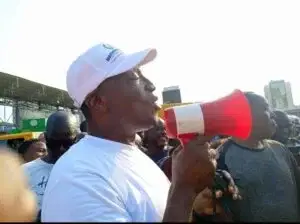
• The Assistant Inspector-General of Police(AIG) in charge of Zone 2 Command, Mr Olohundare Jimoh, speaking with transporters at Obalende garage, Lagos State, on Wednesday.
The Assistant Inspector-General of Police, Zone 2 Command, Mr Olohundare Jimoh, has declared that officers must pay fares before boarding commercial vehicles, warning against abuse of authority.
Jimoh spoke on Wednesday at Obalende garage during a sensitisation meeting with drivers and transport workers marking National Police Day 2026.
He stressed that relations between police and the public must be based on partnership, not coercion, urging both sides to support each other voluntarily.
“No police officer has the right to enter your vehicle without paying. We should assist one another willingly, not by force,” he said.
Jimoh called for stronger cooperation to maintain safety and order on roads, insisting there was no conflict between officers and transport unions.
“I don’t collect money from officers. We don’t arrest people arbitrarily. If you have issues with any officer, report directly to me,” he said.
(Vanguard)
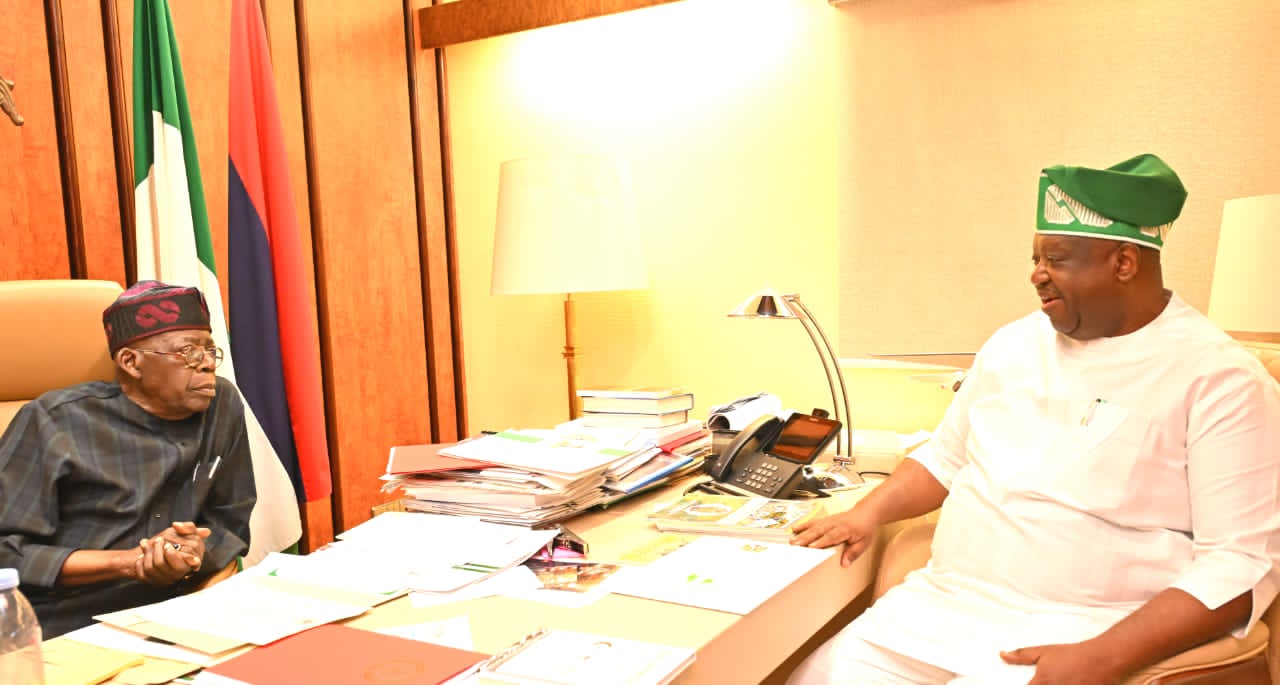
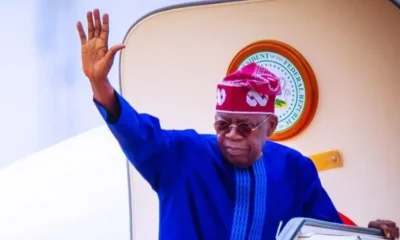
President Bola Ahmed Tinubu will leave for Jos tomorrow to commiserate with the state government and residents over recent deadly gun attacks that lefts dozens dead.
This was following Governor Caleb Mutfwang’s security briefing to the President on the recent violent attack in Angwan Rukuba, Plateau State.
During the meeting on Wednesday at the presidential villa in Abuja, Governor Caleb Mutfwang told Mr President that although security forces have restored calm after fresh disturbances involving looters on Wednesday morning, following the deadly Palm Sunday attack that left more than a dozen dead and many others injured.
He said that investigations are continuing to determine the identities or motives of the attackers who are yet to be apprehended .
Presidency source said that President Tinubu was initially scheduled for a planned trip to Ogun State to flag off operations at the Gateway International Cargo Airport on Thursday.
From Jos, the President will travel to Lagos to observe Good Friday.
On Saturday, April 4, he will visit Ogun State to commission projects including the cargo airport.
He will then return to Lagos during the Easter holiday to commission several state infrastructure projects, including the Ojota/Opebi Link Bridge.
Before heading back to Abuja, the president will visit Bayelsa State on April 10 to commission projects completed under Governor Duoye Diri.
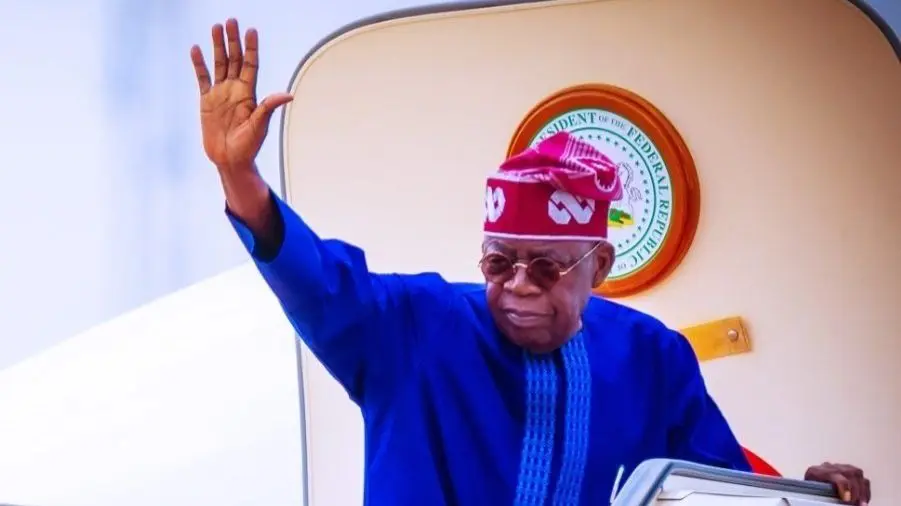
President Bola Ahmed Tinubu will tomorrow embark on a visit to Jos, Plateau State, as the first leg of a five-state tour across the country.
The Presidency announced that the President has postponed his scheduled trip to Ogun State to enable him to commence the series of official visits.
Details of the remaining four states in the tour are expected to be released by the Presidency in due course.
The development comes as President Tinubu continues nationwide engagements aimed at assessing development projects, interacting with stakeholders, and addressing key national issues in the respective states.
Further updates on the itinerary will be communicated as the visits progress.


INEC Dismisses Calls for Chairman’s Removal

Ebonyi: Gunmen Assasinate Another Traditional Ruler

From South Africa to US, ‘Cicada’ COVID-19 variant spreading

Tech Expert, Zuckerberg trains with UFC champions, Adesanya, Alexander

Organ Trafficking: Ekweremadu bags 10 years in UK prison

SAINT OBI: Between his marriage and his death
-
 Business2 days ago
33 Nigerian Banks Beat CBN’s Recapialisation with ₦4.65trn Combined Capital Base
-
 Politics2 days ago
BREAKING: INEC Withdraws Recognition of David Mark’s ADC
-

 Sports2 days ago
FirstBank Sponsors Samuel Okwaraji U-16 Football Championship 2026
-
 News2 days ago
JUST IN: Tinubu Heads to Jos Tomorrow, Postpones Ogun Trip for 5-State Visits
-

 Entertainment2 days ago
Super Eagles Iwobi to launch music album ‘More To Life’
-
 News2 days ago
Easter: FG declares Friday, Monday public holidays
-

 Politics2 days ago
Arise News Anchor Ikokwu in Political Race for Reps Seat
-
 News2 days ago
Gas Leak in Ogun School: 30 Students, Teacher Hospitalised