
Business
Manufacturers Kick Against 15% Increment in Port Tariffs; Give Reasons
Many manufacturers who operate as tenants in NPA facilities will also face escalated costs, which could significantly disrupt the slight moderation in the mounting challenges that has bedeviled the manufacturing sector in recent times.


▪︎Segun Ajayi-Kadir, MAN Director-General
The Manufacturers Association of Nigeria (MAN), having consulted widely with its members across the country, expresses grave concern over the proposed 15% increase in port-related charges by the Nigerian Ports Authority (NPA).
In a position statement released by Segun Ajayi-Kadir, MAN Director-General, on Sunday, said that the proposed increment is coming up at a time when businesses are struggling with the rising cost of operations, high rate of foreign exchange, astronomical energy costs, and general economic uncertainties, imposing additional financial burdens on manufacturers through increased port tariffs will exacerbate the challenges faced by the real sector.
Port Operations and Their Impact on Manufacturing
Ports are the gateway to international trade and play a crucial role in the efficiency and cost-effectiveness of business operations.
According to the United Nations Conference on Trade and Development (UNCTAD) 80% of Nigeria’s traded goods are transported by sea, with 70% of total imports and exports in West and Central Africa destined for Nigeria.
This underscores the critical role Nigerian ports play in facilitating trade and industrial productivity.
For manufacturers, port-related charges constitute significant indirect costs, as most raw materials and industrial machinery are imported through these ports.
Any increase in charges will have a ripple effect, leading to higher production costs, increased inflationary pressures, and reduced competitiveness of locally manufactured goods.
Many manufacturers who operate as tenants in NPA facilities will also face escalated costs, which could significantly disrupt the slight moderation in the mounting challenges that has bedeviled the manufacturing sector in recent times.
The Economic Realities and Global Competitiveness
Nigeria’s current economic climate is characterized by rising inflation, foreign exchange challenges, and declining industrial capacity utilization.
Many businesses are experiencing worrying downturn due to unsustainable operating costs. Increasing port tariffs is therefore ill-timed and could signal a departure from government’s avowed efforts and commitment to the ease of doing business.
It is inevitable that this additional strain on industrial activities will ultimately lead to reduce capacity utilization and possibly job losses.
Furthermore, Nigeria must remain competitive in regional trade. Neighboring countries with more efficient and cost-effective ports will become far more attractive alternatives, leading to increased cargo diversion.
This will not only reduce revenue for the Nigerian government but will encourage smuggling and other untoward trade practices that weaken our economy.
Alternative Approaches to Revenue Generation
While we acknowledge the need for revenue generation, increasing port tariffs could be counterproductive in the long run.
The real issues affecting port revenue include:
Port congestion and inefficiency:
Reducing turnaround time for vessels and improving cargo-clearing processes can significantly boost revenue.
High demurrage charges:
Addressing bureaucratic bottlenecks that delay cargo clearance will ensure faster throughput and more efficient revenue collection. Infrastructure investment: Improving port infrastructure will enhance operational efficiency and attract more business, leading to natural revenue growth.
Competitive pricing strategies:
Instead of raising tariffs, aligning Nigerian port charges with global best practices will encourage more trade volume and increase overall earnings.
Our Appeal to the Nigerian Ports Authority
The Manufacturers Association of Nigeria’s implores the NPA to shelve the proposed 15% tariff increase and instead, collaborate with stakeholders to explore sustainable alternatives for revenue generation.
Increasing tariffs in the current economic climate will have dire consequences, including:
1. Increased cost of production, leading to higher prices of goods and fanning inflation.
2. Reduced competitiveness of Nigerian manufacturers in local and international markets.
3. Increased smuggling due to high costs at Nigerian ports compared to neighboring countries. 4. Decline in government revenue due to lower cargo turn out and manufacturing downturn.
Rather than imposing additional financial burdens on businesses, we propose a stakeholder dialogue to explore strategies for enhancing port efficiency, reducing operational bottlenecks, and creating a more business-friendly environment that will ultimately lead to increased revenue without undermining industrial growth and competitiveness.
We earnestly advocate for caution and deep reflection on the part of the NPA, as a key stakeholder in Nigeria’s economic development.
NPA’s consultation with key economic actors after it has decided on the increase is tantamount to putting the cart before the horse and does not demonstrate goodwill.
We call on NPA to rescind the planned increase in order to avert a monumental downturn in the fortunes of businesses in Nigeria.
The manufacturing sector can ill-afford such an increase at this time; it runs against the present administration’s efforts at making Nigeria a trading hub in the West African sub-region, and would definitely constitute a drag in the efforts of government to stabilize the economy in the year 2025.
Business
Dangote Refinery’s IPO Ends Tomorrow
“The level of investor interest reflects growing confidence in our business and in the strong financial results we have delivered,” the company said.
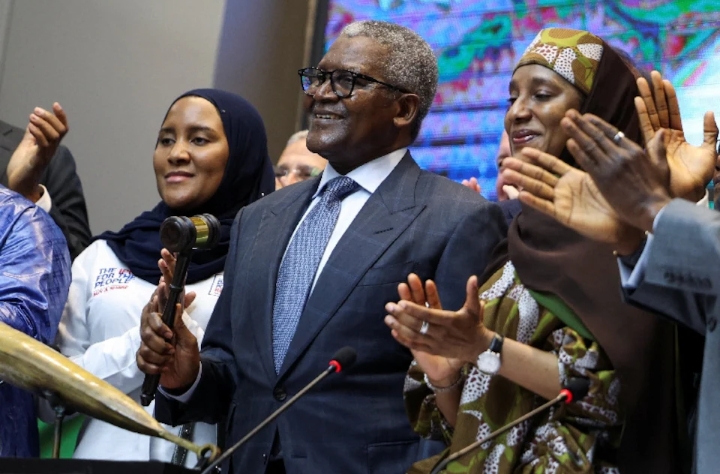
[File photo] Opening ceremony of Dangote Refinery’s IPO on the NGX, September 14,2026
Dangote Petroleum Refinery & Petrochemicals has confirmed that its Initial Public Offering (IPO) will close on Tuesday, 27 October 2026 as scheduled, with no extension.
In a statement, the management said that the IPO has become a historic ownership moment, an opportunity for Africans at home and abroad to own a stake in one of the continent’s most strategic industrial assets.
“Investors recognise that this refinery is not merely an energy asset. It is a platform for industrial growth, foreign-exchange generation, regional trade, energy security and economic development across Africa,” management said.
The offer was structured to ensure ordinary investors participate alongside institutions, broadening ownership of the world-class asset.
“The level of investor interest reflects growing confidence in our business and in the strong financial results we have delivered,” the company said.
Business
Dangote Visit London Stock Exchange Ahead of November Cement Listing
Unlike an initial public offering, a secondary listing would let Dangote Cement, already listed on the Nigerian Exchange, set up an additional presence in London.
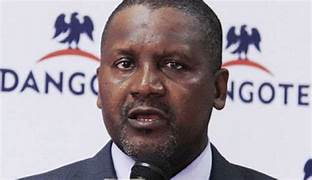
Aliko Dangote visited the London Stock Exchange on Friday, October 23, 2026, as Dangote Cement Plc prepares a proposed $1 billion share sale and a secondary listing in the United Kingdom.
The company is reportedly targeting November 2026 for the listing, subject to market conditions and regulatory approval.
A video circulating on social media captured the visit, with exchange officials and attendees welcoming Africa’s richest man.
The trip is part of efforts to pull international investment into his business empire.
The proposed deal could see Dangote Cement offer about 10% of its equity to international investors, potentially raising roughly $1 billion.
The final timetable is not fixed and remains subject to market conditions and regulatory requirements.
Unlike an initial public offering, a secondary listing would let Dangote Cement, already listed on the Nigerian Exchange, set up an additional presence in London.
That could raise the company’s visibility with international institutional investors, including pension funds, asset managers and other investment firms.
The share sale has not been completed. Its final structure, valuation and pricing are still subject to confirmation.
Business
Olagunju to head JPMorgan’s Proposed Nigerian Merchant Bank
The proposed bank would expand JPMorgan’s presence beyond its representative office in Lagos. It could undertake a broader range of regulated banking activities after securing a final licence.

The Central Bank of Nigeria has granted JPMorgan approval-in-principle to establish a merchant bank in Nigeria.
The regulator also approved Adedapo Adedayo Olagunju as Managing Director of the proposed JPMorgan Merchant Bank Nigeria Limited.
The approval came on Friday, October 23, 2026. The bank has not received its final operating licence.
Olagunju has led JPMorgan’s West African operations since 2018.
He is an Oxford-trained banker with more than two decades of experience in treasury management, financial markets, institutional banking and structured finance.
His appointment puts him in line to head the American bank’s proposed Nigerian merchant bank once final licensing is completed.
The CBN also approved four non-executive directors and three independent non-executive directors for the proposed institution.
The proposed bank would expand JPMorgan’s presence beyond its representative office in Lagos. It could undertake a broader range of regulated banking activities after securing a final licence.


FG Approves ₦70k Transport Allowance for Civil Servants

Suffocation, Overcrowding Kill 37 Niger Miners – Panel

Nigeria’s First Imported Ebola Patient Moved to Switzerland

BREAKING: Lagos Govt Declares Today, Thursday Work-Free to Mark 2026 Ìṣẹ̀ṣe Day

Tech Expert, Zuckerberg trains with UFC champions, Adesanya, Alexander

Organ Trafficking: Ekweremadu bags 10 years in UK prison
-

 News2 days ago
BREAKING: Former Arise News Anchor, Constance Ikokwu Appointed NDC National Campaign Council Spokesperson
-
 Business2 days ago
Dangote Visit London Stock Exchange Ahead of November Cement Listing
-

 Business2 days ago
Naira To Dollar, Pound, Euro…Rate Monday, October 26
-

 International2 days ago
Brazil’s Lula Wins Fourth Term In Presidential Runoff
-
 Health2 days ago
EBOLA: Lagos Heightens Watch at Airports After Abuja Case
-
News2 days ago
Sanwo-Olu: Opebi-Ojota Link Bridge Will Open Before Christmas
-

 Health2 days ago
Ebola: Nigeria Sends Back Swiss Woman Via Medivac Plane
-
 Business2 days ago
History of Naira Revaluation and Devaluation (1973–2026) (Part 2)