
Business
MAN Supports 15% Import Tariff on Petrol and Diesel


A Step Towards Strengthening Local Content and the Patronage of Made-in-Nigeria Preamble
The Manufacturers Association of Nigeria (MAN) has commended the Federal Government for its recent approval of a 15% import tariff on petrol and diesel.
In a press release signed by Segun Ajayi-Kadir, Director-General Manufacturers Association of Nigeria, the association recognised gesture as a strategic step and patriotic policy that aligns with the Nigeria First agenda and MAN’s long-standing advocacy for local content development and patronage of Made-in-Nigeria.
It is heartening that this is coming less than one Month after the 53rd AGM of MAN with the theme: Nigeria First: Prioritizing Patronage of Made in Nigeria Products.
The association said the strategic policy has reassured domestic manufacturers that Government is attentive to the imperatives of growing indigenous manufacturing.
It exemplifies governments commitment to halting the perennial bleeding of our patrimony; asserting the sovereignty of the great country; guaranteeing energy sufficiency and security, and improving the overall wellbeing of Nigerians in this regards.
This is a sure step in the promotion of local value addition, strengthening domestic refining capacity, conserving foreign exchange, and advancing Nigeria’s long-term industrialisation objectives.
MAN’s Position:
1. Unfettered implementation of the domestic supply of crude and enshrined in the PIA. This will ensure the Naira for crude arrangement that will ensure effective and reliable supply of crude to the local refineries and reduce the pressure on our scarce foreign exhange.
It will also attract more investors, including the holders of the 30 refininery licenses to commit resources in the sector.
2. There is no better path to fixing Nigeria’s economy than protecting local industries, encouraging local patronage, fostering value addition, and promoting industrial development anchored on local content.
3. Nigeria is blessed with enormous oil resources. Unfortunately, scarce forex in billions of dollars is still being spent on importing refined petroleum.
Supporting local refining capacity through appropriate policy tools will conserve scarce foreign exchange, improve the stability of the Naira, and foster a more favourable macroeconomic environment for investment.
In view of above, MAN duly:
i. recognises the importance, significance, and necessity of the approval of the 15% import tariff on petroleum products — petrol and diesel.
ii. Acknowledges that the tariff is a rightful, deliberately designed policy instrument intended to protect and encourage domestic producers, curb dumping, and create a stable environment for local refiners to thrive.
iii. Notes that the tariff will accelerate operational readiness of domestic refineries, thereby reducing disruptions and stabilising energy supply to industries.
iv. Supports the 15% import tariff as an industrial policy instrument that will:
• Encourage the utilisation of local refining capacity and promote backward integration across the energy value chain.
• Conserve foreign exchange by reducing the nation’s dependence on imported refined petroleum products.
• Strengthen the manufacturing base through a more stable and predictable fuel supply.
• Generate employment opportunities, build technical expertise, and strengthen industrial linkages between refineries and manufacturers.
• Promote local content development and stimulate demand for Nigerian engineering, fabrication and logistics services.
v. MAN views this policy as a vital step in achieving energy independence and industrial sustainability, both of which are prerequisites for Nigeria’s economic transformation.
Call for Transparent and Balanced Implementation:
While supporting the 15% tariff imposition, MAN calls for transparent, efficient, and well-coordinated implementation to ensure its benefits reach both industry and consumers, safeguard competitiveness, and prevent unintended cost burdens.
Specifically, MAN calls for:
i. Transparent price monitoring: Government and regulators (PPPRA, NMDPRA, FCCPC) should closely monitor domestic pricing to prevent excessive mark-ups or anti-competitive behaviour.
ii. Stable transition period: During the initial months of implementation, the government should support local refiners to ensure adequate fuel availability and prevent supply shocks or speculative hoarding, particularly with the festive period approaching.
iii. Reinvestment of tariff revenue: Proceeds from the import duty should be reinvested into energy infrastructure, refinery efficiency, and power support schemes for industries, including credit facilities for industrial energy transition and renewable adoption.
iv. SMIs support measures: Provide targeted incentives or rebatesfor small and medium manufacturers reliant on diesel-powered generators during the transition period.
v. Support the development of more local refineries: The government should create an enabling environment and provide targeted incentives to attract investment in additional modular and conventional refineries, thereby strengthening domestic refining capacity, promoting competition, and ensuring long-term energy security.
vii. Ensure stakeholder harmony in the energy sector: The government should foster continuous engagement among refiners, marketers, regulators, and consumers to prevent disputes, ensure policy coherence, and sustain market stability.
viii. Move speedily to fully privatize the government owned refinery as it is evident that we may never succeed in restoring them to functionality under the current dispensation.
Selling off the refineries will stop the commitment of our scarce financial resources to an evidently irredeemable venture.
MAN acknowledges this major step in the implementation of Nigeria First policy of government. We are committed to supporting the Federal Government’s Nigeria First policy direction, especially on local content development and home grown industrialisation.
MAN believes that this tariff will accelerate the country’s journey toward energy sovereignty, industrial competitiveness, and sustainable economic growth — all anchored on the strength of Made-in-Nigeria.
Business
OPay launches new office in Jos
” Opening this office in Jos allows us to stay closer to the people we serve, better understand their needs, and continue to provide fast, secure, and reliable financial services that improve everyday life.”

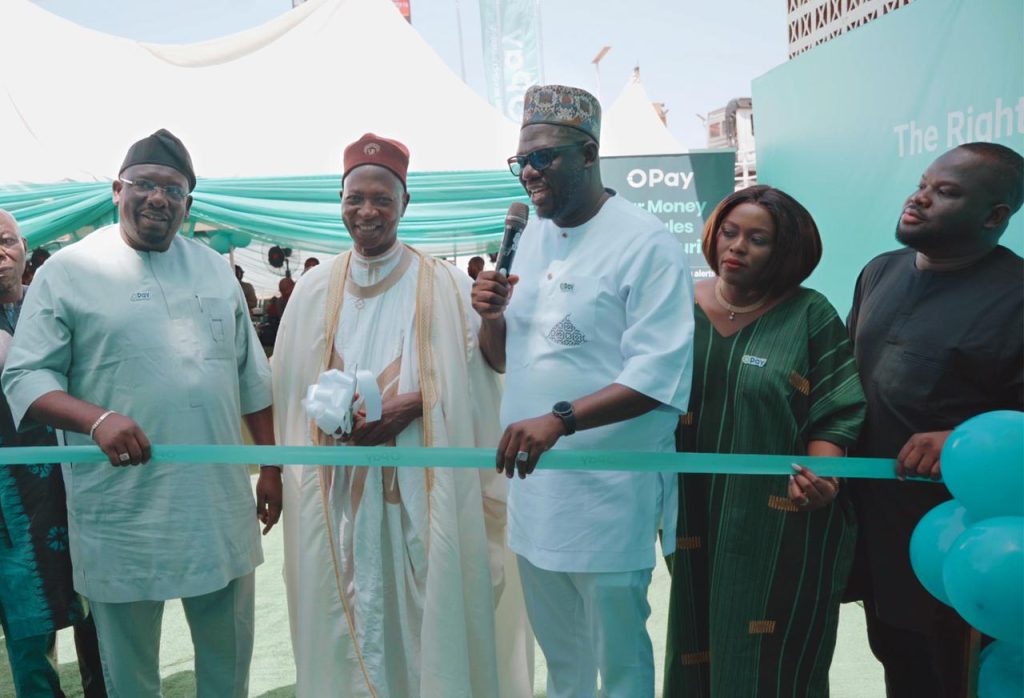
OPay has officially launched its new office in Jos, Plateau State.
Speaking at the event, OPay’s Chief Operations and Technology Officer, Dotun Adekunle, said that the new Jos office reflects OPay’s continued commitment to putting customers first and advancing financial inclusion across Nigeria.
He said :” Our customers are at the center of everything we do.
Opening this office in Jos allows us to stay closer to the people we serve, better understand their needs, and continue to provide fast, secure, and reliable financial services that improve everyday life.”
Business
Governor Otti Commissions Ultimum Manufacturing Plant in Aba
Razzle beverages include Razzl Pamplemousse (a unique and special grapefruit flavour), Razzl Cola, Razzl Orange, and Razzl Lemon.
Ultimum Limited, the manufacturers of Razzl brand of carbonated soft drinks has commissioned its state-of-the-art beverage manufacturing plant in Aba, Abia State.
Razzle beverages include Razzl Pamplemousse (a unique and special grapefruit flavour), Razzl Cola, Razzl Orange, and Razzl Lemon.
Located in the Osisioma Industrial Layout, the new plant was commissioned by the Governor of Abia State, Dr. Alex Chioma Otti.
Otti described the investment as a clear signal of economic revival and growing investor confidence in Abia State.
“This investment confirms that we are creating the right conditions for businesses to grow, thrive, and succeed. Investors will always go where there is clarity, stability, and opportunity.
Our focus has been to build that environment, and today’s commissioning shows that the strategy is working,” he said.
The Chairman of Ultimum Limited and representative of the investor group, Mr. Whalen Kadji, emphasized the company’s long-term commitment to Aba and Nigeria.
“We did not come here by chance. We came because of the energy and entrepreneurial spirit of Aba. This city has always been a center of enterprise, and we believe strongly in its future.
This plant is more than an investment in beverages; it is an investment in people, in jobs, and in the growth of local industry. We are here for the long term, and this is just the beginning of what we intend to build here.”
The Managing Director of Ultimum Limited, Mr. Austin Ufomba, described the plant as a bold step in the company’s journey.
“Ultimum Limited started with a simple idea, to build world-class products right here in Africa,”he said.
Business
Oil price jumps to $106, stocks drop on uncertainty over US-Iran talks
Crude prices rallied more than three percent on Thursday, with Brent crude above $106 per barrel and WTI around $93.
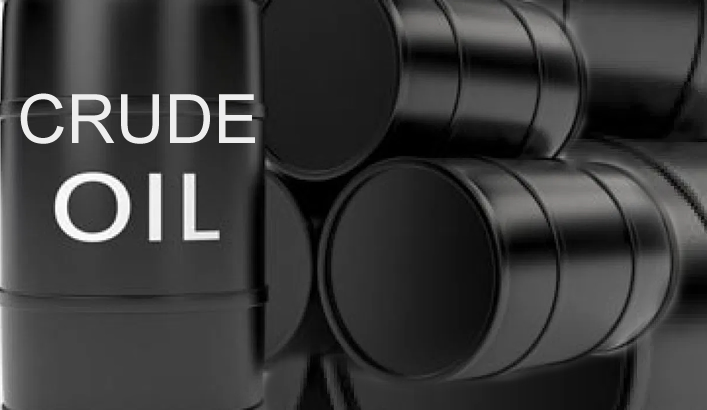
Oil prices jumped and equities slid Thursday as hopes for a peace deal between the US and Iran wavered after Tehran rejected Washington’s bid to wind down the nearly four-week war.
Markets had been buoyed this week by US President Donald Trump’s announcement that strikes targeting Iran’s energy infrastructure would be postponed, adding that the two sides were in peace talks.
But uncertainty over the talks and the virtual closure of the Strait of Hormuz — through which around 20 percent of oil and liquefied natural gas passes — have cast a shadow over market sentiment.
“The market rollercoaster continues,” said Joshua Mahony, chief market analyst at Scope Markets.
Crude prices rallied more than three percent on Thursday, with Brent crude above $106 per barrel and WTI around $93.
( VANGUARD)


Lagos PDP Governorship Aspirant Adeoye Rejects One-Party Dominance

Kwankwaso officially joins ADC in Kano

Just in: Tuggar resigns as Foreign Minister

Tech Expert, Zuckerberg trains with UFC champions, Adesanya, Alexander

Organ Trafficking: Ekweremadu bags 10 years in UK prison

SAINT OBI: Between his marriage and his death
-

 Sports1 day ago
CAF appoints Nigeria’s Samson Adamu as acting secretary general
-

 Business1 day ago
Governor Otti Commissions Ultimum Manufacturing Plant in Aba
-
 Politics2 days ago
JUST IN: Kwankwaso Set to Join ADC on Monday
-
 News21 hours ago
President Tinubu at 74, Donates Salaries to Armed Forces Welfare Fund
-
 Politics21 hours ago
PDP will contest 2027 polls, says Wike
-

 Business20 hours ago
OPay launches new office in Jos
-

 News12 hours ago
Lagos High Court Embraces Full Digital Transformation with Mandatory E-Filing
-

 Crime12 hours ago
12 killed in Plateau attack