
Health
JUST IN: Police Confirms Three missing Medical Students Death After Boat Mishap in Calabar


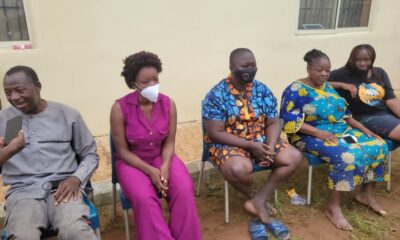
The police in Cross River state has confirmed the death of three medical students who went missing after their boat capsized during a cruise on Saturday in the state.
The state’s Commissioner pf Police, Gyogon Augustine Grimah said thirteen medical students across different universities in Nigeria were involved in the boat accident, adding that ten of them were rescued alive as soon as the boat capsized with three missing.
It was gathered that locals saw the floating bodies on Monday morning and alerted Marine Police.
The Police Commissioner said they recovered the bodies of two males and one female.
He said the bodies will be kept under proper care and contact made with relevant families before handover.
The medical students were in Calabar last week for the annual Nigeria Medical Students Association Health Week.
The week is hosted yearly in any member university within the country.
The 2023 edition was hosted in Calabar with various activities, including educational and social activities.
One of the social activities was a visit to the Marina Resorts and some students decided to enjoy a cruise ride in the resort.
President of the Nigeria Medical Students Association (NiMSA) Mr. Ejim Egbe, said the first set of 13 students had a safe ride and returned to shores.
Though they expressed some concerns, the management assured of safety before the second set of 13 boarded.
The accident occurred with the second set while 10 victims were rescued alive.










Health
Ebola: Nigeria Sends Back Swiss Woman Via Medivac Plane
The patient who is the wife of a Swiss diplomat in Nigeria was flown out of Nigeria this morning through a medivac plane which was already at the airport waiting to evacuate her.


A Swiss woman diagnosed with Ebola virus in Nigeria is set to be evacuated from the country early this morning through an air ambulance at the private jet wing of the Nnamdi Azikiwe International Airport.
Ohibaba News learned the patient who is the wife of a Swiss diplomat in Nigeria was flown out of Nigeria this morning through a medivac plane which was already at the airport waiting to evacuate her.
Our Reporter deployed to the General Aviation Terminal later obtained pictures of the arrival of a convoy of vehicular ambulance from Abuja city centre with diplomatic vehicles in the entourage.
The three vehicle convoy had an international Agency vehicle entering the Private Jet section of the Nnamdi Azikwe International Airport.
Airport officials cordoned off the private wing of the airport but news men eventually obtained videos of a medivac plane with crews eventually evacuating the sick passenger suspected to be the Ebola index case due to the special nature of the medical evacuation.
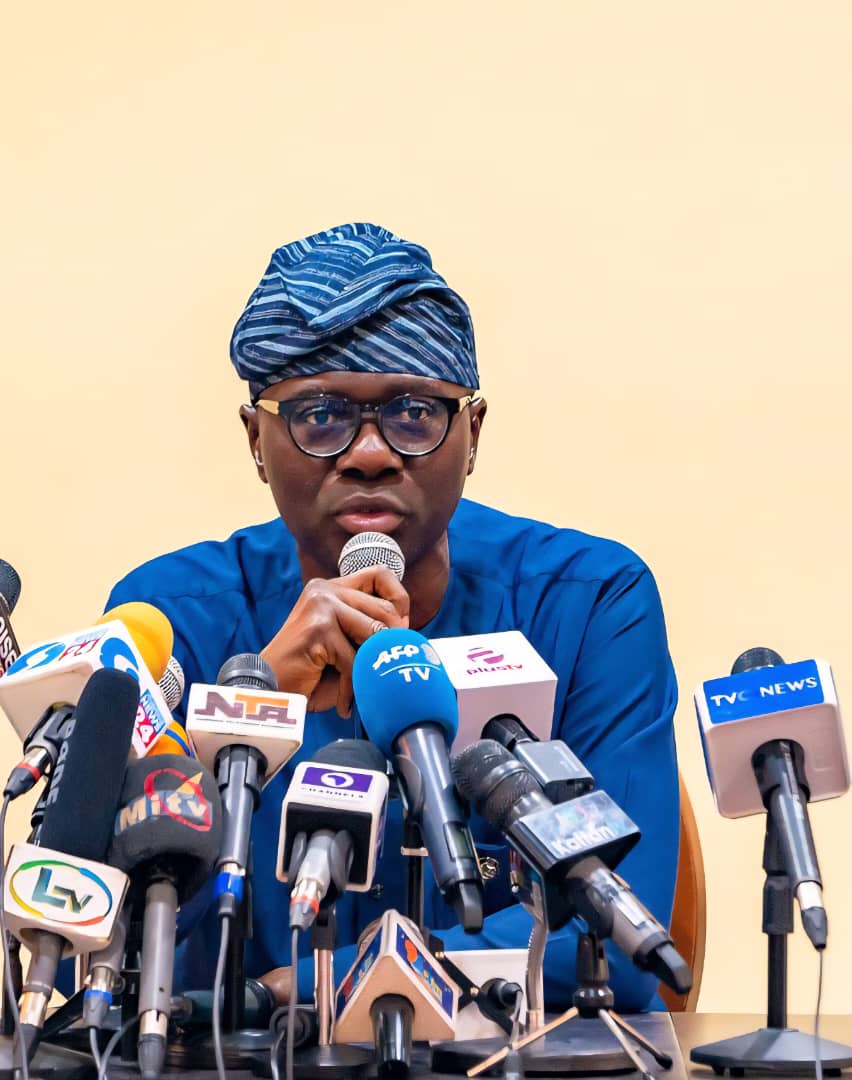
Lagos State has strengthened disease surveillance and public health preparedness following confirmation of an imported case of Ebola Bundibugyo virus in Abuja, the Federal Capital Territory, the Ministry of Health said in a statement on Sunday.
Residents and visitors need not panic, the ministry stressed, as the state is fully ready to prevent, detect and respond to any potential public health threat. There are currently no suspected or confirmed cases in Lagos.
The Directorate of Epidemiology, Biosecurity and Global Health is intensifying surveillance, risk communication and community engagement. Collaboration with agencies at points of entry, including Murtala Muhammed International Airport (MMIA), has also been stepped up to enable early detection and rapid response.
As part of these efforts, the ministry conducted a strategic engagement and assessment at MMIA with airport management, Port Health Services and other aviation and public health stakeholders. Discussions focused on passenger screening, information sharing, infection prevention and control, and emergency response coordination. Public enlightenment is also being expanded through educational materials on Ebola symptoms, transmission and prevention.
Ebola Virus Disease is a severe and potentially fatal illness that spreads mainly through direct contact with the blood or other body fluids of an infected person showing symptoms, contaminated materials, or the bodies of people who have died from the disease. Infection can also occur through contact with infected animals.
Symptoms typically appear between two and 21 days after exposure and may include fever, severe weakness, headache, muscle pain, sore throat, vomiting, diarrhoea and abdominal pain. Unexplained bleeding or bruising can occur in some cases. Because early symptoms can resemble malaria or other common illnesses, anyone who becomes unwell—especially after possible exposure or travel from an area with active transmission—should seek prompt medical assessment.
The ministry reminded residents of Lagos State’s fever-management policy: anyone with fever should take a malaria rapid diagnostic test before using antimalarial medicines. If the test is negative, a healthcare professional should evaluate other possible causes.
Preventive measures advised include regular hand washing, avoiding contact with the body fluids of sick persons, not handling potentially contaminated materials, and staying away from sick or dead wild animals.
Travellers arriving in Nigeria, particularly from areas reporting Ebola transmission, are urged to cooperate with Port Health Services, provide accurate travel and health information, and follow official public health guidance. Anyone who develops symptoms during or after travel should notify health personnel promptly and seek advice before visiting a healthcare facility.
Suspected cases or concerns about possible exposure in Lagos can be reported via the state’s emergency lines 112 or 767, or by calling the Directorate of Epidemiology, Biosecurity and Global Health on 0802 316 9485.
The Lagos State Government said it will continue to monitor the situation, strengthen surveillance and response capacity, and issue verified updates as necessary. Residents are encouraged to remain calm, practise recommended precautions and rely on official information from the Nigeria Centre for Disease Control and Prevention (NCDC) and other authorised agencies.
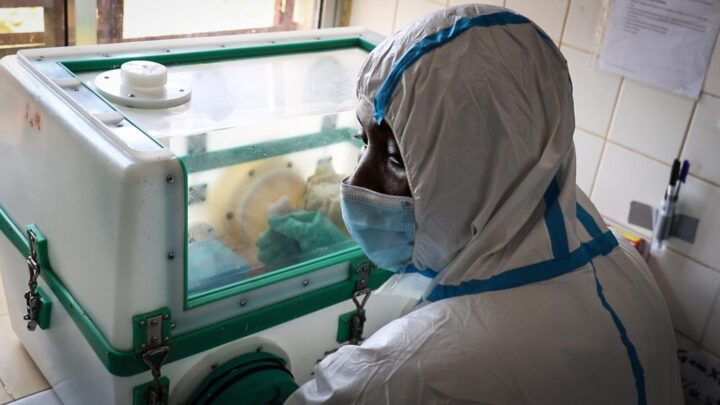
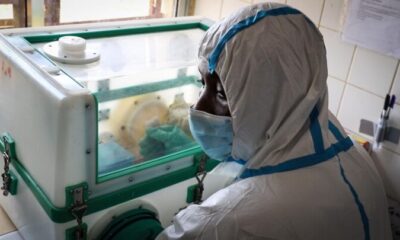
The Federal Government has said the confirmed Ebola patient in Abuja is responding well to treatment and showing signs of recovery, with laboratory results indicating significant improvement.
Coordinating Minister of Health and Social Welfare, Professor Muhammad Ali Pate, disclosed this while briefing journalists on the national response. He said he had spoken with the clinicians managing the case and that there is a possibility the patient could recover fully, though authorities would not take anything for granted.
The patient is a woman who recently arrived in Nigeria from Uganda (via Addis Ababa). She was asymptomatic on arrival but developed symptoms days later and was admitted to a private hospital in the Federal Capital Territory, where she received care for several days before laboratory confirmation of Ebola virus disease on 20 October 2026. The infection has been identified as the Bundibugyo strain.
Authorities have identified 44 contacts, including healthcare workers, patients, caregivers and travel contacts. High-risk contacts have been placed in quarantine, while others remain under monitoring. The government has intensified contact tracing, surveillance and infection-prevention measures, and has stated there is currently no evidence of community transmission.
Pate emphasised that the priority remains containing the single confirmed case and preventing any wider outbreak. The Nigeria Centre for Disease Control and Prevention (NCDC) has activated its incident management system in collaboration with the FCT Health Services Secretariat and international partners, including the World Health Organization.


Dangote Refinery’s IPO Ends Tomorrow

Ebola: Nigeria Sends Back Swiss Woman Via Medivac Plane

Brazil’s Lula Wins Fourth Term In Presidential Runoff

BREAKING: Lagos Govt Declares Today, Thursday Work-Free to Mark 2026 Ìṣẹ̀ṣe Day

Tech Expert, Zuckerberg trains with UFC champions, Adesanya, Alexander

Organ Trafficking: Ekweremadu bags 10 years in UK prison
-

 Business3 days ago
Naira To Dollar, Pound, Euro… Today October 23
-

 Business3 days ago
Obasanjo Accuses Tinubu : “You Made Every Nigerian Poor By 300% Naira Devaluation”
-

 Business3 days ago
History of Naira Revaluation and Devaluation (1973–2026)
-

 Business3 days ago
CBN Licences Abbey Bank to Start Full Commercial Banking in November 2026
-
 News3 days ago
JUST IN: 1 Dead, 3 Rescued in Fadeyi Building Collapse, Lagos
-

 News2 hours ago
BREAKING: Former Arise News Anchor, Constance Ikokwu Appointed NDC National Campaign Council Spokesperson
-

 Politics2 days ago
2027 presidential election: Tinubu’s Northern test begins today
-
 Health2 days ago
Ebola patient in Abuja showing signs of recovery – FG