
News
JUST IN: NBC Vows To Appeal Judgements Against Its Regulatory Mandates


National Broadcasting Commission (NBC) has vowed to appeal against the judgement by a Federal High Court in Abuja, which nullified the powers of the Commission to impose fines on broadcast stations that violates the provisions of the country’s Broadcasting codes.
Reacting to the ruling , NBC Director-General, Balarabe Shehu Ilelah, said : ” NBC will appeal against the judgement when found to be in conflict with the previous judgements of the Court, which empowers the Commission to regulate Broadcasting in Nigeria.”
He said that the Commission has applied for a certified copy of the judgement.
It is a global best practices and the ethics of the legal profession, that no party can freely comment on a judgement it has not seen and read,” he said.
Ohibaba.com reported that in the previous judgements, an Abuja-based Federal High Court had ruled that the NBC had the authority to impose sanctions on errant stations.
At the time, Justice N. E. Maha in April 2022 had ruled in a case brought against NBC by seven organisations led by the Socio-Economic Rights and Accountability Project (SERAP).
In a Certified True Copy of the judgement, Justice Maha had interpreted the provision of Section 2(1)(n) of the NBC Act, 1992.
The provision states, “The Commission shall have the responsibility of determining and applying sanctions including revocation of licences of defaulting stations which do not operate in accordance with the broadcast code and in public interest.”
Relying on the provision, Justice Maha held, “The law is settled that a regulator imposing fines under its enabling law in the discharge of its functions could not have acted unconstitutionally.
In Moses Ediru v Federal Road Safety Commission and 20 ors(supra) the court held that the FRSC Act gives the Commission the right to impose and enforce sanctions and such right does not derogate from the judicial powers of the court as provided in the constitution.






News
President Tinubu Commissions new EFCC office in Ekiti
Earlier, EFCC Chairman Ola Olukoyede described the commissioning of the Ekiti Zonal Directorate as a landmark development that would enhance the Commission’s presence and effectiveness in the region.

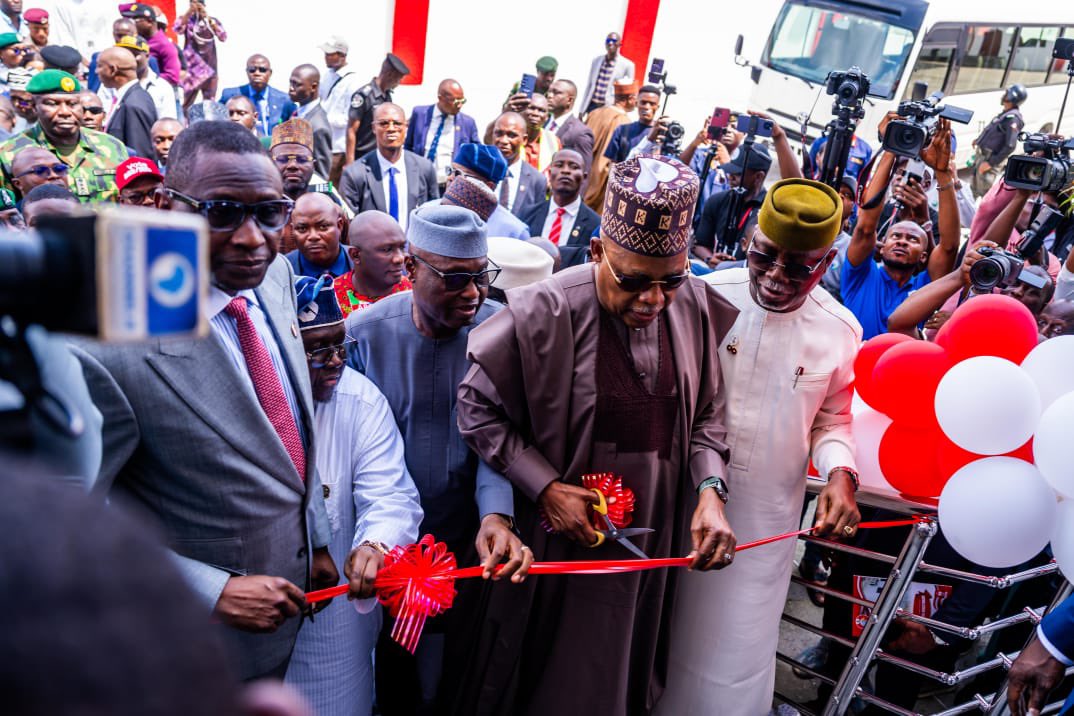
• EFCC Ekiti Office commission by Vice President Kashim Shettima, Tuesday, June 9, 2026.
President Bola Ahmed Tinubu has commissioned the new Economic and Financial Crimes Commission (EFCC) Zonal Directorate office in Ado-Ekiti.
Represented by Vice President Kashim Shettima at the commissioning ceremony on Tuesday, President Tinubu said that the state-of-the-art facility reflects the Federal Government’s commitment to strengthening institutions responsible for fighting corruption and economic crimes.
The President commended EFCC Chairman, Ola Olukoyede, as well as the management and staff of the Commission for their efforts in enhancing the agency’s operational capacity and expanding its reach across the country.
According to him, the new office will improve the Commission’s effectiveness in tackling corruption, financial crimes and related offences, while bringing anti-graft operations closer to the people of Ekiti and Ondo States.
Earlier, EFCC Chairman Ola Olukoyede described the commissioning of the Ekiti Zonal Directorate as a landmark development that would enhance the Commission’s presence and effectiveness in the region.
He noted that the facility would help close operational gaps in the Commission’s coverage of Ekiti and Ondo States while improving engagement with local communities in the fight against corruption.

An Improvised Explosive Device (IED) exploded on the Anka-Bagega road on Tuesday, killing one person and injuring seven others.

The blast struck a commercial Volkswagen Golf 3 Wagon carrying passengers travelling from Bagega village to Anka town. One passenger died on the spot, while the seven injured victims are receiving treatment at a primary healthcare facility in Bagega.

The explosion also caused significant damage to the vehicle, sparking fresh security concerns among commuters using the route.

This incident comes barely a month after a similar IED explosion occurred along the same road.

Zamfara State Commissioner of Police, Ahmad Bello, confirmed the attack. He said joint security forces have been deployed to assess the situation, clear the affected area, and restore normalcy on the route.

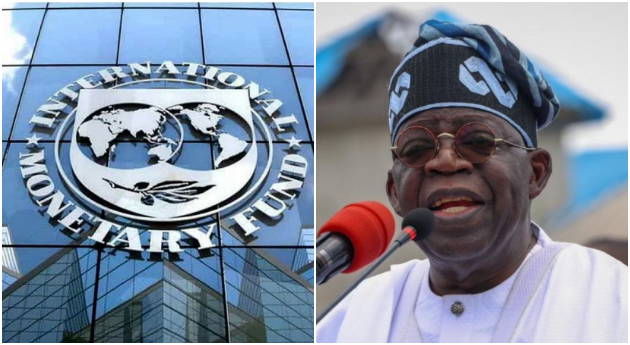
The Federal Government has welcomed the International Monetary Fund’s (IMF) 2026 Article IV Mission Concluding Statement, describing it as an independent validation of the success of President Bola Ahmed Tinubu’s economic reform programme.
In a statement, the government noted the IMF’s overall positive assessment, saying the Fund’s observations confirm that the bold reforms implemented over the past three years are strengthening macroeconomic stability, restoring investor confidence, and laying a solid foundation for sustainable and inclusive growth.
The IMF highlighted several key achievements, including improved functioning of the foreign exchange market, stronger external buffers, ongoing fiscal and revenue reforms, and resilience in the banking sector. These developments, the government said, have enhanced Nigeria’s ability to withstand external shocks compared to recent years.
Particular emphasis was placed on the impact of major policy decisions such as the removal of fuel subsidies, the end of deficit monetisation, the liberalisation of the foreign exchange market, and strengthened fiscal discipline. According to the statement, these measures have significantly reduced economic vulnerabilities and rebuilt confidence.
Despite new global challenges arising from the Middle East conflict — including higher energy and food prices, tighter financial conditions, and supply chain disruptions — the IMF acknowledged Nigeria’s notable resilience. The parallel market premium has remained below five percent, sovereign spreads have stayed broadly stable, and investor confidence has been preserved.
The Fund also noted that Nigeria is well positioned to benefit from elevated energy prices through increased export earnings, improved fiscal revenues, and higher foreign exchange inflows. The government said it will focus on translating these opportunities into lasting gains by ramping up crude oil production, expanding domestic refining capacity, boosting gas production and exports, and attracting fresh investments across the energy sector.
Addressing Poverty and Food Insecurity
The government acknowledged the IMF’s observation that poverty and food insecurity remain pressing challenges. While per capita income grew by nearly 10 percent in 2025, indicating a marked reduction in poverty levels, authorities stressed that macroeconomic stability alone is not enough.
To ensure inclusive growth, the government is strengthening social protection programmes, including direct cash transfers to vulnerable households, support for small businesses, student loans through NELFUND, consumer credit schemes, and healthcare investments.
In the agricultural sector, efforts are being scaled up through the Renewed Hope National Agricultural Mechanisation Programme and other initiatives aimed at boosting productivity, expanding irrigation, improving access to inputs and financing, and strengthening food security.
The government also welcomed the IMF’s recognition of progress in domestic revenue mobilisation and public financial management. It pledged to continue implementing new tax laws, digitising revenue collection, and improving transparency and accountability. Steps are already being taken to enhance fiscal data integrity and meet the highest international standards in economic and fiscal statistics.
Positive Medium-Term Outlook
The IMF projects continued economic growth above four percent over the medium term, alongside improving external reserves, rising investment, and stronger fiscal revenues. Public debt has declined as a percentage of GDP, while reserve buffers have strengthened significantly. These positive developments complement recent sovereign credit rating upgrades by international agencies.
The Federal Government reaffirmed its commitment to maintaining macroeconomic stability, accelerating inclusive growth, deepening structural reforms, improving the investment climate, expanding infrastructure, and enhancing human capital development and job creation.
“While challenges remain, the direction is clear and the foundations are stronger,” the statement said. “The ultimate objective of these reforms is not merely improved economic indicators, but better outcomes for all Nigerians — lower inflation, decent jobs, higher incomes, greater economic opportunity, and a better quality of life.


Bamidele tasks 11th Senate to consider single term for President, govs

President Tinubu Commissions new EFCC office in Ekiti

Peter Obi demands N5bn from Kenneth Okonkwo over defamation allegations

Tech Expert, Zuckerberg trains with UFC champions, Adesanya, Alexander

Organ Trafficking: Ekweremadu bags 10 years in UK prison

SAINT OBI: Between his marriage and his death
-
 News2 days ago
Court Voids ₦110bn N’Assembly Vehicles, Allowances
-
 Business3 days ago
Senate’s approval of Sugar – Sweetened Beverages Tax Bill, Shocking, says CPPE, Lobbying Reps for rejection
-
 News3 days ago
Court Declares National Assembly’s N110bn SUV and Allowance Schemes Unlawful
-
 News2 days ago
FG Clears Five-Month Allowance Arrears for University Lecturers
-

 News2 days ago
Lagos Begins 500-Tree Campaign to Tackle Extreme Heat
-

 Politics2 days ago
NDC Declares Party Supremacy, Approves Code of Conduct Committee
-

 Entertainment2 days ago
Nigerian-British Singer Talay Riley Dies in London Stabbing, Others Mourn
-

 Politics2 days ago
2027: Lagos APC picks Damilola as Hamzat ‘s Deputy Governor